Injoys
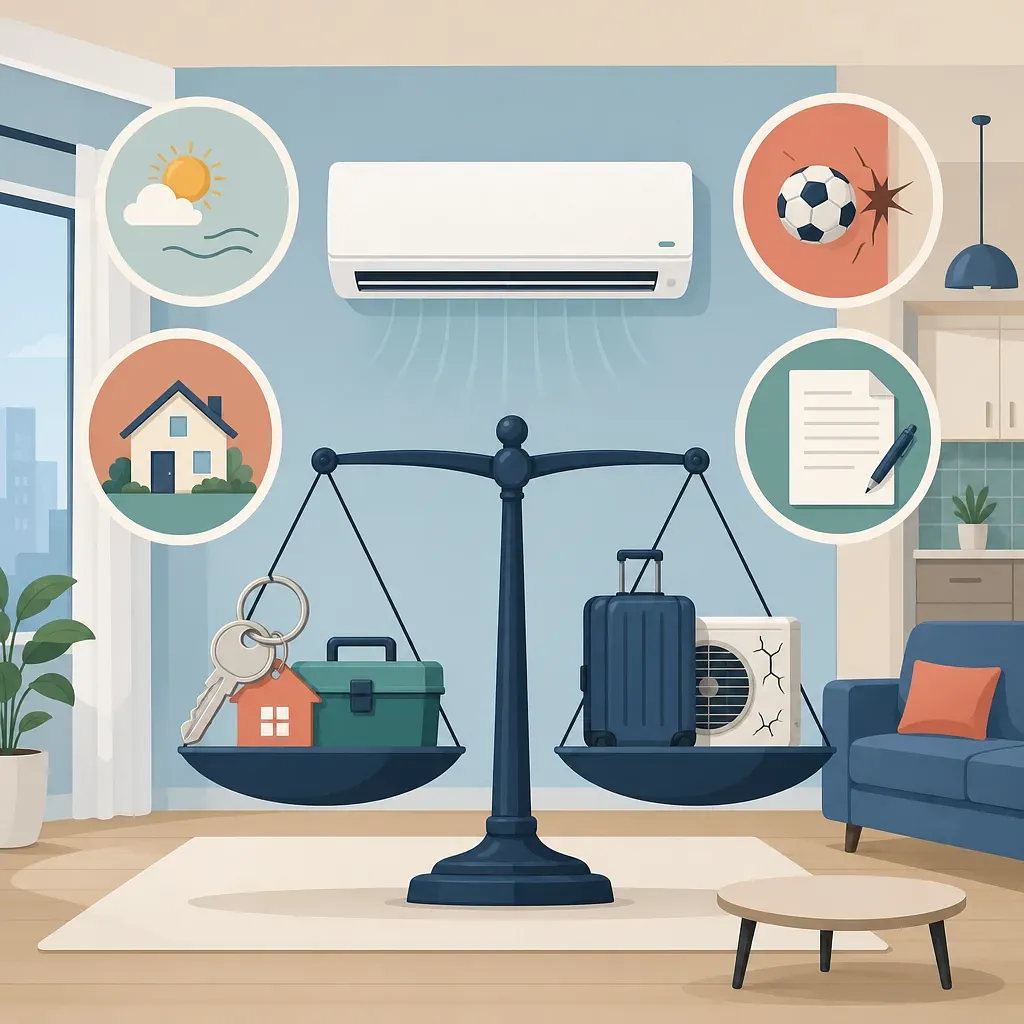
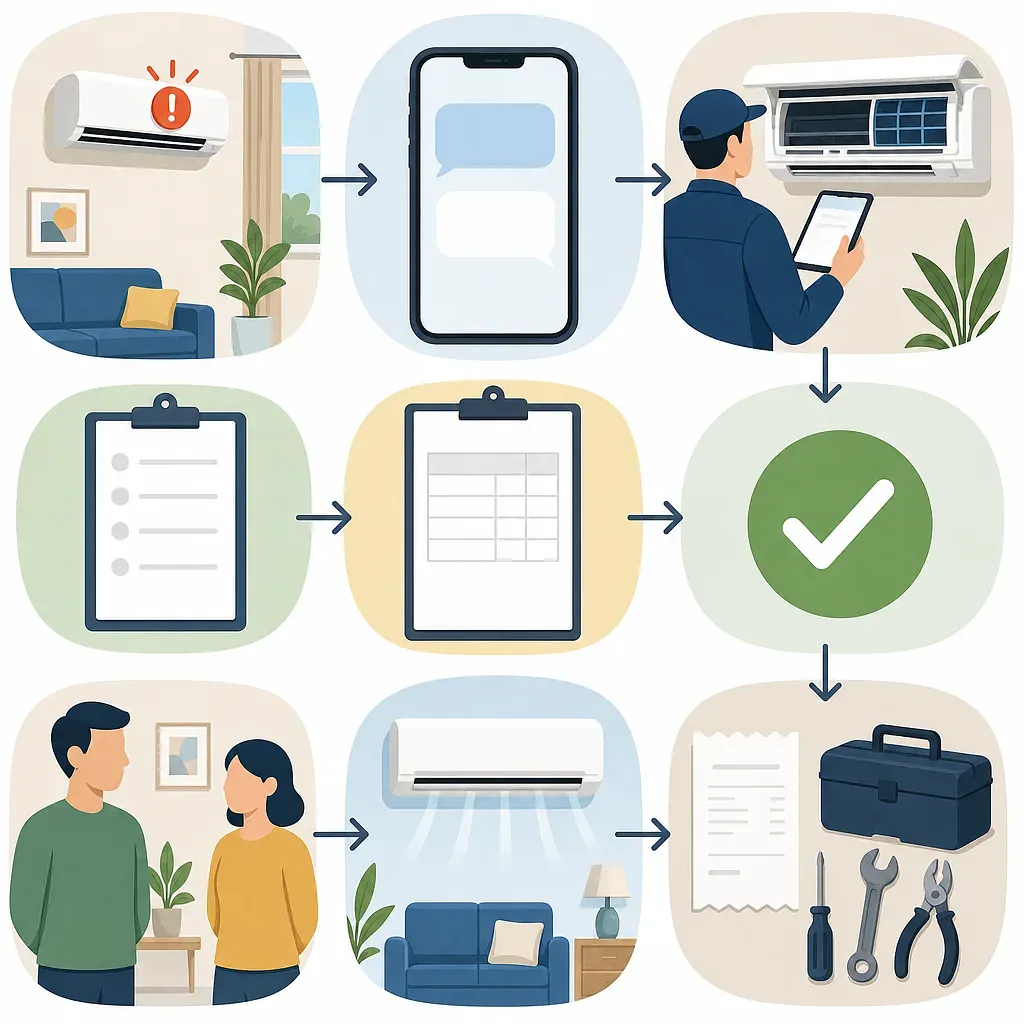
The party responsible for repair costs is not automatically determined simply because an air conditioner installed in a monthly rental or jeonse home has broken down. The key issues are whether the air conditioner was provided under the lease, who owns it, why it broke down, and what special repair provisions are included in the agreement.
Article 623 of the Korean Civil Act stipulates that a landlord has a duty to maintain the leased property in a condition necessary for the tenant’s use and enjoyment. However, this does not mean that the landlord must repair every minor problem or any appliance brought in by the tenant. Actual responsibility is determined by considering both the terms of the agreement and the nature of the malfunction.
Basic Principles Applicable to Jeonse and Monthly Rentals
The basic framework for determining the duty to repair an air conditioner does not change depending on whether the lease is a deposit-based jeonse or a monthly rental with rent paid each month. In both cases, it is necessary to review the condition of the equipment provided with the home, the purpose of the agreement, the cause of the malfunction, and any special provisions.
The main standards under the Civil Act are as follows.
- Article 623 of the Civil Act: The landlord must maintain the leased property in a condition necessary for its use and enjoyment.
- Article 626 of the Civil Act: If the tenant has incurred expenses necessary to preserve the leased property, the tenant may claim reimbursement of those necessary expenses from the landlord. However, whether reimbursement is actually available may depend on the necessity of the repair, the cause of responsibility, the notification process, and any special provisions.
- Article 634 of the Civil Act: If the leased property requires repair, the tenant must notify the landlord without delay unless the landlord is already aware of the need.
- Article 627 of the Civil Act: If part of the leased property becomes unavailable for use and enjoyment through no fault of the tenant, the tenant may request a proportional reduction in rent. The scope of any reduction is not determined solely by the air conditioner’s malfunction; the extent to which use of the home is restricted must also be considered.
The landlord’s responsibility is not established merely because the air conditioner has broken down. Important factors include how much the malfunction affects the tenant’s ability to use the home for its contractual purpose, whether the problem can be resolved through simple maintenance, and whether it is an age-related failure of a major component.
Three Types of Air Conditioners to Distinguish First
1. An Air Conditioner Provided as an Option Under the Lease
If the air conditioner is listed as an option in the lease agreement, property listing, confirmation and explanation document for the subject property, or inventory of fixtures, this supports the conclusion that it was provided as equipment accompanying the leased property. Records showing that the landlord confirmed it was operating normally at the time of move-in or provided instructions for its use may also be helpful.
If this air conditioner does not operate because of aging or an internal component failure that occurred during ordinary use, the landlord is likely to be found responsible for repairs. Conversely, it cannot necessarily be concluded that the landlord is responsible even for routine maintenance that can ordinarily be performed by the tenant, such as cleaning the filter.
2. Property Left Behind by a Previous Tenant
An air conditioner does not always become an option provided by the landlord merely because it is installed in the home. The assessment may differ if, at the time of contracting, the landlord clearly explained that it was property left behind by a previous tenant and that the landlord would not be responsible for its repair or replacement, and the same terms were specifically stated in the lease agreement.
However, if the air conditioner is listed as an option in the agreement and has been maintained by the landlord, the landlord’s responsibility does not disappear merely by later calling it property left behind. The following materials should be reviewed together.
- The options and fixtures list in the lease agreement
- Real estate listings and photographs
- The confirmation and explanation document for the subject property
- Messages exchanged with the landlord or real estate agent before and after move-in
- Records showing who paid previous repair costs
- Special provisions concerning ownership of and responsibility for disposing of property left behind
3. An Air Conditioner Installed by the Tenant
If an air conditioner purchased and installed by the tenant breaks down, the tenant is responsible for the repair costs in principle. However, if the malfunction was caused by in-wall piping, electrical facilities, a leak, or an electrical problem on the building side, defects in the building facilities must be assessed separately from problems with the air conditioner itself.
If the walls or piping were damaged during installation, a separate issue concerning restoration to the original condition may arise, so it is advisable to obtain the landlord’s consent before installation.
Guide for Determining Responsibility for Repair Costs
| Situation | General Direction of Assessment | Materials to Review |
|---|---|---|
| A landlord-owned option breaks down due to aging | The landlord’s duty to repair is likely to become an issue | Agreement, year of manufacture, technician’s diagnosis |
| Refrigerant leak or failure of a major component such as the compressor or control board | The landlord may be responsible depending on the cause and condition of the equipment | Malfunction report, repair history, estimate |
| Malfunction caused by impact, damage, or unauthorized disassembly by the tenant | The tenant is likely to be responsible | Photographs of damage, technician’s opinion, circumstances of use |
| Reduced performance due to poor maintenance, such as failure to clean the filter | The tenant’s responsibility for routine maintenance may become an issue | Filter condition, maintenance instructions, diagnostic results |
| Property left behind by a previous tenant with a clear special provision excluding responsibility | Determined according to the terms of the special provision and the circumstances of the agreement | Special provision on property left behind, record of explanations, fixtures list |
| Malfunction of a product purchased and installed by the tenant | Normally the tenant’s responsibility | Purchase receipt, installation consent form |
| Air conditioner unusable because of defects in the building’s electrical or piping systems | Review the landlord’s duty to repair the building facilities | Electrical and piping diagnosis, confirmation from the management office |
| Tenant replaces the unit immediately without notifying the landlord | Recovery of the cost may become difficult | Evidence of urgency, notification attempts, estimates and receipts |
This table presents general directions for assessment. The actual conclusion may vary depending on the scale of the malfunction, whether it can be repaired, the age of the product, any special provisions, and the parties’ notification and response process.
Evidence Distinguishing Age-Related Failure from Tenant Fault
A dispute may be prolonged if the cause of the malfunction is asserted only verbally. If possible, the tenant should obtain a written diagnosis from an air-conditioning technician that describes not only the symptoms but also the presumed cause.
Evidence Supporting Aging or Natural Failure
- Photographs showing the product’s year of manufacture and model name
- Whether the product operated normally at move-in and how long it had previously been used
- A technician’s opinion that components such as the compressor, motor, or control board deteriorated naturally
- Repair history for the same symptoms
- Evidence showing no signs of external impact or unauthorized disassembly
- Photographs showing normal cleaning and use
Cases in Which the Tenant’s Intentional Misconduct or Negligence May Be at Issue
- The indoor or outdoor unit was damaged by impact while moving or relocating furniture
- The product was disassembled or its wiring was modified without notifying the landlord
- Damage worsened because a drainage malfunction warning was ignored for a long period
- The malfunction was caused by using the product in a manner inconsistent with its instructions
- A problem occurred because basic filter maintenance was not performed at all
The mere fact that a product is old does not mean every malfunction will be recognized as a natural failure. Conversely, the mere fact that it broke down while being used by the tenant does not establish tenant fault. The technician’s diagnosis of the cause and records of use are important.