Psychological Safety and Performance Standards: The Art of Give-and-Take for Leaders Building High-Performance Organizations
Psychological safety does not simply mean a comfortable atmosphere. High-performing organizations foster both a sense of safety that allows for candor and challenging performance standards, thereby fostering both learning and execution.
Psychological safety is a shared belief among team members that they will not face interpersonal repercussions for asking questions, voicing concerns, making mistakes, or expressing dissent.
A sense of security with low performance standards leads to a “club room” focused on camaraderie, while high standards without a sense of security create a “jungle” dominated by defensiveness and silence.
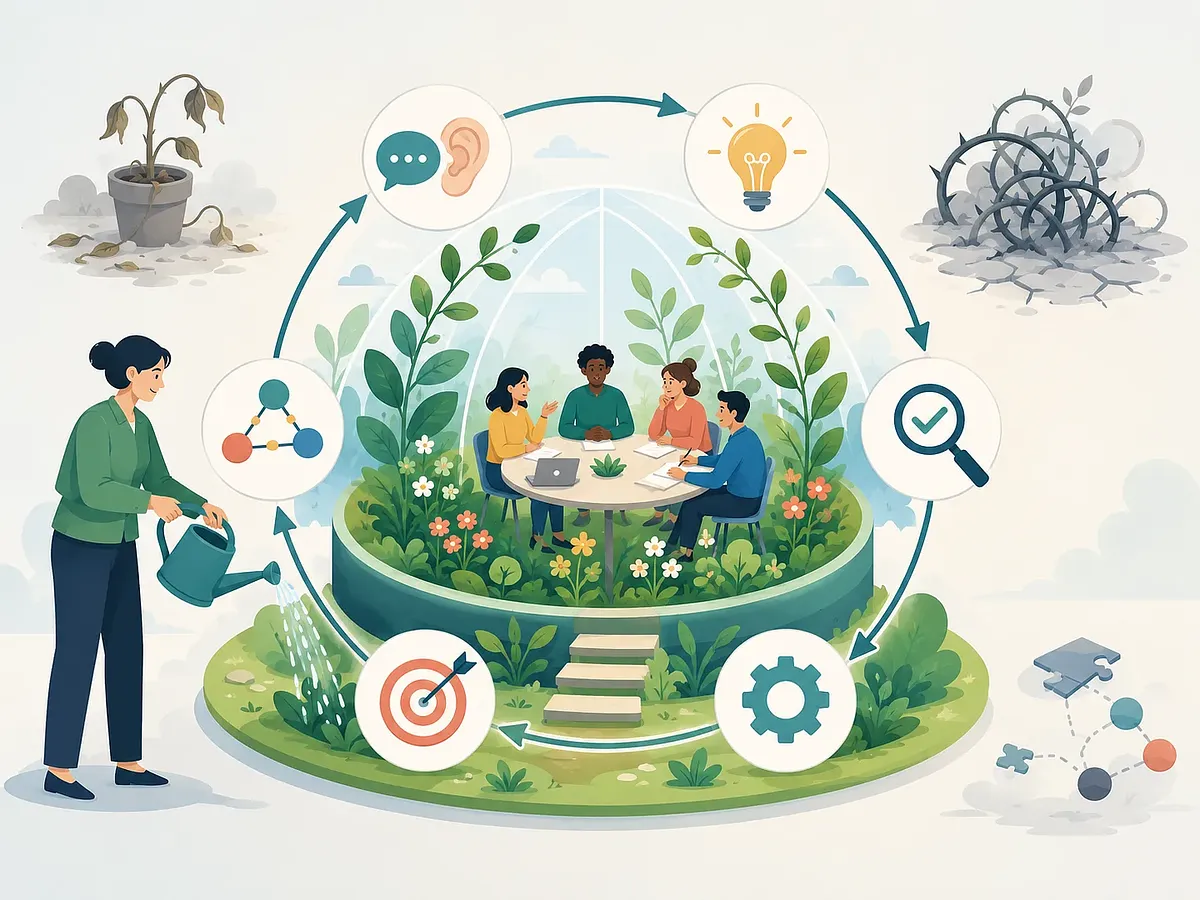
The key to a high-performing organization is to create a “healthy tension” that raises both a sense of security and standards, thereby enabling conversations that may be uncomfortable but are productive.
Leaders must strike a balance between a relaxed atmosphere and intense competition by addressing external changes, customer value, clear goals, rapid feedback, and designing incentives for collaboration.
Psychological safety does not arise from policy statements; rather, it becomes established as a behavioral norm when leaders consistently ask questions, respond to mistakes, conduct meetings, and apply evaluation criteria in the same way.
Introduction
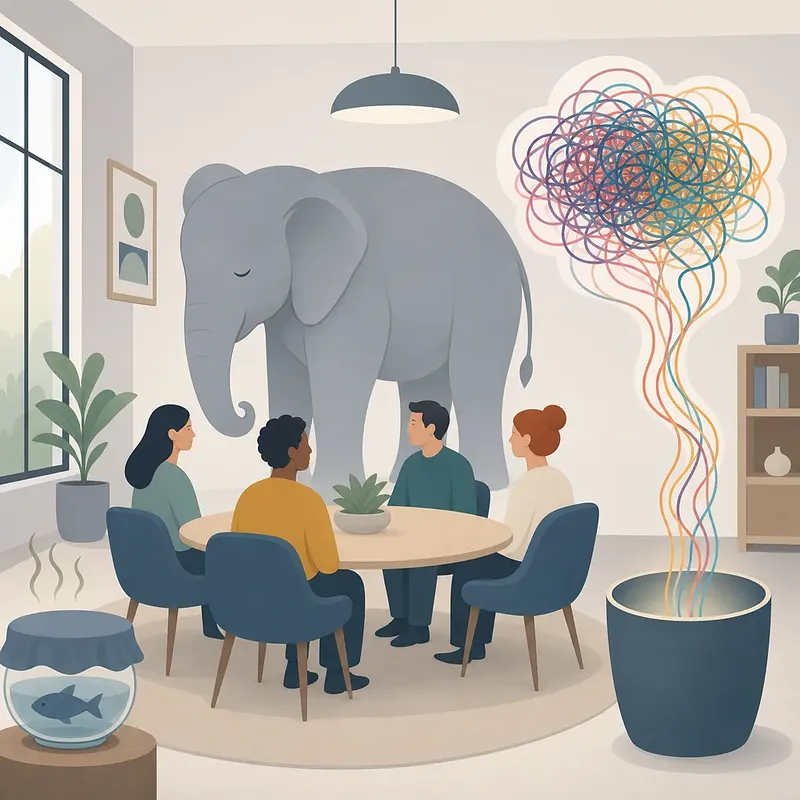
A positive organizational atmosphere does not necessarily lead to results. Conversely, intense pressure to perform does not automatically result in exceptional execution. Many teams find themselves caught between these two extremes. At one end is the “club room,” where people avoid saying anything that might make others uncomfortable; at the other end is the “jungle,” where mistakes and weaknesses are hidden.
High-performing organizations do not choose one over the other. They simultaneously foster a sense of psychological safety where members can speak honestly and maintain high performance standards that demand better results. The state that arises from this balance is what this article refers to as “healthy tension.”
Key Definition: Psychological Safety Is Not “Comfort”
Psychological safety refers to a state in which team members believe they will not be punished, ridiculed, or penalized for asking questions, making mistakes, voicing concerns, expressing dissent, or sharing unfinished ideas. In her 1999 study, Amy C. Edmondson described this as a shared belief that a team is safe even when taking interpersonal risks.
The key point is that psychological safety does not mean “let’s always be nice to everyone.” In teams with high psychological safety, it is possible to ask difficult questions, provide uncomfortable feedback, and learn openly from failure. In other words, psychological safety is not a mechanism for lowering performance standards; rather, it is closer to the learning infrastructure necessary to actually achieve higher standards.
Organizational Culture Viewed Through Two Dimensions
By placing psychological safety and performance standards on two axes, we can categorize organizational states into four types.
Category | Low Performance Standards | High Performance Standards
High Psychological Safety | Club Room: Good relationships but weak challenge and feedback | Learning & High-Performance Organization: Candid dialogue and high standards work in tandem
Low Psychological Safety | The “Asari” Environment: Increased political maneuvering, indifference, and avoidance of responsibility | The “Jungle”: Intense competition and pressure, but increased silence, defensiveness, and concealment of risks
The key point of this table is not “safety versus performance,” but “how to enhance both.” In the 2025 issue of Harvard Business Review, Edmondson and Michaela J. Kerrissey explained that viewing psychological safety and accountability for performance as opposite ends of a spectrum is a false dichotomy. To achieve outstanding performance in an uncertain environment, high standards and psychological safety are both necessary.
Why Do “Teams with a Good Atmosphere” Fail to Deliver Results?
The reason teams with a good atmosphere fail to deliver results is generally because psychological safety is mistaken for “comfort without challenge.” Although team members get along well, if the following behaviors become routine, the team will prioritize maintaining relationships over growth:
· Everyone agrees during meetings, but implementation is slow after a decision is made.
· Even when quality standards are violated, the team brushes it off with “It can’t be helped this time.”
· Team members avoid giving direct feedback even when they are aware of a colleague’s poor performance.
· There is a weak sense of urgency regarding changes in customers, the market, or technology.
· Goals are too easy or vague, so even when the team succeeds, the learning gained is minimal.
In this state, there may appear to be little conflict, but in reality, critical conflicts remain unresolved. The team feels comfortable, but its edge is lost; members are busy but feel no pressure to work more effectively.
Why Do Even “High-Pressure Teams” Fail to Deliver Results?
Even with high performance standards, if psychological safety is low, the team becomes a “jungle.” On the surface, there may be tension, but in reality, information is withheld and learning comes to a halt.
· Rather than quickly sharing mistakes, members wait until responsibility is clearly assigned.
· They remain silent for fear of being labeled a “negative person” if they voice dissent.
· They fail to raise red flags early on, so problems only come to light after they’ve grown.
· They view colleagues not as collaborators, but as people to compare themselves to or as competitors.
· Only good news reaches the leader, while bad news is filtered out.
Such teams may appear to move quickly in the short term. However, this is fatal when facing challenges that require learning—such as complex problems, customer uncertainty, technological shifts, or new business ventures. This is because, when psychological safety is low, members prioritize “self-protective behaviors” over “behaviors aimed at finding the right answer.”
How Healthy Tension Works
Healthy tension (Productive Tension) is a state in which members simultaneously feel protected and challenged. Three conditions are necessary for this state.
1. The Ability to Speak Up
Team members must be able to quickly voice problems, mistakes, uncertainties, and dissenting opinions. Especially when information unknown to leaders exists on the ground, silence becomes a cost to the entire organization.
2. Standards Must Be Clear
It must be clear what constitutes a good outcome, what quality is expected, and what value should be provided to customers. If standards are vague, even a safe team will become lax.
3. Learning Must Lead to Action
Psychological safety is not an end in itself. Frank conversations must lead to faster problem identification, better decision-making, and higher-quality execution.
How to Elevate a Lax “Club Room” Team
Teams with high psychological safety but low performance standards need “meaningful challenges,” not “pressure.”
Bring External Realities Into the Team
Leaders must clearly explain changes in customer behavior, the pace of competitors, how AI and automation are transforming work processes, cost structures, and market expectations. Rather than simply saying, “Let’s work harder,” they must convince the team why the current approach is insufficient.
Set Stretch Goals
A stretch goal is a challenging target that is difficult to achieve with current capabilities but can be reached through learning and collaboration. Goals should be expressed as measurable outcomes, not abstract slogans.
Here are some examples:
Vague Goal | Better Stretch Goal
Let’s increase customer satisfaction | Let’s reduce the re-inquiry rate among our key customer segment by 20% next quarter
Let’s improve development speed | Let’s reduce deployment lead time from 30 days to 14 days
Let’s collaborate better | Reduce the number of delayed project decisions to 10 or fewer per month
Let’s improve quality | Reduce critical errors within 7 days of launch by 50%
Design Small Wins
Ambitious goals often meet with resistance at first. At this point, leaders must break the goals down into small, experimental units. Experiencing quick successes creates a sense of “This actually works,” and that sense redefines the team’s standards.
Frame Feedback as “Sharing Standards,” Not “Damaging Relationships”
In loose-knit teams, feedback is often seen as an uncomfortable task. Leaders must reframe the purpose of feedback from personal evaluation to aligning on shared standards. It’s more effective to ask, “What did we learn based on our standards?” rather than “Who was at fault?”
How to Revive a High-Pressure “Jungle” Team
For teams with high performance standards but low psychological safety, simply telling them to reduce competition isn’t enough. You must change the structure so that collaboration actually benefits performance.
Establish a “One Team” Goal
If only individual goals are emphasized, team members will fend for themselves. You must design shared goals, common metrics, and interdependent tasks. For example, if sales, marketing, product, and customer support all track the same customer retention rate metric, it becomes easier to optimize the entire organization rather than just individual departments.
Design a Work Structure That Requires Collaboration
Simply paying lip service to collaboration won’t bring about change. Decision-making authority, information flow, review procedures, and joint deliverables must be designed in a way that requires collaboration.
· Implement cross-reviews instead of sole approvals.
· Involve both the execution team and customer-facing teams in key decision-making.
· Conduct failure reviews as meetings to design preventive measures, not as blame-assignment sessions.
· Reflect both individual and team contributions in project performance evaluations.
Redefine the Definition of “Competence”
In a “jungle-style” organization, it is easy to view the strongest individual, the person who wins the most, or the person who lasts the longest as the most competent. Leaders must repeatedly convey a different message.
“The most competent person is not the one who achieves results alone, but the one who enables others to solve complex problems together.”
This message must be reflected not only in words but also in promotions, rewards, recognition, and assignments to key projects. If contributions to collaboration aren’t factored into actual evaluations, team members will perceive the leader’s words as a campaign rather than a cultural norm.
Leaders Must Show Vulnerability First
In teams with low psychological safety, even a leader’s small reaction can send a powerful signal. When leaders admit what they don’t know, acknowledge misjudgments, and express gratitude for opposing views, team members relearn the boundaries of what they can say.
Diagnostic Questions Leaders Can Use to Assess the Situation Immediately
The more “no” answers there are to the following questions, the more likely the balance has been disrupted.
Psychological Safety Diagnosis
· Perspectives that differ from the leader’s are actually voiced during meetings.
· Team members share potential mistakes or delays early on.
· Asking for help is not interpreted as a sign of incompetence.
· Those who raise issues are recognized as contributors, not as troublemakers.
· In post-meeting retrospectives, learning from causes takes precedence over assigning blame.
Performance Criteria Diagnosis
· Team goals are measurable and clearly prioritized.
· Quality and deadline standards are specifically defined.
· When poor performance recurs, the team engages in improvement discussions rather than avoiding the issue.
· Metrics linked to customer value or business performance are reviewed regularly.
· Challenging goals are managed through small experiments and learning cycles.
Collaboration Structure Assessment
· Individual goals do not conflict with team goals.
· The necessary functions and roles are brought together early on for important projects.
· Contributions to collaboration are reflected in evaluations and recognition.
· Information is not confined to specific individuals or departments.
· When conflicts arise, discussions focus on what constitutes a better decision, not on who “won.”
Situational Leadership Checklist
Organizational State | Key Indicators | Leader’s Priority Tasks | Actions to Avoid
Club Room | The atmosphere is good, but the drive to achieve goals is weak | Share external realities, set challenging goals, establish clear criteria | Tolerating low performance out of fear of damaging relationships
Jungle | Pressure to deliver results is high, but there is a lot of silence and defensiveness | Protect those who share mistakes, establish a “one team” goal, and incorporate collaboration into evaluations | Exacerbate silence by applying even greater pressure
Asaripan | Low sense of security and low standards; frequent avoidance of responsibility | Redefine roles and expectations; restore basic discipline; rebuild trust in leadership | Merely repeating abstract cultural slogans
Learning & High-Performance Organizations | Dissent and high standards coexist | Maintain standards, accelerate learning, institutionalize positive behaviors | Stop managing the quality of dialogue just because results are being achieved
Questions That Create Healthy Tension in Meetings
A leader’s questions determine the quality of an organization’s dialogue. The following questions help raise both the sense of safety and the standards simultaneously.
· “Where might we be wrong right now?”
· “From the customer’s perspective, what is the biggest risk of this decision?”
· “If we fail to achieve our goal, which assumption will be the first to fall apart?”
· “If you have any objections, speaking up now is what contributes to the team. What concerns do you have?”
· “Beyond individual accountability, what systemic changes are needed in light of this mistake?”
· “What evidence can we point to this week that shows we’ve raised our standards?”
Misconceptions to Avoid
Misconception 1: Psychological safety means working comfortably
No. Psychological safety is the condition that allows people to speak uncomfortable truths. Truly safe teams do not shy away from difficult conversations.
Misconception 2: High performance standards conflict with psychological safety
Not necessarily. The higher the performance standards, the more important it is to quickly identify problems and learn from them. Psychological safety doesn’t weaken high standards—it makes them achievable.
Misconception 3: It’s Enough for a Leader to Declare, “You Can Speak Up”
It’s not enough. Team members look at a leader’s reactions more than their declarations. What happens when someone voices dissent, and how mistakes are handled when shared—these are what shape the actual culture.
Misconception 4: Collaboration is solved by hiring people with good character
While individual personality is important, structure is more important. If goals, authority, evaluations, and meeting styles do not require collaboration, even good people will end up fending for themselves.
Implementation Checklist
Leaders can design a balanced approach in the following order:
· Assess whether the current team is closer to a “club room,” a “jungle,” a “free-for-all,” or a “learning and high-performance organization.”
· If performance standards are low, set challenging goals linked to changes in customers, the market, and technology.
· If psychological safety is low, the leader should first change the way they ask questions, offer recognition, and share mistakes.
· If collaboration is weak, establish not only individual goals but also shared goals and metrics for collaborative contributions.
· Change the recurring rules for meetings, retrospectives, evaluations, and rewards to institutionalize the desired behaviors.
· Publicly recognize small successes to clarify “what constitutes good behavior in our team.”
· Review both psychological safety and performance standards together every quarter. Measuring only one aspect disrupts the balance.
Conclusion
An exceptional organization is neither a lax club nor a suffocating jungle. They do not stop at merely maintaining good relationships, nor do they silence people in the name of high standards. The key is to simultaneously raise both the “safety to speak up” and the “standards that must be challenged.”
A leader’s role is to skillfully balance these two pillars. If the team has become too comfortable, you must increase tension by exposing them to external realities and challenging goals. If the team feels too stifled, you must restore a shared vision, collaborative structures, and a culture where it’s safe to raise concerns. The healthy tension created in this way enables the organization to learn, and only a learning organization can consistently deliver results in a changing environment.
 Injoys