Skip to content
Injoys
Knowledge Base

Should You Exercise Even If Your Kidneys Are Weak? Exercise Principles for Chronic Kidney Disease

There is no need to avoid exercise solely because your kidneys are weak. Regular, moderate-intensity exercise tailored to your condition can help improve fitness, cardiovascular health, daily functioning, and quality of life, but it cannot be said to restore kidney function itself.

Listen or read this article

10:13

Listen, or read the text only.

Should You Exercise Even If Your Kidneys Are Weak? Exercise Principles for Chronic Kidney Disease

Kokoro 82M AI-generated voice

0:00 10:13

Advertisement

Download audio

File name
safe-exercise-for-chronic-kidney-disease-en.mp3
Format
MP3 (audio/mpeg)
Duration
10:13
File size
7.02 MB
Engine
Kokoro 82M

This audio was generated by AI.

You may download and use it freely for personal use.

Should You Exercise Even If Your Kidneys Are Weak? Exercise Principles for Chronic Kidney Disease

8 min read

Should You Exercise Even If Your Kidneys Are Weak? Exercise Principles for Chronic Kidney Disease
There is no need to avoid exercise solely because your kidneys are weak. Regular, moderate-intensity exercise tailored to your condition can help improve fitness, cardiovascular health, daily functioning, and quality of life, but it cannot be said to restore kidney function itself.
For people with stable chronic kidney disease, regular physical activity tailored to their cardiovascular status and exercise capacity is generally recommended.
Moderate-intensity exercise can be understood as a level at which breathing becomes faster than usual, but you can still speak in short sentences.
Aerobic exercises such as brisk walking, stationary cycling, and swimming can be combined with light strength training according to your fitness level.
Exercise can improve fitness and quality of life, but it should not be regarded as a treatment that directly restores damaged kidneys or definitively prevents a decline in glomerular filtration rate.
If you experience chest pain, severe shortness of breath, dizziness that makes you feel as though you may faint, unusual muscle pain, or dark brown urine, stop exercising and seek medical care.
The idea that people with weak kidneys should never exercise is generally incorrect. For patients with stable chronic kidney disease, regular physical activity can help reduce physical deconditioning and sedentary behavior while improving cardiovascular health, walking ability, daily functioning, and quality of life.
However, the same exercise is not suitable for every patient. In addition to the stage of kidney disease, heart disease, blood pressure, anemia, diabetes, bone and joint health, dialysis status, and recent symptoms must all be considered.
Myths and Facts
Category | Description Myth | Exercise must always be avoided if the kidneys are weak. Fact | If the condition is stable, regular exercise tailored to the individual’s abilities is often recommended. Statement requiring caution | It cannot be stated with certainty that exercise directly repairs damaged kidneys or necessarily preserves kidney function for a long time. Primary goals | To improve fitness, cardiovascular health, muscle strength, mobility, and quality of life while reducing prolonged sitting.
Test results do not always improve after exercise. Strenuous exercise, muscle damage, or dehydration can temporarily raise serum creatinine and affect the estimated glomerular filtration rate. If you engaged in unusually strenuous exercise before a test, inform your healthcare provider.
How Much Exercise Is Appropriate?
KDIGO’s chronic kidney disease guideline recommends at least 150 cumulative minutes of moderate-intensity physical activity per week, as permitted by the patient’s cardiovascular condition and physical capacity. However, there is no need to reach 150 minutes from the outset. If your fitness level is low or you have not exercised for a long time, it is safer to start with 5–10 minutes and gradually increase the duration and frequency.
Checking Intensity With the Talk Test
· Light intensity: You can talk and sing comfortably. · Moderate intensity: Your breathing becomes faster, but you can talk in short sentences. · High intensity: You need to catch your breath after speaking a few words.
Therefore, it is difficult to define appropriate exercise simply as “exercise that does not make you short of breath at all.” You may become slightly short of breath at moderate intensity, but you should not experience uncontrollable breathing difficulty. If you have heart disease or take medication that affects your heart rate, it is better to prioritize perceived exertion and your healthcare provider’s guidance over a target heart rate.
Types of Exercise That May Be Recommended
Exercise type | Examples | How to start | Main precautions Aerobic exercise | Brisk walking, stationary cycling, swimming, low-intensity aerobics | Start with 5–10 minutes about 3 times per week and gradually increase | Stop if you experience dizziness, chest pain, or excessive shortness of breath Strength training | Standing up from a chair, resistance bands, light dumbbells | Exercise major muscle groups about 2 nonconsecutive days per week | Do not hold your breath or attempt excessively heavy weights Flexibility and balance exercises | Gentle stretching, heel raises, balance exercises | Perform before or after aerobic exercise or at a separate time | If you are at risk of falling, use a wall or chair for support Daily activities | Walking short distances, light housework, breaking up prolonged sitting | Move within your ability every 30–60 minutes | Reduce the intensity and duration on days of severe fatigue
Before exercising, warm up at a low intensity. When finishing, do not stop suddenly; gradually reduce your pace.
Should All Strenuous Exercise Be Avoided?
Activities such as marathons, high-intensity soccer, or rugby are not absolutely prohibited for every patient with chronic kidney disease. However, prolonged high-intensity exercise can increase the risk of dehydration, elevated body temperature, electrolyte changes, and muscle damage. Rhabdomyolysis caused by severe muscle damage can lead to acute kidney injury.
It is safer to obtain an evaluation from a healthcare provider before starting high-intensity exercise if any of the following apply:
· Advanced chronic kidney disease or a recent rapid change in kidney function · Uncontrolled high blood pressure, arrhythmia, angina, or heart failure · Severe anemia, edema, electrolyte abnormalities, or marked fatigue · Fainting, chest pain, or abnormal shortness of breath during exercise · Currently receiving dialysis or recovering from kidney transplant surgery
Because a transplanted kidney may be relatively exposed to external impact, kidney transplant recipients should consult their transplant care team about participating in contact sports such as rugby or martial arts.
Exercise Precautions for Dialysis Patients
Dialysis patients can also benefit from exercise if their condition is stable, but the type of dialysis and vascular access must be considered.
· If you have an arteriovenous fistula for hemodialysis, consult your healthcare provider before performing exercises that involve repeatedly lifting heavy weights with that arm. · Postpone exercise if you experience dizziness, low blood pressure, or severe fatigue immediately after dialysis. · Some healthcare facilities offer supervised low-intensity cycling during dialysis, but do not begin this on your own. · Peritoneal dialysis patients should choose exercise types based on abdominal discomfort, hernia risk, and how securely the catheter is fixed. · Follow the fluid restriction set by your dialysis care team rather than general exercise hydration guidelines.
Prioritize Individual Fluid and Dietary Prescriptions
The general advice to drink plenty of water while exercising does not apply to every patient with chronic kidney disease. Fluid restriction may be necessary for people with edema, heart failure, or hyponatremia, or those receiving dialysis. Conversely, separate adjustments may be needed when exercising in hot conditions or when there is a high risk of dehydration.
Sports drinks may also contain sodium, potassium, and sugar, so do not consume large amounts on your own. Protein supplements, creatine, pre-workout supplements, and some herbal products can also affect kidney disease treatment and test results, so it is safer to consult a healthcare provider or clinical dietitian.
Signs That You Should Postpone or Stop Exercise Immediately
In the following situations, do not begin exercise or stop immediately and seek evaluation from a healthcare provider as appropriate:
· Chest pain or pressure · Severe shortness of breath that does not subside with rest · Fainting or dizziness that makes you feel as though you may collapse · Sudden irregular heartbeat or extreme palpitations · Unusually severe muscle pain, muscle weakness, or muscle swelling · Dark brown or cola-colored urine · An acute illness that can cause dehydration, such as fever, vomiting, or diarrhea · Suddenly worsening edema or rapid weight gain · Bleeding, pain, swelling, or unusual changes at the dialysis vascular access site
Dark brown urine and severe muscle pain may be signs of rhabdomyolysis and require prompt medical attention. If blood or protein in the urine recurs or persists for a long time after exercise, it should also be evaluated rather than dismissed as a simple response to exercise.
How to Build a Safe Routine
· Tell your healthcare provider about your current activity level and any symptoms you experience during exercise. · Start with 5–10 minutes of familiar, low-impact exercise such as walking. · Increase only either the duration or frequency a little at a time each week. · At moderate intensity, check whether you can still talk, and lower the intensity if you develop severe shortness of breath. · Record your exercise duration, fatigue, dizziness, blood pressure, and recovery. · Readjust your plan if you develop an acute illness, your prescription changes, or your dialysis schedule changes.
Exercise does not replace medication, blood pressure and blood sugar management, smoking cessation, nutritional management, or regular medical care. The goal is not to achieve an excessive performance target but to consistently maintain a level of activity suited to your condition.
0:00 0:00
1 / 38

Advertisement

Download text

File name
safe-exercise-for-chronic-kidney-disease-en.txt
Format
TXT (text/plain)
Paragraphs
38

Downloads exactly what you see as a text file.

Please cite the source when quoting.

Large text

Makes the text larger and the colors clearer. Turn it on if the text feels too small.

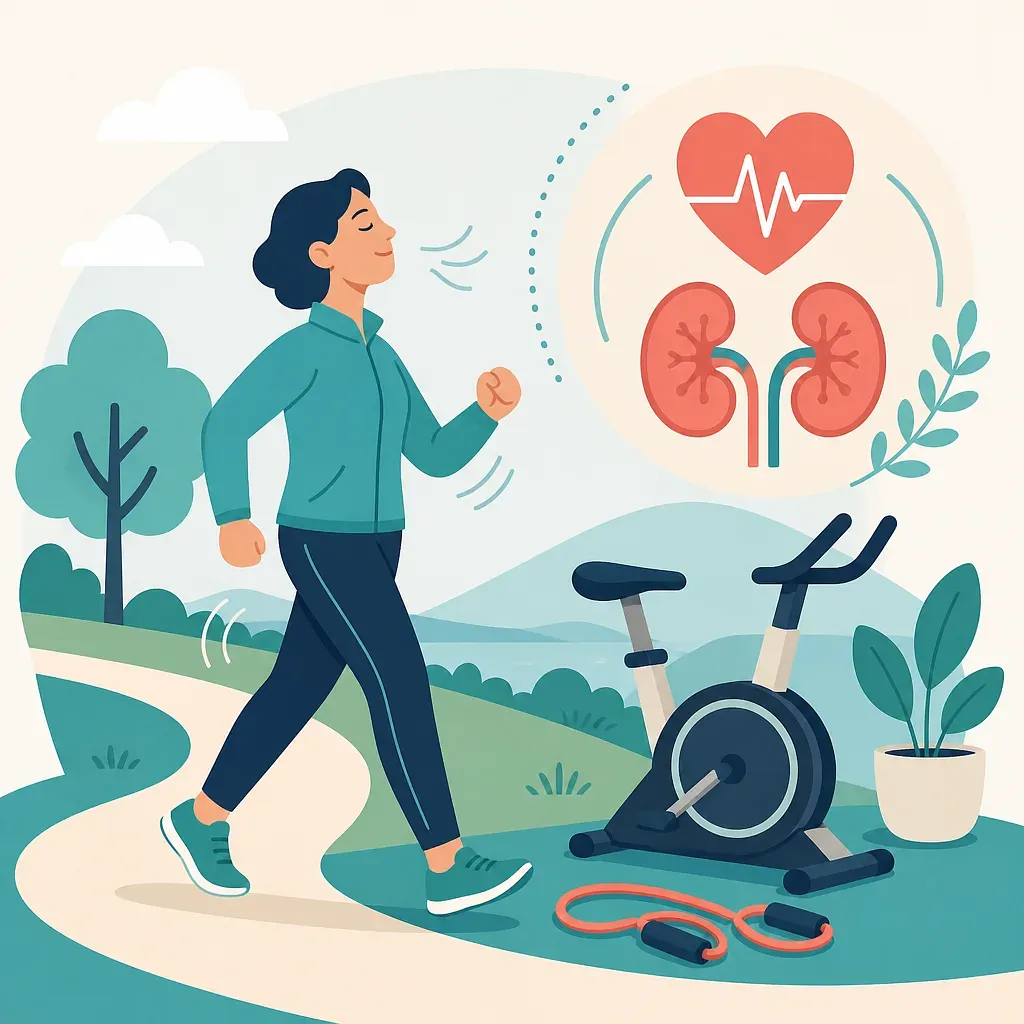
Walking and indoor exercise are shown alongside symbols of kidney and heart health.

Key points

  • For people with stable chronic kidney disease, regular physical activity tailored to their cardiovascular status and exercise capacity is generally recommended.
  • Moderate-intensity exercise can be understood as a level at which breathing becomes faster than usual, but you can still speak in short sentences.
  • Aerobic exercises such as brisk walking, stationary cycling, and swimming can be combined with light strength training according to your fitness level.
  • Exercise can improve fitness and quality of life, but it should not be regarded as a treatment that directly restores damaged kidneys or definitively prevents a decline in glomerular filtration rate.
  • If you experience chest pain, severe shortness of breath, dizziness that makes you feel as though you may faint, unusual muscle pain, or dark brown urine, stop exercising and seek medical care.

The idea that people with weak kidneys should never exercise is generally incorrect. For patients with stable chronic kidney disease, regular physical activity can help reduce physical deconditioning and sedentary behavior while improving cardiovascular health, walking ability, daily functioning, and quality of life.

However, the same exercise is not suitable for every patient. In addition to the stage of kidney disease, heart disease, blood pressure, anemia, diabetes, bone and joint health, dialysis status, and recent symptoms must all be considered.

Myths and Facts

Category Description
Myth Exercise must always be avoided if the kidneys are weak.
Fact If the condition is stable, regular exercise tailored to the individual’s abilities is often recommended.
Statement requiring caution It cannot be stated with certainty that exercise directly repairs damaged kidneys or necessarily preserves kidney function for a long time.
Primary goals To improve fitness, cardiovascular health, muscle strength, mobility, and quality of life while reducing prolonged sitting.

Test results do not always improve after exercise. Strenuous exercise, muscle damage, or dehydration can temporarily raise serum creatinine and affect the estimated glomerular filtration rate. If you engaged in unusually strenuous exercise before a test, inform your healthcare provider.

How Much Exercise Is Appropriate?

KDIGO’s chronic kidney disease guideline recommends at least 150 cumulative minutes of moderate-intensity physical activity per week, as permitted by the patient’s cardiovascular condition and physical capacity. However, there is no need to reach 150 minutes from the outset. If your fitness level is low or you have not exercised for a long time, it is safer to start with 5–10 minutes and gradually increase the duration and frequency.

Checking Intensity With the Talk Test

  • Light intensity: You can talk and sing comfortably.
  • Moderate intensity: Your breathing becomes faster, but you can talk in short sentences.
  • High intensity: You need to catch your breath after speaking a few words.

Therefore, it is difficult to define appropriate exercise simply as “exercise that does not make you short of breath at all.” You may become slightly short of breath at moderate intensity, but you should not experience uncontrollable breathing difficulty. If you have heart disease or take medication that affects your heart rate, it is better to prioritize perceived exertion and your healthcare provider’s guidance over a target heart rate.

Exercise type Examples How to start Main precautions
Aerobic exercise Brisk walking, stationary cycling, swimming, low-intensity aerobics Start with 5–10 minutes about 3 times per week and gradually increase Stop if you experience dizziness, chest pain, or excessive shortness of breath
Strength training Standing up from a chair, resistance bands, light dumbbells Exercise major muscle groups about 2 nonconsecutive days per week Do not hold your breath or attempt excessively heavy weights
Flexibility and balance exercises Gentle stretching, heel raises, balance exercises Perform before or after aerobic exercise or at a separate time If you are at risk of falling, use a wall or chair for support
Daily activities Walking short distances, light housework, breaking up prolonged sitting Move within your ability every 30–60 minutes Reduce the intensity and duration on days of severe fatigue

Before exercising, warm up at a low intensity. When finishing, do not stop suddenly; gradually reduce your pace.

Should All Strenuous Exercise Be Avoided?

Activities such as marathons, high-intensity soccer, or rugby are not absolutely prohibited for every patient with chronic kidney disease. However, prolonged high-intensity exercise can increase the risk of dehydration, elevated body temperature, electrolyte changes, and muscle damage. Rhabdomyolysis caused by severe muscle damage can lead to acute kidney injury.

It is safer to obtain an evaluation from a healthcare provider before starting high-intensity exercise if any of the following apply:

  • Advanced chronic kidney disease or a recent rapid change in kidney function
  • Uncontrolled high blood pressure, arrhythmia, angina, or heart failure
  • Severe anemia, edema, electrolyte abnormalities, or marked fatigue
  • Fainting, chest pain, or abnormal shortness of breath during exercise
  • Currently receiving dialysis or recovering from kidney transplant surgery

Because a transplanted kidney may be relatively exposed to external impact, kidney transplant recipients should consult their transplant care team about participating in contact sports such as rugby or martial arts.

Exercise Precautions for Dialysis Patients

Dialysis patients can also benefit from exercise if their condition is stable, but the type of dialysis and vascular access must be considered.

  • If you have an arteriovenous fistula for hemodialysis, consult your healthcare provider before performing exercises that involve repeatedly lifting heavy weights with that arm.
  • Postpone exercise if you experience dizziness, low blood pressure, or severe fatigue immediately after dialysis.
  • Some healthcare facilities offer supervised low-intensity cycling during dialysis, but do not begin this on your own.
  • Peritoneal dialysis patients should choose exercise types based on abdominal discomfort, hernia risk, and how securely the catheter is fixed.
  • Follow the fluid restriction set by your dialysis care team rather than general exercise hydration guidelines.

Prioritize Individual Fluid and Dietary Prescriptions

The general advice to drink plenty of water while exercising does not apply to every patient with chronic kidney disease. Fluid restriction may be necessary for people with edema, heart failure, or hyponatremia, or those receiving dialysis. Conversely, separate adjustments may be needed when exercising in hot conditions or when there is a high risk of dehydration.

Sports drinks may also contain sodium, potassium, and sugar, so do not consume large amounts on your own. Protein supplements, creatine, pre-workout supplements, and some herbal products can also affect kidney disease treatment and test results, so it is safer to consult a healthcare provider or clinical dietitian.

Signs That You Should Postpone or Stop Exercise Immediately

In the following situations, do not begin exercise or stop immediately and seek evaluation from a healthcare provider as appropriate:

  • Chest pain or pressure
  • Severe shortness of breath that does not subside with rest
  • Fainting or dizziness that makes you feel as though you may collapse
  • Sudden irregular heartbeat or extreme palpitations
  • Unusually severe muscle pain, muscle weakness, or muscle swelling
  • Dark brown or cola-colored urine
  • An acute illness that can cause dehydration, such as fever, vomiting, or diarrhea
  • Suddenly worsening edema or rapid weight gain
  • Bleeding, pain, swelling, or unusual changes at the dialysis vascular access site

Dark brown urine and severe muscle pain may be signs of rhabdomyolysis and require prompt medical attention. If blood or protein in the urine recurs or persists for a long time after exercise, it should also be evaluated rather than dismissed as a simple response to exercise.

How to Build a Safe Routine

  1. Tell your healthcare provider about your current activity level and any symptoms you experience during exercise.
  2. Start with 5–10 minutes of familiar, low-impact exercise such as walking.
  3. Increase only either the duration or frequency a little at a time each week.
  4. At moderate intensity, check whether you can still talk, and lower the intensity if you develop severe shortness of breath.
  5. Record your exercise duration, fatigue, dizziness, blood pressure, and recovery.
  6. Readjust your plan if you develop an acute illness, your prescription changes, or your dialysis schedule changes.

Exercise does not replace medication, blood pressure and blood sugar management, smoking cessation, nutritional management, or regular medical care. The goal is not to achieve an excessive performance target but to consistently maintain a level of activity suited to your condition.

Sign-in required

Sign in with your Google account to like, comment, and save highlights.

Images

Walking and indoor exercise are shown alongside symbols of kidney and heart health.
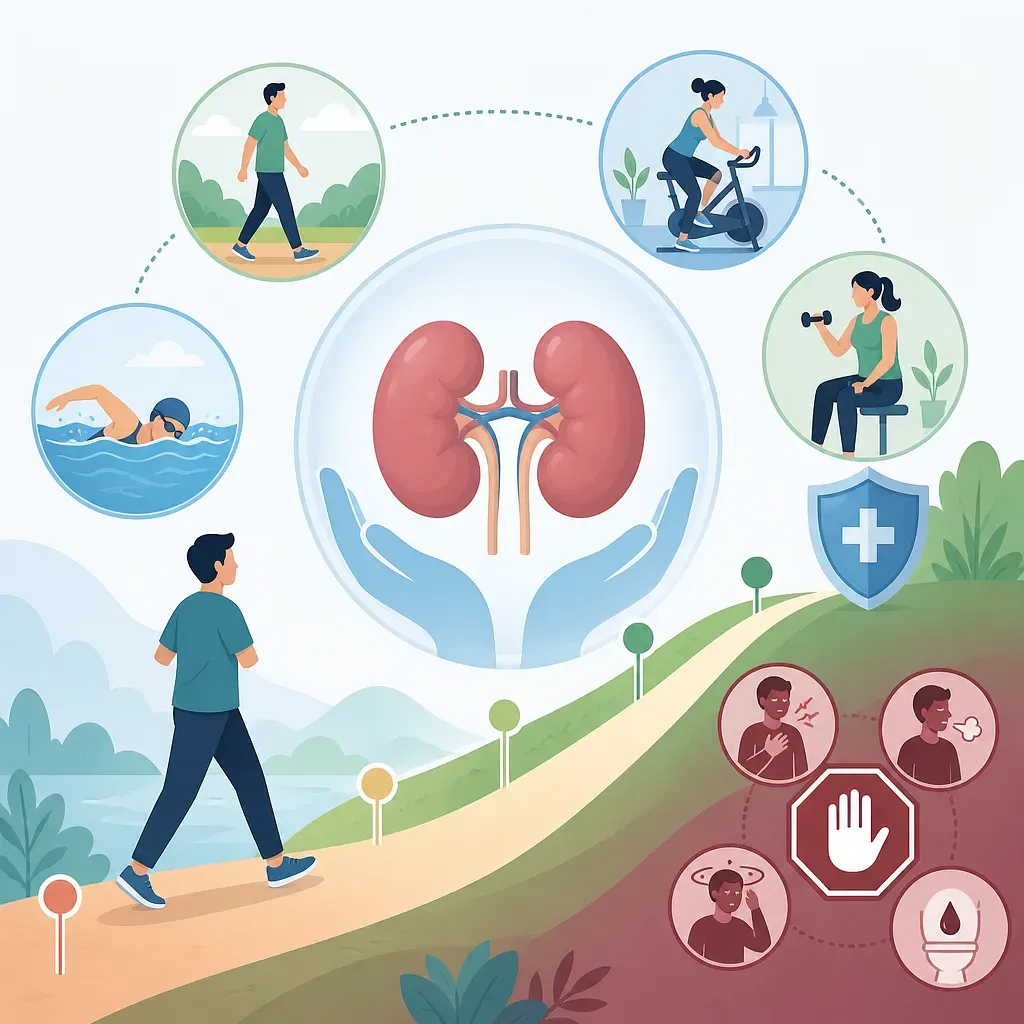
The illustration shows exercise options for chronic kidney disease and symptoms that signal when to stop.

FAQ

Do I need to stop exercising if my kidneys are weak?

It is not always necessary to rest. Regular physical activity tailored to the individual's abilities is generally recommended for patients with stable chronic kidney disease. However, if there is an acute illness, uncontrolled heart disease, severe anemia, or a recent decline in kidney function, an evaluation by a healthcare professional is needed first.

Can exercise restore kidney function?

Exercise can help improve physical fitness, cardiovascular health, walking ability, and quality of life, but it is not a treatment that directly restores damaged kidneys. It also cannot be said with certainty that it slows the decline in kidney function, so prescribed treatment and regular checkups should be continued.

What is the most generally suitable exercise for patients with chronic kidney disease?

Aerobic exercises whose intensity is easy to adjust, such as brisk walking, stationary cycling, and swimming, are commonly chosen. Light strength training and balance exercises may also help, and it is best to start with short sessions of 5–10 minutes.

How can I assess exercise intensity?

At moderate intensity, breathing becomes faster than usual, but you can still speak in short sentences. If you are so short of breath that it is difficult to say even a few words, the intensity is high. If you have heart disease or take medication that affects your heart rate, you should prioritize your healthcare professional's guidance.

Are marathons or soccer always prohibited?

They are not absolutely prohibited for all patients. However, prolonged high-intensity exercise can increase the risk of dehydration, elevated body temperature, and muscle damage, so people with advanced kidney disease or cardiovascular disease need an evaluation before participating. Transplant recipients should also assess the risk of injury from contact sports.

Can I exercise on dialysis days?

It may be possible depending on the patient's condition and the healthcare facility's management practices. However, exercise should be postponed if low blood pressure, dizziness, or severe fatigue occurs immediately after dialysis. The type of exercise should be coordinated with the dialysis care team to avoid straining the vascular access or peritoneal dialysis catheter.

Should I drink a lot of water or sports drinks while exercising?

Patients with chronic kidney disease or those receiving dialysis may not be able to follow general hydration advice as is. Whether fluids should be restricted and how much is allowed should follow the healthcare professional's prescription, and it is best not to consume large amounts of sports drinks containing sodium, potassium, or sugar without guidance.

What symptoms require me to stop exercising immediately?

Exercise should be stopped if chest pain, severe shortness of breath, dizziness that feels like you may faint, abnormal palpitations, severe muscle pain, or muscle weakness occurs. In particular, if dark brown urine is also present, prompt medical attention is needed because of the possibility of rhabdomyolysis.

Can patients with kidney disease take protein or creatine supplements?

It is safer not to take them without guidance. Protein intake targets vary depending on the stage of kidney disease and nutritional status, and creatine and various exercise supplements can affect test results or treatment. You should consult a nephrology healthcare professional or clinical dietitian before taking them.

Sources

Data formats

This content is available in several machine-friendly formats.

Data-only languages (machine translated, files only)

Indonesian JSON MD Portuguese JSON MD Chinese (Traditional) JSON MD Deutsch JSON MD

Reuse & AI usage

Search indexing and AI citation with attribution are welcome. See the license policy for details.

CC BY · License

Loading…

Loading…

Related content