Skip to content
Injoys
Policy Guide 🇺🇸 United States

This content applies specifically to United States.

U.S. Flood Insurance Review Guide Before the Peak of the 2026 Atlantic Hurricane Season

This guide compares the roles and limitations of standard homeowners insurance, NFIP flood insurance, and FEMA disaster assistance ahead of the period of concentrated Atlantic hurricane activity in 2026. It also explains the standard 30-day waiting period for new NFIP policies, how to assess risk outside high-risk zones, and the requirement to maintain insurance for properties that previously received FEMA assistance.

Views 121 12 min read KO EN JA ES

Listen or read this article

Listen, or read the text only.

U.S. Flood Insurance Review Guide Before the Peak of the 2026 Atlantic Hurricane Season

Kokoro 82M AI-generated voice

0:00 17:10

Download audio

File name
us-flood-insurance-nfip-fema-hurricane-season-2026-en.mp3
Format
MP3 (audio/mpeg)
Duration
17:10
File size
11.8 MB
Engine
Kokoro 82M

This audio was generated by AI.

You may download and use it freely for personal use.

U.S. Flood Insurance Review Guide Before the Peak of the 2026 Atlantic Hurricane Season

13 min read

U.S. Flood Insurance Review Guide Before the Peak of the 2026 Atlantic Hurricane Season
This guide compares the roles and limitations of standard homeowners insurance, NFIP flood insurance, and FEMA disaster assistance ahead of the period of concentrated Atlantic hurricane activity in 2026. It also explains the standard 30-day waiting period for new NFIP policies, how to assess risk outside high-risk zones, and the requirement to maintain insurance for properties that previously received FEMA assistance.
NOAA's seasonal outlook presents probabilities for overall Atlantic activity; it does not predict landfall in a specific area or the likelihood of an individual home flooding.
Standard U.S. homeowners insurance does not cover flood damage caused by surface water entering a building, so separate flood insurance may be necessary.
New NFIP policies are generally subject to a 30-day waiting period, with limited exceptions for loan transactions, flood map changes, and other circumstances.
Being outside a Special Flood Hazard Area does not mean there is no risk; rainfall, drainage, storm surge, terrain, and past flooding records should all be reviewed.
FEMA disaster assistance is limited aid contingent on a presidential disaster declaration and eligibility review, and it does not replace insurance payouts.
The 2026 Atlantic hurricane season runs from June 1 through November 30. NOAA’s seasonal outlook indicates a relatively higher likelihood of below-normal overall activity, but this does not mean that any coast or home is safe. Tropical cyclone activity in the Atlantic is typically concentrated between August and October, so insurance coverage and effective dates should be reviewed in early August.
Why Seasonal Outlooks Cannot Predict Landfall Risk for Individual Areas
NOAA’s hurricane seasonal outlook expresses, as probabilities, the overall expected level of activity for named storms, hurricanes, and major hurricanes across the entire Atlantic basin. It is not designed to predict the number of landfalls in a specific city or the likelihood that an individual home will flood.
Even if the total number of storms during the season is low, a single landfall can cause severe damage in a particular area. Actual tracks and intensity depend on atmospheric and oceanic conditions after a storm forms, and reliable local information should be obtained through short-term forecasts and local government evacuation guidance.
A seasonal outlook should not be used as the sole basis for determining insurance needs for the following reasons.
· The number of hurricanes and the number of landfalls in a specific area are not the same metric. · Tropical storms and weak hurricanes can also produce heavy rainfall and storm surge. · River flooding and flooding caused by inadequate drainage can occur inland, far from the storm’s center. · Because of insurance waiting periods, coverage purchased after a storm approaches may not cover the resulting damage.
Comparison of Homeowners Insurance, NFIP Flood Insurance, and FEMA Assistance
The three systems differ in eligibility requirements, reasons for payment, and purpose.
Category | Standard homeowners insurance | NFIP flood insurance | FEMA individual disaster assistance Basic nature | Property insurance contract with a private insurer | Flood insurance operated by the federal government that may be sold and administered by insurers | Limited government assistance provided after a disaster Flood coverage | Flooding caused by surface-water overflow is generally excluded | Covered damage to insured buildings and contents caused by a flood as defined in the policy | Review is possible only if there is a presidential major disaster declaration, approval of individual assistance, and other required conditions Payment criteria | Contracted perils, limits, deductibles, and exclusions | Purchased building and contents limits, loss adjustment, and policy terms | Program requirements such as the applicant’s needs, insurance compensation, and habitability Enrollment or application timing | Purchased before a loss | Generally must be purchased before a loss and pass the waiting period | Application after the disaster occurs and government approval is granted Full restoration coverage | Depends on the scope of the contract | Subject to limits and policy restrictions | Not a program that restores all losses to their original condition Duplicate payment | Adjusted according to other insurance and contract terms | No duplicate compensation for the same loss | Does not provide duplicate assistance for the same loss covered by insurance
FEMA assistance may include not only grants that do not have to be repaid but also separately offered disaster loans. Loans must be repaid, so not all FEMA assistance should be understood as free grant funding.
What to Check in Standard Homeowners Insurance
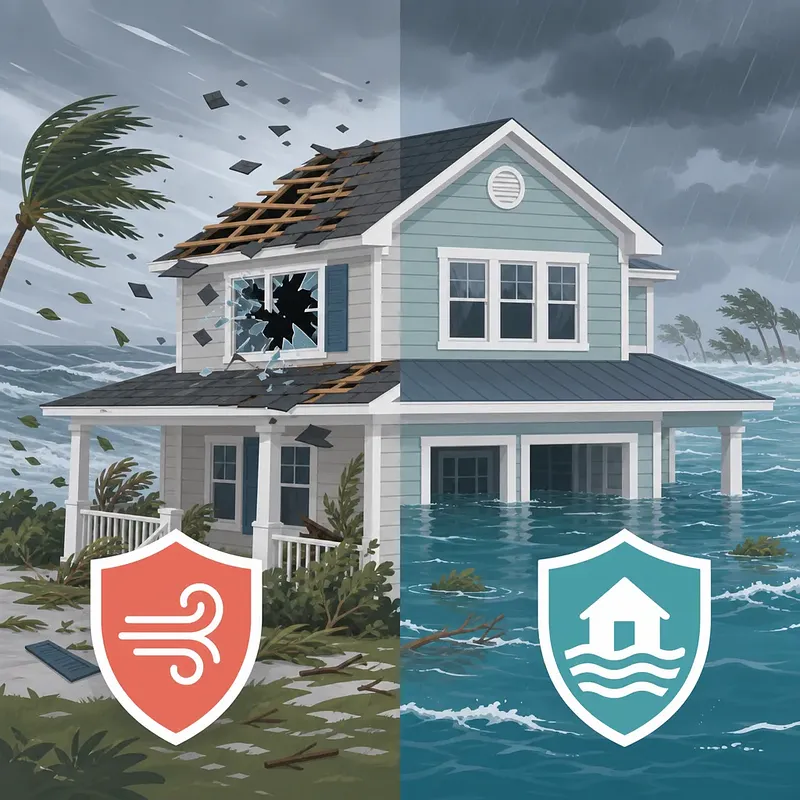
Standard homeowners insurance in the United States generally does not cover flooding caused by external water flowing over the ground, such as river overflow, surface water swollen by heavy rain, or storm surge. By contrast, damage from rainwater entering after wind damages the roof may be covered, depending on the policy terms.
The following should be checked in the insurance policy and coverage summary.
· Whether flood or surface-water damage is explicitly excluded · Whether a separate deductible applies to hurricane, storm, or wind damage · Whether sewer backup coverage is standard coverage or an endorsement · The conditions and limits for temporary living expenses or loss-of-use coverage · Whether garages, detached structures, fences, swimming pools, and landscaping are covered · Whether roofs and personal property are valued based on replacement cost or depreciated actual cash value
When wind damage and flood damage occur at the same time, the process of distinguishing the causes of loss is important. Once it is safe after the damage, it is advisable to document the inside and outside of the building with photographs and videos and retain emergency repair receipts and an inventory of damaged items.
NFIP Flood Insurance Coverage Structure
NFIP is a federal flood insurance program available to owners, renters, and others associated with eligible buildings in participating communities. Insurance may be handled through private insurers, but coverage terms follow NFIP rules and policies.
Buildings and Contents Are Covered Separately
Building coverage and contents coverage may not automatically be bundled together, so enrollment status and limits should be checked separately for each.
· Building coverage: Policy-defined building components such as foundations, walls, stairs, electrical and plumbing systems, and central heating and cooling equipment · Contents coverage: Covered movable property owned by the policyholder, such as furniture, clothing, and electronics · Renters: Coverage for personally owned contents is more important than coverage for the building itself · Condo owners: Any gap between the condo association’s building insurance and insurance for the individual unit and contents should be checked
The maximum NFIP coverage limits for a typical residential building with 1∼4 units are $250,000 for the building and $100,000 for contents. The actual payment varies according to the purchased limits, deductible, amount of loss, ownership status, and policy terms.
NFIP Does Not Cover Every Cost
NFIP generally does not cover additional living expenses or temporary lodging costs. Coverage is also significantly restricted for items in basements and areas below ground level, while vehicles, currency, valuable documents, and most outdoor property may be excluded or subject to limitations. Moisture and mold damage may also be excluded depending on whether the policyholder could reasonably have prevented it.
Therefore, the following should be reviewed in addition to comparing coverage amounts.
· Whether building and contents coverage has been purchased and the limits for each · The deductibles that apply separately to the building and contents · Restrictions on basements, garages, detached structures, and outdoor facilities · Whether losses are valued at replacement cost or actual cash value · Costs that must be borne when temporary living expenses are not covered
The 30-Day Waiting Period for New NFIP Policies
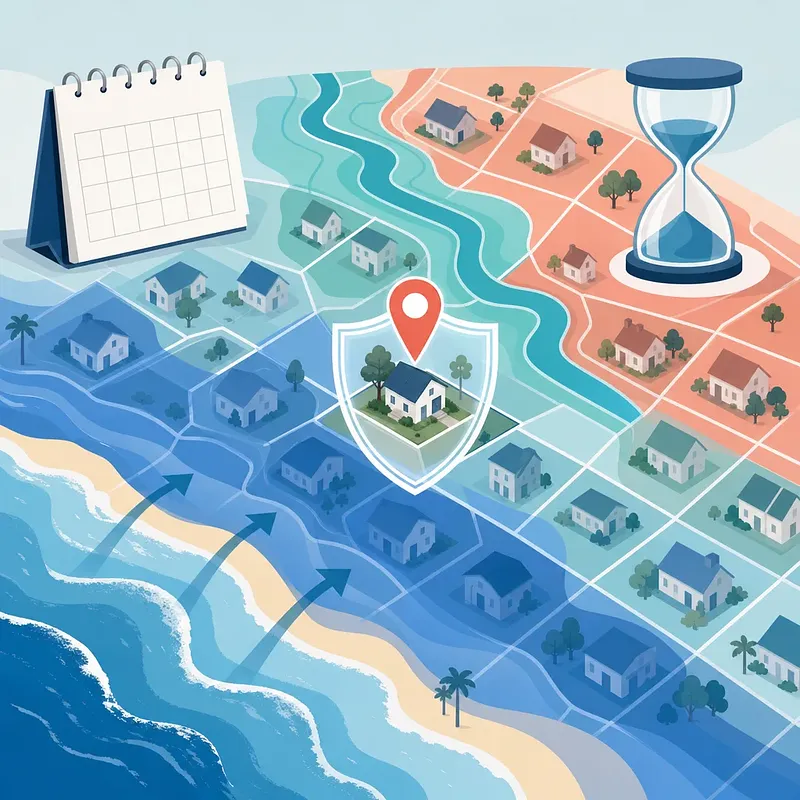
A new NFIP policy generally takes effect after a 30-day waiting period following submission of the application and payment of the premium. Flood losses occurring during the waiting period are generally not covered. This is why waiting until a storm is forecast or a hurricane watch is issued is risky.
Common exceptions include the following, but applicability and the exact effective date should be confirmed with the insurer or NFIP sales representative.
· When insurance is purchased in direct connection with the origination, increase, extension, or renewal of a secured real estate loan · When a flood map revision newly places a building in a Special Flood Hazard Area and coverage is purchased within the prescribed period · When the amount of coverage is increased in an approved manner during the renewal process · When an exception under NFIP rules applies to flooding caused or worsened by a wildfire on federal land
Receiving a premium quote alone does not start coverage. The application completion date, premium payment date, and policy effective date should be confirmed in writing.
How to Assess the Need Outside High-Risk Flood Zones
Special Flood Hazard Areas on FEMA flood maps generally represent areas with an annual flood probability of at least 1%. They are often called “100-year flood zones,” but this does not mean they flood only once every 100 years. The risk exists again each year, and cumulative exposure increases with longer ownership.
An area outside a high-risk zone is not a no-risk zone. Maps represent the statistical risk from specified flood sources and may not fully reflect recent development, aging drainage systems, localized torrential rainfall, or topographical changes since the maps were created.
The following information should be considered together when determining the need for insurance.
· The zone and base flood elevation shown on FEMA flood maps · The actual elevation of the building floor and major equipment · Distance from rivers, coastlines, drainage channels, and low-lying areas · Whether the area’s primary risk is storm surge, inland flooding, or river overflow · Local government flood history and stormwater drainage plans · Past flooding and insurance claim information provided by the seller · The mortgage lender’s insurance requirements · Premiums, deductibles, estimated maximum loss, and emergency funds
Flood insurance may be required for secured real estate located in a Special Flood Hazard Area under federal regulations or lender policies. Outside such zones, a lender may require insurance even when it is not legally mandatory, and the fact that coverage is optional does not mean there is no risk.
Checking Eligibility for NFIP Coverage
Eligibility for NFIP coverage depends on whether the property is located in an NFIP-participating community and whether the building and applicant meet program requirements. Renters, as well as homeowners, may consider insurance for contents they own.
The following information should be gathered.
· The exact address of the property to be insured · The building’s use and occupancy type · Year of construction, number of floors, foundation, and below-ground-space information · Mortgage lender information · Desired building and contents limits and deductibles · Existing flood insurance policies and past claim information
Private flood insurance may also be an option. However, coverage limits, waiting periods, temporary living expenses, restrictions on below-ground spaces, renewal terms, and lender acceptance should be compared with NFIP using the same criteria.
Differences Between FEMA Disaster Assistance and Insurance Payments
FEMA individual disaster assistance is not an insurance payment issued automatically. It requires a presidential major disaster declaration, approval of individual assistance for the affected area, compliance with application deadlines, and an individual eligibility review. If the same loss is covered by insurance, FEMA does not provide duplicate assistance for it.
Eligibility for an insurance payment is determined according to the contract executed before the loss and the purchased coverage limits. FEMA assistance is a limited program intended to support basic housing safety and essential needs, so it should not be assumed that it will pay enough to fully restore a home to its pre-disaster condition or replace all personal property.
If a disaster occurs, respond in the following order.
· Prioritize life and safety and follow local government evacuation and return guidance. · Report the loss promptly to the insurer and obtain a claim number. · Within safe limits, obtain photographs, videos, an inventory of items, and receipts. · Check through official channels whether the disaster has been approved for FEMA individual assistance. · When applying to FEMA, accurately report insurance coverage and expected insurance payments. · Retain both insurance denial or settlement documents and the FEMA decision letter.
Flood Insurance Maintenance Requirements for Properties That Previously Received FEMA Assistance
If FEMA assistance was received for insurable property damaged by flooding, federal law may impose a requirement to purchase and continuously maintain flood insurance. Homes or personal property in Special Flood Hazard Areas, in particular, may be linked to eligibility for future assistance.
If insurance is discontinued for a property subject to a maintenance requirement, federal disaster assistance for the same type of property damage may be denied after a future flood. This obligation may also transfer to the new owner when the home is sold, so the buyer should be informed and provided with supporting documentation.
If there is a history of prior assistance, check the following documents.
· The FEMA decision letter and conditions of assistance · The current flood insurance policy and renewal date · If a Group Flood Insurance Policy was provided, its expiration date and whether conversion to an individual policy is necessary · Disclosures regarding flood insurance maintenance in property sale documents · Records of coverage lapses or cancellation
If it is unclear whether the obligation applies, contact the number listed in the FEMA decision letter and the current insurer. When purchasing a property whose previous owner may have received assistance, it is prudent to verify the maintenance obligation and insurance history through the seller, insurer, and lender.
Final Checklist Before Peak Hurricane Season
· Check the homeowners insurance policy for flood exclusions and wind-damage deductibles. · Check building and contents coverage separately under NFIP or private flood insurance. · For new coverage, confirm the actual effective date rather than the application date. · Identify coverage gaps for below-ground spaces, temporary living expenses, vehicles, and outdoor property. · Review not only the flood zone but also topography, drainage, storm surge, and past flooding records. · Store a photographic and video inventory of the home’s interior and major possessions in a secure online location. · Keep insurer, lender, local government, and FEMA contact information available offline as well. · If FEMA assistance was received in the past, confirm the flood insurance maintenance requirement and renewal date.
Even if the seasonal outlook shows the possibility of below-normal activity, insurance decisions should be based on the risk of the individual property, financial capacity to absorb losses, and coverage gaps. The most important time is not after a storm forms, but before it arrives, allowing for the waiting period so coverage can take effect.
0:00 0:00
1 / 62

Download text

File name
us-flood-insurance-nfip-fema-hurricane-season-2026-en.txt
Format
TXT (text/plain)
Paragraphs
62

Downloads exactly what you see as a text file.

Please cite the source when quoting.

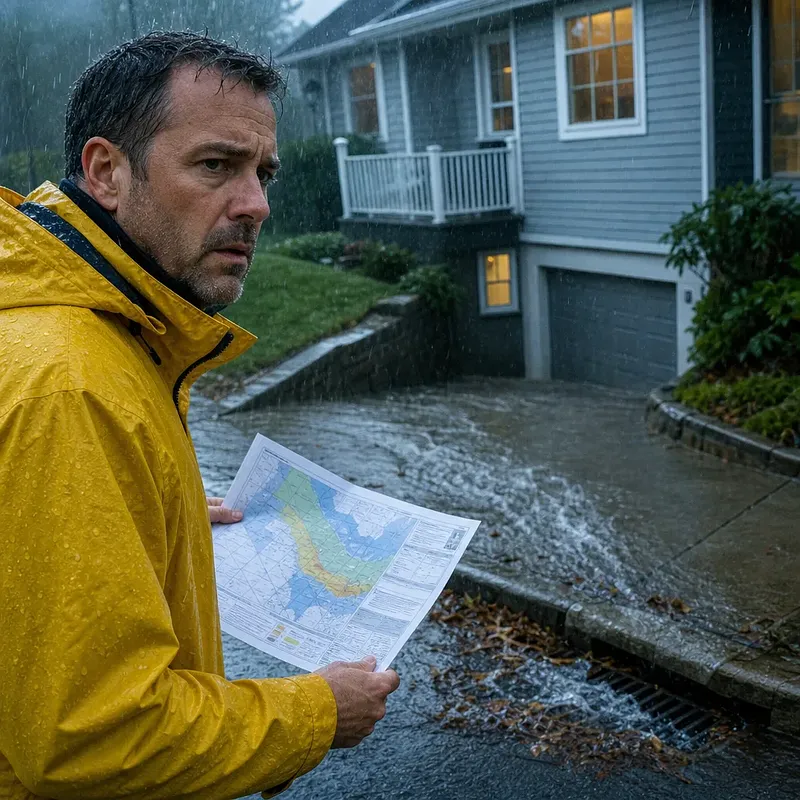
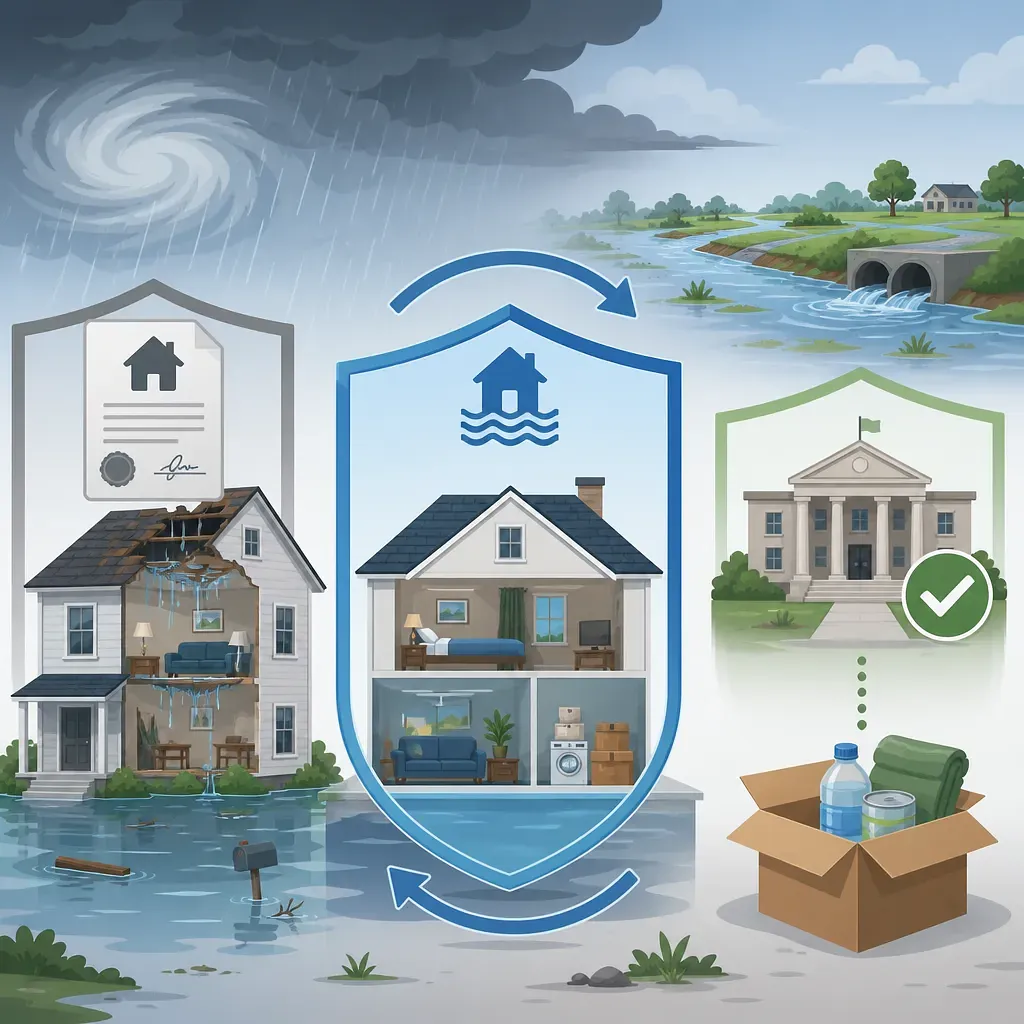
The illustration highlights flood risk and the need to review coverage before peak hurricane season.

Key points

  • NOAA's seasonal outlook presents probabilities for overall Atlantic activity; it does not predict landfall in a specific area or the likelihood of an individual home flooding.
  • Standard U.S. homeowners insurance does not cover flood damage caused by surface water entering a building, so separate flood insurance may be necessary.
  • New NFIP policies are generally subject to a 30-day waiting period, with limited exceptions for loan transactions, flood map changes, and other circumstances.
  • Being outside a Special Flood Hazard Area does not mean there is no risk; rainfall, drainage, storm surge, terrain, and past flooding records should all be reviewed.
  • FEMA disaster assistance is limited aid contingent on a presidential disaster declaration and eligibility review, and it does not replace insurance payouts.

The 2026 Atlantic hurricane season runs from June 1 through November 30. NOAA’s seasonal outlook indicates a relatively higher likelihood of below-normal overall activity, but this does not mean that any coast or home is safe. Tropical cyclone activity in the Atlantic is typically concentrated between August and October, so insurance coverage and effective dates should be reviewed in early August.

Why Seasonal Outlooks Cannot Predict Landfall Risk for Individual Areas

NOAA’s hurricane seasonal outlook expresses, as probabilities, the overall expected level of activity for named storms, hurricanes, and major hurricanes across the entire Atlantic basin. It is not designed to predict the number of landfalls in a specific city or the likelihood that an individual home will flood.

Even if the total number of storms during the season is low, a single landfall can cause severe damage in a particular area. Actual tracks and intensity depend on atmospheric and oceanic conditions after a storm forms, and reliable local information should be obtained through short-term forecasts and local government evacuation guidance.

A seasonal outlook should not be used as the sole basis for determining insurance needs for the following reasons.

  • The number of hurricanes and the number of landfalls in a specific area are not the same metric.
  • Tropical storms and weak hurricanes can also produce heavy rainfall and storm surge.
  • River flooding and flooding caused by inadequate drainage can occur inland, far from the storm’s center.
  • Because of insurance waiting periods, coverage purchased after a storm approaches may not cover the resulting damage.

Comparison of Homeowners Insurance, NFIP Flood Insurance, and FEMA Assistance

The three systems differ in eligibility requirements, reasons for payment, and purpose.

Category Standard homeowners insurance NFIP flood insurance FEMA individual disaster assistance
Basic nature Property insurance contract with a private insurer Flood insurance operated by the federal government that may be sold and administered by insurers Limited government assistance provided after a disaster
Flood coverage Flooding caused by surface-water overflow is generally excluded Covered damage to insured buildings and contents caused by a flood as defined in the policy Review is possible only if there is a presidential major disaster declaration, approval of individual assistance, and other required conditions
Payment criteria Contracted perils, limits, deductibles, and exclusions Purchased building and contents limits, loss adjustment, and policy terms Program requirements such as the applicant’s needs, insurance compensation, and habitability
Enrollment or application timing Purchased before a loss Generally must be purchased before a loss and pass the waiting period Application after the disaster occurs and government approval is granted
Full restoration coverage Depends on the scope of the contract Subject to limits and policy restrictions Not a program that restores all losses to their original condition
Duplicate payment Adjusted according to other insurance and contract terms No duplicate compensation for the same loss Does not provide duplicate assistance for the same loss covered by insurance

FEMA assistance may include not only grants that do not have to be repaid but also separately offered disaster loans. Loans must be repaid, so not all FEMA assistance should be understood as free grant funding.

What to Check in Standard Homeowners Insurance

Standard homeowners insurance in the United States generally does not cover flooding caused by external water flowing over the ground, such as river overflow, surface water swollen by heavy rain, or storm surge. By contrast, damage from rainwater entering after wind damages the roof may be covered, depending on the policy terms.

The following should be checked in the insurance policy and coverage summary.

  • Whether flood or surface-water damage is explicitly excluded
  • Whether a separate deductible applies to hurricane, storm, or wind damage
  • Whether sewer backup coverage is standard coverage or an endorsement
  • The conditions and limits for temporary living expenses or loss-of-use coverage
  • Whether garages, detached structures, fences, swimming pools, and landscaping are covered
  • Whether roofs and personal property are valued based on replacement cost or depreciated actual cash value

When wind damage and flood damage occur at the same time, the process of distinguishing the causes of loss is important. Once it is safe after the damage, it is advisable to document the inside and outside of the building with photographs and videos and retain emergency repair receipts and an inventory of damaged items.

NFIP Flood Insurance Coverage Structure

NFIP is a federal flood insurance program available to owners, renters, and others associated with eligible buildings in participating communities. Insurance may be handled through private insurers, but coverage terms follow NFIP rules and policies.

Buildings and Contents Are Covered Separately

Building coverage and contents coverage may not automatically be bundled together, so enrollment status and limits should be checked separately for each.

  • Building coverage: Policy-defined building components such as foundations, walls, stairs, electrical and plumbing systems, and central heating and cooling equipment
  • Contents coverage: Covered movable property owned by the policyholder, such as furniture, clothing, and electronics
  • Renters: Coverage for personally owned contents is more important than coverage for the building itself
  • Condo owners: Any gap between the condo association’s building insurance and insurance for the individual unit and contents should be checked

The maximum NFIP coverage limits for a typical residential building with 1∼4 units are $250,000 for the building and $100,000 for contents. The actual payment varies according to the purchased limits, deductible, amount of loss, ownership status, and policy terms.

NFIP Does Not Cover Every Cost

NFIP generally does not cover additional living expenses or temporary lodging costs. Coverage is also significantly restricted for items in basements and areas below ground level, while vehicles, currency, valuable documents, and most outdoor property may be excluded or subject to limitations. Moisture and mold damage may also be excluded depending on whether the policyholder could reasonably have prevented it.

Therefore, the following should be reviewed in addition to comparing coverage amounts.

  1. Whether building and contents coverage has been purchased and the limits for each
  2. The deductibles that apply separately to the building and contents
  3. Restrictions on basements, garages, detached structures, and outdoor facilities
  4. Whether losses are valued at replacement cost or actual cash value
  5. Costs that must be borne when temporary living expenses are not covered

The 30-Day Waiting Period for New NFIP Policies

A new NFIP policy generally takes effect after a 30-day waiting period following submission of the application and payment of the premium. Flood losses occurring during the waiting period are generally not covered. This is why waiting until a storm is forecast or a hurricane watch is issued is risky.

Common exceptions include the following, but applicability and the exact effective date should be confirmed with the insurer or NFIP sales representative.

  • When insurance is purchased in direct connection with the origination, increase, extension, or renewal of a secured real estate loan
  • When a flood map revision newly places a building in a Special Flood Hazard Area and coverage is purchased within the prescribed period
  • When the amount of coverage is increased in an approved manner during the renewal process
  • When an exception under NFIP rules applies to flooding caused or worsened by a wildfire on federal land

Receiving a premium quote alone does not start coverage. The application completion date, premium payment date, and policy effective date should be confirmed in writing.


How to Assess the Need Outside High-Risk Flood Zones

Special Flood Hazard Areas on FEMA flood maps generally represent areas with an annual flood probability of at least 1%. They are often called “100-year flood zones,” but this does not mean they flood only once every 100 years. The risk exists again each year, and cumulative exposure increases with longer ownership.

An area outside a high-risk zone is not a no-risk zone. Maps represent the statistical risk from specified flood sources and may not fully reflect recent development, aging drainage systems, localized torrential rainfall, or topographical changes since the maps were created.

The following information should be considered together when determining the need for insurance.

  • The zone and base flood elevation shown on FEMA flood maps
  • The actual elevation of the building floor and major equipment
  • Distance from rivers, coastlines, drainage channels, and low-lying areas
  • Whether the area’s primary risk is storm surge, inland flooding, or river overflow
  • Local government flood history and stormwater drainage plans
  • Past flooding and insurance claim information provided by the seller
  • The mortgage lender’s insurance requirements
  • Premiums, deductibles, estimated maximum loss, and emergency funds

Flood insurance may be required for secured real estate located in a Special Flood Hazard Area under federal regulations or lender policies. Outside such zones, a lender may require insurance even when it is not legally mandatory, and the fact that coverage is optional does not mean there is no risk.

Checking Eligibility for NFIP Coverage

Eligibility for NFIP coverage depends on whether the property is located in an NFIP-participating community and whether the building and applicant meet program requirements. Renters, as well as homeowners, may consider insurance for contents they own.

The following information should be gathered.

  • The exact address of the property to be insured
  • The building’s use and occupancy type
  • Year of construction, number of floors, foundation, and below-ground-space information
  • Mortgage lender information
  • Desired building and contents limits and deductibles
  • Existing flood insurance policies and past claim information

Private flood insurance may also be an option. However, coverage limits, waiting periods, temporary living expenses, restrictions on below-ground spaces, renewal terms, and lender acceptance should be compared with NFIP using the same criteria.

Differences Between FEMA Disaster Assistance and Insurance Payments

FEMA individual disaster assistance is not an insurance payment issued automatically. It requires a presidential major disaster declaration, approval of individual assistance for the affected area, compliance with application deadlines, and an individual eligibility review. If the same loss is covered by insurance, FEMA does not provide duplicate assistance for it.

Eligibility for an insurance payment is determined according to the contract executed before the loss and the purchased coverage limits. FEMA assistance is a limited program intended to support basic housing safety and essential needs, so it should not be assumed that it will pay enough to fully restore a home to its pre-disaster condition or replace all personal property.

If a disaster occurs, respond in the following order.

  1. Prioritize life and safety and follow local government evacuation and return guidance.
  2. Report the loss promptly to the insurer and obtain a claim number.
  3. Within safe limits, obtain photographs, videos, an inventory of items, and receipts.
  4. Check through official channels whether the disaster has been approved for FEMA individual assistance.
  5. When applying to FEMA, accurately report insurance coverage and expected insurance payments.
  6. Retain both insurance denial or settlement documents and the FEMA decision letter.

Flood Insurance Maintenance Requirements for Properties That Previously Received FEMA Assistance

If FEMA assistance was received for insurable property damaged by flooding, federal law may impose a requirement to purchase and continuously maintain flood insurance. Homes or personal property in Special Flood Hazard Areas, in particular, may be linked to eligibility for future assistance.

If insurance is discontinued for a property subject to a maintenance requirement, federal disaster assistance for the same type of property damage may be denied after a future flood. This obligation may also transfer to the new owner when the home is sold, so the buyer should be informed and provided with supporting documentation.

If there is a history of prior assistance, check the following documents.

  • The FEMA decision letter and conditions of assistance
  • The current flood insurance policy and renewal date
  • If a Group Flood Insurance Policy was provided, its expiration date and whether conversion to an individual policy is necessary
  • Disclosures regarding flood insurance maintenance in property sale documents
  • Records of coverage lapses or cancellation

If it is unclear whether the obligation applies, contact the number listed in the FEMA decision letter and the current insurer. When purchasing a property whose previous owner may have received assistance, it is prudent to verify the maintenance obligation and insurance history through the seller, insurer, and lender.

Final Checklist Before Peak Hurricane Season

  • Check the homeowners insurance policy for flood exclusions and wind-damage deductibles.
  • Check building and contents coverage separately under NFIP or private flood insurance.
  • For new coverage, confirm the actual effective date rather than the application date.
  • Identify coverage gaps for below-ground spaces, temporary living expenses, vehicles, and outdoor property.
  • Review not only the flood zone but also topography, drainage, storm surge, and past flooding records.
  • Store a photographic and video inventory of the home’s interior and major possessions in a secure online location.
  • Keep insurer, lender, local government, and FEMA contact information available offline as well.
  • If FEMA assistance was received in the past, confirm the flood insurance maintenance requirement and renewal date.

Even if the seasonal outlook shows the possibility of below-normal activity, insurance decisions should be based on the risk of the individual property, financial capacity to absorb losses, and coverage gaps. The most important time is not after a storm forms, but before it arrives, allowing for the waiting period so coverage can take effect.

See whether you qualify

Check NFIP Eligibility

Owners or renters of eligible properties in NFIP-participating communities can check whether they are eligible to enroll. Have the property address, building use, desired building and contents coverage, and existing insurance information ready, and be sure to check the standard 30-day waiting period for new policies.

You are leaving for an external site that Injoys does not operate. Please re-check eligibility, dates, and amounts on that institution's own notice.

Go to the official page

Opens in a new window.

Advertisement

Images

The illustration highlights flood risk and the need to review coverage before peak hurricane season.
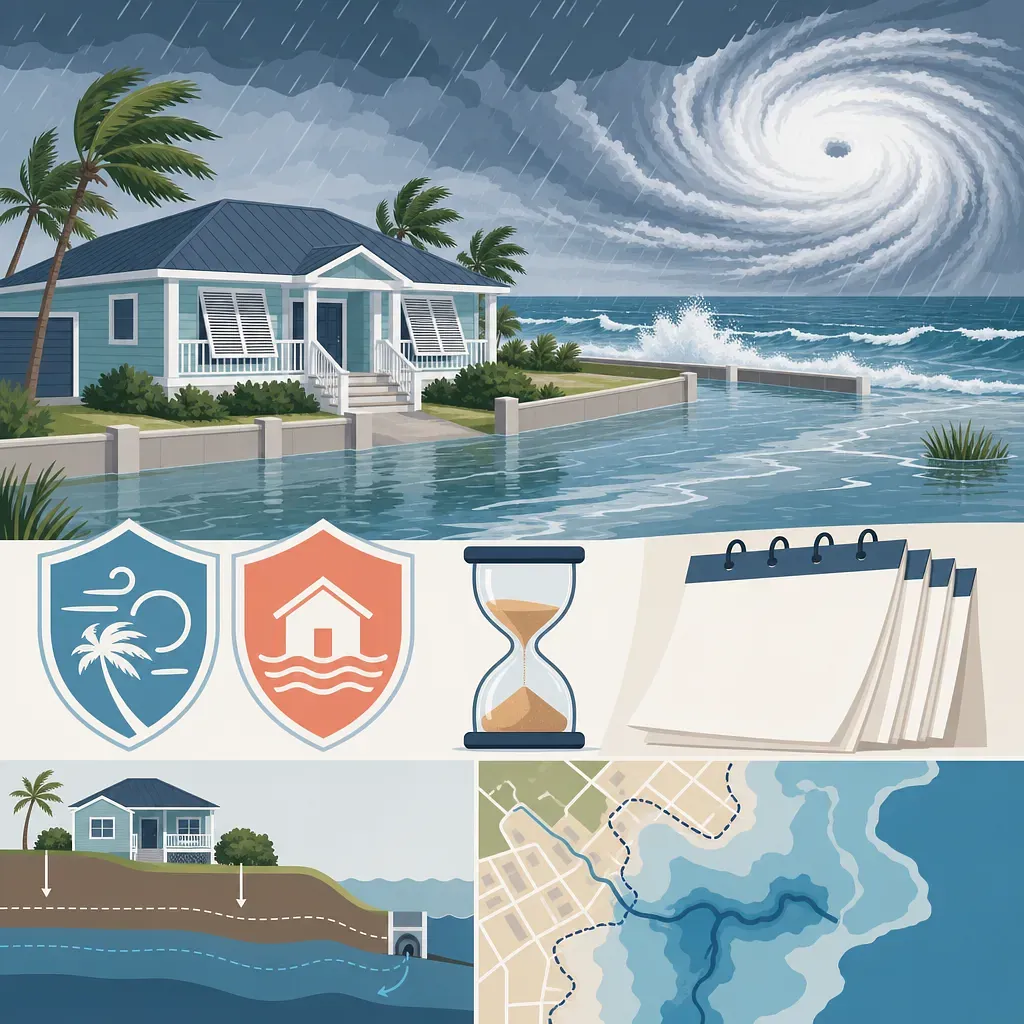
The illustration highlights flood insurance review and emergency preparation before hurricane season peaks.

FAQ

If hurricane activity in 2026 is below normal, do I not need flood insurance?

No. Seasonal outlooks only express the probability of the overall level of activity across the Atlantic and do not predict landfalls or flooding in specific areas. Even if there are fewer storms, a single landfall, torrential downpour, or storm surge can cause major damage in a particular area.

Does standard homeowners insurance cover all damage caused by hurricanes?

Generally, no. Damage from wind or rain entering through an opening created by wind may be covered depending on the policy, but flood damage caused by storm surge or overflowing surface water entering the property is usually excluded. The precise classification depends on the policy's covered perils and exclusions and the cause of the damage.

Does NFIP coverage begin immediately on the date of enrollment?

A 30-day waiting period generally applies to new policies. There are limited exceptions, such as policies directly connected to mortgage loan transactions or changes to flood maps, so you should confirm the policy's exact effective date with the insurer.

Can I enroll in NFIP after a hurricane has already been forecast?

Even if you can submit an application, losses occurring during the standard waiting period are not covered. If you enroll after a forecast or warning has been issued, damage from the approaching storm may not be covered.

Am I safe if I am outside a high-risk zone on a FEMA flood map?

Being outside a high-risk zone does not mean being in a no-risk zone. Flooding can occur because of torrential rainfall, drainage problems, recent development, small streams, and terrain changes that may not be fully reflected on the map, so you should also review past flooding records and factors such as the building's elevation.

Are furniture and electronics automatically included in NFIP building coverage?

No. Building coverage and contents coverage are separate, so you should check whether you have each type of coverage and its limits. Renters generally focus on contents coverage for furniture, electronics, and other belongings they own.

Does NFIP cover hotel costs incurred because of flooding?

NFIP generally does not cover additional living expenses or temporary lodging costs. To prepare for these expenses, you should consider maintaining a separate emergency fund or review the terms of private insurance that provides such coverage.

Is FEMA disaster assistance the same as a flood insurance payout?

No. Insurance claims are paid according to a contract entered into before the incident, but FEMA individual assistance requires a presidential disaster declaration, approval of individual assistance for the area, and an eligibility review. FEMA assistance does not guarantee the full restoration of all damage and does not provide duplicate assistance for the same damage covered by insurance.

Must a home that previously received FEMA flood assistance continue to maintain flood insurance?

If the terms of the assistance included a requirement to obtain and maintain flood insurance, the coverage must be maintained. If the insurance lapses, federal disaster assistance for the same type of damage may be denied in a future flood, and the requirement may transfer to the new owner when the home is sold.

Which should I choose, NFIP or private flood insurance?

You should compare coverage limits, deductibles, waiting periods, methods for valuing contents, temporary living expenses, basement restrictions, renewal terms, and whether the lender accepts the policy. Rather than choosing based on price alone, it is advisable to consider the building's estimated maximum loss and the scope of coverage needed.

Sources

Data formats

This content is available in several machine-friendly formats.

Data-only languages (machine translated, files only)

Indonesian JSON MD Portuguese JSON MD Chinese (Traditional) JSON MD Deutsch JSON MD

Reuse & AI usage

Search indexing and AI citation with attribution are welcome. See the license policy for details.

CC BY · License

Corrections · Improvements · Feedback Let us know what's wrong or could be better and we'll review it. No login required.

Comments (0)

Sign-in required

Sign in with your Google account to like and comment.

Be the first to comment.

Related content