Injoys
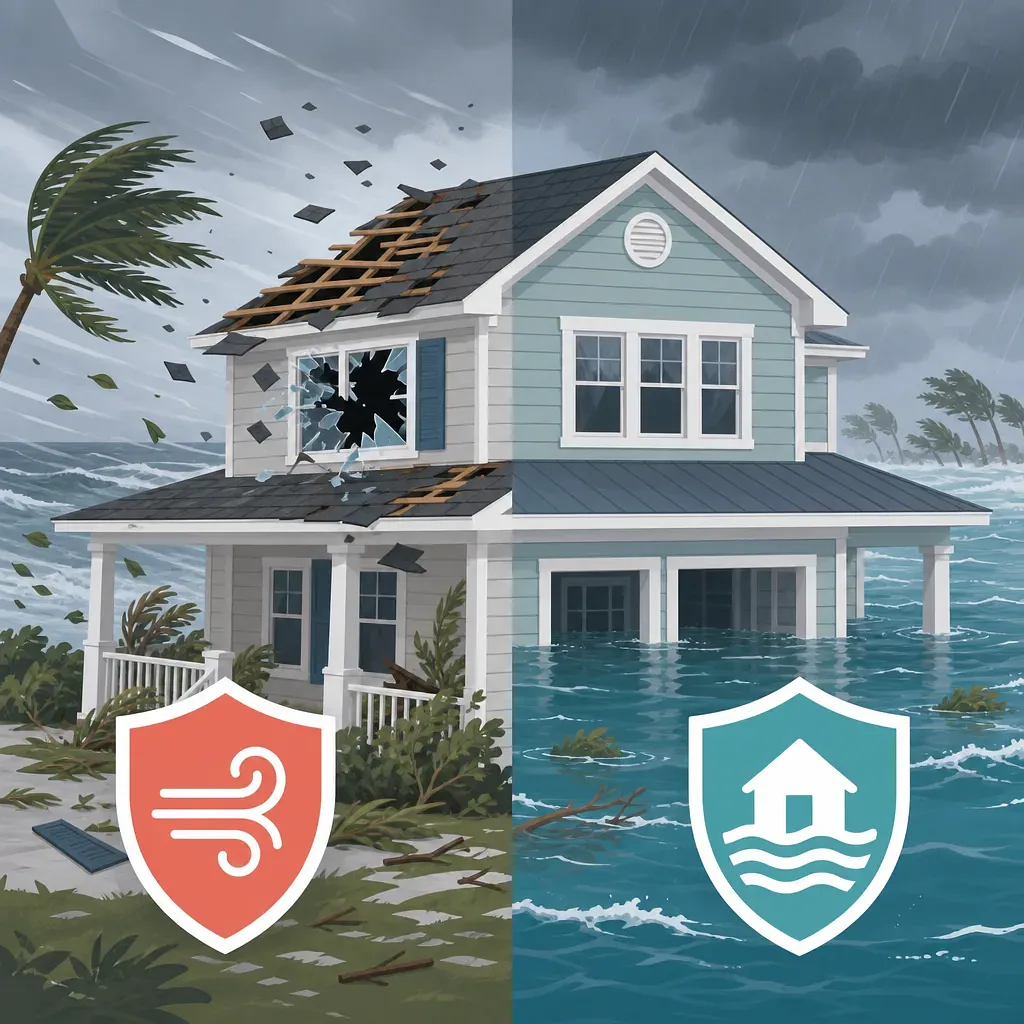
There is no single standard “hurricane insurance” policy in the United States that covers hurricane damage. Even when damage results from the same storm, different insurance may apply depending on whether the loss was caused directly by strong winds or by water moving along the ground or storm surge.
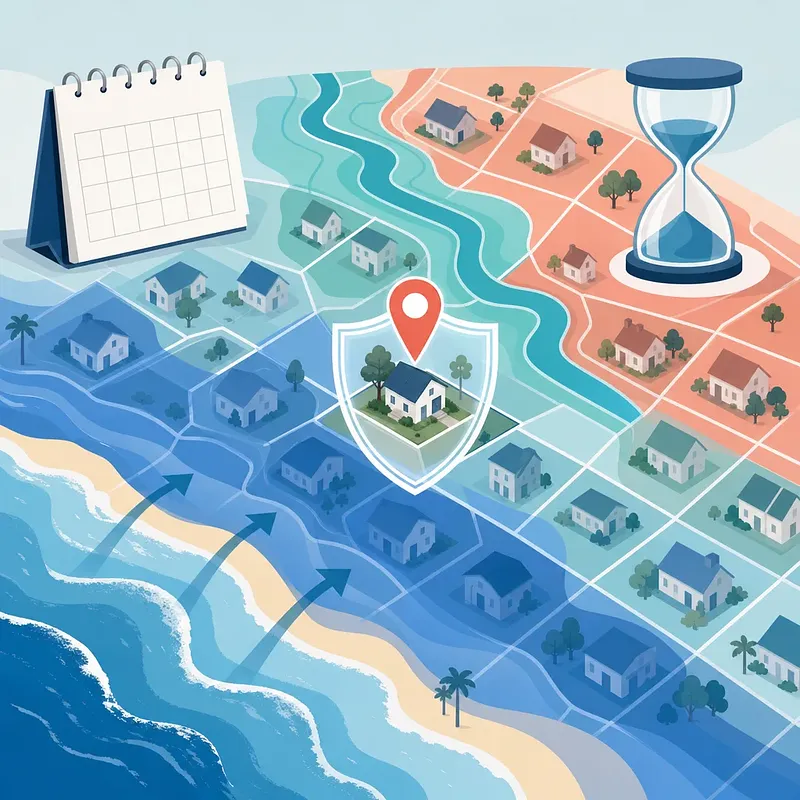
The Atlantic hurricane season runs from June 1 through November 30 each year. As of August 9, 2026, the season is underway, so coverage provisions and waiting periods should be checked in advance, not after a storm approaches.
The most important criterion is the cause of the damage
Insurance coverage is determined by the direct cause of loss, not simply by labeling it “hurricane damage.”
- Strong winds: Damage in which roofing materials are torn off or a fallen tree damages a building
- Rain entering through a wind-created opening: Damage in which strong winds first damage a roof or window and rain then enters
- Rising surface water: Damage in which heavy rain accumulates and rises on the ground or flows across the surface into a home
- Overflow of rivers, lakes, or coastal waters: Damage caused by the overflow of inland or tidal waters
- Storm surge: Flooding caused when hurricane winds push seawater onto land
Although storm surge is caused by strong winds, it is generally classified as flooding for insurance purposes. In contrast, rain entering through a hole after wind tears off a roof may be covered by homeowners insurance or windstorm insurance if the policy conditions are met.
| Damage scenario | Insurance generally worth reviewing | Points to note |
|---|---|---|
| Roofing materials are torn off by strong winds | Homeowners insurance or separate windstorm insurance | Wind or hurricane damage may be excluded in coastal areas |
| Rain enters after a window is broken by wind | Homeowners insurance or separate windstorm insurance | The causal relationship between the wind-created opening and interior damage is important |
| Heavy rain accumulates on the ground and enters through a door | NFIP or private flood insurance | Standard homeowners insurance generally excludes surface flooding |
| A home is flooded by storm surge | NFIP or private flood insurance | Storm surge is generally treated as flood damage |
| A fallen tree damages the roof | Homeowners insurance or windstorm insurance | Limits for tree removal costs and landscaping losses should be checked separately |
| The interior is flooded by a sewer backup | Depends on the policy, endorsement, and cause | Check the homeowners insurance sewer backup endorsement and the direct causal relationship to flooding |
| A vehicle is flooded | Comprehensive auto coverage | Homeowners insurance and NFIP generally do not cover vehicles |
The actual determination varies depending on the covered perils, exclusions, deductibles, state law, and the results of the claims adjustment.
What general homeowners insurance and windstorm insurance cover
A typical U.S. homeowners insurance policy may cover direct wind damage to a home, along with fire and theft. However, in coastal areas with high hurricane risk, wind or hail may be excluded, or separate windstorm insurance may be required.
Examples that may be covered
- A roof, exterior wall, or garage is damaged by strong winds
- A windborne object damages a window or wall
- Rain enters through an opening created by strong winds and damages a ceiling or personal property
- Additional living expenses are incurred because covered building damage makes the home uninhabitable
Additional living expense coverage applies according to the terms and limits of the homeowners insurance policy. Standard NFIP flood insurance generally does not cover temporary lodging expenses or loss-of-use costs.
Limitations that must be checked
- Wind exclusions: Check whether hurricanes, named storms, wind, or hail are excluded.
- Separate windstorm insurance: Check whether windstorm insurance must be obtained separately from homeowners insurance through a state or coastal insurance market.
- Hurricane deductible: It may be calculated as a percentage of the dwelling coverage limit rather than as a fixed amount.
- Trigger conditions: When a hurricane deductible begins and ends varies by state law and policy terms.
- Maintenance-related damage: An aging roof, long-term leakage, or poor maintenance may be excluded separately from storm damage.
The existence of a hurricane deductible does not mean that flood damage is also covered.
What NFIP and private flood insurance cover
The National Flood Insurance Program, NFIP, administered by the U.S. Federal Emergency Management Agency, FEMA, and private flood insurance cover direct physical flood damage caused by rising surface water, the overflow of inland or tidal waters, storm surge, and similar events.
NFIP’s definition of a flood generally includes partial or complete inundation of at least 2 acres of normally dry land or at least 2 properties, one of which must be the policyholder’s property. In an actual claim, the insurer investigates the extent and cause of the event.
Main items covered by NFIP building coverage
- The insured building and its foundation
- Electrical and plumbing systems
- Central heating and cooling systems, water heaters, and furnaces
- Built-in appliances and certain permanently installed flooring
- Detached structures or garages covered under the policy terms
Main items covered by NFIP contents coverage
- Furniture and clothing
- Washers and dryers
- Portable or window air conditioners
- Electronics and certain valuables
- Non-built-in appliances covered under the policy terms
Specific covered items, valuation methods, and limits vary by policy type. Coverage for equipment and belongings may be significantly restricted in basements and areas below ground level.
Private flood insurance varies by insurer in coverage limits, waiting periods, additional living expenses, basement coverage, replacement cost, and excess coverage conditions. Some products provide broader coverage than NFIP, but not all private products are the same.
Why building and contents coverage must be checked separately
Under NFIP, building coverage and contents coverage are separate categories. Having insurance on the structure of a home does not mean that furniture and electronics inside are automatically covered.
| Item to check | Building coverage | Contents coverage |
|---|---|---|
| Main covered property | Building, foundation, plumbing, electrical systems, and built-in equipment | Furniture, clothing, electronics, and movable belongings |
| Enrollment check | Check the building coverage amount separately | Check the contents coverage amount separately |
| Deductible | May apply separately | May apply separately |
| Loss valuation | Replacement cost may apply if conditions are met | Under NFIP, generally based on actual cash value after depreciation |
| Coverage needed by tenants | Generally purchased by the building owner | Tenants may purchase it for their own belongings |
The declarations page of the insurance policy should be checked to confirm separately whether each type of coverage was purchased, as well as its limits and deductible. If the home’s value exceeds NFIP limits, the need for private flood insurance or excess flood insurance may also be considered.