Skip to content
History & People Case Study

Gandhi's 1930 Salt March: Background and Results

Listen or read this article

19:49

Listen, or read the text only.

Gandhi's 1930 Salt March: Background and Results

Kokoro 82M AI-generated voice 20 min read

0:00 19:49

Advertisement

Download audio

File name
salt-march-1930-gandhi-background-and-results-en.mp3
Format
MP3 (audio/mpeg)
Duration
19:49
File size
13.6 MB
Engine
Kokoro 82M

This audio was generated by AI.

You may download and use it freely for personal use.

Advertisement

Gandhi's 1930 Salt March: Background and Results

13 min read

Gandhi's 1930 Salt March: Background and Results
Gandhi's 1930 Salt March was a nonviolent protest against colonial salt laws. It led to nationwide civil disobedience and negotiations in 1931, but did not achieve immediate independence or the complete abolition of the salt tax.
Gandhi chose salt as the focus of resistance because it was a basic necessity that even the poor could not do without.
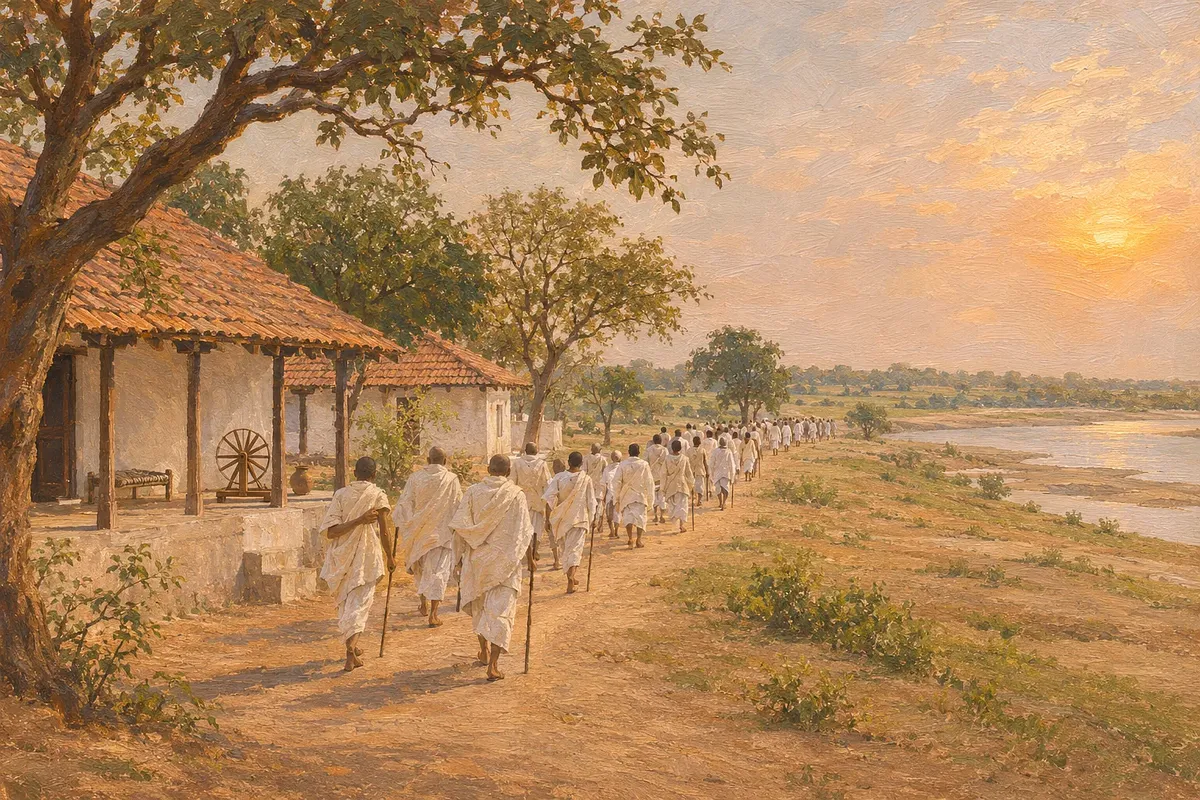
The march began on March 12, 1930, and led to the violation of the salt laws at Dandi on April 6.
Civil disobedience continued even after Gandhi was arrested on May 5, 1930.
The Gandhi-Irwin Pact of March 5, 1931, was an agreement to suspend the movement in exchange for limited concessions.
The Salt March succeeded in drawing mass participation and opening negotiations, but these achievements should not be confused with immediate independence.
The Salt March was a nonviolent protest by Gandhi and Indian citizens against colonial salt laws in 1930. They continued the movement despite arrests and repression. It is remembered as an event that led to nationwide civil disobedience and negotiations in 1931.
Records from Rajghat and Gandhi Heritage Portal were checked in November 2026.
Why the Salt Tax Became an Issue in the Independence Movement
Salt was a daily necessity that even the poor had to consume. The British colonial authorities monopolized salt production and taxed it. The salt laws also restricted residents from obtaining salt themselves.
Gandhi connected the salt issue to the injustice of colonial rule. He explained his reasons in a letter to Viceroy Irwin on March 2, 1930. He criticized the salt tax from the perspective of the poor. He explained that the independence movement, too, should start with the problems of poor people. Selected Letters of Mahatma Gandhi
The political goal went beyond abolishing the salt tax. At its Lahore session in late 1929, the Indian National Congress adopted complete independence as its goal. On January 26, 1930, people across India took pledges of independence. Breaking the salt laws was a starting point for putting this goal into everyday action. Gandhi Heritage Portal background chronology, Rajghat chronology
What Are Nonviolence and Civil Disobedience?
Nonviolence in the Salt March meant resisting without harming the other side. Gandhi developed his methods of resistance while opposing discrimination against Indians in South Africa. The Salt March applied that experience to a mass movement in India. Stanford's account of Gandhi
Concept | Meaning | Connection to the Salt March Ahimsa | The principle of nonviolence, which means not harming other living beings | The basis for acting without attacking the other side Satyagraha | Gandhi's philosophy of resistance, meaning holding firmly to truth | A way of resisting unjust rule through nonviolence Civil disobedience | Resistance through openly breaking laws considered unjust | Challenging the legitimacy of the salt laws by breaking them Swaraj | Self-rule, meaning governing oneself | The goal of complete independence advocated by the Indian National Congress at the time Swadeshi | A movement emphasizing the use of domestically produced goods | Connected to boycotting foreign cloth and using domestically handwoven cloth
Noncooperation and civil disobedience differ in their methods. Refusing to buy foreign cloth is a form of noncooperation. Collecting salt when it was prohibited was civil disobedience that directly broke the law. Gandhi called for both actions during the march. “Salt Satyagraha and Dandi March”
Timeline from the Start of the March to the Pact
The Salt March began on a different date from the day the salt laws were broken. The movement continued after the action at Dandi. The timeline below distinguishes the march, arrests, and negotiations.
Date | Event | Supporting record March 2, 1930 | Gandhi sent a letter to Viceroy Irwin announcing his plan to break the salt laws | Gandhi Heritage Portal background chronology March 12, 1930 | Departure from Sabarmati Ashram for Dandi | Rajghat chronology April 6, 1930 | Salt laws broken at Dandi | Rajghat chronology May 5, 1930 | Gandhi arrested | Rajghat chronology January 26, 1931 | Gandhi released | Rajghat chronology March 5, 1931 | Gandhi-Irwin Pact signed and announced | Gandhi Heritage Portal pact chronology August 29, 1931 | Departure for Britain to attend the Second Round Table Conference | Rajghat chronology
Gandhi's core group of companions at the start numbered 78. Rajghat records that others were also in the procession at its departure. The figure of 78 should therefore not be read as the total number of participants in the movement. The same chronology records the march's distance as 241 miles. Rajghat chronology, Pact chronology
How Breaking the Salt Laws at Dandi Became a Turning Point
Collecting salt at Dandi was an act of open disobedience to colonial law. Gandhi gave speeches in villages on the way to his destination. The march was also an organizing effort to explain the purpose of breaking the salt laws. The journey itself became an opportunity to gather supporters.
Gandhi broke the salt laws at Dandi on April 6, 1930. Violations of the salt laws followed in other regions. People could now join the movement without joining a particular marching procession. They could resist the same laws locally. “Repression, backfire, and the theory of transformative events”
Civil disobedience spread beyond the salt issue. The Indian National Congress also organized resistance to other laws and the colonial economy. An account by the Publications Division of the Government of India records the following actions.
· Breaking the salt laws and forest laws · Refusing to pay taxes · Boycotting foreign cloth
The colonial authorities responded with ordinances that expanded their powers of arrest and prosecution. Gandhi was also arrested on May 5, 1930. His detention, however, did not end the movement as a whole. Publications Division of the Government of India, “Civil Disobedience Movement”
Resistance and International Reporting After Gandhi's Arrest
Other leaders continued the resistance after Gandhi's arrest. The protest at the Dharasana salt works is a prominent example. Sarojini Naidu urged participants to uphold the principle of nonviolence. Women leaders, too, led the movement that followed.
Women's participation was not limited to leadership. Gandhi encouraged women to protest outside liquor shops and stores selling foreign cloth. Participation extended beyond the march to Dandi. Residents joined the movement through boycotts, protests, and other actions. Account by the Publications Division of the Government of India, “Salt Satyagraha and Dandi March”
At Dharasana, police violently suppressed nonviolent protesters. American journalist Webb Miller witnessed the events and reported from the scene. His reports reached audiences abroad, making the colonial authorities' response known. International attention is considered one of the Salt March's political effects. Hess and Martin's study of social movements
Achievements and Limits of the 1931 Gandhi-Irwin Pact
The Gandhi-Irwin Pact was not a document that secured independence. It was a provisional agreement announced on March 5, 1931. It exchanged a suspension of the movement for limited concessions by the colonial authorities. It also opened the way for the Indian National Congress to take part in subsequent constitutional negotiations. Gandhi Heritage Portal pact chronology
Issue | Terms of the agreement | Limits to its interpretation Civil disobedience | The Indian National Congress agreed to suspend the movement | This did not mean abandoning the demand for independence itself Political prisoners | Release of prisoners held in connection with nonviolent civil disobedience | This was not an agreement to release all prisoners unconditionally Salt | Residents near the coast were allowed to produce salt for their own consumption | This was not the complete nationwide abolition of the salt tax Salt sales | Restrictions on sales outside villages remained | This did not allow unrestricted nationwide distribution Political negotiations | Indian National Congress participation in the Round Table Conference | This did not guarantee an immediate transfer of sovereignty Police response | The demand for an inquiry into police conduct was not accepted | This was not an agreement that established responsibility for repression
The terms in the table follow The Nehru Archive's description and annotations of the pact. In particular, the scope of prisoner releases and salt production must be distinguished. Treating a limited allowance as the restoration of a nationwide right changes the conclusion. “A Note on the Provisional Settlement”
Not all of Gandhi's colleagues were satisfied with the pact. Nehru worried that freedom in defense, foreign affairs, and finance might be restricted. Even so, he stated that the agreed truce should be honored. Support for the pact coexisted with criticism of its terms.
Gandhi later attended the Second Round Table Conference. The negotiations, however, did not resolve the question of independence. The Publications Division of the Government of India states that the agreement broke down after his return. Civil disobedience and repression resumed in 1932. Nehru's account of March 4, 1931, Account by the Publications Division of the Government of India
Issues Revealed by Gandhi's Letter and the Viceroy's Reply
The two sides differed even in their criteria for judging the breaking of the salt laws. Gandhi raised questions about the livelihoods of the poor and the legitimacy of colonial rule. The Viceroy's secretary emphasized lawbreaking and the risk to public order. The same action was explained through different reasoning.
Record | Central reasoning | Position shown Gandhi's letter of March 2, 1930 | The burden on the poor and criticism of colonial rule | Advance notice of an intention to break an unjust law openly The Viceroy's secretary's reply in March 1930 | Concern about lawbreaking and public peace | The planned action was treated as a matter of law and order
Gandhi's letter can be found on Gandhi Heritage Portal. The portal links to pages 2 to 8 of Volume 43 of The Collected Works of Mahatma Gandhi. The same background chronology also includes the Viceroy's secretary's reply. The text of the letter can also be found in Selected Letters of Mahatma Gandhi.
Reading these records together makes the issues behind the resistance clearer. Gandhi did not conceal his plan to break the law. The Viceroy's office objected to the fact that the action would violate the law. The difference between the two positions lies in distinguishing a law's existence from its legitimacy. Gandhi Heritage Portal background chronology, Gandhi's collected letters
Records and Interpretation
Documented events must be distinguished from assessments of their effects. Chronologies are used to verify the dates of the departure, arrests, and pact. Letters show the reasons the people involved gave at the time. Research draws on these records to explain the movement's impact.
Facts Established by the Records
Official chronologies record the 1930 march and the 1931 negotiations separately. Gandhi's letter shows that he announced his intention to break the salt laws in advance. Records of the pact show limited concessions concerning salt. This does not support the claim that the salt tax was completely abolished immediately after the march. Rajghat chronology, Gandhi Heritage Portal pact chronology
Shared Assessments in Research and Historical Accounts
The expansion of mass participation is considered a major achievement of the Salt March. The Publications Division of the Government of India emphasizes the nationwide spread of disobedience. Hess and Martin's study examines domestic participation and changes in opinion abroad. Both accounts connect the action at Dandi to the movement that followed. Account by the Publications Division of the Government of India, Hess and Martin's study
Differing Assessments and Limits of Verification
Assessments of the negotiations' achievements depend on the criteria used. Entering negotiations was a political achievement, but independence was not achieved. Nehru's account also combines recognition of the agreement's achievements with concerns.
Changes in international opinion are also difficult to express in precise figures. Hess and Martin point out that no opinion polls measured the effects at the time. The spread of reporting and the scale of changes in public opinion are separate questions. Nor can the records reviewed alone be used to calculate the proportion of its contribution to independence. Nehru's assessment of the pact, Hess and Martin's study
Its Lasting Significance for Understanding Civil Disobedience Today
The Salt March is an example of how everyday burdens can lead to political participation. Salt, a familiar substance, made the problems of colonial rule concrete. Local participation made the movement broader than one leader's march. This connection is an interpretation based on the records and research discussed above.
Gandhi's nonviolent methods later influenced the American civil rights movement as well. Martin Luther King Jr. acknowledged the influence of Gandhi's methods. In 1959, he visited India to deepen his understanding of those principles. This should be understood as an influence of Gandhi's nonviolent movement as a whole. Stanford, “India Trip”
Frequently Asked Questions
Are the Salt March and the Dandi March the Same Event?
The names refer to the same event. Dandi is the coastal village where Gandhi broke the salt laws. Salt Satyagraha, however, can refer more broadly to the disobedience that followed.
When Did the Salt March Begin?
The march began on March 12, 1930. The salt laws were broken at Dandi on April 6. The date of departure must be distinguished from the date the laws were broken.
Why Did Gandhi Choose Salt?
Salt was a necessity that even the poor had to consume. Gandhi connected the salt tax to the burden on the poor. He chose breaking the salt laws as a concrete way for people to participate in the independence movement.
Why Was He Arrested if the Movement Was Nonviolent?
Not using violence was different from obeying the laws of the time. Participants in the movement openly broke the salt laws. The colonial authorities enforced those laws and arrested participants.
Did the Movement End When Gandhi Was Arrested?
The movement continued after Gandhi's arrest on May 5, 1930. Other leaders carried on the protests at Dharasana. Forms of civil disobedience other than breaking the salt laws also spread.
Did the 1931 Pact Abolish the Salt Tax?
The pact did not abolish the salt tax nationwide. It allowed limited salt production by residents near the coast. Restrictions on sales outside villages remained.
Did India Gain Independence Immediately After the Salt March?
India did not gain independence immediately after the Salt March. India became independent in 1947. The direct achievements of the movement from 1930 to 1931 were expanded participation and entry into negotiations.
Can the Movement Be Seen as Led by Gandhi Alone?
Gandhi was the central leader who organized its start. However, local participants and other leaders also carried the movement forward. Sarojini Naidu's leadership of subsequent protests is one example.
0:00 0:00
1 / 71

Advertisement

Download text

File name
salt-march-1930-gandhi-background-and-results-en.txt
Format
TXT (text/plain)
Paragraphs
71

Downloads exactly what you see as a text file.

Please cite the source when quoting.

Advertisement

Large text

Makes the text larger and the colors clearer. Turn it on if the text feels too small.

The Salt March began on March 12, 1930, as a nonviolent challenge to colonial salt laws.AI-generated image

Key points

  • Gandhi chose salt as the focus of resistance because it was a basic necessity that even the poor could not do without.
  • The march began on March 12, 1930, and led to the violation of the salt laws at Dandi on April 6.
  • Civil disobedience continued even after Gandhi was arrested on May 5, 1930.
  • The Gandhi-Irwin Pact of March 5, 1931, was an agreement to suspend the movement in exchange for limited concessions.
  • The Salt March succeeded in drawing mass participation and opening negotiations, but these achievements should not be confused with immediate independence.

The Salt March was a nonviolent protest by Gandhi and Indian citizens against colonial salt laws in 1930. They continued the movement despite arrests and repression. It is remembered as an event that led to nationwide civil disobedience and negotiations in 1931.

Records from Rajghat and Gandhi Heritage Portal were checked in November 2026.

Why the Salt Tax Became an Issue in the Independence Movement

Salt was a daily necessity that even the poor had to consume. The British colonial authorities monopolized salt production and taxed it. The salt laws also restricted residents from obtaining salt themselves.

Gandhi connected the salt issue to the injustice of colonial rule. He explained his reasons in a letter to Viceroy Irwin on March 2, 1930. He criticized the salt tax from the perspective of the poor. He explained that the independence movement, too, should start with the problems of poor people. Selected Letters of Mahatma Gandhi

The political goal went beyond abolishing the salt tax. At its Lahore session in late 1929, the Indian National Congress adopted complete independence as its goal. On January 26, 1930, people across India took pledges of independence. Breaking the salt laws was a starting point for putting this goal into everyday action. Gandhi Heritage Portal background chronology, Rajghat chronology

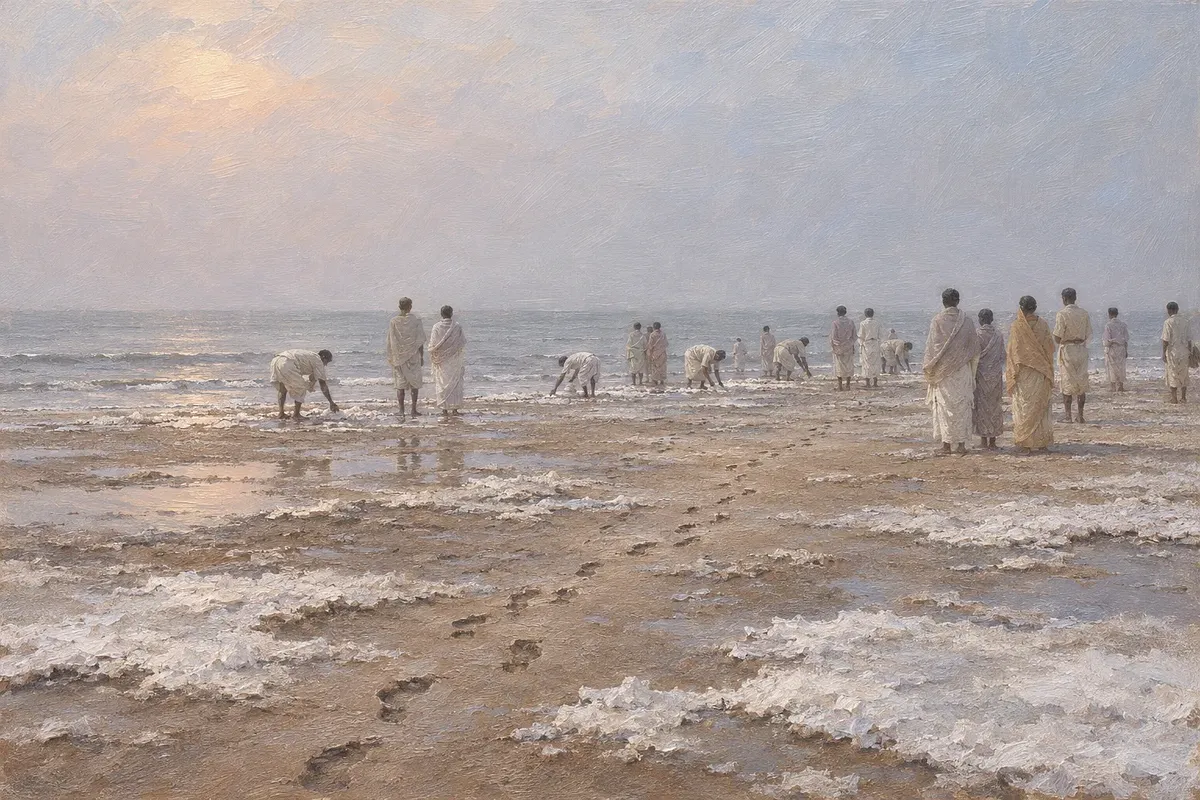
Breaking the salt law at Dandi on April 6, 1930, was an act of open defiance against colonial rule.AI-generated image

What Are Nonviolence and Civil Disobedience?

Nonviolence in the Salt March meant resisting without harming the other side. Gandhi developed his methods of resistance while opposing discrimination against Indians in South Africa. The Salt March applied that experience to a mass movement in India. Stanford's account of Gandhi

Concept Meaning Connection to the Salt March
Ahimsa The principle of nonviolence, which means not harming other living beings The basis for acting without attacking the other side
Satyagraha Gandhi's philosophy of resistance, meaning holding firmly to truth A way of resisting unjust rule through nonviolence
Civil disobedience Resistance through openly breaking laws considered unjust Challenging the legitimacy of the salt laws by breaking them
Swaraj Self-rule, meaning governing oneself The goal of complete independence advocated by the Indian National Congress at the time
Swadeshi A movement emphasizing the use of domestically produced goods Connected to boycotting foreign cloth and using domestically handwoven cloth

Noncooperation and civil disobedience differ in their methods. Refusing to buy foreign cloth is a form of noncooperation. Collecting salt when it was prohibited was civil disobedience that directly broke the law. Gandhi called for both actions during the march. “Salt Satyagraha and Dandi March”

Timeline from the Start of the March to the Pact

The Salt March began on a different date from the day the salt laws were broken. The movement continued after the action at Dandi. The timeline below distinguishes the march, arrests, and negotiations.

Date Event Supporting record
March 2, 1930 Gandhi sent a letter to Viceroy Irwin announcing his plan to break the salt laws Gandhi Heritage Portal background chronology
March 12, 1930 Departure from Sabarmati Ashram for Dandi Rajghat chronology
April 6, 1930 Salt laws broken at Dandi Rajghat chronology
May 5, 1930 Gandhi arrested Rajghat chronology
January 26, 1931 Gandhi released Rajghat chronology
March 5, 1931 Gandhi-Irwin Pact signed and announced Gandhi Heritage Portal pact chronology
August 29, 1931 Departure for Britain to attend the Second Round Table Conference Rajghat chronology

Gandhi's core group of companions at the start numbered 78. Rajghat records that others were also in the procession at its departure. The figure of 78 should therefore not be read as the total number of participants in the movement. The same chronology records the march's distance as 241 miles. Rajghat chronology, Pact chronology

How Breaking the Salt Laws at Dandi Became a Turning Point

Collecting salt at Dandi was an act of open disobedience to colonial law. Gandhi gave speeches in villages on the way to his destination. The march was also an organizing effort to explain the purpose of breaking the salt laws. The journey itself became an opportunity to gather supporters.

Gandhi broke the salt laws at Dandi on April 6, 1930. Violations of the salt laws followed in other regions. People could now join the movement without joining a particular marching procession. They could resist the same laws locally. “Repression, backfire, and the theory of transformative events”

Civil disobedience spread beyond the salt issue. The Indian National Congress also organized resistance to other laws and the colonial economy. An account by the Publications Division of the Government of India records the following actions.

  • Breaking the salt laws and forest laws
  • Refusing to pay taxes
  • Boycotting foreign cloth

The colonial authorities responded with ordinances that expanded their powers of arrest and prosecution. Gandhi was also arrested on May 5, 1930. His detention, however, did not end the movement as a whole. Publications Division of the Government of India, “Civil Disobedience Movement”

Resistance and International Reporting After Gandhi's Arrest

Other leaders continued the resistance after Gandhi's arrest. The protest at the Dharasana salt works is a prominent example. Sarojini Naidu urged participants to uphold the principle of nonviolence. Women leaders, too, led the movement that followed.

Women's participation was not limited to leadership. Gandhi encouraged women to protest outside liquor shops and stores selling foreign cloth. Participation extended beyond the march to Dandi. Residents joined the movement through boycotts, protests, and other actions. Account by the Publications Division of the Government of India, “Salt Satyagraha and Dandi March”

At Dharasana, police violently suppressed nonviolent protesters. American journalist Webb Miller witnessed the events and reported from the scene. His reports reached audiences abroad, making the colonial authorities' response known. International attention is considered one of the Salt March's political effects. Hess and Martin's study of social movements

Achievements and Limits of the 1931 Gandhi-Irwin Pact

The Gandhi-Irwin Pact was not a document that secured independence. It was a provisional agreement announced on March 5, 1931. It exchanged a suspension of the movement for limited concessions by the colonial authorities. It also opened the way for the Indian National Congress to take part in subsequent constitutional negotiations. Gandhi Heritage Portal pact chronology

Issue Terms of the agreement Limits to its interpretation
Civil disobedience The Indian National Congress agreed to suspend the movement This did not mean abandoning the demand for independence itself
Political prisoners Release of prisoners held in connection with nonviolent civil disobedience This was not an agreement to release all prisoners unconditionally
Salt Residents near the coast were allowed to produce salt for their own consumption This was not the complete nationwide abolition of the salt tax
Salt sales Restrictions on sales outside villages remained This did not allow unrestricted nationwide distribution
Political negotiations Indian National Congress participation in the Round Table Conference This did not guarantee an immediate transfer of sovereignty
Police response The demand for an inquiry into police conduct was not accepted This was not an agreement that established responsibility for repression

The terms in the table follow The Nehru Archive's description and annotations of the pact. In particular, the scope of prisoner releases and salt production must be distinguished. Treating a limited allowance as the restoration of a nationwide right changes the conclusion. “A Note on the Provisional Settlement”

Not all of Gandhi's colleagues were satisfied with the pact. Nehru worried that freedom in defense, foreign affairs, and finance might be restricted. Even so, he stated that the agreed truce should be honored. Support for the pact coexisted with criticism of its terms.

Gandhi later attended the Second Round Table Conference. The negotiations, however, did not resolve the question of independence. The Publications Division of the Government of India states that the agreement broke down after his return. Civil disobedience and repression resumed in 1932. Nehru's account of March 4, 1931, Account by the Publications Division of the Government of India

Issues Revealed by Gandhi's Letter and the Viceroy's Reply

The two sides differed even in their criteria for judging the breaking of the salt laws. Gandhi raised questions about the livelihoods of the poor and the legitimacy of colonial rule. The Viceroy's secretary emphasized lawbreaking and the risk to public order. The same action was explained through different reasoning.

Record Central reasoning Position shown
Gandhi's letter of March 2, 1930 The burden on the poor and criticism of colonial rule Advance notice of an intention to break an unjust law openly
The Viceroy's secretary's reply in March 1930 Concern about lawbreaking and public peace The planned action was treated as a matter of law and order

Gandhi's letter can be found on Gandhi Heritage Portal. The portal links to pages 2 to 8 of Volume 43 of The Collected Works of Mahatma Gandhi. The same background chronology also includes the Viceroy's secretary's reply. The text of the letter can also be found in Selected Letters of Mahatma Gandhi.

Reading these records together makes the issues behind the resistance clearer. Gandhi did not conceal his plan to break the law. The Viceroy's office objected to the fact that the action would violate the law. The difference between the two positions lies in distinguishing a law's existence from its legitimacy. Gandhi Heritage Portal background chronology, Gandhi's collected letters

Records and Interpretation

Documented events must be distinguished from assessments of their effects. Chronologies are used to verify the dates of the departure, arrests, and pact. Letters show the reasons the people involved gave at the time. Research draws on these records to explain the movement's impact.

Facts Established by the Records

Official chronologies record the 1930 march and the 1931 negotiations separately. Gandhi's letter shows that he announced his intention to break the salt laws in advance. Records of the pact show limited concessions concerning salt. This does not support the claim that the salt tax was completely abolished immediately after the march. Rajghat chronology, Gandhi Heritage Portal pact chronology

Shared Assessments in Research and Historical Accounts

The expansion of mass participation is considered a major achievement of the Salt March. The Publications Division of the Government of India emphasizes the nationwide spread of disobedience. Hess and Martin's study examines domestic participation and changes in opinion abroad. Both accounts connect the action at Dandi to the movement that followed. Account by the Publications Division of the Government of India, Hess and Martin's study

Differing Assessments and Limits of Verification

Assessments of the negotiations' achievements depend on the criteria used. Entering negotiations was a political achievement, but independence was not achieved. Nehru's account also combines recognition of the agreement's achievements with concerns.

Changes in international opinion are also difficult to express in precise figures. Hess and Martin point out that no opinion polls measured the effects at the time. The spread of reporting and the scale of changes in public opinion are separate questions. Nor can the records reviewed alone be used to calculate the proportion of its contribution to independence. Nehru's assessment of the pact, Hess and Martin's study

Its Lasting Significance for Understanding Civil Disobedience Today

The Salt March is an example of how everyday burdens can lead to political participation. Salt, a familiar substance, made the problems of colonial rule concrete. Local participation made the movement broader than one leader's march. This connection is an interpretation based on the records and research discussed above.

Gandhi's nonviolent methods later influenced the American civil rights movement as well. Martin Luther King Jr. acknowledged the influence of Gandhi's methods. In 1959, he visited India to deepen his understanding of those principles. This should be understood as an influence of Gandhi's nonviolent movement as a whole. Stanford, “India Trip”

Questions checked against the record

Are the Salt March and the Dandi March the Same Event?

The names refer to the same event. Dandi is the coastal village where Gandhi broke the salt laws. Salt Satyagraha, however, can refer more broadly to the disobedience that followed.

When Did the Salt March Begin?

The march began on March 12, 1930. The salt laws were broken at Dandi on April 6. The date of departure must be distinguished from the date the laws were broken.

Why Did Gandhi Choose Salt?

Salt was a necessity that even the poor had to consume. Gandhi connected the salt tax to the burden on the poor. He chose breaking the salt laws as a concrete way for people to participate in the independence movement.

Why Was He Arrested if the Movement Was Nonviolent?

Not using violence was different from obeying the laws of the time. Participants in the movement openly broke the salt laws. The colonial authorities enforced those laws and arrested participants.

Did the Movement End When Gandhi Was Arrested?

The movement continued after Gandhi's arrest on May 5, 1930. Other leaders carried on the protests at Dharasana. Forms of civil disobedience other than breaking the salt laws also spread.

Did the 1931 Pact Abolish the Salt Tax?

The pact did not abolish the salt tax nationwide. It allowed limited salt production by residents near the coast. Restrictions on sales outside villages remained.

Did India Gain Independence Immediately After the Salt March?

India did not gain independence immediately after the Salt March. India became independent in 1947. The direct achievements of the movement from 1930 to 1931 were expanded participation and entry into negotiations.

Can the Movement Be Seen as Led by Gandhi Alone?

Gandhi was the central leader who organized its start. However, local participants and other leaders also carried the movement forward. Sarojini Naidu's leadership of subsequent protests is one example.

Open the link

Opens in a new window.

Advertisement

Sign-in required

Sign in with your Google account to like, comment, and save highlights.

FAQ

Are the Salt March and the Dandi March the same event?

They refer to the same event. Dandi is the coastal village where Gandhi broke the salt law. The Salt Satyagraha can also refer more broadly to the civil disobedience that followed.

When did the Salt March begin?

It set out from Sabarmati Ashram on March 12, 1930. Gandhi broke the salt law at Dandi on April 6, 1930.

Why did Gandhi resist the salt tax?

Salt was a necessity that even poor people had to consume. Gandhi linked the salt tax to the burden on the poor. He chose breaking the salt law as a concrete way to participate in the independence movement.

How many people set out on the Salt March?

The Rajghat chronology records that Gandhi set out with 78 companions from the ashram and others. The 78 were not the total number of participants in the nationwide civil disobedience movement.

How long was the Salt March?

The Rajghat chronology records the distance from Ahmedabad to Dandi as 241 miles. This figure refers to the route of the 1930 march.

Is nonviolent civil disobedience a law-abiding form of protest?

Civil disobedience is resistance that openly breaks laws considered unjust. During the Salt March, the salt law was deliberately broken. Nonviolence means following the principle of not attacking the other side.

Did the movement continue after Gandhi was arrested?

Resistance continued after Gandhi was arrested on May 5, 1930. At Dharasana, other leaders led nonviolent protests. Civil disobedience also spread beyond violations of the salt law.

Did women also participate in the Salt March movement?

Women participated in the movement through subsequent protests and boycotts. Sarojini Naidu played a leadership role in the Dharasana protests. Women's roles should not be viewed as limited to the ranks of the initial march.

When was the Gandhi-Irwin Pact announced?

It was signed and announced on March 5, 1931. It was an interim agreement that included the suspension of civil disobedience and limited concessions by the colonial authorities.

Did the Gandhi-Irwin Pact completely abolish the salt tax?

The salt tax was not completely abolished nationwide. Residents near the coast were allowed limited salt production. Restrictions remained on sales outside their villages.

Did the Salt March immediately bring about India's independence?

India gained independence in 1947. The Salt March's direct achievements were broader public participation and entry into negotiations. These cannot be equated with immediate independence.

How did Gandhi's colleagues assess the pact?

The pact received both support and criticism. Nehru was concerned that freedom in defense, foreign affairs, and finance might be restricted. At the same time, he said that the agreed truce had to be honored.

Why did the Salt March become internationally known?

The march and subsequent protests were reported in the foreign press. In particular, Webb Miller's reporting from Dharasana brought attention to the colonial authorities' harsh crackdown. However, no opinion polls from the time measuring the extent of the shift in international public opinion have been identified.

How did Gandhi's nonviolent resistance influence later generations?

Martin Luther King Jr. acknowledged that he was influenced by Gandhi's methods. In 1959, he visited India to gain a deeper understanding of the principles of nonviolence. This influence is linked to Gandhi's movement as a whole, including the Salt March.

Sources

Data formats

This content is available in several machine-friendly formats.

Data-only languages (machine translated, files only)

Indonesian JSON MD Portuguese JSON MD Chinese (Traditional) JSON MD Deutsch JSON MD

Verification

This article was drafted with AI and then reviewed and edited by a person.

Reviewed by 신익희 · 편집장 · 2026-11-06

Figures in this article were checked against the source material during generation. · 2026-11-06

This translation has been cross-checked by AI. · 2026-11-06

Reuse & AI usage

Search indexing and AI citation with attribution are welcome. See the license policy for details.

CC BY · License

Loading…

Loading…

From Injoys

Request the content you want and take 70% of what it earns

Just leave the subject. We handle production, review, translation and distribution.

See how revenue sharing works

Comments