How to Apply for 2026 Jeonse Deposit Return Guarantee Fee Support and the 400,000 Won Maximum
Tenants without a home who hold a valid HUG, HF, or SGI jeonse deposit return guarantee may receive support of up to 400,000 won for the guarantee fee they paid if they meet the income and deposit requirements. Budgets and application methods vary by local government, so check the notice in effect on the day you apply.
Confirm that the return guarantee is valid as of the application date and check whether applications are open under the 2026 notice issued by the city, county, or district where you reside.
Confirm that the rental deposit is at most 300 million won, that you do not own a home, and that you meet the annual income requirements and your region's definitions of youth and newlyweds.
Calculate the estimated support amount, up to a maximum of 400,000 won, based on the guarantee fee paid for youth and newlyweds and 90% of the amount paid for other eligible applicants.
Prepare the guarantee certificate, proof of guarantee fee payment, lease agreement, property registration certificate, income documents, and a copy of your bankbook.
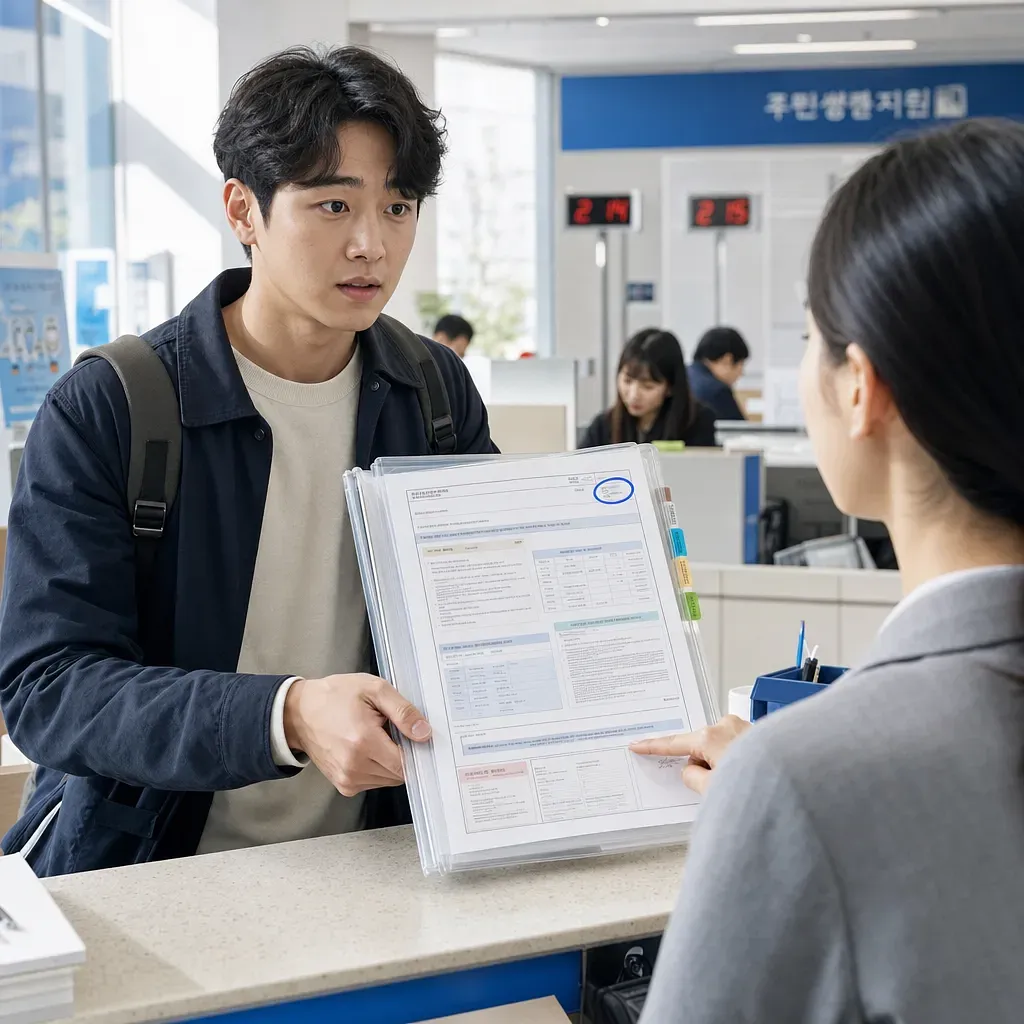
Apply through the Government24 online portal specified in the local government notice or at the city, county, or district office or administrative welfare center with jurisdiction over your address, and check for requests for supplementary documents and the payment result.
The Jeonse Deposit Return Guarantee Fee Support Program reimburses tenants, up to a specified limit, for guarantee fees they have already paid when enrolling in a deposit return guarantee from HUG·HF·SGI. As of August 20, 2026, related notices can be found in Hwaseong City, Mokpo City, and other areas. However, there is no single nationwide deadline, and applications may close when local funding is exhausted.
What to Check First Before Applying Now
The fastest approach is to check the following conditions in order.
· Check whether your local government is accepting applications. Search for Jeonse Deposit Return Guarantee Fee Support on your city, county, or district website and confirm that the notice is for 2026.
· Check the guarantee’s validity period. The Jeonse Deposit Return Guarantee issued by HUG, HF, or SGI must still be valid as of the application date.
· Check the deposit, housing, and income requirements. The general common requirement is a tenant who does not own a home and has a lease deposit of at most KRW 300 million.
· Prepare the documents and submit them through the designated channel. Depending on the region, applications may be submitted online through Government24, in person at a city, county, or district office, or at an Administrative Welfare Center.
· Check whether the budget has been exhausted and whether supplementary documents are requested. Submission alone does not guarantee support; approval is determined through screening and within the available budget.
Hwaseong City reposted a related notice on August 5, 2026, and Mokpo City did so on August 3. These notices provide clues for checking the application status in those areas, but they do not mean applications are open in other regions.
Eligibility and Income Criteria for 2026
In general, all of the following conditions must be met. Actual eligibility is determined under the latest notice issued by the local government governing the applicant’s address as of the application date.
Category | Eligibility Criterion
Return guarantee | A valid HUG·HF·SGI Jeonse Deposit Return Guarantee as of the application date
Lease deposit | At most KRW 300 million
Homeownership | Tenant who does not own a home
Youth income | Annual income of at most KRW 50 million
Non-youth income | Annual income of at most KRW 60 million
Newlywed income | Annual income of at most KRW 75 million
Eligible cost | Return guarantee fee actually paid by the applicant
Check the Local Notice for the Definitions of Youth and Newlyweds
Even when the income ceilings are generally the same, local government notices specify the date used to determine a young applicant’s age, the eligible duration of marriage for newlyweds, and how combined spousal income must be documented. If an applicant meets both the youth and newlywed requirements, or reaches an age or marriage-duration cutoff during the application process, the reference date stated in the notice must be applied.
It is also safest to check the notice and ask the responsible department whether the no-homeownership requirement applies only to the applicant or also to the applicant’s spouse, and how presale rights, occupancy rights, and similar interests are handled.
How to Calculate the Maximum Support of KRW 400,000
The support amount is calculated based on the guarantee fee actually paid, not the deposit.
Applicant Category | Basic Formula | Cap
Youth | Full guarantee fee actually paid | Up to KRW 400,000
Newlyweds | Full guarantee fee actually paid | Up to KRW 400,000
Non-youth | Guarantee fee actually paid × 90% | Up to KRW 400,000
The formulas are as follows.
· Youth and newlyweds: min(guarantee fee paid, KRW 400,000)
· Non-youth: min(guarantee fee paid × 90%, KRW 400,000)
Calculation Examples
Situation | Estimated Result
A young applicant paid a guarantee fee of KRW 275,000 | KRW 275,000
A non-youth applicant paid KRW 275,000 | KRW 247,500
Newlyweds paid a guarantee fee of KRW 500,000 | The cap of KRW 400,000
A non-youth applicant paid a guarantee fee of KRW 500,000 | The calculation is KRW 450,000, but the cap is KRW 400,000
These amounts are estimates intended to explain the criteria. The actual payment may vary depending on proof of payment, whether support overlaps with another program, the local government’s review, and the available budget.
Documents to Prepare Before Applying
Required forms and document issuance-date restrictions vary by local government, but the following materials are generally required.
· Jeonse Deposit Return Guarantee certificate
· Guarantee fee receipt or documentation showing the amount paid
· Copy of the lease agreement
· Real estate registration certificate for the relevant home
· Resident registration record
· Copy of a bankbook in the applicant’s name
· Documents verifying annual income, such as a certificate of income
· Marriage certificate if applying as newlyweds
· Application form, written pledge, and consent form for the collection and use of personal information
· Power of attorney and identity verification documents if applying through a representative
In some regions, a separate receipt may not be required if the guarantee certificate clearly shows the guarantee fee paid, but the documentation method specified in the notice takes precedence. Some documents may be omitted if the applicant consents to the joint use of administrative information.
Also Check Document Issuance Dates
Some local governments impose issuance-date restrictions on resident registration records, real estate registration certificates, income-related documents, and other materials. Rather than submitting documents issued long ago, it is advisable to review the required-document table in the notice again immediately before applying.
How to Check Application Availability by Address
Although this program operates under central government standards, actual application intake and budget management are handled by each local government. Therefore, you should not assume that you can apply where you live based only on a notice issued by another city.
1. Search the Website of Your City, County, or District
Enter the following phrases in the website’s search box.
· 2026 Jeonse Deposit Return Guarantee Fee Support
· Jeonse Deposit Return Guarantee Fee
· Guarantee Fee Support Program
In the search results, check the notice date, application period, whether applications may close early when the budget is exhausted, the responsible department, and the application location.
2. Check Whether Online Applications Are Available
Some regions may offer the service through Government24, but online applications are not available uniformly across all local governments. Set your area of residence on Government24 and search for the service. If it does not appear, use the in-person application location listed in the local government notice.
3. Check the In-Person Application Location
Some regions accept applications directly through the housing or residential welfare department of the city, county, or district office, while others also allow applications at eup, myeon, or dong Administrative Welfare Centers. Before visiting, confirm the application location and operating hours with the responsible department to avoid an unnecessary trip.
Situations Likely to Result in Rejection and How to Prevent Them
Applicants often check only the support limit and overlook the application timing or the status of their supporting documents.
· Applying after the guarantee has expired: Because the requirement that the guarantee be valid as of the application date may not be met, apply before it expires.
· Applying for a guarantee but not yet paying the guarantee fee: Because this program supports guarantee fees that have already been paid, a guarantee certificate and proof of payment are required.
· Applying under a notice for an address other than the leased home: The eligible local government is determined according to the jurisdictional criteria in the notice, such as the applicant’s resident registration and the location of the leased home.
· Applying the wrong income year or household scope: Ask the responsible department which income year is used and whose income must be combined.
· Having already received support for the same guarantee fee through another program: Be sure to check whether duplicate support is restricted.
· Confusing different guarantee products: Confirm that the product guarantees the return of the tenant’s jeonse deposit, rather than being a jeonse loan guarantee or a rental deposit guarantee purchased by a rental business operator.
What to Check for Lease Renewals and Guarantee Renewals
Simply renewing a lease agreement may not automatically extend the guarantee. If the return guarantee was renewed or reissued because of a change in the contract period, deposit, or landlord, the following points must be distinguished.
· Whether the current guarantee certificate is valid on the application date
· How much guarantee fee was actually paid this time
· Whether support was previously received for the same guarantee fee
· Whether the renewed guarantee fee is recognized under the program for that year
Making these distinctions prevents duplicate applications and errors in which an amount greater than the amount paid is requested. Because local government notices may not clearly define the eligibility of renewed or reissued guarantees, it is advisable to prepare the guarantee number and payment history and contact the responsible department.
Process After Applying
After submission, the responsible agency checks the guarantee’s validity, the lease deposit, homeownership status, income, and whether duplicate support has been received. If documents are missing, the applicant may be asked to provide supplementary materials. Failure to do so within the specified period may delay the review or result in closure of the application.
Final payment eligibility and timing vary depending on each region’s processing procedures and budget. After applying, check text messages, phone calls, the application status on Government24, or the status-checking method provided by the local government, and it is safest to keep the account in the applicant’s name active until payment is made.
 Injoys