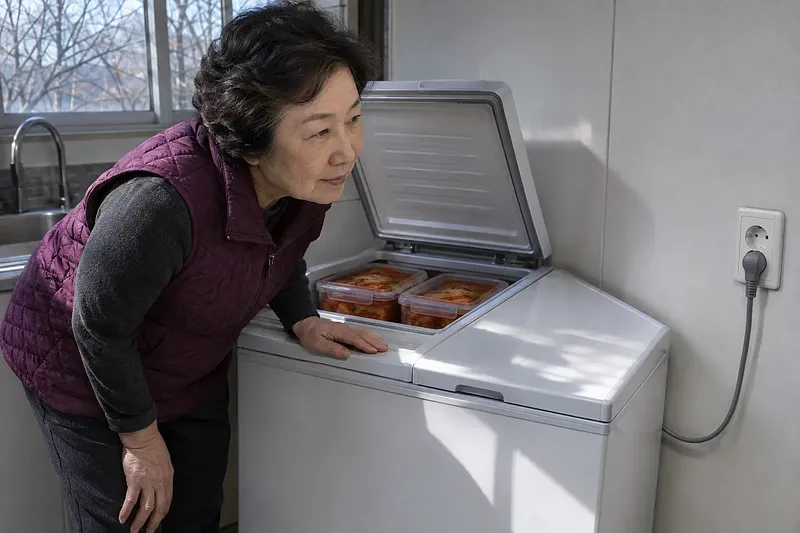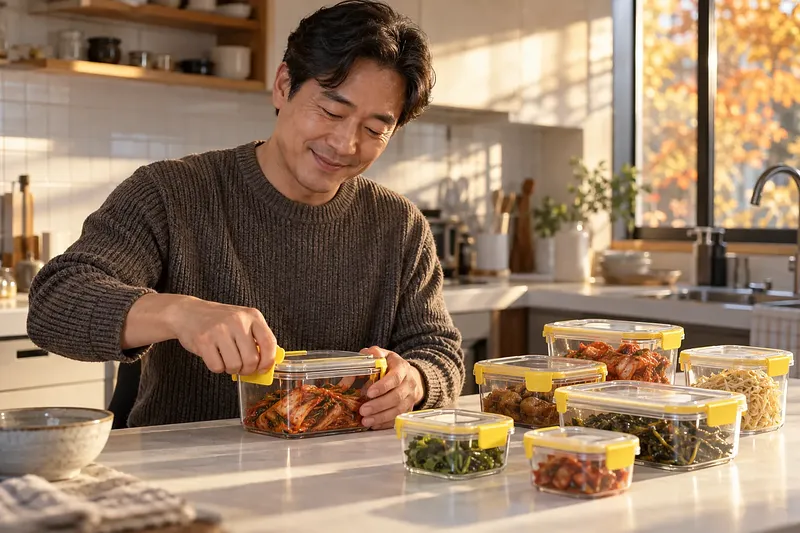
Keep salted shrimp in the refrigerator or freezer as directed on the package. Even in the freezer, the salty brine may not freeze solid. Once opened, keep the lid closed and eat the shrimp as soon as possible, even if the use-by date has not passed.
The guidance on how long to keep the shrimp after opening follows the Ministry of Food and Drug Safety's Q&A as of January 18, 2023.
What the Label Says About Refrigerating or Freezing
Even products aged in earthen tunnels in the same Gwangcheon area come with different storage instructions. Some specify a refrigeration temperature, while others say to freeze the product for long-term storage. The first thing to look for on the package you bought is “Storage Instructions.”
| Product | Storage Instructions on the Label | How to Store It at Home |
|---|---|---|
| Gwangcheon Togul Traditional Foods Gwangcheon Salted Shrimp 250g | Refrigerate at a temperature of at least 0℃ and at most 10℃ | Refrigerate within the temperature range shown on the package. |
| Myeongpum Gwangcheon Togul Saeujeot Chujeot | Refrigerate; freeze for long-term storage | You can freeze any portion you plan to keep for longer. The instructions do not specify how many months it will keep. |
| Gwangcheon Tunnel-Aged Yukjeot 1kg (Top Grade) | Keep frozen | Put it in the freezer after purchase. |
What Ojeot, Yukjeot, and Chujeot Mean
The names ojeot, yukjeot, and chujeot refer to when the shrimp were caught or salted. Ojeot is salted shrimp from the 5th lunar month, yukjeot is from the 6th lunar month, and chujeot is made with shrimp caught in autumn. Small shrimp that have been salted and aged are used in kimchi seasoning or to season stews. “Tunnel-aged” describes where the salted shrimp were aged, so check the home storage temperature separately.
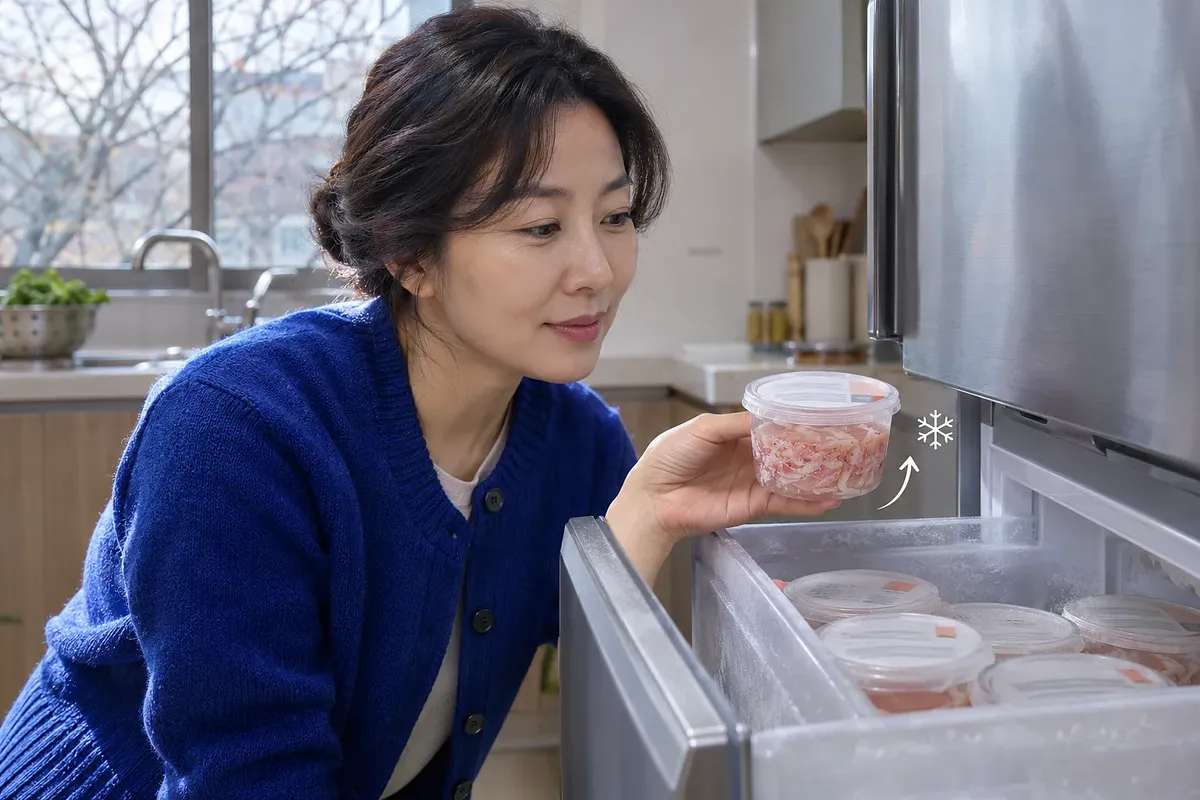
The salty brine in saeujeot can stay partly liquid even in the freezer.
Why the Brine May Not Freeze Solid in the Freezer
Salt dissolved in the brine lowers the freezing point, the temperature at which water starts to freeze. When some of the water freezes, the salt concentration in the remaining liquid rises. This is why ice and liquid brine can remain side by side in the same freezer.
The percentage of sea salt in the ingredient list shows how much salt was added during production. It is not the same as a value based on measuring the salt concentration of the brine itself. The ingredient percentages alone therefore make it hard to calculate the temperature at which the product will freeze.
If the brine is soft enough to get a spoon into, that alone does not tell you how cold it is or whether the shrimp are safe to eat. If you are unsure about the temperature, check it with a freezer thermometer. According to the U.S. Department of Agriculture's Food Safety and Inspection Service, some microorganisms survive freezing. Depending on the conditions, they can start multiplying again after thawing.
The Use-By Date Before Opening and How Long to Keep the Product After Opening
The use-by date on the package applies to an unopened product kept under the storage conditions on the label. If the product also specifies how long to use it after opening, follow those instructions as well. If there are no separate instructions, there is no basis for setting a single number of months that applies to all products.
Once food has been opened, neither the sell-by date nor the use-by date can guarantee that it is safe, so please eat it as soon as possible.
Ministry of Food and Drug Safety, “A Q&A on Use-By Date Labeling ①”
For example, opening a new container shortly before the use-by date and transferring the shrimp to a smaller container does not reset the date. Write both the date you opened it and the original use-by date on the smaller containers so you can tell the two dates apart. The Ministry of Food and Drug Safety advises against eating products past their use-by date.
How to Portion and Scoop Out Salted Shrimp After Opening
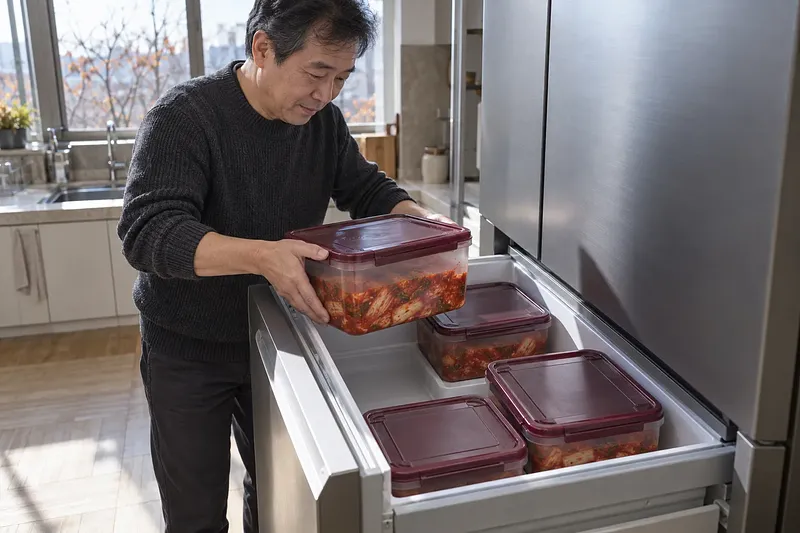
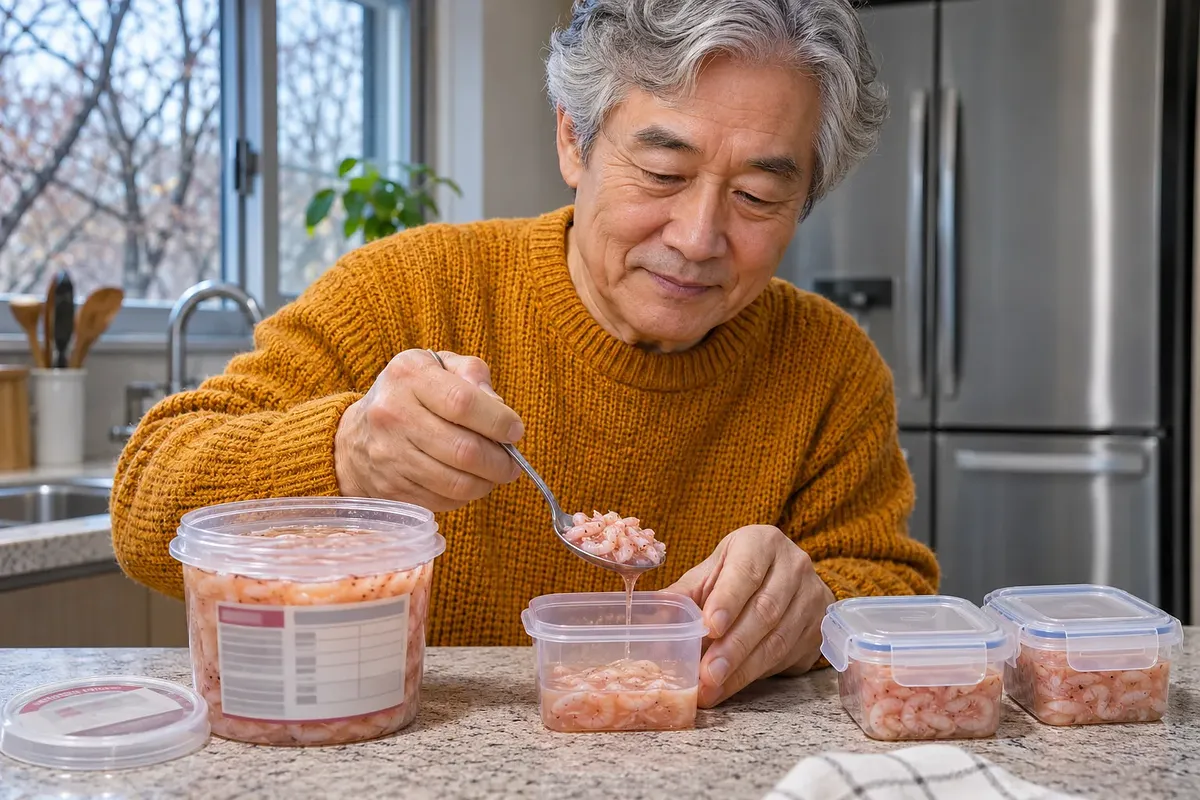
If you need to take out a large container often, dividing the shrimp ahead of time into portions you can use all at once reduces temperature changes. The amount you set aside at a time may differ depending on whether you use a whole container when making kimchi for winter or add a little at a time to stew. If you plan to freeze any of it, first check whether the label gives freezing instructions.
- Wash your hands and get a clean spoon and food-safe containers with lids. Wash any utensils that have touched other ingredients before using them.
- Spoon out as much as you need for one cooking session into each container and close the lids. Put the rest straight into the refrigerator or freezer as directed on the label.
- When cooking, take out only the container you need. If it needs thawing, thaw it in the refrigerator so you do not have to leave the whole large container at room temperature as often.