Skip to content
Injoys
Case Study

Triangle Factory Fire and New York State Safety Reforms

After the 1911 Triangle Factory fire, demands from workers and reform groups led to the creation of the New York State Factory Investigating Commission. Site inspections and hearings provided the basis for revisions to safety and health laws in 1912 and 1913.

Listen or read this article

18:11

Listen, or read the text only.

Triangle Factory Fire and New York State Safety Reforms

Kokoro 82M AI-generated voice 19 min read

0:00 18:11

Advertisement

Download audio

File name
triangle-factory-fire-new-york-safety-law-reform-en.mp3
Format
MP3 (audio/mpeg)
Duration
18:11
File size
12.5 MB
Engine
Kokoro 82M

This audio was generated by AI.

You may download and use it freely for personal use.

Triangle Factory Fire and New York State Safety Reforms

12 min read

Triangle Factory Fire and New York State Safety Reforms
After the 1911 Triangle Factory fire, demands from workers and reform groups led to the creation of the New York State Factory Investigating Commission. Site inspections and hearings provided the basis for revisions to safety and health laws in 1912 and 1913.
The Triangle Factory fire on March 25, 1911, killed 146 people.
At a memorial rally, Rose Schneiderman emphasized the movement for workers to organize themselves.
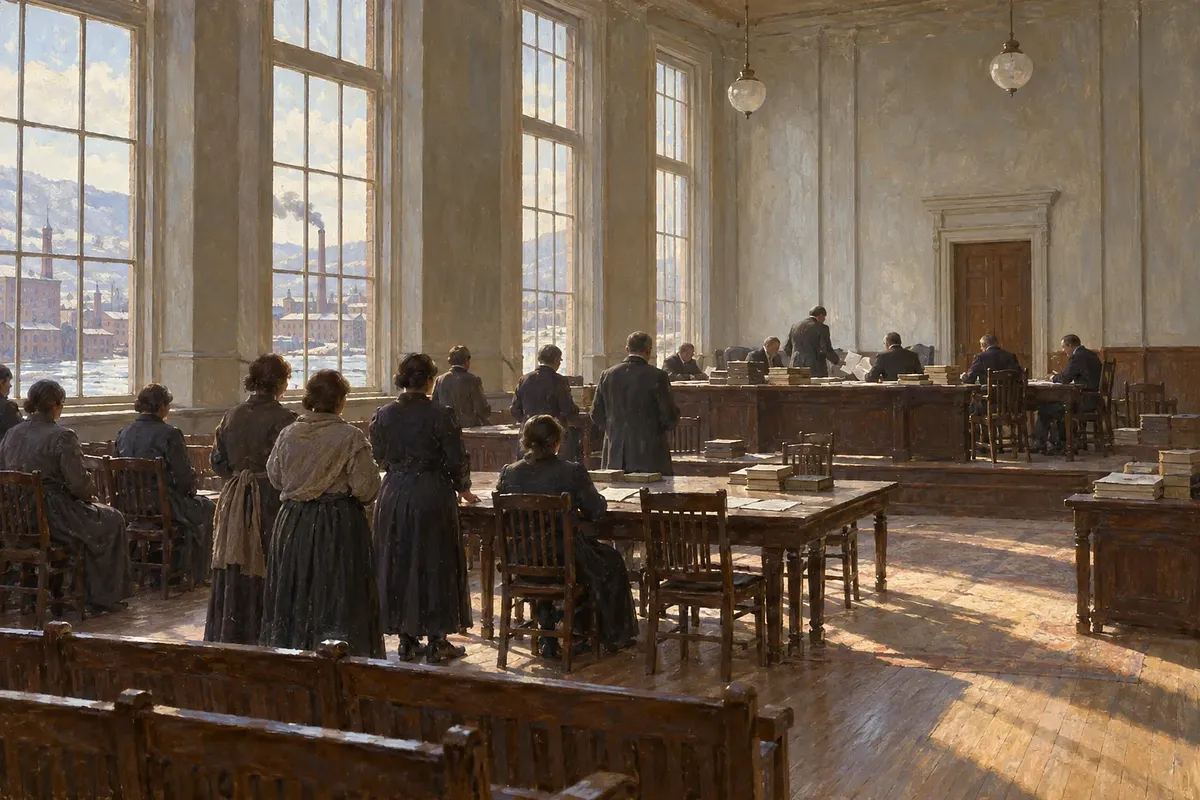
The New York State Factory Investigating Commission documented working conditions through site inspections and public hearings.
The 1912 to 1913 revisions expanded from fire safety regulations to a reorganization of the Department of Labor.
The factory owners' acquittal in their criminal trial should not be mistaken for a finding that the factory was safe.
The 1911 Triangle factory fire in New York killed 146 people. Workers and reform groups demanded safety measures. New York State revised its safety and health laws through an investigating commission. The fire is remembered as a case in which collective demands led to preventive measures.
This article follows records from Cornell University and the New York State Archives, checked in October 2026.
Working Conditions and Safety Problems Before the Fire
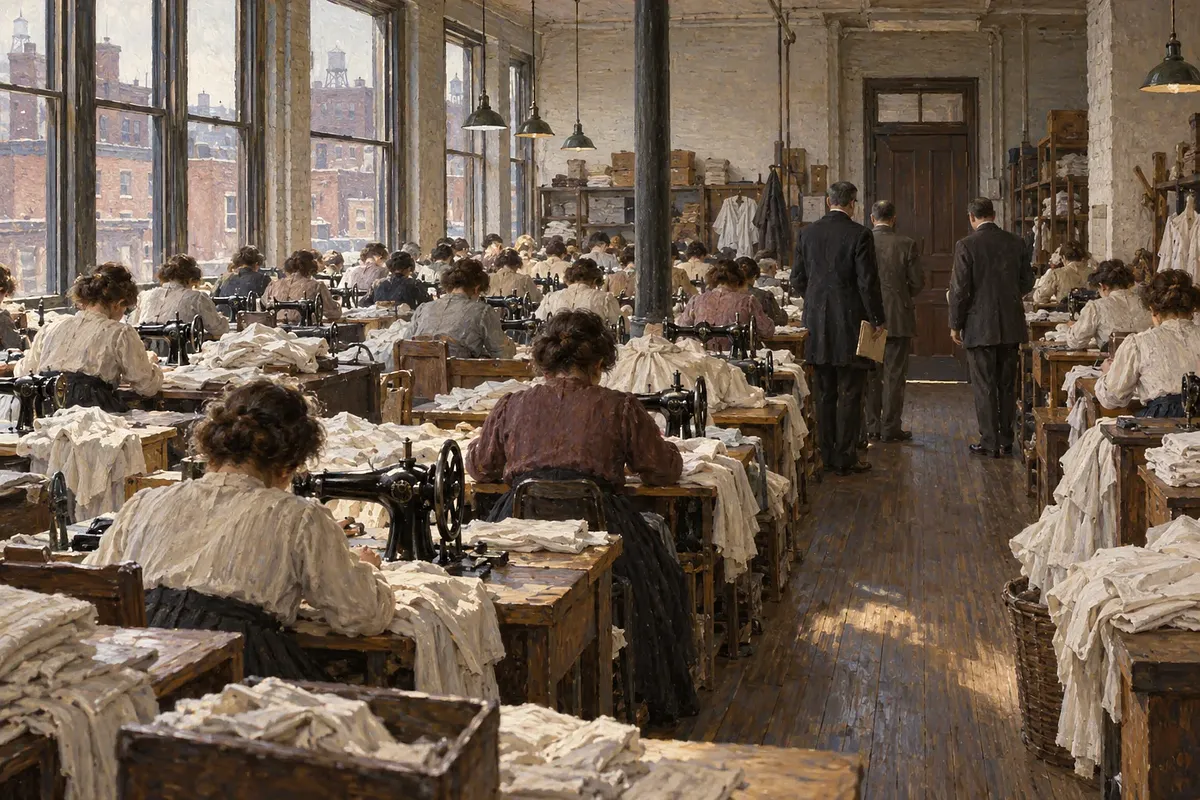
The dangers at the Triangle factory were part of poor working conditions that had existed before the fire. The factory occupied the 8th through 10th floors of Manhattan’s Asch Building. Many of its workers were young immigrant women. A shirtwaist was a blouse worn by women at the time.
Low wages and long hours encouraged workers to organize. Triangle workers took part in the 1909 garment industry strike. The demands raised after the fire grew out of that experience. This background is covered in the National Park Service’s historical account.
During the fire on March 25, 1911, several means of escape failed. Cornell University’s account says workers could not open the 9th-floor door. The external fire escape did not provide a safe way out. Fire department ladders could not reach the floors where people needed rescue.
Problem exposed | Effect on escape and rescue | Distinction to keep in mind when reading the records Door that would not open | Blocked the way to the stairs | Testimony about the door’s condition and the owners’ knowledge are separate issues Weak external fire escape | Failed as an evacuation route | Having a fire escape was not the same as being able to use it Limited reach of rescue equipment | Made rescue from upper floors difficult | Outside rescue alone could not ensure safety
This table is based on Cornell University’s account of the fire.
Timeline: From Workers’ Demands to Legislation
Reform moved from protests immediately after the disaster to investigations and legislation over several years. Memorial gatherings brought working conditions into public debate. The investigating commission gathered evidence to examine those demands. Legislation followed over several years.
Date | Event and change | Supporting record 1909 | Triangle workers took part in the garment industry strike | National Park Service historical account March 25, 1911 | Triangle factory fire | Cornell University account of the fire April 2, 1911 | Schneiderman stressed the need for a labor movement at a memorial gathering | Speech held by the Kheel Center June 30, 1911 | Law establishing the New York State Factory Investigating Commission was enacted | Commission’s 1912 preliminary report From October 1911 | Public hearings held in several New York State cities | New York State Archives guide to commission records December 27, 1911 | Not-guilty verdict in the factory owners’ criminal trial | Cornell University account of the trial 1912 | Legislation on factory registration, automatic sprinklers and related rules | New York State Archives guide to commission records 1913 | Reorganization of the Department of Labor and additional safety and health legislation | New York State Archives guide to commission records February 1915 | Investigating commission submitted its final report | New York State Archives guide to commission records
What Rose Schneiderman Demanded at the Memorial Gathering
Rose Schneiderman emphasized organized action by workers. She spoke at the Metropolitan Opera House on April 2, 1911. The Kheel Center holds the speech under the title “We Have Found You Wanting.” It first appeared in The Survey on April 8, 1911.
The only way they can save themselves is by a strong working-class movement. Rose Schneiderman, “We Have Found You Wanting,” copy held by Cornell University’s Kheel Center
The speech argues that charity for bereaved families alone would not change working conditions. It also points to pressure from public authorities against workers’ protests. It ends by proposing a movement organized by workers themselves as the solution. These points appear in the speech published by the Kheel Center.
Treating this speech as a demand for a particular piece of equipment would narrow its meaning. Its central claim is that workers must be the agents of improving their conditions. In the reforms that followed, union activity and demands for legislation developed together.
How the Factory Investigating Commission Turned Demands Into Evidence
The New York State Factory Investigating Commission combined site inspections with hearings. The law establishing it was enacted on June 30, 1911. The commission had the authority to require witnesses to appear and documents to be produced. Its legal basis was Chapter 561 of the New York State laws of 1911.
State legislators Robert Wagner and Alfred Smith led the commission. Frances Perkins also took part in the investigation and site visits. These connections helped move the findings onto the legislative agenda. Their roles are explained in the U.S. Department of Labor’s history of the commission.
The commission did not limit itself to the causes of the fire at one factory. It also investigated ventilation, sanitation and occupational diseases. It examined whether existing laws were being enforced. The scope of the investigation is set out in the 1912 preliminary report.
Investigative method | Evidence gathered | Role in considering legislation Site inspections | Conditions of buildings, equipment and sanitation | Identified hazards repeated across factories Public hearings | Testimony from workers, employers, officials and others | Added firsthand experience and explanations to the official record Questionnaires and written submissions | Proposals from experts, labor groups and others | Helped assess improvements and problems with regulations Review of existing laws | Regulations and their enforcement | Helped determine the need for new rules and administrative changes
Hearings were held in Buffalo, Rochester and other places as well as New York City. They provided a way to put workers’ experiences into the public record. The methods of investigation are described in the New York State Archives guide to the commission’s records.
What Changed in Safety and Health Laws in 1912 and 1913?
The revisions addressed both safety equipment rules and the administrative bodies that would enforce them. In 1912, provisions concerning factory registration and automatic sprinklers became law. The Department of Labor was reorganized in 1913. Restrictions on women’s night work were also included in the legislation.
Area | Problem raised by the investigation | Direction of reform Fire prevention and evacuation | Too few exits and inadequate escape facilities | Stronger fire safety rules, including sprinkler requirements Worker health | Inadequate ventilation, washing facilities and toilets | Improved sanitation and health protections Oversight | Limits of existing labor laws and supervisory bodies | Factory registration and reorganization of the Department of Labor Working hours | Night work by women and other concerns | Protective rules, including restrictions on night work
The commission also recommended more stairs and exits, alarm systems and other measures. Not every recommendation became law on the same day or to the same extent. The New York State Archives guide distinguishes what was adopted in each year.
New York City pursued reforms separately from state legislation. In October 1911, the city moved to establish a Bureau of Fire Prevention. The measure was intended to reduce confusion among agencies over inspections and enforcement. This course of events is described in Cornell University’s account of legislative reform.
How Did the Not-Guilty Verdict Differ From Safety Law Reform?
The criminal trial was a process for deciding whether the owners were criminally responsible. Preventive legislation was work to establish safety standards that would apply to other factories. Both processes began with the same disaster, but they addressed different questions.
According to Cornell University’s account of the trial, workers testified that they could not open the door. At trial, the question was whether the owners knew it was locked. The jury returned a not-guilty verdict on December 27, 1911. That verdict should not be read as a finding that the factory was safe.
Distinction | Criminal trial | Investigating commission and legislation Central question | Could the defendants be held criminally responsible? | What risks should be reduced through regulation? Subject of review | Actions and knowledge in a specific case | Working conditions and regulation across workplaces Outcome | Not-guilty verdict for the defendants | Changes to safety and health rules and the oversight system
A rule prohibiting locked doors already existed before the fire. Reform therefore also involved the enforcement of existing rules. The trial’s course is described in Cornell University’s account of the investigation and trial.
Records and Interpretation
Records from the time and later accounts should be read with their different purposes in mind. Testimony records events as individuals experienced them. The commission’s reports presented findings and legislative recommendations. Historical accounts connect multiple records to explain the meaning of the changes.
What the Records Confirm
The Kheel Center’s introduction to the trial materials describes testimony from about 100 people. The full record has not survived intact, however. The complete text of Volume 2 is no longer available. Some of its contents have been supplemented by Leon Stein’s research notes.
This state of preservation is noted in the Kheel Center’s introduction to the trial records. The introduction itself should be distinguished from the original courtroom testimony. Anyone quoting an individual’s words directly should check that testimony separately.
An Interpretation Shared by Historical Accounts
Cornell University and the U.S. Department of Labor describe the fire as a turning point for reform. They also place it in the context of the existing labor movement and Progressive Era reform. It would therefore be difficult to say that one disaster created the whole of labor law.
Limits to What Can Be Confirmed
Testimony about a locked door is distinct from proof of what the owners knew. The not-guilty verdict does not reject all the testimony about the door. Nor should a later historical account be presented as though it were the court’s ruling at the time.
Legislative outcomes alone cannot measure how much actual risk fell. Records of legal changes show how the system changed. Assessing its effects after implementation would require additional inspection, enforcement and accident data.
Why Some Records Give the Death Toll as 145 and Others as 146
This article uses 146, the figure given in current accounts by Cornell University and public institutions. The text of the 1912 preliminary report, however, gives 145. The difference is a reason to distinguish the figure in the original document from the figure used in later accounts.
Record | Death toll given | How this article treats it Page 13 of the commission’s 1912 preliminary report | 145 | Identified as the figure in the contemporary document Cornell University account of the fire | 146 | Used as the fire’s death toll Library of Congress historical guide | 146 | Cross-check for the figure in current accounts
The excerpt from that report alone cannot establish how the difference arose. Silently changing 145 when quoting the original would alter the record. Conversely, using only 145 in an account of the event would conflict with current guides. Both the 1912 report and the Library of Congress guide need to be checked.
The Results of Reform and Their Meaning Today
One result of this case was that workers’ experiences became subjects of investigation and legal enforcement. Hazards were treated as public problems to be compared across workplaces. Reform extended beyond equipment standards to the bodies responsible for oversight.
Even after the revisions, there were political efforts to weaken the rules. The U.S. Department of Labor’s account records opposition from employers’ associations. In 1915, supporters of the reforms held a rally to defend the laws. Maintaining the system remained necessary after the legislation passed.
Today, this case is used to compare the conditions under which industrial safety systems work. Its significance lies in three connections:
· The connection between workers raising concerns and their testimony entering the official record. · The connection between site investigations and specific preventive rules. · The connection between passing laws and continuing oversight and enforcement.
Frequently Asked Questions
Did the Fire Create American Labor Law for the First Time?
State and local governments had labor safety rules before the fire. The Triangle fire exposed the limits of the existing system. New York State subsequently expanded and reorganized its rules and oversight system.
Did Schneiderman Call for Sprinklers?
The central point of the memorial speech examined here is the need for a strong labor movement. The quoted sentence does not call for sprinklers. Equipment recommendations should be distinguished from the speech and placed in the commission’s investigation and legislative process.
Did the Factory Investigating Commission Investigate Only the Fire?
The investigation expanded to sanitation, occupational diseases, working hours and other matters. It also examined enforcement of existing laws. The commission later investigated wage issues as well.
Why Did the Law Change if the Factory Owners Were Found Not Guilty?
The criminal trial and preventive legislation addressed different questions. The not-guilty verdict was not a reason to leave risks at other factories unaddressed. The investigating commission developed measures that could apply across workplaces.
Did the Legal Changes Eliminate Every Risk?
The records of legal changes alone cannot establish that outcome. Maintaining and enforcing the rules remained necessary. Their actual effect on safety must be assessed using records from after implementation.
0:00 0:00
1 / 69

Advertisement

Download text

File name
triangle-factory-fire-new-york-safety-law-reform-en.txt
Format
TXT (text/plain)
Paragraphs
69

Downloads exactly what you see as a text file.

Please cite the source when quoting.

Large text

Makes the text larger and the colors clearer. Turn it on if the text feels too small.

The New York State Factory Investigating Commission's site visits helped ground the 1912–1913 safety and health reforms.AI-generated image

Key points

  • The Triangle Factory fire on March 25, 1911, killed 146 people.
  • At a memorial rally, Rose Schneiderman emphasized the movement for workers to organize themselves.
  • The New York State Factory Investigating Commission documented working conditions through site inspections and public hearings.
  • The 1912 to 1913 revisions expanded from fire safety regulations to a reorganization of the Department of Labor.
  • The factory owners' acquittal in their criminal trial should not be mistaken for a finding that the factory was safe.

The 1911 Triangle factory fire in New York killed 146 people. Workers and reform groups demanded safety measures. New York State revised its safety and health laws through an investigating commission. The fire is remembered as a case in which collective demands led to preventive measures.

This article follows records from Cornell University and the New York State Archives, checked in October 2026.

Working Conditions and Safety Problems Before the Fire

The dangers at the Triangle factory were part of poor working conditions that had existed before the fire. The factory occupied the 8th through 10th floors of Manhattan’s Asch Building. Many of its workers were young immigrant women. A shirtwaist was a blouse worn by women at the time.

Low wages and long hours encouraged workers to organize. Triangle workers took part in the 1909 garment industry strike. The demands raised after the fire grew out of that experience. This background is covered in the National Park Service’s historical account.

During the fire on March 25, 1911, several means of escape failed. Cornell University’s account says workers could not open the 9th-floor door. The external fire escape did not provide a safe way out. Fire department ladders could not reach the floors where people needed rescue.

Problem exposed Effect on escape and rescue Distinction to keep in mind when reading the records
Door that would not open Blocked the way to the stairs Testimony about the door’s condition and the owners’ knowledge are separate issues
Weak external fire escape Failed as an evacuation route Having a fire escape was not the same as being able to use it
Limited reach of rescue equipment Made rescue from upper floors difficult Outside rescue alone could not ensure safety

This table is based on Cornell University’s account of the fire.

Public hearings helped the New York State Factory Investigating Commission document working conditions.AI-generated image

Timeline: From Workers’ Demands to Legislation

Reform moved from protests immediately after the disaster to investigations and legislation over several years. Memorial gatherings brought working conditions into public debate. The investigating commission gathered evidence to examine those demands. Legislation followed over several years.

Date Event and change Supporting record
1909 Triangle workers took part in the garment industry strike National Park Service historical account
March 25, 1911 Triangle factory fire Cornell University account of the fire
April 2, 1911 Schneiderman stressed the need for a labor movement at a memorial gathering Speech held by the Kheel Center
June 30, 1911 Law establishing the New York State Factory Investigating Commission was enacted Commission’s 1912 preliminary report
From October 1911 Public hearings held in several New York State cities New York State Archives guide to commission records
December 27, 1911 Not-guilty verdict in the factory owners’ criminal trial Cornell University account of the trial
1912 Legislation on factory registration, automatic sprinklers and related rules New York State Archives guide to commission records
1913 Reorganization of the Department of Labor and additional safety and health legislation New York State Archives guide to commission records
February 1915 Investigating commission submitted its final report New York State Archives guide to commission records

What Rose Schneiderman Demanded at the Memorial Gathering

Rose Schneiderman emphasized organized action by workers. She spoke at the Metropolitan Opera House on April 2, 1911. The Kheel Center holds the speech under the title “We Have Found You Wanting.” It first appeared in The Survey on April 8, 1911.

The only way they can save themselves is by a strong working-class movement.

Rose Schneiderman, “We Have Found You Wanting,” copy held by Cornell University’s Kheel Center

The speech argues that charity for bereaved families alone would not change working conditions. It also points to pressure from public authorities against workers’ protests. It ends by proposing a movement organized by workers themselves as the solution. These points appear in the speech published by the Kheel Center.

Treating this speech as a demand for a particular piece of equipment would narrow its meaning. Its central claim is that workers must be the agents of improving their conditions. In the reforms that followed, union activity and demands for legislation developed together.

How the Factory Investigating Commission Turned Demands Into Evidence

The New York State Factory Investigating Commission combined site inspections with hearings. The law establishing it was enacted on June 30, 1911. The commission had the authority to require witnesses to appear and documents to be produced. Its legal basis was Chapter 561 of the New York State laws of 1911.

State legislators Robert Wagner and Alfred Smith led the commission. Frances Perkins also took part in the investigation and site visits. These connections helped move the findings onto the legislative agenda. Their roles are explained in the U.S. Department of Labor’s history of the commission.

The commission did not limit itself to the causes of the fire at one factory. It also investigated ventilation, sanitation and occupational diseases. It examined whether existing laws were being enforced. The scope of the investigation is set out in the 1912 preliminary report.

Investigative method Evidence gathered Role in considering legislation
Site inspections Conditions of buildings, equipment and sanitation Identified hazards repeated across factories
Public hearings Testimony from workers, employers, officials and others Added firsthand experience and explanations to the official record
Questionnaires and written submissions Proposals from experts, labor groups and others Helped assess improvements and problems with regulations
Review of existing laws Regulations and their enforcement Helped determine the need for new rules and administrative changes

Hearings were held in Buffalo, Rochester and other places as well as New York City. They provided a way to put workers’ experiences into the public record. The methods of investigation are described in the New York State Archives guide to the commission’s records.

What Changed in Safety and Health Laws in 1912 and 1913?

The revisions addressed both safety equipment rules and the administrative bodies that would enforce them. In 1912, provisions concerning factory registration and automatic sprinklers became law. The Department of Labor was reorganized in 1913. Restrictions on women’s night work were also included in the legislation.

Area Problem raised by the investigation Direction of reform
Fire prevention and evacuation Too few exits and inadequate escape facilities Stronger fire safety rules, including sprinkler requirements
Worker health Inadequate ventilation, washing facilities and toilets Improved sanitation and health protections
Oversight Limits of existing labor laws and supervisory bodies Factory registration and reorganization of the Department of Labor
Working hours Night work by women and other concerns Protective rules, including restrictions on night work

The commission also recommended more stairs and exits, alarm systems and other measures. Not every recommendation became law on the same day or to the same extent. The New York State Archives guide distinguishes what was adopted in each year.

New York City pursued reforms separately from state legislation. In October 1911, the city moved to establish a Bureau of Fire Prevention. The measure was intended to reduce confusion among agencies over inspections and enforcement. This course of events is described in Cornell University’s account of legislative reform.


How Did the Not-Guilty Verdict Differ From Safety Law Reform?

The criminal trial was a process for deciding whether the owners were criminally responsible. Preventive legislation was work to establish safety standards that would apply to other factories. Both processes began with the same disaster, but they addressed different questions.

According to Cornell University’s account of the trial, workers testified that they could not open the door. At trial, the question was whether the owners knew it was locked. The jury returned a not-guilty verdict on December 27, 1911. That verdict should not be read as a finding that the factory was safe.

Distinction Criminal trial Investigating commission and legislation
Central question Could the defendants be held criminally responsible? What risks should be reduced through regulation?
Subject of review Actions and knowledge in a specific case Working conditions and regulation across workplaces
Outcome Not-guilty verdict for the defendants Changes to safety and health rules and the oversight system

A rule prohibiting locked doors already existed before the fire. Reform therefore also involved the enforcement of existing rules. The trial’s course is described in Cornell University’s account of the investigation and trial.

Records and Interpretation

Records from the time and later accounts should be read with their different purposes in mind. Testimony records events as individuals experienced them. The commission’s reports presented findings and legislative recommendations. Historical accounts connect multiple records to explain the meaning of the changes.

What the Records Confirm

The Kheel Center’s introduction to the trial materials describes testimony from about 100 people. The full record has not survived intact, however. The complete text of Volume 2 is no longer available. Some of its contents have been supplemented by Leon Stein’s research notes.

This state of preservation is noted in the Kheel Center’s introduction to the trial records. The introduction itself should be distinguished from the original courtroom testimony. Anyone quoting an individual’s words directly should check that testimony separately.

An Interpretation Shared by Historical Accounts

Cornell University and the U.S. Department of Labor describe the fire as a turning point for reform. They also place it in the context of the existing labor movement and Progressive Era reform. It would therefore be difficult to say that one disaster created the whole of labor law.

Limits to What Can Be Confirmed

Testimony about a locked door is distinct from proof of what the owners knew. The not-guilty verdict does not reject all the testimony about the door. Nor should a later historical account be presented as though it were the court’s ruling at the time.

Legislative outcomes alone cannot measure how much actual risk fell. Records of legal changes show how the system changed. Assessing its effects after implementation would require additional inspection, enforcement and accident data.

Why Some Records Give the Death Toll as 145 and Others as 146

This article uses 146, the figure given in current accounts by Cornell University and public institutions. The text of the 1912 preliminary report, however, gives 145. The difference is a reason to distinguish the figure in the original document from the figure used in later accounts.

Record Death toll given How this article treats it
Page 13 of the commission’s 1912 preliminary report 145 Identified as the figure in the contemporary document
Cornell University account of the fire 146 Used as the fire’s death toll
Library of Congress historical guide 146 Cross-check for the figure in current accounts

The excerpt from that report alone cannot establish how the difference arose. Silently changing 145 when quoting the original would alter the record. Conversely, using only 145 in an account of the event would conflict with current guides. Both the 1912 report and the Library of Congress guide need to be checked.

The Results of Reform and Their Meaning Today

One result of this case was that workers’ experiences became subjects of investigation and legal enforcement. Hazards were treated as public problems to be compared across workplaces. Reform extended beyond equipment standards to the bodies responsible for oversight.

Even after the revisions, there were political efforts to weaken the rules. The U.S. Department of Labor’s account records opposition from employers’ associations. In 1915, supporters of the reforms held a rally to defend the laws. Maintaining the system remained necessary after the legislation passed.

Today, this case is used to compare the conditions under which industrial safety systems work. Its significance lies in three connections:

  • The connection between workers raising concerns and their testimony entering the official record.
  • The connection between site investigations and specific preventive rules.
  • The connection between passing laws and continuing oversight and enforcement.

Questions checked against the record

Did the Fire Create American Labor Law for the First Time?

State and local governments had labor safety rules before the fire. The Triangle fire exposed the limits of the existing system. New York State subsequently expanded and reorganized its rules and oversight system.

Did Schneiderman Call for Sprinklers?

The central point of the memorial speech examined here is the need for a strong labor movement. The quoted sentence does not call for sprinklers. Equipment recommendations should be distinguished from the speech and placed in the commission’s investigation and legislative process.

Did the Factory Investigating Commission Investigate Only the Fire?

The investigation expanded to sanitation, occupational diseases, working hours and other matters. It also examined enforcement of existing laws. The commission later investigated wage issues as well.

Why Did the Law Change if the Factory Owners Were Found Not Guilty?

The criminal trial and preventive legislation addressed different questions. The not-guilty verdict was not a reason to leave risks at other factories unaddressed. The investigating commission developed measures that could apply across workplaces.

The records of legal changes alone cannot establish that outcome. Maintaining and enforcing the rules remained necessary. Their actual effect on safety must be assessed using records from after implementation.

Open the link

Opens in a new window.

Advertisement

Sign-in required

Sign in with your Google account to like, comment, and save highlights.

FAQ

When did the Triangle factory fire occur?

It occurred on March 25, 1911, in Manhattan, New York. Cornell University and the Library of Congress put the death toll at 146.

Were U.S. labor laws first enacted because of the fire?

Workplace safety regulations existed before the fire. The incident prompted New York State to expand and overhaul its existing regulations and oversight system.

What did Rose Schneiderman call for at the memorial gathering?

In her speech on April 2, 1911, she emphasized organized action by workers. She also criticized the idea that charity alone could change working conditions.

How did the New York State Factory Investigating Commission conduct its investigation?

It used site inspections, public hearings, surveys, and written submissions. It also had the authority to require witnesses to appear and documents to be submitted.

What legal changes were made in 1912 and 1913?

In 1912, regulations covering factory registration and automatic sprinklers, among other things, were adopted. In 1913, legislation reorganized the Department of Labor and introduced additional safety and health regulations.

Does the factory owners' acquittal mean there was nothing wrong with the doors?

The not-guilty verdict cannot be taken as proof that the factory was safe. The issue at trial was whether the owners knew the door was locked.

Why does a report from the time list the death toll as 145?

The 1912 preliminary report lists 145 deaths. Current accounts from Cornell University and public agencies give the toll as 146. The excerpt from that report alone cannot establish the reason for the discrepancy.

Did the legal changes make all factories safe?

The fact that laws were passed does not, by itself, show that all risks were eliminated. Assessing their actual effects requires inspection, enforcement, and accident records from after the laws took effect.

Where can I read the Factory Investigating Commission's reports?

You can read an excerpt from the preliminary report at Cornell University's Kheel Center. The Historical Society of the New York Courts explains how to access the second, third, and fourth reports for public viewing.

Sources

Data formats

This content is available in several machine-friendly formats.

Data-only languages (machine translated, files only)

Indonesian JSON MD Portuguese JSON MD Chinese (Traditional) JSON MD Deutsch JSON MD

Verification

This article was drafted with AI and then reviewed and edited by a person.

Reviewed by 신익희 · 편집장 · 2026-10-20

Figures in this article were checked against the source material during generation. · 2026-10-20

This translation has been cross-checked by AI. · 2026-10-20

Reuse & AI usage

Search indexing and AI citation with attribution are welcome. See the license policy for details.

CC BY · License

Loading…

Loading…

Loading…

Related content

From Injoys

Request the content you want and take 70% of what it earns

Just leave the subject. We handle production, review, translation and distribution.

See how revenue sharing works

Comments