Skip to content
Injoys
Knowledge Base

Why the Yen Stays Weak Despite 2026 Rate Hikes

The weak yen cannot be explained simply by whether Japan raises interest rates. The 2026 U.S.-Japan interest rate gap and overseas investment flows help explain the limits of currency intervention and the effects on households and businesses.

Listen or read this article

21:22

Listen, or read the text only.

Why the Yen Stays Weak Despite 2026 Rate Hikes

Kokoro 82M AI-generated voice 22 min read

0:00 21:22

Advertisement

Download audio

File name
yen-weakness-2026-interest-rate-hikes-explained-en.mp3
Format
MP3 (audio/mpeg)
Duration
21:22
File size
14.7 MB
Engine
Kokoro 82M

This audio was generated by AI.

You may download and use it freely for personal use.

Why the Yen Stays Weak Despite 2026 Rate Hikes

16 min read

Why the Yen Stays Weak Despite 2026 Rate Hikes
The weak yen cannot be explained simply by whether Japan raises interest rates. The 2026 U.S.-Japan interest rate gap and overseas investment flows help explain the limits of currency intervention and the effects on households and businesses.
Based on the September 2026 decisions, the gap between U.S. and Japanese policy rates is 2.50 to 2.75 percentage points.
The yen carry trade seeks to profit from interest rate differences but can incur losses if the yen strengthens.
When income earned overseas is reinvested locally, a current account surplus does not immediately lead to yen buying.
The weak yen's impact on each business depends on the currency mix of its revenue and costs.
When buying yen with won, you need to check both the dollar-yen and won-dollar exchange rates.
A weak yen can persist even if Japan raises interest rates, as long as a rate gap with the United States remains. Market expectations for interest rates and the flow of overseas investment also matter. When buying yen with Korean won, you need to look at both the dollar-yen and won-dollar exchange rates.
The policy rate figures are based on announcements by the U.S. and Japanese central banks in September 2026.
Which exchange rate defines a weak yen?
A weak yen means the yen has fallen in value against another currency. The dollar-yen exchange rate shows how many yen are needed to buy one dollar. When that number rises, the yen falls against the dollar.
The won-yen exchange rate is usually shown as the won needed to buy 100 yen. When that number falls, you can buy yen more cheaply with won. Because the two rates use different reference currencies, they may not move in the same direction.
Quotation | When the number rises | When the number falls Yen per dollar, yen/dollar | Yen weakens against the dollar | Yen strengthens against the dollar Won per 100 yen, won/100 yen | Yen strengthens against the won | Yen weakens against the won
Reports of a long-term low in the summer of 2026 concerned the yen against the dollar. In an August 3 report, AP said the dollar-yen rate had briefly exceeded 164 yen in July. The same report described this as the dollar’s strongest level in about 40 years. It should not be read as a historic low in the won-yen exchange rate. AP’s August 3, 2026, exchange rate report

Why is the yen weak even after an interest rate increase?
Exchange rates respond to relative investment conditions, not just the size of Japan’s rate increase. If U.S. rates remain higher, dollar assets retain their interest-rate appeal. Markets also price in expected future rate differences ahead of time.
The Bank of Japan (日本銀行) decided to raise its policy rate on September 18, 2026. Its target for the uncollateralized overnight call rate is around 1.25% per year. The new guideline takes effect on September 24. Bank of Japan announcement of a change in its money market operations guideline
The Bank will encourage the uncollateralized overnight call rate to remain at around 1.25 percent. Bank of Japan, Change in the Guideline for Money Market Operations, September 18, 2026
This is a target for guiding very short-term interest rates between financial institutions. It does not mean individuals can borrow yen at the same rate. Actual lending rates reflect creditworthiness and the financial institution’s terms.
Comparison | September 2026 decision | Interpretation Japanese policy rate | Around 1.25% per year | Bank of Japan’s short-term rate target U.S. policy rate | 3.75% to 4.00% per year | Target range for the federal funds rate U.S.-Japan policy rate gap | 2.50 to 2.75 percentage points | U.S. target range minus Japan’s target
The U.S. Federal Reserve also decided to raise its policy rate on September 16. Japan’s increase alone therefore does not show that the rate gap between the two countries narrowed substantially. The gap above is a simple comparison of policy rates. It is not the return on an investment in U.S. Treasury securities. Federal Reserve’s September 2026 FOMC statement
An expected rate increase may be reflected in exchange rates before it is announced. If subsequent increases come more slowly than expected, demand to buy yen may weaken. The yen’s weakness after a rate increase alone does not establish that the policy had no effect.
How does the yen carry trade work?
A yen carry trade involves raising funds in low-interest-rate yen. Investors use the borrowed money to buy assets in other currencies that they expect to yield higher returns. Selling yen in this process can put downward pressure on the currency.
But the interest rate difference is not a guaranteed return. If the yen strengthens, the cost of repaying the borrowed yen rises. A fall in the price of the assets held can also cause losses. BIS analyzed how the unwinding of leveraged investments amplified market volatility in August 2024. BIS analysis of carry trade unwinding
· Funding rate: The interest charged on an actual yen loan. · Investment return: Interest earned on the investment assets and gains or losses from price changes. · Foreign exchange gain or loss: The gain or loss when converting funds back into yen. · Transaction costs: Currency conversion costs, fees, and other expenses.
Currency hedging is a transaction that reduces exchange rate risk. But hedging costs also reflect the interest rate difference between the two countries. It is therefore difficult to eliminate exchange rate risk while still capturing the full rate difference. BIS explanation of currency hedging and interest rate differences
Why is the yen weak despite a current account surplus?
Not all of a current account surplus leads to immediate yen purchases. The current account includes interest and dividends from overseas investments. It also includes some profits that overseas subsidiaries retain locally.
The Bank of Japan’s balance of payments FAQ explains how reinvested earnings are treated. Retained earnings at an overseas subsidiary are recorded as income attributable to its parent company. At the same time, they are recorded as reinvestment in the financial account. They are recorded even if no money is sent to Japan or converted into yen. Bank of Japan balance of payments statistics FAQ
Simply subtracting overseas investment from the current account surplus can therefore be inaccurate. The same reinvestment transaction may have corresponding entries in both statistics. To compare them, first align their periods and coverage.
Distinction to check | Easy to confuse | Correct interpretation Flows and stocks | Annual overseas investment and overseas assets at year-end | Distinguish transactions over a period from holdings at a point in time Gross and net figures | Overseas investment purchases and net investment | Check whether sales, recoveries, and investment in the opposite direction are reflected Income and currency conversion | Profits earned overseas and yen purchases | Distinguish local reinvestment from actual currency conversion Statistical period | Annual and half-year figures | Compare figures for the same period
NISA is a Japanese account system that provides tax benefits on investment returns. Which assets the money in those accounts is invested in is a separate question. The entire amount invested through NISA cannot be treated as overseas investment or yen sales. Japan Financial Services Agency’s explanation of NISA
Why is foreign exchange intervention unlikely to change the trend?
Intervention to buy yen directly increases demand for the currency. It cannot, however, eliminate the interest rate gap between the two countries or investors’ long-term outlook. Incentives to sell yen may remain after the intervention.
On August 3, 2026, AP reported confirmation of intervention by both the U.S. and Japan. The dollar-yen rate fell to around 155.20 yen during trading that day. But it is difficult to isolate the effect of intervention from the entire exchange rate change over a given period. Economic data and interest rate expectations can change at the same time. AP report on U.S.-Japan foreign exchange intervention
Japan’s Ministry of Finance (財務省) publishes its own intervention amounts separately. The total for July 30 through August 26, 2026, was 15.3993 trillion yen. That is the Japanese amount for the entire reporting period. It should not be read as the total for one day of joint U.S.-Japan intervention. Ministry of Finance announcement of August 28, 2026
When assessing the effect of intervention, make these distinctions:
· Short-term effect: Check whether it eased sharp exchange rate movements. · Lasting effect: Check whether interest rate expectations and capital flows changed afterward. · Scope of the figures: Distinguish estimates from official amounts. · Participants: Look at the Japanese and U.S. amounts separately.
The relationship between fiscal expansion and rising government bond yields
A rise in government bond yields does not always mean a stronger yen. Its effect on the currency depends on why yields rose. Investors may also demand higher interest rates because of concerns about public finances.
Reason government bond yields rise | Possible market signal | Possible effect on the yen Improved growth outlook | Higher expected investment returns and interest rates | May support demand for yen Inflation concerns | Concern about declining purchasing power | Depends on the central bank’s response Increased bond supply | Need to absorb more bonds | Depends on demand and the policy response Weaker confidence in public finances | Demand for extra compensation for risk | May accompany a weaker yen
Sanae Takaichi’s (高市早苗) government pursued a reduction in the consumption tax on food. A related bill was also mentioned at a September 17, 2026, press conference. The same press conference explained that funding for the entire measure would be considered alongside budget reforms. There is insufficient basis to conclude that the policy would be funded entirely through government bonds. Japanese Prime Minister’s Office press conference of September 17, 2026
Government targets for encouraging investment must also be distinguished from actual government spending. If private investment is included, the entire amount is not a fiscal burden. The confirmed budget and bond issuance plan are needed to determine how much funding the government will actually raise.
There are also limits to calculating costs by multiplying existing government debt by the increase in interest rates. Interest on fixed-rate government bonds does not change immediately when market rates rise. The burden appears through new issuance and refinancing debt as it matures. Refinancing means replacing maturing debt with new debt.

What else does the Bank of Japan consider?
The Bank of Japan considers economic activity and prices as well as exchange rates. Higher interest rates tend to restrain borrowing and spending. Meanwhile, higher import prices caused by a weak yen reduce households’ purchasing power.
The release version of GDP figures from Japan’s Cabinet Office (内閣府) also matters. The first preliminary estimate of real growth in the second quarter of 2026 was an annualized 1.1%. The second preliminary estimate, released on September 8, revised it to an annualized 1.4%. Growth from the previous quarter was 0.4%. Cabinet Office second preliminary GDP estimate for the second quarter of 2026
An annualized rate converts one quarter’s pace of growth into the rate that would result if it continued for a year. It does not mean the economy grew by that much during the quarter. Assessing the economy also requires details such as consumption and capital investment.
In its September announcement, the Bank of Japan assessed the economy as recovering moderately despite some weakness. It also described the effects of a weak yen and high crude oil prices on inflation. It would therefore be inappropriate to conclude that it cannot raise rates further. Actual policy will depend on subsequent data and forecasts. Bank of Japan’s September 2026 assessment of economic activity and prices
By circumstance: Benefits and burdens of a weak yen
The effect of a weak yen depends on the currencies in which revenue and costs are calculated. Exporters can face higher costs if they use many imported raw materials. The share of production overseas and whether currency risks are hedged also affect the outcome.
Situation | Potential benefit | Burdens to check as well Company with substantial foreign-currency revenue | Higher yen value of foreign-currency profits | Overseas costs, imported raw materials, currency hedging Japan’s tourism industry | Lower cost of local purchases for foreign visitors | Rising food ingredient, energy, and labor costs Import-focused company | Limited direct exchange rate benefit | Higher cost of foreign-currency payments Japanese household | Potential increase in the yen value of foreign-currency assets held | Higher food and energy prices Paying for a trip to Japan in won | Lower currency conversion cost if the won-yen rate falls | Local prices, airfares, currency conversion fees
Toyota’s earnings forecast cannot be explained by the exchange rate alone. In August 2026, the company raised its annual operating profit forecast by 400 billion yen. Its forecast for the fiscal year ending March 2027 is 3.4 trillion yen. The company’s explanation also includes alternative logistics routes for the Middle East and business improvements. Toyota’s FY2027 first-quarter results explanation
It would therefore be inaccurate to attribute the entire forecast increase to the weak yen. Assessing exchange rate sensitivity requires a separate analysis from the company. An improved corporate profit forecast also does not guarantee a rise in the share price.
Household burdens as seen through real wages
Real wages show the amount of goods and services that wages can buy. Even if nominal wages rise, real wages fall when prices rise faster. A weak yen can contribute to this burden through import prices.
The Ministry of Health, Labour and Welfare’s (厚生労働省) final statistics for 2025 are as follows. They cover workplaces with at least 5 employees. The real wage figures differ depending on the consumer price index used. Ministry of Health, Labour and Welfare’s final 2025 Monthly Labour Survey results
Indicator | Change from the previous year in 2025 | Basis Nominal wages in 2025 | Increased 2.5% from the previous year | Total cash earnings Real wages | Decreased 1.3% | Overall price index excluding imputed rent for owner-occupied housing Reference figure for real wages | Decreased 0.8% | Overall consumer price index
Imputed rent estimates the benefit of living in your own home as though it were rent. It is not money actually paid to a landlord. Whether this item is included makes a difference in the real wage calculation.
The decline in real wages cannot be attributed entirely to the weak yen. Global commodity prices and the size of wage increases also matter. Nor does improvement in a single quarter show whether earlier losses in purchasing power have been recovered.
Calculation example: The difference between 884 won and 950 won per 100 yen
If the exchange rate per 100 yen falls from 950 won to 884 won, you save 66 won. The two rates are comparison figures for the calculation. They are not presented as actual bank exchange rates on a particular date.
Comparison | Calculation | Result Difference in the cost of buying 100 yen | 950 won - 884 won | Decrease of 66 won Percentage decrease in won cost | 66 won ÷ 950 won × 100 | About 6.95% Percentage increase in yen purchasable with the same amount of won | 950 ÷ 884 - 1 | About 7.47%
The percentage decrease in cost and the percentage increase in yen purchasable are different because they use different starting values. Currency conversion fees are not included in these calculations.
To compare travel costs, use the exchange rate that will actually apply. Cash conversion and card payments may have different costs. If local accommodation costs have risen, the exchange rate benefit may also shrink.
The effect of the won hidden in the won-yen exchange rate
The won-yen exchange rate is affected by movements in the won as well as the yen. The relationship can be calculated using the dollar as a common reference. This assumes rates from the same point in time and on the same pricing basis.
Won per 100 yen = Won per dollar ÷ Yen per dollar × 100
With other conditions unchanged | Effect on won per 100 yen | Meaning for someone converting won Yen per dollar rises | Falls | Lower cost of buying yen Won per dollar rises | Rises | Higher cost of buying yen Both rates rise by the same percentage | Largely unchanged | Benefit of a weaker yen against the dollar is offset
A weaker yen against the dollar alone is therefore not enough to predict the cost of converting travel money. If the won weakens more, the cost of buying yen can rise. Banks’ actual exchange rates also reflect transaction costs.
Common mistakes in articles about the weak yen
When interpreting a weak yen, distinguish what the numbers measure from claims about cause and effect. Policy rates and government bond yields are different indicators, even though both are interest rates. Confirmed changes should also be read separately from estimates of their causes.
Common interpretation | What to check The policy rate gap equals the investment return | Actual funding rate, asset return, foreign exchange gains or losses, and costs Rising government bond yields always mean a stronger currency | Distinguish growth expectations from inflation and fiscal risks The entire current account surplus is cash entering the country | Overseas retained earnings and their treatment as reinvestment A monthly intervention amount is the amount of joint intervention on a particular day | Reporting period and amounts by participating country A higher profit forecast is entirely due to the exchange rate | The company’s explanation of sales volume, costs, logistics, and other factors Yen that are cheap compared with the past will rise in value | Distinguish the current price from future returns
If you are preparing to convert currency, check in this order:
· Decide when you will need the yen and how much you need. · Check the bank’s actual exchange rate per 100 yen. · Compare the final amount of won you will spend, including fees. · Keep money for travel separate from funds invested in the hope of exchange rate gains.
0:00 0:00
1 / 76

Advertisement

Download text

File name
yen-weakness-2026-interest-rate-hikes-explained-en.txt
Format
TXT (text/plain)
Paragraphs
76

Downloads exactly what you see as a text file.

Please cite the source when quoting.

Large text

Makes the text larger and the colors clearer. Turn it on if the text feels too small.

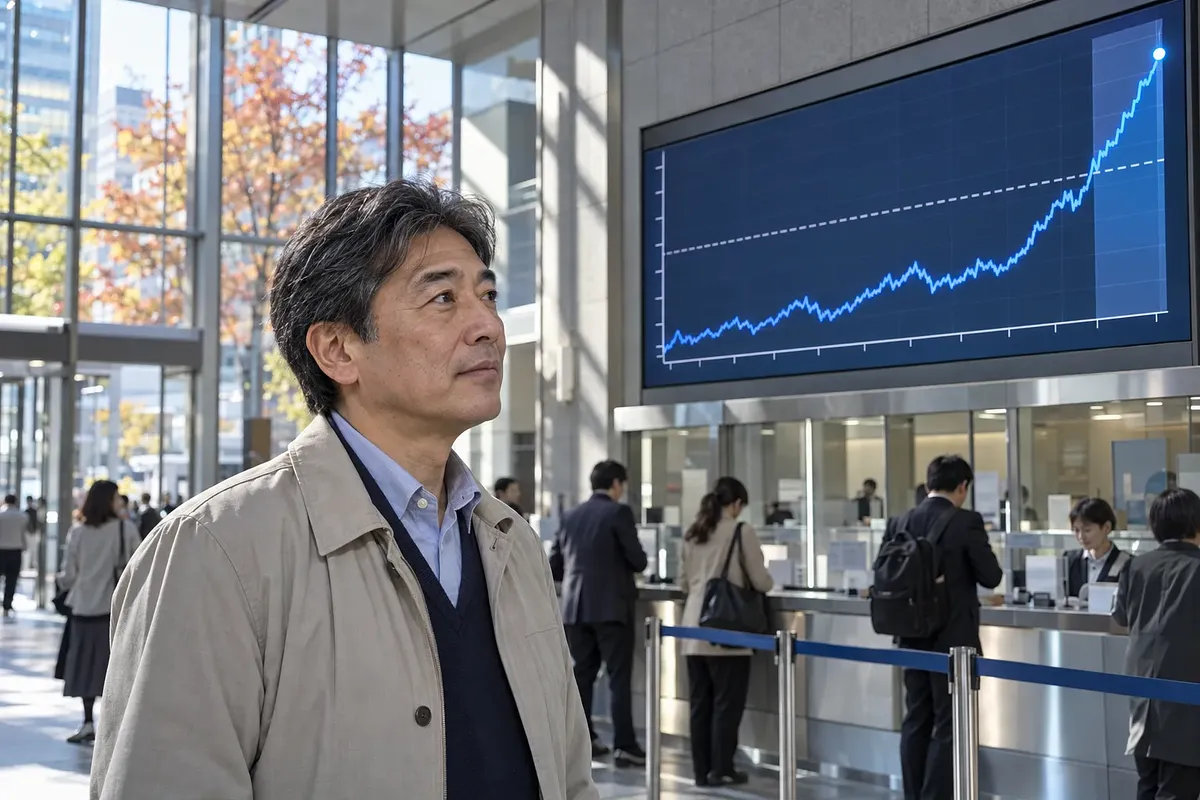
The yen can remain weak after a Japanese rate hike if the U.S.–Japan interest-rate gap persists.

Key points

  • Based on the September 2026 decisions, the gap between U.S. and Japanese policy rates is 2.50 to 2.75 percentage points.
  • The yen carry trade seeks to profit from interest rate differences but can incur losses if the yen strengthens.
  • When income earned overseas is reinvested locally, a current account surplus does not immediately lead to yen buying.
  • The weak yen's impact on each business depends on the currency mix of its revenue and costs.
  • When buying yen with won, you need to check both the dollar-yen and won-dollar exchange rates.

A weak yen can persist even if Japan raises interest rates, as long as a rate gap with the United States remains. Market expectations for interest rates and the flow of overseas investment also matter. When buying yen with Korean won, you need to look at both the dollar-yen and won-dollar exchange rates.

The policy rate figures are based on announcements by the U.S. and Japanese central banks in September 2026.

Which exchange rate defines a weak yen?

A weak yen means the yen has fallen in value against another currency. The dollar-yen exchange rate shows how many yen are needed to buy one dollar. When that number rises, the yen falls against the dollar.

The won-yen exchange rate is usually shown as the won needed to buy 100 yen. When that number falls, you can buy yen more cheaply with won. Because the two rates use different reference currencies, they may not move in the same direction.

Quotation When the number rises When the number falls
Yen per dollar, yen/dollar Yen weakens against the dollar Yen strengthens against the dollar
Won per 100 yen, won/100 yen Yen strengthens against the won Yen weakens against the won

Reports of a long-term low in the summer of 2026 concerned the yen against the dollar. In an August 3 report, AP said the dollar-yen rate had briefly exceeded 164 yen in July. The same report described this as the dollar’s strongest level in about 40 years. It should not be read as a historic low in the won-yen exchange rate. AP’s August 3, 2026, exchange rate report

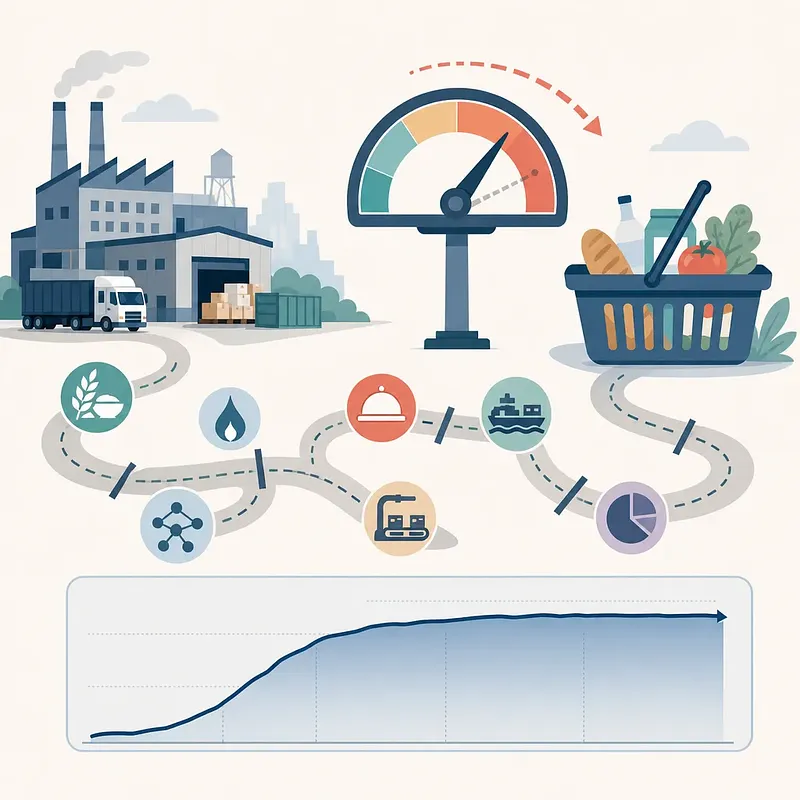
A weaker yen can raise the cost of imported goods for households.

Why is the yen weak even after an interest rate increase?

Exchange rates respond to relative investment conditions, not just the size of Japan’s rate increase. If U.S. rates remain higher, dollar assets retain their interest-rate appeal. Markets also price in expected future rate differences ahead of time.

The Bank of Japan (日本銀行) decided to raise its policy rate on September 18, 2026. Its target for the uncollateralized overnight call rate is around 1.25% per year. The new guideline takes effect on September 24. Bank of Japan announcement of a change in its money market operations guideline

The Bank will encourage the uncollateralized overnight call rate to remain at around 1.25 percent.

Bank of Japan, Change in the Guideline for Money Market Operations, September 18, 2026

This is a target for guiding very short-term interest rates between financial institutions. It does not mean individuals can borrow yen at the same rate. Actual lending rates reflect creditworthiness and the financial institution’s terms.

Comparison September 2026 decision Interpretation
Japanese policy rate Around 1.25% per year Bank of Japan’s short-term rate target
U.S. policy rate 3.75% to 4.00% per year Target range for the federal funds rate
U.S.-Japan policy rate gap 2.50 to 2.75 percentage points U.S. target range minus Japan’s target

The U.S. Federal Reserve also decided to raise its policy rate on September 16. Japan’s increase alone therefore does not show that the rate gap between the two countries narrowed substantially. The gap above is a simple comparison of policy rates. It is not the return on an investment in U.S. Treasury securities. Federal Reserve’s September 2026 FOMC statement

An expected rate increase may be reflected in exchange rates before it is announced. If subsequent increases come more slowly than expected, demand to buy yen may weaken. The yen’s weakness after a rate increase alone does not establish that the policy had no effect.

How does the yen carry trade work?

A yen carry trade involves raising funds in low-interest-rate yen. Investors use the borrowed money to buy assets in other currencies that they expect to yield higher returns. Selling yen in this process can put downward pressure on the currency.

But the interest rate difference is not a guaranteed return. If the yen strengthens, the cost of repaying the borrowed yen rises. A fall in the price of the assets held can also cause losses. BIS analyzed how the unwinding of leveraged investments amplified market volatility in August 2024. BIS analysis of carry trade unwinding

  • Funding rate: The interest charged on an actual yen loan.
  • Investment return: Interest earned on the investment assets and gains or losses from price changes.
  • Foreign exchange gain or loss: The gain or loss when converting funds back into yen.
  • Transaction costs: Currency conversion costs, fees, and other expenses.

Currency hedging is a transaction that reduces exchange rate risk. But hedging costs also reflect the interest rate difference between the two countries. It is therefore difficult to eliminate exchange rate risk while still capturing the full rate difference. BIS explanation of currency hedging and interest rate differences

Why is the yen weak despite a current account surplus?

Not all of a current account surplus leads to immediate yen purchases. The current account includes interest and dividends from overseas investments. It also includes some profits that overseas subsidiaries retain locally.

The Bank of Japan’s balance of payments FAQ explains how reinvested earnings are treated. Retained earnings at an overseas subsidiary are recorded as income attributable to its parent company. At the same time, they are recorded as reinvestment in the financial account. They are recorded even if no money is sent to Japan or converted into yen. Bank of Japan balance of payments statistics FAQ

Simply subtracting overseas investment from the current account surplus can therefore be inaccurate. The same reinvestment transaction may have corresponding entries in both statistics. To compare them, first align their periods and coverage.

Distinction to check Easy to confuse Correct interpretation
Flows and stocks Annual overseas investment and overseas assets at year-end Distinguish transactions over a period from holdings at a point in time
Gross and net figures Overseas investment purchases and net investment Check whether sales, recoveries, and investment in the opposite direction are reflected
Income and currency conversion Profits earned overseas and yen purchases Distinguish local reinvestment from actual currency conversion
Statistical period Annual and half-year figures Compare figures for the same period

NISA is a Japanese account system that provides tax benefits on investment returns. Which assets the money in those accounts is invested in is a separate question. The entire amount invested through NISA cannot be treated as overseas investment or yen sales. Japan Financial Services Agency’s explanation of NISA

Why is foreign exchange intervention unlikely to change the trend?

Intervention to buy yen directly increases demand for the currency. It cannot, however, eliminate the interest rate gap between the two countries or investors’ long-term outlook. Incentives to sell yen may remain after the intervention.

On August 3, 2026, AP reported confirmation of intervention by both the U.S. and Japan. The dollar-yen rate fell to around 155.20 yen during trading that day. But it is difficult to isolate the effect of intervention from the entire exchange rate change over a given period. Economic data and interest rate expectations can change at the same time. AP report on U.S.-Japan foreign exchange intervention

Japan’s Ministry of Finance (財務省) publishes its own intervention amounts separately. The total for July 30 through August 26, 2026, was 15.3993 trillion yen. That is the Japanese amount for the entire reporting period. It should not be read as the total for one day of joint U.S.-Japan intervention. Ministry of Finance announcement of August 28, 2026

When assessing the effect of intervention, make these distinctions:

  • Short-term effect: Check whether it eased sharp exchange rate movements.
  • Lasting effect: Check whether interest rate expectations and capital flows changed afterward.
  • Scope of the figures: Distinguish estimates from official amounts.
  • Participants: Look at the Japanese and U.S. amounts separately.

The relationship between fiscal expansion and rising government bond yields

A rise in government bond yields does not always mean a stronger yen. Its effect on the currency depends on why yields rose. Investors may also demand higher interest rates because of concerns about public finances.

Reason government bond yields rise Possible market signal Possible effect on the yen
Improved growth outlook Higher expected investment returns and interest rates May support demand for yen
Inflation concerns Concern about declining purchasing power Depends on the central bank’s response
Increased bond supply Need to absorb more bonds Depends on demand and the policy response
Weaker confidence in public finances Demand for extra compensation for risk May accompany a weaker yen

Sanae Takaichi’s (高市早苗) government pursued a reduction in the consumption tax on food. A related bill was also mentioned at a September 17, 2026, press conference. The same press conference explained that funding for the entire measure would be considered alongside budget reforms. There is insufficient basis to conclude that the policy would be funded entirely through government bonds. Japanese Prime Minister’s Office press conference of September 17, 2026

Government targets for encouraging investment must also be distinguished from actual government spending. If private investment is included, the entire amount is not a fiscal burden. The confirmed budget and bond issuance plan are needed to determine how much funding the government will actually raise.

There are also limits to calculating costs by multiplying existing government debt by the increase in interest rates. Interest on fixed-rate government bonds does not change immediately when market rates rise. The burden appears through new issuance and refinancing debt as it matures. Refinancing means replacing maturing debt with new debt.


What else does the Bank of Japan consider?

The Bank of Japan considers economic activity and prices as well as exchange rates. Higher interest rates tend to restrain borrowing and spending. Meanwhile, higher import prices caused by a weak yen reduce households’ purchasing power.

The release version of GDP figures from Japan’s Cabinet Office (内閣府) also matters. The first preliminary estimate of real growth in the second quarter of 2026 was an annualized 1.1%. The second preliminary estimate, released on September 8, revised it to an annualized 1.4%. Growth from the previous quarter was 0.4%. Cabinet Office second preliminary GDP estimate for the second quarter of 2026

An annualized rate converts one quarter’s pace of growth into the rate that would result if it continued for a year. It does not mean the economy grew by that much during the quarter. Assessing the economy also requires details such as consumption and capital investment.

In its September announcement, the Bank of Japan assessed the economy as recovering moderately despite some weakness. It also described the effects of a weak yen and high crude oil prices on inflation. It would therefore be inappropriate to conclude that it cannot raise rates further. Actual policy will depend on subsequent data and forecasts. Bank of Japan’s September 2026 assessment of economic activity and prices

By circumstance: Benefits and burdens of a weak yen

The effect of a weak yen depends on the currencies in which revenue and costs are calculated. Exporters can face higher costs if they use many imported raw materials. The share of production overseas and whether currency risks are hedged also affect the outcome.

Situation Potential benefit Burdens to check as well
Company with substantial foreign-currency revenue Higher yen value of foreign-currency profits Overseas costs, imported raw materials, currency hedging
Japan’s tourism industry Lower cost of local purchases for foreign visitors Rising food ingredient, energy, and labor costs
Import-focused company Limited direct exchange rate benefit Higher cost of foreign-currency payments
Japanese household Potential increase in the yen value of foreign-currency assets held Higher food and energy prices
Paying for a trip to Japan in won Lower currency conversion cost if the won-yen rate falls Local prices, airfares, currency conversion fees

Toyota’s earnings forecast cannot be explained by the exchange rate alone. In August 2026, the company raised its annual operating profit forecast by 400 billion yen. Its forecast for the fiscal year ending March 2027 is 3.4 trillion yen. The company’s explanation also includes alternative logistics routes for the Middle East and business improvements. Toyota’s FY2027 first-quarter results explanation

It would therefore be inaccurate to attribute the entire forecast increase to the weak yen. Assessing exchange rate sensitivity requires a separate analysis from the company. An improved corporate profit forecast also does not guarantee a rise in the share price.

Household burdens as seen through real wages

Real wages show the amount of goods and services that wages can buy. Even if nominal wages rise, real wages fall when prices rise faster. A weak yen can contribute to this burden through import prices.

The Ministry of Health, Labour and Welfare’s (厚生労働省) final statistics for 2025 are as follows. They cover workplaces with at least 5 employees. The real wage figures differ depending on the consumer price index used. Ministry of Health, Labour and Welfare’s final 2025 Monthly Labour Survey results

Indicator Change from the previous year in 2025 Basis
Nominal wages in 2025 Increased 2.5% from the previous year Total cash earnings
Real wages Decreased 1.3% Overall price index excluding imputed rent for owner-occupied housing
Reference figure for real wages Decreased 0.8% Overall consumer price index

Imputed rent estimates the benefit of living in your own home as though it were rent. It is not money actually paid to a landlord. Whether this item is included makes a difference in the real wage calculation.

The decline in real wages cannot be attributed entirely to the weak yen. Global commodity prices and the size of wage increases also matter. Nor does improvement in a single quarter show whether earlier losses in purchasing power have been recovered.

Calculation example: The difference between 884 won and 950 won per 100 yen

If the exchange rate per 100 yen falls from 950 won to 884 won, you save 66 won. The two rates are comparison figures for the calculation. They are not presented as actual bank exchange rates on a particular date.

Comparison Calculation Result
Difference in the cost of buying 100 yen 950 won - 884 won Decrease of 66 won
Percentage decrease in won cost 66 won ÷ 950 won × 100 About 6.95%
Percentage increase in yen purchasable with the same amount of won 950 ÷ 884 - 1 About 7.47%

The percentage decrease in cost and the percentage increase in yen purchasable are different because they use different starting values. Currency conversion fees are not included in these calculations.

To compare travel costs, use the exchange rate that will actually apply. Cash conversion and card payments may have different costs. If local accommodation costs have risen, the exchange rate benefit may also shrink.

The effect of the won hidden in the won-yen exchange rate

The won-yen exchange rate is affected by movements in the won as well as the yen. The relationship can be calculated using the dollar as a common reference. This assumes rates from the same point in time and on the same pricing basis.

Won per 100 yen = Won per dollar ÷ Yen per dollar × 100

With other conditions unchanged Effect on won per 100 yen Meaning for someone converting won
Yen per dollar rises Falls Lower cost of buying yen
Won per dollar rises Rises Higher cost of buying yen
Both rates rise by the same percentage Largely unchanged Benefit of a weaker yen against the dollar is offset

A weaker yen against the dollar alone is therefore not enough to predict the cost of converting travel money. If the won weakens more, the cost of buying yen can rise. Banks’ actual exchange rates also reflect transaction costs.

Common mistakes in articles about the weak yen

When interpreting a weak yen, distinguish what the numbers measure from claims about cause and effect. Policy rates and government bond yields are different indicators, even though both are interest rates. Confirmed changes should also be read separately from estimates of their causes.

Common interpretation What to check
The policy rate gap equals the investment return Actual funding rate, asset return, foreign exchange gains or losses, and costs
Rising government bond yields always mean a stronger currency Distinguish growth expectations from inflation and fiscal risks
The entire current account surplus is cash entering the country Overseas retained earnings and their treatment as reinvestment
A monthly intervention amount is the amount of joint intervention on a particular day Reporting period and amounts by participating country
A higher profit forecast is entirely due to the exchange rate The company’s explanation of sales volume, costs, logistics, and other factors
Yen that are cheap compared with the past will rise in value Distinguish the current price from future returns

If you are preparing to convert currency, check in this order:

  1. Decide when you will need the yen and how much you need.
  2. Check the bank’s actual exchange rate per 100 yen.
  3. Compare the final amount of won you will spend, including fees.
  4. Keep money for travel separate from funds invested in the hope of exchange rate gains.
Open the link

Opens in a new window.

Advertisement

Sign-in required

Sign in with your Google account to like, comment, and save highlights.

FAQ

If Japan raises interest rates, will the yen necessarily strengthen?

Not necessarily. The interest rate gap with the U.S. and the outlook for future policy also matter. An expected rate hike may already be reflected in the exchange rate before it is announced.

What is the policy interest rate gap between the U.S. and Japan as of September 2026?

Japan's target is about 1.25% annually. The U.S. target range is 3.75~4.00% annually. The simple difference is 2.50~2.75 percentage points, which is not the same as the actual investment return.

Is the yen carry trade a safe way to earn the interest rate difference?

Exchange rate and asset price movements can cause losses. If the yen strengthens, repaying yen loans becomes more costly. The cost of currency hedging must also be taken into account.

Why can the yen weaken when Japan has a current account surplus?

The current account also includes profits reinvested overseas. That income may not result in actual transfers to Japan or conversion into yen. Demand for currency exchange from other investment and trade transactions also plays a role.

Where can I check the size of Japan's foreign exchange interventions?

You can check the Japanese Ministry of Finance's foreign exchange intervention records. Monthly totals should be distinguished from daily breakdowns. The amount reported by Japan should not be interpreted as a total that also includes the U.S.

Is Japan's 1.1% growth rate for the second quarter of 2026 the latest figure?

The annualized 1.1% figure was the first preliminary estimate. In the second preliminary estimate released on September 8, 2026, it was revised to an annualized 1.4%. Quarter-on-quarter growth was 0.4%.

Does a rise in Japanese government bond yields mean public finances are unstable?

A rise in government bond yields alone does not establish that public finances are unstable. Growth and inflation expectations, government bond supply, and central bank policy all play a role. The cause of the yield increase needs to be identified.

Is a weaker yen always good for Japanese exporters?

It can increase the yen value of profits earned in foreign currencies. On the other hand, it can raise the cost of imported raw materials and overseas expenses. The outcome depends on where production takes place and whether currency hedging is used.

How much did real wages in Japan fall in 2025?

According to the Ministry of Health, Labour and Welfare's final statistics, real wages based on total cash earnings in 2025 fell 0.5% from the previous year. The figures cover workplaces with at least five employees. They are adjusted using the overall price index excluding imputed rent for owner-occupied housing.

If the yen weakens against the dollar, does it also become cheaper to exchange won for yen?

If the won-dollar exchange rate stays the same, buying yen with won costs less. But if the won also weakens, that benefit may shrink. For an actual comparison, use the applicable exchange rate per 100 yen.

Is 884 won per 100 yen the exchange rate currently in effect?

In this article, it is a figure used for calculations to compare with 950 won. It is not the current exchange rate. Check your bank's currency exchange screen for the amount including fees.

Sources

Data formats

This content is available in several machine-friendly formats.

Data-only languages (machine translated, files only)

Indonesian JSON MD Portuguese JSON MD Chinese (Traditional) JSON MD Deutsch JSON MD

Verification

This article was drafted with AI and then reviewed and edited by a person.

Reviewed by 신익희 · 편집장 · 2026-10-01

Figures in this article were checked against the source material during generation. 3 correction(s) applied. · 2026-10-01

This translation has been cross-checked by AI. · 2026-10-01

Reuse & AI usage

Search indexing and AI citation with attribution are welcome. See the license policy for details.

CC BY · License

Loading…

Loading…

Related content

From Injoys

Request the content you want and take 70% of what it earns

Just leave the subject. We handle production, review, translation and distribution.

See how revenue sharing works

Comments