Skip to content
History and People, records and timelines of how people and nations overcame adversity Case Study

Kim Chun-chu's 648 Silla-Tang Alliance: How It Formed

Listen or read this article

18:10

Listen, or read the text only.

Kim Chun-chu's 648 Silla-Tang Alliance: How It Formed

Kokoro 82M AI-generated voice 19 min read

0:00 18:10

Advertisement

Download audio

File name
kim-chunchu-648-silla-tang-alliance-background-en.mp3
Format
MP3 (audio/mpeg)
Duration
18:10
File size
12.5 MB
Engine
Kokoro 82M

This audio was generated by AI.

You may download and use it freely for personal use.

Advertisement

Kim Chun-chu's 648 Silla-Tang Alliance: How It Formed

12 min read

Kim Chun-chu's 648 Silla-Tang Alliance: How It Formed
After the fall of Daeya Fortress, Kim Chun-chu sought reinforcements from Goguryeo but failed. His direct negotiations with Tang in 648 marked a turning point in the Silla-Tang alliance as the two states' military interests aligned.
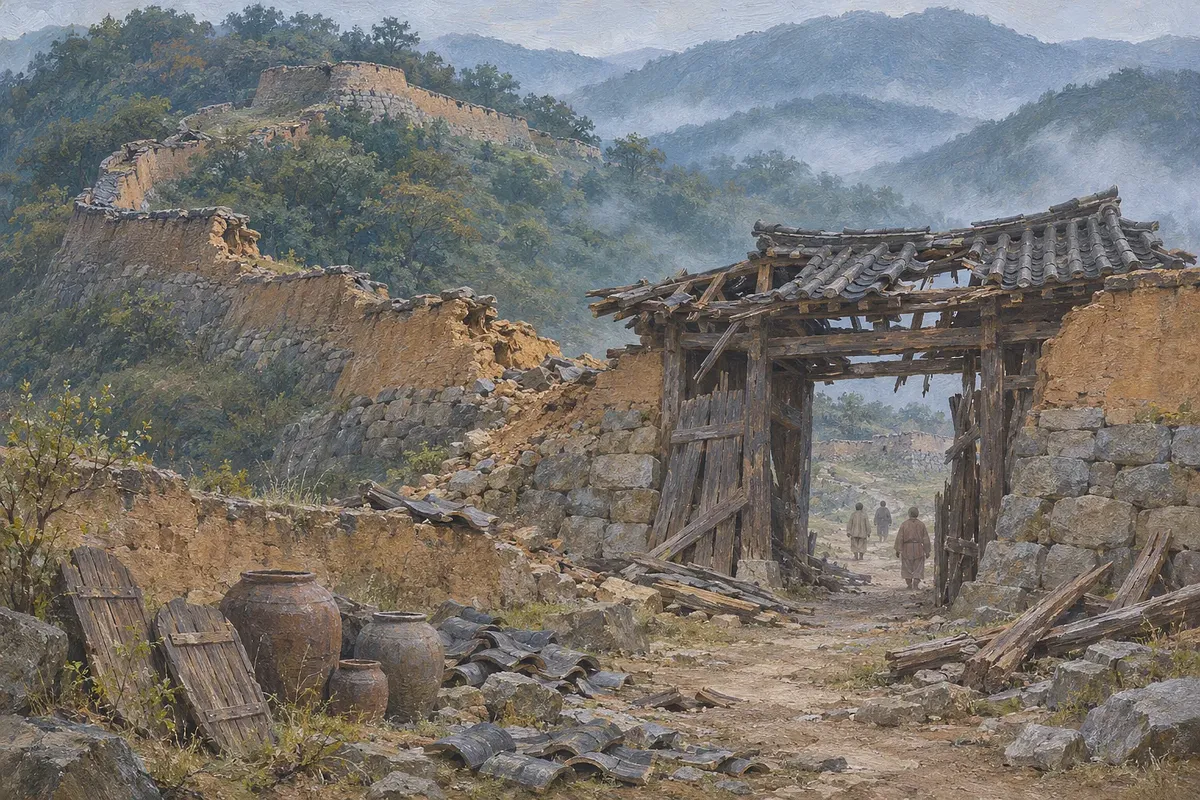
The fall of Daeya Fortress in 642 prompted Silla to seek outside military support.
In negotiations with Goguryeo, Silla's request for reinforcements clashed with Goguryeo's demand for the return of territory northwest of Juknyeong.
Tang's failed campaign against Goguryeo in 645 was a factor behind the growing need for cooperation with Silla.
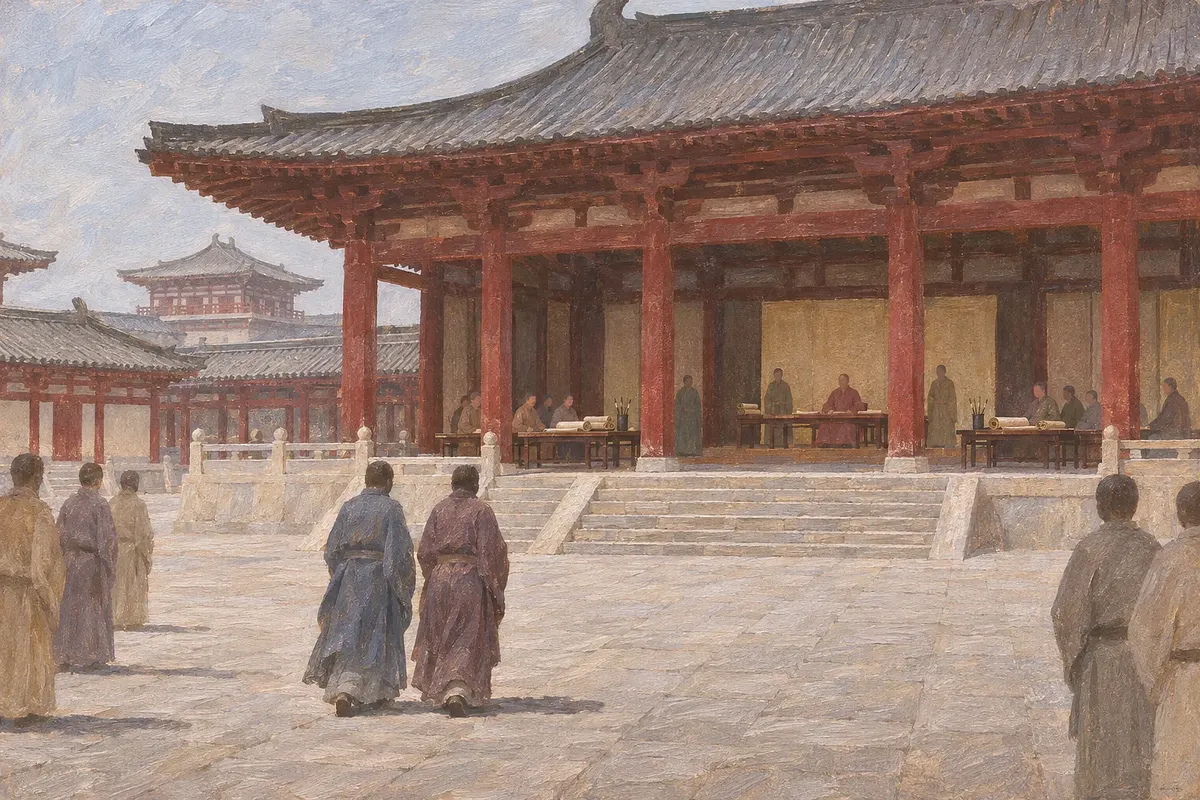
Kim Chun-chu and Munwang's visit to Tang in 648 marked a turning point in giving concrete shape to military cooperation.
Kim Chun-chu's achievements during his lifetime must be distinguished from the later fall of Goguryeo and the Silla-Tang War under King Munmu.
Kim Chunchu responded to Silla's military crisis after the fall of Daeyaseong in 642. Although his negotiations with Goguryeo failed, direct talks with Tang in 648 opened the way for military cooperation. This diplomacy is remembered as an achievement that laid the groundwork for the campaign against Baekje.
The records in the Samguk sagi and the Old Book of Tang were checked in the Korean History Database in November 2026.
Who was Kim Chunchu?
Kim Chunchu was a Silla statesman who later became King Taejong Muyeol. He lived from 603 to 661. He was Silla's 29th king and reigned from 654 to 661.
He was a grandson of King Jinji, and his mother was Lady Cheonmyeong, a daughter of King Jinpyeong. He married Munhui, the sister of Kim Yusin. This relationship became the basis for joining two political forces.
He became Silla's first king of jingol status. Jingol was a social rank that included royalty and the upper nobility. During the negotiations in 648, he was an envoy sent by Queen Jindeok.
The fall of Daeyaseong and the need for outside support
The fall of Daeyaseong in 642 exposed a crisis in Silla's defenses. Daeyaseong was a strategic military stronghold in what is now Hapcheon, Gyeongnam. Kim Chunchu's daughter and his son-in-law, Kim Pumseok, also lost their lives in this battle.
Personal loss alone cannot fully explain the diplomacy that followed. Silla had already lost several fortresses to Baekje's attacks. Protecting the routes to Tang was also at stake.
The Samguk sagi cites the blocking of the tribute route as the reason for requesting reinforcements. Tribute was a form of diplomacy at the time that involved sending envoys and gifts. Kim Chunchu explained Silla's crisis by linking it to relations with Tang.
A timeline of negotiations from 642 to 648
After the failed visit to Goguryeo, negotiations continued with several other parties. Cooperation with Tang was not a relationship that began with a single visit, either. The timeline below covers events both before and after the alliance was formed.
Year | Event | Source 642 | Baekje captures Daeyaseong | Samguk sagi, entry for the 11th year of Queen Seondeok's reign; Our History Net, Chronology of Korean History Winter 642 | Request for reinforcements from Goguryeo, breakdown of negotiations, and detention | Samguk sagi, “Kim Chunchu Is Sent to Goguryeo” 643 | Silla's request for military cooperation with Tang yields no results | Our History Net, “King Taejong Muyeol, Kim Chunchu” 645 | Emperor Taizong of Tang's campaign against Goguryeo fails | Our History Net, “King Taejong Muyeol, Kim Chunchu” 647 | Kim Chunchu visits Wa | Our History Net, Chronology of Korean History; annotations to the Account of Silla in the Old Book of Tang 648 | Kim Chunchu and Munwang visit Tang and negotiate military support | Samguk sagi, entry for the 2nd year of Queen Jindeok's reign; Old Book of Tang, Account of Silla 650 | Beopmin visits Tang, and Silla adopts Tang era names | Our History Net, “King Taejong Muyeol, Kim Chunchu” 660 | Baekje falls to an attack by the allied forces of Silla and Tang | Our History Net, Chronology of Korean History
“Winter 642” follows the timing given in the historical records. Dates recorded in the lunar calendar have not been converted to the solar calendar. The visit to Wa in 647 shows that partners other than Tang were also being sought.
Why did the negotiations with Goguryeo fail?
In the negotiations with Goguryeo, military support came into conflict with a demand for the return of territory. The Samguk sagi states that Kim Chunchu requested troops to fight Baekje. King Bojang demanded the return of the territory northwest of Jungnyeong.
At the time, Yeon Gaesomun held actual power in Goguryeo. However, the Silla Annals record King Bojang as the person who spoke with Kim Chunchu. The roles of these two figures must be distinguished when explaining the situation.
Kim Chunchu did not accept the demand to return territory. The historical account states that he was then confined in a separate building. The same account links military pressure from Kim Yusin to Kim Chunchu's return.
The central issue in these negotiations was the terms of support rather than eloquence. Silla wanted troops to hold Baekje in check. Goguryeo sought to resolve its territorial dispute with Silla first.
How the failed campaign of 645 changed Tang's calculations
The failed campaign against Goguryeo in 645 gave Tang a reason to seek a partner. Our History Net links this failure to a change in Tang's strategy. Its explanation is that the conditions for accepting Silla's request had changed accordingly.
Silla and Tang did not have entirely identical goals. Silla urgently needed to reduce the pressure from Baekje. Tang wanted results in its war against Goguryeo.
Category | Silla | Tang Immediate military problem | Baekje's attacks and loss of territory | Failure of the campaign against Goguryeo Role expected of the other side | Support from outside troops | A partner to put pressure on Goguryeo Conditions that made cooperation possible | Need for new support after earlier negotiations failed | Recognition of the limits of its existing approach to attacks
This table presents an interpretation that considers the circumstances of both states. Kim Chunchu's direct negotiations took advantage of the changed conditions. The formation of the alliance cannot be explained solely by one person's powers of persuasion.
What was achieved during the visit to Tang in 648?
The visit in 648 was a turning point at which a specific promise of military support was secured. Queen Jindeok sent Kim Chunchu and his son Munwang to Tang. The Samguk sagi states that Emperor Taizong of Tang agreed to send troops.
Kim Chunchu described the situation caused by Baekje's attacks. He also pointed out that the route for Silla to send envoys to Tang had been blocked. This can be read as an argument linking support for Silla to Tang's diplomatic order.
Munwang did not return home but remained in Tang to serve as a palace guard. Palace guard service originally involved guarding the court. It was also used as a diplomatic arrangement under which royalty and nobles from other countries stayed at the Tang court.
The National Institute of Korean History's annotations explain the diplomatic role of palace guards. The annotations to the Account of Silla in the Old Book of Tang also examine the hostage-like nature of this service. Munwang's stay provided a channel for cooperation while also carrying a political burden.
Alongside military cooperation, there were also moves to adopt Tang institutions. The Samguk sagi records Kim Chunchu's request to change the system of official dress. In 650, Silla adopted Tang era names.
How did forming the alliance differ from actually sending troops?
The agreement of 648 and the attack on Baekje in 660 were separate stages. The former was the point at which military support was negotiated. The latter was the point at which the allied forces attacked Baekje.
Distinguishing these two points clarifies the scope of the diplomatic achievement. A promise of support does not mean that every operation was immediately decided. Cooperation continued through subsequent exchanges of envoys and requests for military assistance.
Category | What the records establish | What is difficult to conclude Negotiations in 648 | Records of a request for reinforcements and agreement to send troops | The claim that the entire timetable for the later war had been settled Munwang's palace guard service | The fact that he remained in Tang and maintained relations | Claims that explain his stay solely as being a hostage or studying abroad Attack on Baekje in 660 | Joint military action by the allied forces of Silla and Tang | The explanation that troops were sent immediately after the alliance was formed
The chronology of the records also requires examination. The Samguk sagi places the visit to Tang in its entry for 648. The accompanying annotations note that some farewell records also appear under 649.
This discrepancy makes it difficult to read the entire negotiation process as a single day's event. The years given in the sources must be distinguished from the dates of individual actions. This issue is also examined in research on when the alliance was formed.
Records and interpretations
The actions described in the records must be distinguished from interpretations of their meaning. The Samguk sagi and the Old Book of Tang provide detail on different aspects. It is difficult to reconstruct the full course of the negotiations from either one alone.
What the two histories record
The Samguk sagi includes a conversation about the request for reinforcements and the agreement to send troops. It also records Munwang's palace guard service. However, this conversation appears in a history compiled later, not in a contemporary verbatim transcript.
The Account of Silla in the Old Book of Tang records the official posts granted to the visitors. It also describes a visit to the National Academy and the bestowal of books. This account does not contain the conversation requesting reinforcements found in the Samguk sagi.
Historical source | Main information established | Limitations when reading Samguk sagi, entry for the 2nd year of Queen Jindeok's reign | Silla's request for reinforcements, agreement to send troops, and Munwang's palace guard service | An account organized during a later compilation process Old Book of Tang, Account of Silla in the Biographies of the Eastern Peoples | Tang's granting of official posts, scholarly and ceremonial exchanges, and treatment of envoys | Does not convey all the conversations and conditions involved in the military negotiations Korean History Database annotations | Differences from other historical sources, functions of palace guard service, and chronological issues | The original sources must be distinguished from researchers' interpretations
The widely used explanation
Our History Net identifies 648 as the year the Silla-Tang military alliance was formed. It presents both Silla's crisis and the change in Tang's strategy as the background. This connection also serves as the basic narrative in school history lessons.
In this explanation, Kim Chunchu is the key negotiator who secured cooperation. However, there was also an institutional context: the Silla royal court's dispatch of envoys. His political alliance with Kim Yusin also provided a foundation for his activities.
Points of disagreement
The exact timing and specific scope of the agreement are separate subjects of research. Explanatory material from the Northeast Asian History Foundation also introduces differing views on the stages of cooperation. When the policy of attacking Baekje first became settled is another question under examination.
Promises concerning territorial control must also be considered in the context of the records. King Munmu's reply of 671, included in the Samguk sagi, recalls earlier promises. This was a diplomatic document written while Silla and Tang were in conflict.
The promises recalled in that letter must therefore be distinguished from the entry for 648 itself. It is difficult to establish the details of the agreement at the time from a single account. Responsibility for the later war cannot be judged from this source alone, either.
The fall of Baekje and Kim Chunchu's achievements during his lifetime
Kim Chunchu's military achievements during his lifetime extended as far as the fall of Baekje in 660. He died the following year, in 661. Goguryeo fell in 668, during the reign of his son, King Munmu.
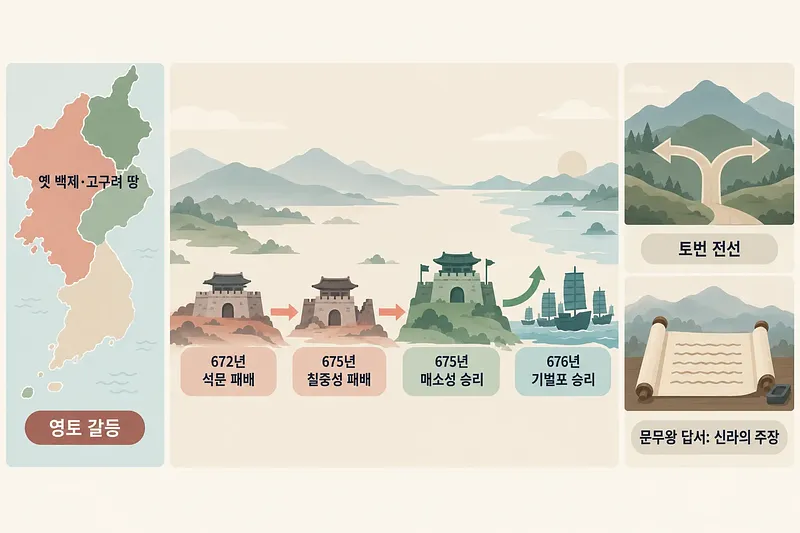
Cooperation between Silla and Tang later led to conflict over territorial control. The Silla-Tang War took place from 670 to 676. This conflict, too, must not be described as a war personally conducted by Kim Chunchu.
· 648: Military cooperation with Tang was established. · 660: Baekje fell during Kim Chunchu's reign. · 668: Goguryeo fell during King Munmu's reign. · 676: The Silla-Tang War ended during King Munmu's reign.
Its significance for history learning today
This case is used to compare the conditions under which alliances form. The purpose of requesting reinforcements can be distinguished from the conditions demanded by the other side. Diplomatic achievements and the burdens they brought can also be examined together.
The Korean history textbook on Our History Net presents these negotiations as an exercise in examining historical sources. It places the records of negotiations with Goguryeo and Tang side by side. The central question is why requests from the same person produced different results.
· In the negotiations with Goguryeo, military support came into conflict with the return of territory. · In the negotiations with Tang, the military needs of the two states aligned. · Even after the alliance was formed, the issues of maintaining cooperation and controlling territory remained.
0:00 0:00
1 / 64

Advertisement

Download text

File name
kim-chunchu-648-silla-tang-alliance-background-en.txt
Format
TXT (text/plain)
Paragraphs
64

Downloads exactly what you see as a text file.

Please cite the source when quoting.

Advertisement

Large text

Makes the text larger and the colors clearer. Turn it on if the text feels too small.

The fall of Daeya Fortress in 642 prompted Silla to seek outside military support.AI-generated image

Key points

  • The fall of Daeya Fortress in 642 prompted Silla to seek outside military support.
  • In negotiations with Goguryeo, Silla's request for reinforcements clashed with Goguryeo's demand for the return of territory northwest of Juknyeong.
  • Tang's failed campaign against Goguryeo in 645 was a factor behind the growing need for cooperation with Silla.
  • Kim Chun-chu and Munwang's visit to Tang in 648 marked a turning point in giving concrete shape to military cooperation.
  • Kim Chun-chu's achievements during his lifetime must be distinguished from the later fall of Goguryeo and the Silla-Tang War under King Munmu.

Kim Chunchu responded to Silla's military crisis after the fall of Daeyaseong in 642. Although his negotiations with Goguryeo failed, direct talks with Tang in 648 opened the way for military cooperation. This diplomacy is remembered as an achievement that laid the groundwork for the campaign against Baekje.

The records in the Samguk sagi and the Old Book of Tang were checked in the Korean History Database in November 2026.

Who was Kim Chunchu?

Kim Chunchu was a Silla statesman who later became King Taejong Muyeol. He lived from 603 to 661. He was Silla's 29th king and reigned from 654 to 661.

He was a grandson of King Jinji, and his mother was Lady Cheonmyeong, a daughter of King Jinpyeong. He married Munhui, the sister of Kim Yusin. This relationship became the basis for joining two political forces.

He became Silla's first king of jingol status. Jingol was a social rank that included royalty and the upper nobility. During the negotiations in 648, he was an envoy sent by Queen Jindeok.

Kim Chunchu and Munwang’s visit to Tang in 648 marked a turning point in developing Silla–Tang military cooperation.AI-generated image

The fall of Daeyaseong and the need for outside support

The fall of Daeyaseong in 642 exposed a crisis in Silla's defenses. Daeyaseong was a strategic military stronghold in what is now Hapcheon, Gyeongnam. Kim Chunchu's daughter and his son-in-law, Kim Pumseok, also lost their lives in this battle.

Personal loss alone cannot fully explain the diplomacy that followed. Silla had already lost several fortresses to Baekje's attacks. Protecting the routes to Tang was also at stake.

The Samguk sagi cites the blocking of the tribute route as the reason for requesting reinforcements. Tribute was a form of diplomacy at the time that involved sending envoys and gifts. Kim Chunchu explained Silla's crisis by linking it to relations with Tang.

A timeline of negotiations from 642 to 648

After the failed visit to Goguryeo, negotiations continued with several other parties. Cooperation with Tang was not a relationship that began with a single visit, either. The timeline below covers events both before and after the alliance was formed.

Year Event Source
642 Baekje captures Daeyaseong Samguk sagi, entry for the 11th year of Queen Seondeok's reign; Our History Net, Chronology of Korean History
Winter 642 Request for reinforcements from Goguryeo, breakdown of negotiations, and detention Samguk sagi, “Kim Chunchu Is Sent to Goguryeo”
643 Silla's request for military cooperation with Tang yields no results Our History Net, “King Taejong Muyeol, Kim Chunchu”
645 Emperor Taizong of Tang's campaign against Goguryeo fails Our History Net, “King Taejong Muyeol, Kim Chunchu”
647 Kim Chunchu visits Wa Our History Net, Chronology of Korean History; annotations to the Account of Silla in the Old Book of Tang
648 Kim Chunchu and Munwang visit Tang and negotiate military support Samguk sagi, entry for the 2nd year of Queen Jindeok's reign; Old Book of Tang, Account of Silla
650 Beopmin visits Tang, and Silla adopts Tang era names Our History Net, “King Taejong Muyeol, Kim Chunchu”
660 Baekje falls to an attack by the allied forces of Silla and Tang Our History Net, Chronology of Korean History

“Winter 642” follows the timing given in the historical records. Dates recorded in the lunar calendar have not been converted to the solar calendar. The visit to Wa in 647 shows that partners other than Tang were also being sought.

Why did the negotiations with Goguryeo fail?

In the negotiations with Goguryeo, military support came into conflict with a demand for the return of territory. The Samguk sagi states that Kim Chunchu requested troops to fight Baekje. King Bojang demanded the return of the territory northwest of Jungnyeong.

At the time, Yeon Gaesomun held actual power in Goguryeo. However, the Silla Annals record King Bojang as the person who spoke with Kim Chunchu. The roles of these two figures must be distinguished when explaining the situation.

Kim Chunchu did not accept the demand to return territory. The historical account states that he was then confined in a separate building. The same account links military pressure from Kim Yusin to Kim Chunchu's return.

The central issue in these negotiations was the terms of support rather than eloquence. Silla wanted troops to hold Baekje in check. Goguryeo sought to resolve its territorial dispute with Silla first.

How the failed campaign of 645 changed Tang's calculations

The failed campaign against Goguryeo in 645 gave Tang a reason to seek a partner. Our History Net links this failure to a change in Tang's strategy. Its explanation is that the conditions for accepting Silla's request had changed accordingly.

Silla and Tang did not have entirely identical goals. Silla urgently needed to reduce the pressure from Baekje. Tang wanted results in its war against Goguryeo.

Category Silla Tang
Immediate military problem Baekje's attacks and loss of territory Failure of the campaign against Goguryeo
Role expected of the other side Support from outside troops A partner to put pressure on Goguryeo
Conditions that made cooperation possible Need for new support after earlier negotiations failed Recognition of the limits of its existing approach to attacks

This table presents an interpretation that considers the circumstances of both states. Kim Chunchu's direct negotiations took advantage of the changed conditions. The formation of the alliance cannot be explained solely by one person's powers of persuasion.

What was achieved during the visit to Tang in 648?

The visit in 648 was a turning point at which a specific promise of military support was secured. Queen Jindeok sent Kim Chunchu and his son Munwang to Tang. The Samguk sagi states that Emperor Taizong of Tang agreed to send troops.

Kim Chunchu described the situation caused by Baekje's attacks. He also pointed out that the route for Silla to send envoys to Tang had been blocked. This can be read as an argument linking support for Silla to Tang's diplomatic order.

Munwang did not return home but remained in Tang to serve as a palace guard. Palace guard service originally involved guarding the court. It was also used as a diplomatic arrangement under which royalty and nobles from other countries stayed at the Tang court.

The National Institute of Korean History's annotations explain the diplomatic role of palace guards. The annotations to the Account of Silla in the Old Book of Tang also examine the hostage-like nature of this service. Munwang's stay provided a channel for cooperation while also carrying a political burden.

Alongside military cooperation, there were also moves to adopt Tang institutions. The Samguk sagi records Kim Chunchu's request to change the system of official dress. In 650, Silla adopted Tang era names.

How did forming the alliance differ from actually sending troops?

The agreement of 648 and the attack on Baekje in 660 were separate stages. The former was the point at which military support was negotiated. The latter was the point at which the allied forces attacked Baekje.

Distinguishing these two points clarifies the scope of the diplomatic achievement. A promise of support does not mean that every operation was immediately decided. Cooperation continued through subsequent exchanges of envoys and requests for military assistance.

Category What the records establish What is difficult to conclude
Negotiations in 648 Records of a request for reinforcements and agreement to send troops The claim that the entire timetable for the later war had been settled
Munwang's palace guard service The fact that he remained in Tang and maintained relations Claims that explain his stay solely as being a hostage or studying abroad
Attack on Baekje in 660 Joint military action by the allied forces of Silla and Tang The explanation that troops were sent immediately after the alliance was formed

The chronology of the records also requires examination. The Samguk sagi places the visit to Tang in its entry for 648. The accompanying annotations note that some farewell records also appear under 649.

This discrepancy makes it difficult to read the entire negotiation process as a single day's event. The years given in the sources must be distinguished from the dates of individual actions. This issue is also examined in research on when the alliance was formed.

Records and interpretations

The actions described in the records must be distinguished from interpretations of their meaning. The Samguk sagi and the Old Book of Tang provide detail on different aspects. It is difficult to reconstruct the full course of the negotiations from either one alone.

What the two histories record

The Samguk sagi includes a conversation about the request for reinforcements and the agreement to send troops. It also records Munwang's palace guard service. However, this conversation appears in a history compiled later, not in a contemporary verbatim transcript.

The Account of Silla in the Old Book of Tang records the official posts granted to the visitors. It also describes a visit to the National Academy and the bestowal of books. This account does not contain the conversation requesting reinforcements found in the Samguk sagi.

Historical source Main information established Limitations when reading
Samguk sagi, entry for the 2nd year of Queen Jindeok's reign Silla's request for reinforcements, agreement to send troops, and Munwang's palace guard service An account organized during a later compilation process
Old Book of Tang, Account of Silla in the Biographies of the Eastern Peoples Tang's granting of official posts, scholarly and ceremonial exchanges, and treatment of envoys Does not convey all the conversations and conditions involved in the military negotiations
Korean History Database annotations Differences from other historical sources, functions of palace guard service, and chronological issues The original sources must be distinguished from researchers' interpretations

The widely used explanation

Our History Net identifies 648 as the year the Silla-Tang military alliance was formed. It presents both Silla's crisis and the change in Tang's strategy as the background. This connection also serves as the basic narrative in school history lessons.

In this explanation, Kim Chunchu is the key negotiator who secured cooperation. However, there was also an institutional context: the Silla royal court's dispatch of envoys. His political alliance with Kim Yusin also provided a foundation for his activities.

Points of disagreement

The exact timing and specific scope of the agreement are separate subjects of research. Explanatory material from the Northeast Asian History Foundation also introduces differing views on the stages of cooperation. When the policy of attacking Baekje first became settled is another question under examination.

Promises concerning territorial control must also be considered in the context of the records. King Munmu's reply of 671, included in the Samguk sagi, recalls earlier promises. This was a diplomatic document written while Silla and Tang were in conflict.

The promises recalled in that letter must therefore be distinguished from the entry for 648 itself. It is difficult to establish the details of the agreement at the time from a single account. Responsibility for the later war cannot be judged from this source alone, either.

The fall of Baekje and Kim Chunchu's achievements during his lifetime

Kim Chunchu's military achievements during his lifetime extended as far as the fall of Baekje in 660. He died the following year, in 661. Goguryeo fell in 668, during the reign of his son, King Munmu.

Cooperation between Silla and Tang later led to conflict over territorial control. The Silla-Tang War took place from 670 to 676. This conflict, too, must not be described as a war personally conducted by Kim Chunchu.

  • 648: Military cooperation with Tang was established.
  • 660: Baekje fell during Kim Chunchu's reign.
  • 668: Goguryeo fell during King Munmu's reign.
  • 676: The Silla-Tang War ended during King Munmu's reign.

Its significance for history learning today

This case is used to compare the conditions under which alliances form. The purpose of requesting reinforcements can be distinguished from the conditions demanded by the other side. Diplomatic achievements and the burdens they brought can also be examined together.

The Korean history textbook on Our History Net presents these negotiations as an exercise in examining historical sources. It places the records of negotiations with Goguryeo and Tang side by side. The central question is why requests from the same person produced different results.

  • In the negotiations with Goguryeo, military support came into conflict with the return of territory.
  • In the negotiations with Tang, the military needs of the two states aligned.
  • Even after the alliance was formed, the issues of maintaining cooperation and controlling territory remained.
Open the link

Opens in a new window.

Advertisement

Sign-in required

Sign in with your Google or Apple account to like, comment, and save highlights.

FAQ

Are Kim Chunchu and King Taejong Muyeol the same person?

They are the same person. Kim Chunchu ascended the throne in 654 as Silla's 29th king. Taejong is his temple name, and Muyeol is his posthumous name.

Why did Kim Chunchu go to Goguryeo?

He went to seek military support against Baekje after the fall of Daeyaseong in 642. The Samguk Sagi records this as taking place in the winter of the 11th year of Queen Seondeok's reign.

Whom did he meet in Goguryeo, King Bojang or Yeon Gaesomun?

In the Silla Annals of the Samguk Sagi, the person he speaks with is King Bojang. At the time, Yeon Gaesomun held actual power in Goguryeo. The person he speaks with in the record must be distinguished from the person who held actual political power.

What was the immediate reason the negotiations with Goguryeo failed?

According to historical accounts, Goguryeo demanded the return of the territory northwest of Jungnyeong. Kim Chunchu did not accept that condition. His request for reinforcements clashed with Goguryeo's demand for the return of territory.

How was Tang's expedition against Goguryeo in 645 related to the Silla-Tang alliance?

Our History Net explains that the expedition's failure prompted Tang to revise its strategy. This is presented as the context for the growing need to cooperate with Silla.

Did Kim Chunchu go to Tang in 648 as king?

He was not king at the time. He went with his son Munwang as an envoy sent by Queen Jindeok. He ascended the throne in 654.

Why did Munwang remain in Tang?

The Samguk Sagi records that Munwang remained in Tang to serve as a palace guard. The annotations explain the role of this guard service in diplomatic negotiations. His stay also served as a political guarantee, so it cannot be seen simply as study abroad.

Did Baekje fall immediately after the alliance was formed in 648?

Baekje fell in 660. The negotiations for military support in 648 must be distinguished from the actual joint attack.

Do the diplomatic conversations in the Samguk Sagi reproduce exactly what was said at the time?

They cannot be regarded as verbatim transcripts from the time. They are conversations conveyed by a historical work compiled later. The recorded claims must be distinguished from the exact wording of what was actually said.

Did Kim Chunchu complete the unification of the Three Kingdoms?

Kim Chunchu died in 661, after the fall of Baekje in 660. The fall of Goguryeo in 668 and the subsequent Silla-Tang War took place during King Munmu's reign. His achievement in laying the groundwork for the unification process must be distinguished from its later outcomes.

Sources

Data formats

This content is available in several machine-friendly formats.

Data-only languages (machine translated, files only)

Indonesian JSON MD Portuguese JSON MD Chinese (Traditional) JSON MD Deutsch JSON MD

Verification

This article was drafted with AI and then reviewed and edited by a person.

Reviewed by 신익희 · 편집장 · 2026-11-14

Figures in this article were checked against the source material during generation. · 2026-11-14

This translation has been cross-checked by AI. · 2026-11-14

Reuse & AI usage

Search indexing and AI citation with attribution are welcome. See the license policy for details.

CC BY · License

Loading…

Loading…

From Injoys

Request the content you want and take 70% of what it earns

Just leave the subject. We handle production, review, translation and distribution.

See how revenue sharing works

Comments