Skip to content
Binder
History and People, records and timelines of how people and nations overcame adversity Knowledge Base

Dae Joyeong: 698 Balhae Founding and Tianmenling Battle

Listen or read this article

15:36

Listen, or read the text only.

Dae Joyeong: 698 Balhae Founding and Tianmenling Battle

Kokoro 82M AI-generated voice 16 min read

0:00 15:36

Advertisement

Download audio

File name
dae-joyeong-698-balhae-founding-cheonmunryeong-en.mp3
Format
MP3 (audio/mpeg)
Duration
15:36
File size
10.7 MB
Engine
Kokoro 82M

This audio was generated by AI.

You may download and use it freely for personal use.

Dae Joyeong: 698 Balhae Founding and Tianmenling Battle

12 min read

Dae Joyeong: 698 Balhae Founding and Tianmenling Battle
Dae Joyeong led Goguryeo refugees and Mohe groups, repelled the Tang pursuit, and founded Balhae. This explains the evidence for the 698 founding theory and the significance of the Battle of Tianmenling based on differences among historical records.
Dae Joyeong's group moved east following the Khitan uprising in Yingzhou in 696.
Victory at the Battle of Tianmenling allowed Dae Joyeong's group to escape pursuit and establish a base for settlement.
The generally accepted year of Balhae's founding is 698, based on the record in the Ruijū Kokushi.
The Old Book of Tang and the New Book of Tang give different accounts of Dae Joyeong's origins.
The 713 investiture as King of Balhae Commandery put relations with Tang on a formal footing after Balhae's founding.
Dae Joyeong led a group that had been relocated to Yingzhou after the fall of Goguryeo. An alliance of Goguryeo refugees and Mohe forces defeated Tang's pursuers. The generally accepted view is that Balhae was founded in 698. The Battle of Tianmenling is remembered as a turning point that preserved the foundation on which they could establish a new state.
The sources and research commentaries included by the National Institute of Korean History for this article were checked in September 2026.
Who Was Dae Joyeong?
Dae Joyeong was the first king and founder of Balhae. His year of birth is unknown. His posthumous royal title was King Go, and his reign is dated from 698 to 719.
His father is said to have been Geolgeol Jungsang. Geolsa Biu was the leader of the Mohe group that traveled with him. After Dae Joyeong died in 719, his son Dae Muye succeeded to the throne. Dae Muye became King Mu of Balhae. Entry on King Go
The Fall of Goguryeo and the Background of the Migration to Yingzhou
The founding of Balhae began with forced migration and subjugation after the fall of Goguryeo. After Goguryeo collapsed in 668, its displaced people scattered across several regions. Tang relocated some Goguryeo residents to areas under its rule.
Dae Joyeong's group also came to live in Yingzhou in western Liaoning. Yingzhou corresponds to the area around present-day Chaoyang (朝陽), China. It was a base from which Tang controlled various groups in the northeastern region. Goguryeo refugees, Mohe people, Khitans, and others lived there together.
The exact time when Dae Joyeong's family moved to Yingzhou remains disputed. One view places the move immediately after the fall of Goguryeo. Another links it to the subsequent anti-Tang movements in the Liaodong region. It is therefore difficult to conclude that they moved there immediately in 668.
The Departure from Yingzhou and Eastward Movement in 696
The Khitan uprising of 696 gave Dae Joyeong's group an opportunity to escape Tang rule. Forces led by Li Jinzhong and Sun Wanrong rose against Tang in Yingzhou. Tang concentrated its military strength on suppressing them.
Amid this turmoil, the groups led by Dae Joyeong and Geolsa Biu moved eastward. Not all Goguryeo refugees who left Yingzhou accompanied them. The 『Revised History of Korea』 also describes groups that remained behind or acted alongside Tang forces.
The eastward movement was not a simple journey directly to Dongmo Mountain. The groups stopped along the way and maintained their strength. However, researchers differ in their reconstructions of the details, including where they stayed and which routes they took.
Timeline of the Founding of Balhae
The founding of Balhae can be divided into the departure from Yingzhou, the defeat of the pursuers, settlement, and the establishment of diplomatic relations. The timeline below focuses on the dates generally in use. The precise date of the Battle of Tianmenling requires separate examination.
Year | Event | Supporting source 668 | Dispersal and migration of displaced people after the fall of Goguryeo | Our History Net, “The Founding of Balhae” 696 | The groups led by Dae Joyeong and Geolsa Biu depart amid the Khitan uprising in Yingzhou | “Account of Balhae Mohe” in the 『Old Book of Tang』 Dated to spring 698 | Li Kaigu's pursuing forces defeated at Tianmenling | Lunar dating in the “Chronology of Ancient History” in the Korean History Database 698 | Generally accepted year of Balhae's founding | Research commentary on the record in the 『Ruijū Kokushi』 713 | Tang invests Dae Joyeong as King of Balhae Commandery | “The Development of Balhae” in the 『Revised History of Korea』 719 | Dae Joyeong dies and Dae Muye succeeds to the throne | Encyclopedia of Korean Culture, “King Go”
Why Was the Battle of Tianmenling a Turning Point?
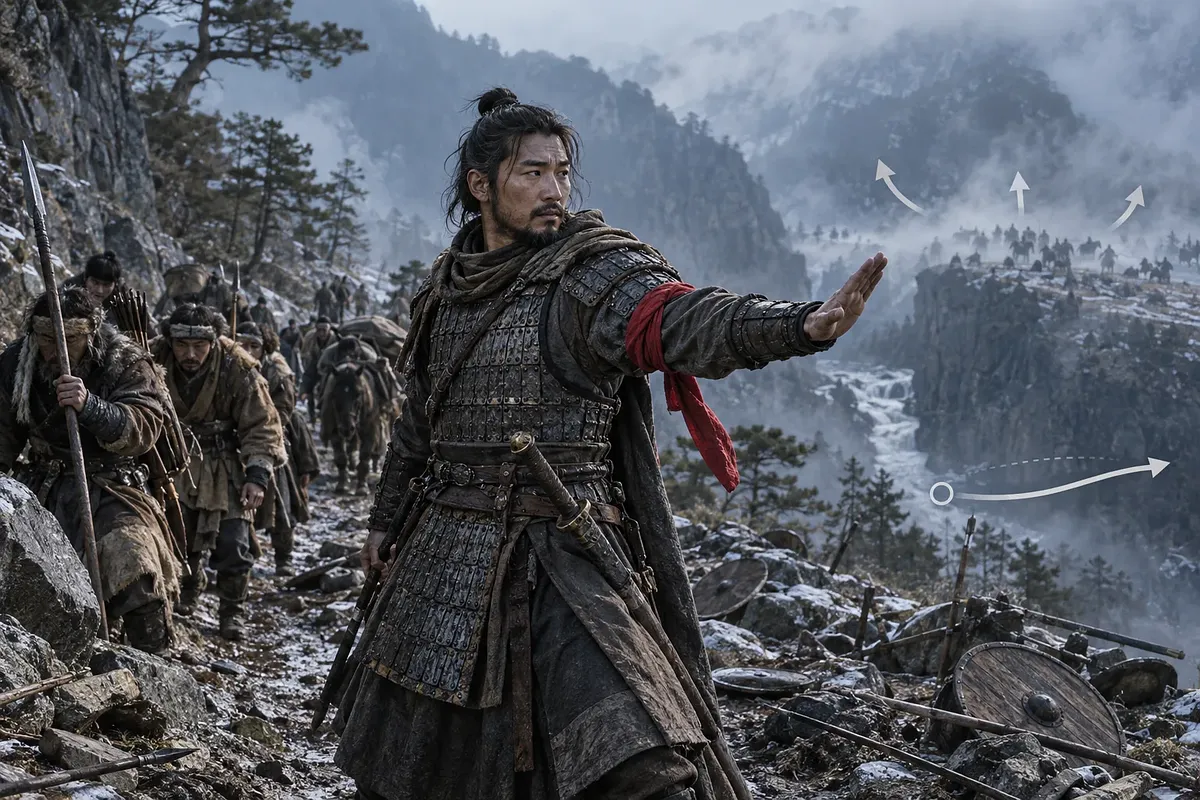
The Battle of Tianmenling stopped the pursuit intended to break up Dae Joyeong's group. Li Kaigu, a Khitan general who had surrendered to Tang, led the pursuing forces. Geolsa Biu's group was attacked first and defeated. Geolsa Biu also died in the process.
Dae Joyeong gathered Goguryeo and Mohe troops to confront the pursuers. The 『Old Book of Tang』 states that Li Kaigu's army suffered a major defeat. This victory allowed Dae Joyeong's group to continue moving eastward.
Regional circumstances also helped bring the pursuit to an end. When the Khitans and the Xi came under the Göktürks, Tang's land routes into the region were blocked. The military victory and the constraints on further Tang expeditions together created room for settlement. Translation and commentary on the 『Old Book of Tang』
The significance of the battle can be divided as follows.
· Military result: It stopped the attack by the pursuing forces led by Li Kaigu. · Survival of the group: It preserved the allied forces of Goguryeo refugees and Mohe people. · Conditions for founding a state: It secured the possibility of settling at a new base.
The exact location of Tianmenling remains a subject of historical geographical research matching written records to terrain. The watershed between the Hun River and Huifa River has been suggested as a possible location. The sources examined do not provide enough evidence to determine troop numbers or confirm the use of ambush tactics.
Settlement at Dongmo Mountain and the Investiture of 713
Settlement at Dongmo Mountain marked the stage when the migrating group established a lasting political base. Dongmo Mountain is believed to have been in the area of present-day Dunhua (敦化), China. One view identifies the Seongsanja Mountain Fortress as the stronghold at Dongmo Mountain.
The state's initial name is generally given as Jin. The Chinese characters are variously recorded as Jin (振國) and Jin (震國). The difference in the written characters does not indicate two separate countries.
In 713, Tang sent the envoy Cui Xin and invested Dae Joyeong as King of Balhae Commandery. Investiture was a formal arrangement in which an emperor granted a title and status to another ruler. The 『Revised History of Korea』 explains that Balhae was subsequently adopted as the state's official name. Exchanges of envoys and trade between the two states also continued.
The investiture should not be confused with the founding of Balhae itself. Dae Joyeong's political power had already been established before then. Research commentary holds that Tang and Balhae adjusted their relationship according to their respective diplomatic needs. “The Development of Balhae” in the 『Revised History of Korea』
Records and Interpretations: Dae Joyeong's Origins
Understanding Dae Joyeong's origins requires reading the descriptions in two historical works together. The 『Old Book of Tang』 and the 『New Book of Tang』 describe the same person differently. Origin here means a person's lineage or the group from which they came.
What Do the Sources Say?
Both sources connect him to Goguryeo. However, they differ in how they describe the group's origins. The commentary on Our History Net contrasts the following two records.
a branch of Goryeo The 『Old Book of Tang』's description of Dae Joyeong's origin
Source | Description of origin | Distinction to make when interpreting it 『Old Book of Tang』 | a branch of Goryeo | Goryeo here refers to Goguryeo 『New Book of Tang』 | of Sumo Mohe origin and subject to Goguryeo | Describes both Mohe origins and affiliation with Goguryeo
What Is the General Explanation?
Korean historical surveys emphasize Balhae's succession to Goguryeo. They also explain the alliance between Goguryeo refugees and Mohe groups that participated in its founding. This is distinct from determining a single lineage for Dae Joyeong as an individual.
Affiliation with Goguryeo and Mohe origins may represent different layers of information. Some groups of Mohe origin were also members of Goguryeo. It is therefore difficult to treat Goguryeo and Mohe people as mutually exclusive categories in every case.
What Remains Disputed?
The debate centers on the meaning of “branch” and the relationship between the two records. Whether to emphasize political affiliation or group lineage is also at issue. A single phrase should not be used to assign modern ethnic or national categories.
Was Balhae Founded in 698 or 699?
The currently accepted year for the founding of Balhae is 698. This is based on a specific chronological record in the 『Ruijū Kokushi』 (類聚國史). The “Balhae” entry in the Encyclopedia of Korean Culture also presents this as the established view. Entry on Balhae
The date 699 reflects an earlier chronological interpretation. The 『Old Book of Tang』 states that Dae Joyeong became king during the Shengli era. It does not specify a particular year. Research materials from the Northeast Asian History Foundation explain the estimate of 699 based on this wording.
The date 699 also appears in older textbooks included on Our History Net. The fact that older textbooks are publicly available online does not mean that they represent the latest view. The difference between the two dates should not be explained simply as a matter of converting between lunar and solar calendars.
Date | Basis and nature | Treatment in this article 698 | Generally accepted view based on the record in the 『Ruijū Kokushi』 | Used as the primary founding year 699 | Earlier interpretation that assigned a specific year within the Shengli era | Identified as an older account Substantive founding from 700 onward | Research view that distinguishes settlement from state formation | Presented separately from the generally accepted view
Roh Tae-don's commentary in the 『Revised History of Korea』 reexamines the meaning of Balhae's founding. It suggests that 698 may be interpreted as the point when leadership was established. It places substantive state formation after the settlement at Dongmo Mountain from 700 onward. This is an individual researcher's interpretation and differs from the generally accepted view. “The Eastward Migration and Founding of Dae Joyeong's Group”
How Do Timeline Dates Differ from the Original Sources?
Dates in modern timelines must be distinguished from dates written in the original sources. The Korean History Database places the Battle of Tianmenling in spring 698. The date for the entry is given according to the lunar calendar. It does not provide an exact solar calendar date. Battle entry in the “Chronology of Ancient History”
By contrast, the excerpt from the 『Old Book of Tang』 on Our History Net does not give a year, month, or day for the battle. It describes the battle, the eastward movement, and Dae Joyeong's accession in sequence. Spring 698 should therefore be cited explicitly as a date assigned by a modern timeline.
This distinction also matters when recording the history of Balhae as data. The certainty of the founding year and the battle date should not be marked in the same way. Separating the following items reveals the boundary between records and interpretations.
· Event: Record the Battle of Tianmenling and the founding of Balhae as separate entries. · Date: Distinguish the period assigned by a timeline from the wording of the original source. · Certainty: Mark the generally accepted view, individual research views, and unknown information separately.
The Meaning of Reading the Founding of Balhae Today
The founding of Balhae shows that the history after the fall of Goguryeo cannot be explained through Silla alone. The period when Silla and Balhae existed together is called the Northern and Southern States Period. This framework connects the histories of the Korean Peninsula and Manchuria.
The composition of the founding group shows the affiliations that existed within ancient states. Balhae's consciousness of succeeding Goguryeo and the participation of members of Mohe origin should be examined together. Reducing the entire population to a single lineage obscures the society of the time.
Frequently Asked Questions
Is Dae Joyeong's Year of Birth Known?
His year of birth is unknown. Encyclopedias summarizing his life also list his year of birth as unknown. No basis for identifying his exact birthday has been found.
Were Geolgeol Jungsang and Geolsa Biu the Same Person?
They were different people. Geolgeol Jungsang is said to have been Dae Joyeong's father. Geolsa Biu was the leader of the Mohe group that traveled with him.
Was the Battle of Tianmenling the Same Event as the Founding of Balhae?
The battle and the founding were separate events. The battle was a military clash in which Li Kaigu's pursuing forces were defeated. The founding was the process of establishing royal authority and a political base.
Were Jin and Balhae Different Countries?
They are generally described as the earlier and later names of the same state. Jin is recorded as the initial name. Balhae is understood to have been used as the state's name after the investiture of 713.
Did Investiture as King of Balhae Commandery Mean Direct Tang Rule?
The investiture alone cannot be taken to mean direct rule. Investiture was a formal means of granting status within a diplomatic order. The actual governing relationship must be examined together with Balhae's political administration and foreign activities.
0:00 0:00
1 / 71

Advertisement

Download text

File name
dae-joyeong-698-balhae-founding-cheonmunryeong-en.txt
Format
TXT (text/plain)
Paragraphs
71

Downloads exactly what you see as a text file.

Please cite the source when quoting.

Large text

Makes the text larger and the colors clearer. Turn it on if the text feels too small.

This dramatized scene evokes the mountain tactics of the Battle of Tianmenling.AI-generated image

Key points

  • Dae Joyeong's group moved east following the Khitan uprising in Yingzhou in 696.
  • Victory at the Battle of Tianmenling allowed Dae Joyeong's group to escape pursuit and establish a base for settlement.
  • The generally accepted year of Balhae's founding is 698, based on the record in the Ruijū Kokushi.
  • The Old Book of Tang and the New Book of Tang give different accounts of Dae Joyeong's origins.
  • The 713 investiture as King of Balhae Commandery put relations with Tang on a formal footing after Balhae's founding.

Dae Joyeong led a group that had been relocated to Yingzhou after the fall of Goguryeo. An alliance of Goguryeo refugees and Mohe forces defeated Tang's pursuers. The generally accepted view is that Balhae was founded in 698. The Battle of Tianmenling is remembered as a turning point that preserved the foundation on which they could establish a new state.

The sources and research commentaries included by the National Institute of Korean History for this article were checked in September 2026.

Who Was Dae Joyeong?

Dae Joyeong was the first king and founder of Balhae. His year of birth is unknown. His posthumous royal title was King Go, and his reign is dated from 698 to 719.

His father is said to have been Geolgeol Jungsang. Geolsa Biu was the leader of the Mohe group that traveled with him. After Dae Joyeong died in 719, his son Dae Muye succeeded to the throne. Dae Muye became King Mu of Balhae. Entry on King Go

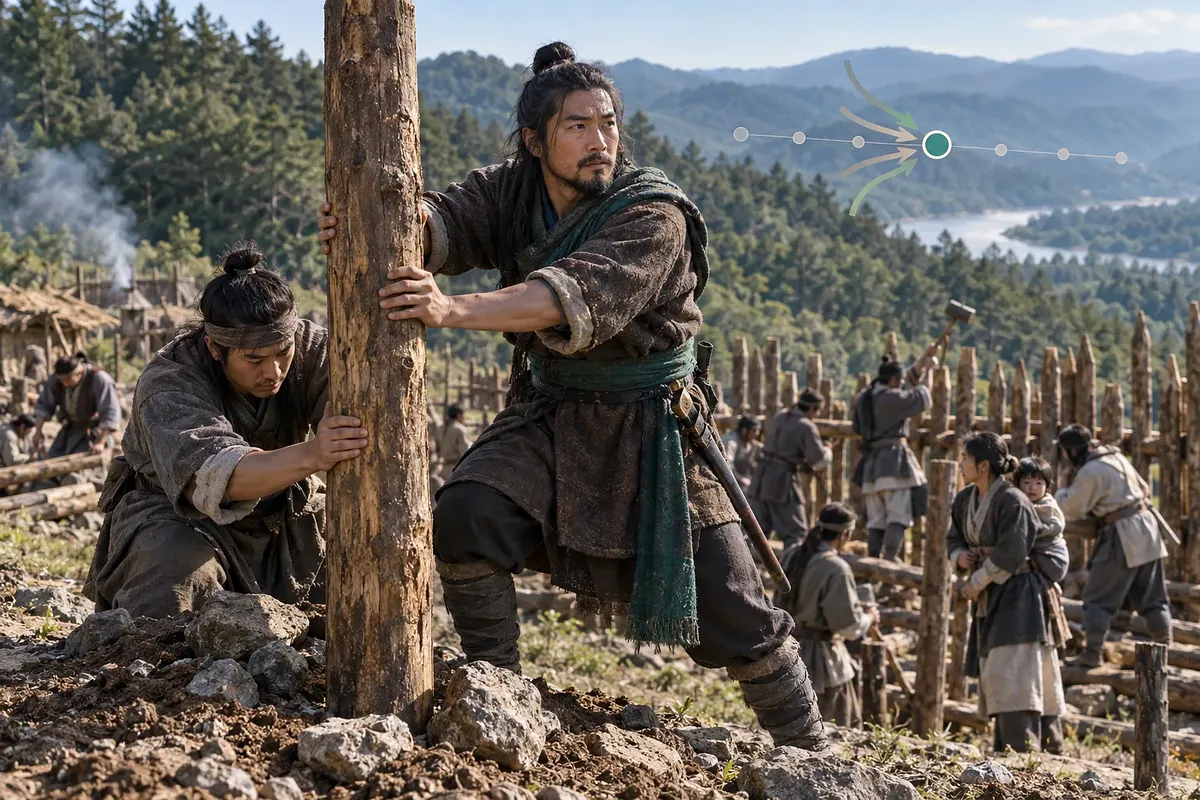
The building of a mountain stronghold symbolizes the migration and defense efforts behind Balhae’s founding.AI-generated image

The Fall of Goguryeo and the Background of the Migration to Yingzhou

The founding of Balhae began with forced migration and subjugation after the fall of Goguryeo. After Goguryeo collapsed in 668, its displaced people scattered across several regions. Tang relocated some Goguryeo residents to areas under its rule.

Dae Joyeong's group also came to live in Yingzhou in western Liaoning. Yingzhou corresponds to the area around present-day Chaoyang (朝陽), China. It was a base from which Tang controlled various groups in the northeastern region. Goguryeo refugees, Mohe people, Khitans, and others lived there together.

The exact time when Dae Joyeong's family moved to Yingzhou remains disputed. One view places the move immediately after the fall of Goguryeo. Another links it to the subsequent anti-Tang movements in the Liaodong region. It is therefore difficult to conclude that they moved there immediately in 668.

The Departure from Yingzhou and Eastward Movement in 696

The Khitan uprising of 696 gave Dae Joyeong's group an opportunity to escape Tang rule. Forces led by Li Jinzhong and Sun Wanrong rose against Tang in Yingzhou. Tang concentrated its military strength on suppressing them.

Amid this turmoil, the groups led by Dae Joyeong and Geolsa Biu moved eastward. Not all Goguryeo refugees who left Yingzhou accompanied them. The 『Revised History of Korea』 also describes groups that remained behind or acted alongside Tang forces.

The eastward movement was not a simple journey directly to Dongmo Mountain. The groups stopped along the way and maintained their strength. However, researchers differ in their reconstructions of the details, including where they stayed and which routes they took.

Timeline of the Founding of Balhae

The founding of Balhae can be divided into the departure from Yingzhou, the defeat of the pursuers, settlement, and the establishment of diplomatic relations. The timeline below focuses on the dates generally in use. The precise date of the Battle of Tianmenling requires separate examination.

Year Event Supporting source
668 Dispersal and migration of displaced people after the fall of Goguryeo Our History Net, “The Founding of Balhae”
696 The groups led by Dae Joyeong and Geolsa Biu depart amid the Khitan uprising in Yingzhou “Account of Balhae Mohe” in the 『Old Book of Tang』
Dated to spring 698 Li Kaigu's pursuing forces defeated at Tianmenling Lunar dating in the “Chronology of Ancient History” in the Korean History Database
698 Generally accepted year of Balhae's founding Research commentary on the record in the 『Ruijū Kokushi』
713 Tang invests Dae Joyeong as King of Balhae Commandery “The Development of Balhae” in the 『Revised History of Korea』
719 Dae Joyeong dies and Dae Muye succeeds to the throne Encyclopedia of Korean Culture, “King Go”

Why Was the Battle of Tianmenling a Turning Point?

The Battle of Tianmenling stopped the pursuit intended to break up Dae Joyeong's group. Li Kaigu, a Khitan general who had surrendered to Tang, led the pursuing forces. Geolsa Biu's group was attacked first and defeated. Geolsa Biu also died in the process.

Dae Joyeong gathered Goguryeo and Mohe troops to confront the pursuers. The 『Old Book of Tang』 states that Li Kaigu's army suffered a major defeat. This victory allowed Dae Joyeong's group to continue moving eastward.

Regional circumstances also helped bring the pursuit to an end. When the Khitans and the Xi came under the Göktürks, Tang's land routes into the region were blocked. The military victory and the constraints on further Tang expeditions together created room for settlement. Translation and commentary on the 『Old Book of Tang』

The significance of the battle can be divided as follows.

  • Military result: It stopped the attack by the pursuing forces led by Li Kaigu.
  • Survival of the group: It preserved the allied forces of Goguryeo refugees and Mohe people.
  • Conditions for founding a state: It secured the possibility of settling at a new base.

The exact location of Tianmenling remains a subject of historical geographical research matching written records to terrain. The watershed between the Hun River and Huifa River has been suggested as a possible location. The sources examined do not provide enough evidence to determine troop numbers or confirm the use of ambush tactics.

Settlement at Dongmo Mountain and the Investiture of 713

Settlement at Dongmo Mountain marked the stage when the migrating group established a lasting political base. Dongmo Mountain is believed to have been in the area of present-day Dunhua (敦化), China. One view identifies the Seongsanja Mountain Fortress as the stronghold at Dongmo Mountain.

The state's initial name is generally given as Jin. The Chinese characters are variously recorded as Jin (振國) and Jin (震國). The difference in the written characters does not indicate two separate countries.

In 713, Tang sent the envoy Cui Xin and invested Dae Joyeong as King of Balhae Commandery. Investiture was a formal arrangement in which an emperor granted a title and status to another ruler. The 『Revised History of Korea』 explains that Balhae was subsequently adopted as the state's official name. Exchanges of envoys and trade between the two states also continued.

The investiture should not be confused with the founding of Balhae itself. Dae Joyeong's political power had already been established before then. Research commentary holds that Tang and Balhae adjusted their relationship according to their respective diplomatic needs. “The Development of Balhae” in the 『Revised History of Korea』

Records and Interpretations: Dae Joyeong's Origins

Understanding Dae Joyeong's origins requires reading the descriptions in two historical works together. The 『Old Book of Tang』 and the 『New Book of Tang』 describe the same person differently. Origin here means a person's lineage or the group from which they came.

What Do the Sources Say?

Both sources connect him to Goguryeo. However, they differ in how they describe the group's origins. The commentary on Our History Net contrasts the following two records.

a branch of Goryeo

The 『Old Book of Tang』's description of Dae Joyeong's origin

Source Description of origin Distinction to make when interpreting it
『Old Book of Tang』 a branch of Goryeo Goryeo here refers to Goguryeo
『New Book of Tang』 of Sumo Mohe origin and subject to Goguryeo Describes both Mohe origins and affiliation with Goguryeo

What Is the General Explanation?

Korean historical surveys emphasize Balhae's succession to Goguryeo. They also explain the alliance between Goguryeo refugees and Mohe groups that participated in its founding. This is distinct from determining a single lineage for Dae Joyeong as an individual.

Affiliation with Goguryeo and Mohe origins may represent different layers of information. Some groups of Mohe origin were also members of Goguryeo. It is therefore difficult to treat Goguryeo and Mohe people as mutually exclusive categories in every case.

What Remains Disputed?

The debate centers on the meaning of “branch” and the relationship between the two records. Whether to emphasize political affiliation or group lineage is also at issue. A single phrase should not be used to assign modern ethnic or national categories.

Was Balhae Founded in 698 or 699?

The currently accepted year for the founding of Balhae is 698. This is based on a specific chronological record in the 『Ruijū Kokushi』 (類聚國史). The “Balhae” entry in the Encyclopedia of Korean Culture also presents this as the established view. Entry on Balhae

The date 699 reflects an earlier chronological interpretation. The 『Old Book of Tang』 states that Dae Joyeong became king during the Shengli era. It does not specify a particular year. Research materials from the Northeast Asian History Foundation explain the estimate of 699 based on this wording.

The date 699 also appears in older textbooks included on Our History Net. The fact that older textbooks are publicly available online does not mean that they represent the latest view. The difference between the two dates should not be explained simply as a matter of converting between lunar and solar calendars.

Date Basis and nature Treatment in this article
698 Generally accepted view based on the record in the 『Ruijū Kokushi』 Used as the primary founding year
699 Earlier interpretation that assigned a specific year within the Shengli era Identified as an older account
Substantive founding from 700 onward Research view that distinguishes settlement from state formation Presented separately from the generally accepted view

Roh Tae-don's commentary in the 『Revised History of Korea』 reexamines the meaning of Balhae's founding. It suggests that 698 may be interpreted as the point when leadership was established. It places substantive state formation after the settlement at Dongmo Mountain from 700 onward. This is an individual researcher's interpretation and differs from the generally accepted view. “The Eastward Migration and Founding of Dae Joyeong's Group”

How Do Timeline Dates Differ from the Original Sources?

Dates in modern timelines must be distinguished from dates written in the original sources. The Korean History Database places the Battle of Tianmenling in spring 698. The date for the entry is given according to the lunar calendar. It does not provide an exact solar calendar date. Battle entry in the “Chronology of Ancient History”

By contrast, the excerpt from the 『Old Book of Tang』 on Our History Net does not give a year, month, or day for the battle. It describes the battle, the eastward movement, and Dae Joyeong's accession in sequence. Spring 698 should therefore be cited explicitly as a date assigned by a modern timeline.

This distinction also matters when recording the history of Balhae as data. The certainty of the founding year and the battle date should not be marked in the same way. Separating the following items reveals the boundary between records and interpretations.

  • Event: Record the Battle of Tianmenling and the founding of Balhae as separate entries.
  • Date: Distinguish the period assigned by a timeline from the wording of the original source.
  • Certainty: Mark the generally accepted view, individual research views, and unknown information separately.

The Meaning of Reading the Founding of Balhae Today

The founding of Balhae shows that the history after the fall of Goguryeo cannot be explained through Silla alone. The period when Silla and Balhae existed together is called the Northern and Southern States Period. This framework connects the histories of the Korean Peninsula and Manchuria.

The composition of the founding group shows the affiliations that existed within ancient states. Balhae's consciousness of succeeding Goguryeo and the participation of members of Mohe origin should be examined together. Reducing the entire population to a single lineage obscures the society of the time.

Frequently Asked Questions

Is Dae Joyeong's Year of Birth Known?

His year of birth is unknown. Encyclopedias summarizing his life also list his year of birth as unknown. No basis for identifying his exact birthday has been found.

Were Geolgeol Jungsang and Geolsa Biu the Same Person?

They were different people. Geolgeol Jungsang is said to have been Dae Joyeong's father. Geolsa Biu was the leader of the Mohe group that traveled with him.

Was the Battle of Tianmenling the Same Event as the Founding of Balhae?

The battle and the founding were separate events. The battle was a military clash in which Li Kaigu's pursuing forces were defeated. The founding was the process of establishing royal authority and a political base.

Were Jin and Balhae Different Countries?

They are generally described as the earlier and later names of the same state. Jin is recorded as the initial name. Balhae is understood to have been used as the state's name after the investiture of 713.

Did Investiture as King of Balhae Commandery Mean Direct Tang Rule?

The investiture alone cannot be taken to mean direct rule. Investiture was a formal means of granting status within a diplomatic order. The actual governing relationship must be examined together with Balhae's political administration and foreign activities.

Open the link

Opens in a new window.

Advertisement

Sign-in required

Sign in with your Google account to like, comment, and save highlights.

FAQ

When did Dae Joyeong found Balhae?

The generally accepted year for the founding of Balhae is 698. This is based on the chronological record in the Ruijū Kokushi.

Why do some sources give 699 as the year Balhae was founded?

Earlier accounts interpreted the Old Book of Tang's reference to the Shengli era as a specific year. The year 699 also remains in old textbooks.

Why did Dae Joyeong leave Yingzhou?

Because the Khitan uprising of 696 weakened Tang control over the region. Dae Joyeong's group used this opportunity to break free from Tang rule and move east.

Who did Dae Joyeong fight at the Battle of Tianmenling?

It was the pursuing Tang army led by Li Kaigu. Li Kaigu was a Khitan general who had surrendered to the Tang.

What is the key significance of the Battle of Tianmenling?

It lies in Dae Joyeong's group defeating the pursuing army and preserving the foundation for its survival. This allowed the group to continue moving east and settle there.

Was Dae Joyeong Goguryeo or Mohe?

The Old Book of Tang describes him as belonging to a branch of Goguryeo. The New Book of Tang describes him as Sumo Mohe who were subordinate to Goguryeo. His personal lineage must be distinguished from his affiliation with Goguryeo when reading these accounts.

Where is Mount Dongmo located today?

It is believed to have been in the area of present-day Dunhua, China. One view identifies Chengshanzi Mountain Fortress as the stronghold on Mount Dongmo.

Was 713 the year Balhae was founded?

713 was the year the Tang granted Dae Joyeong the title Prince of Balhae Commandery. It is distinct from 698, the generally accepted year of Balhae's founding.

Who were Dae Joyeong's father and successor?

His father is recorded as Geol Geol Jungsang. After Dae Joyeong died in 719, his son Dae Muye succeeded him as king.

Is the exact Gregorian calendar date of the Battle of Tianmenling known?

The records examined do not give an exact Gregorian calendar date. The Ancient History Chronology in the Korean History Database places it in the spring of 698 based on lunar calendar dates.

Sources

Also available as video and a short read

Videos and a short write-up made from this content. Watch instead of reading, or skim the gist first.

Short version

Loading…

Data formats

This content is available in several machine-friendly formats.

Data-only languages (machine translated, files only)

Indonesian JSON MD Portuguese JSON MD Chinese (Traditional) JSON MD Deutsch JSON MD

Verification

This article was drafted with AI and then reviewed and edited by a person.

Reviewed by 신익희 · 편집장 · 2026-09-21

Figures in this article were checked against the source material during generation. · 2026-09-21

This translation has been cross-checked by AI. · 2026-09-21

Reuse & AI usage

Search indexing and AI citation with attribution are welcome. See the license policy for details.

CC BY · License

Loading…

Loading…

From Injoys

Request the content you want and take 70% of what it earns

Just leave the subject. We handle production, review, translation and distribution.

See how revenue sharing works

Comments