Injoys
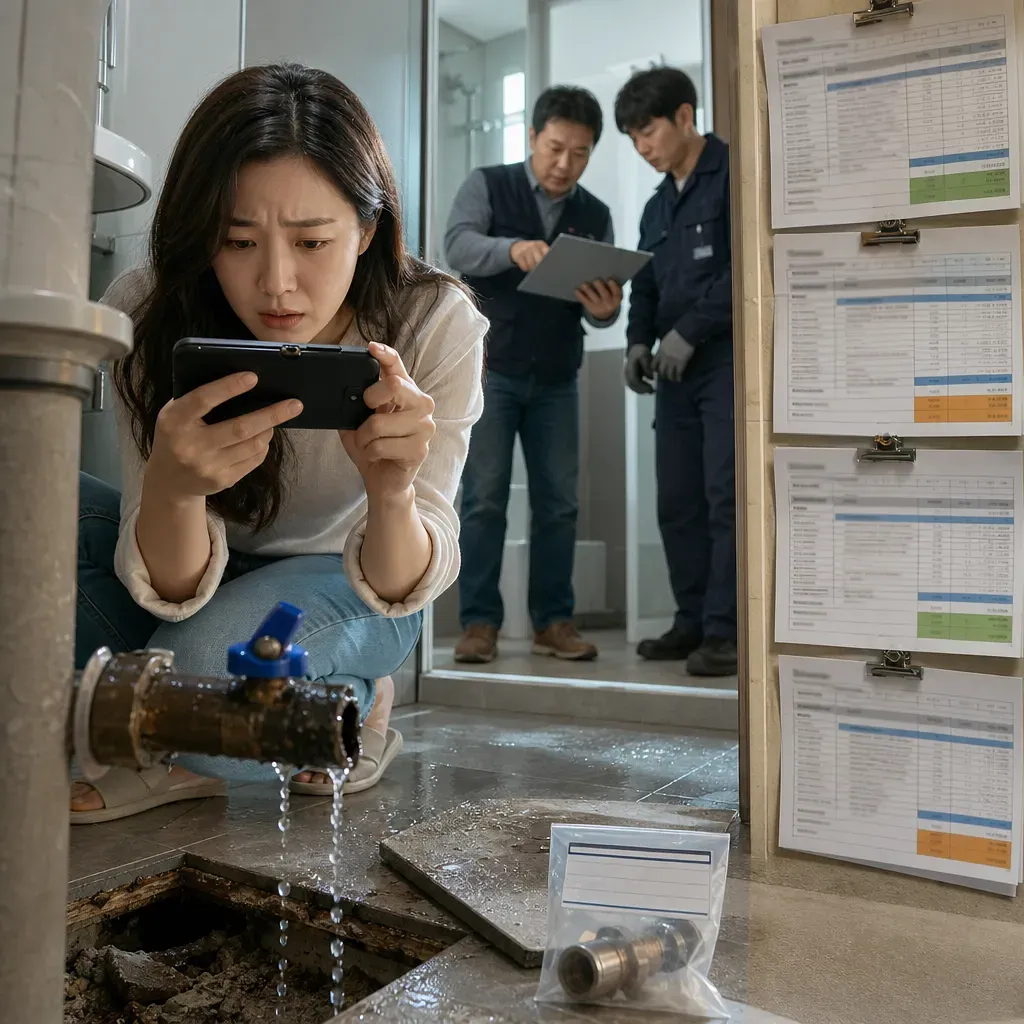
Apartment water leak insurance benefits are not paid merely because “a leak occurred.” The personal liability rider must have been in effect at the time of the accident, the insured must bear legal liability for the damage to the unit below, and the loss must fall within the policy’s scope of coverage.
First, check the insurance policy and notify the insurer of the accident. Insurance claims are subject to statute-of-limitations issues under the Commercial Act, but the specific period and starting point may vary depending on the type of claim and how the accident unfolded. It is therefore safest to check with the insurer and review the applicable laws without delaying the filing.
What to Check First: Eligibility, Deadlines, and Required Materials
Three Conditions for Determining Claim Eligibility
- Was the coverage valid on the date of the accident? The relevant standard is the status of the policy when the leak occurred, not whether coverage is currently in effect.
- Is the liable person included as an insured? The policyholder and the insured may be different. The name of the rider, such as individual, child, or family coverage, and the scope of covered family members may also vary depending on when the policy was purchased and its terms.
- Is there legal liability for the damage to the unit below? Depending on whether the cause is deterioration, a construction defect, or a common pipe issue, responsibility may lie differently with the owner, tenant, or property manager.
Materials to Secure Immediately After the Accident
- Photos and videos showing the leak location and how the water spread
- Pre-repair photos of the ceiling, walls, and floor of the unit below, as well as wet household belongings
- Leak detection reports and investigation results, including pipe pressure tests
- Construction estimates that separately identify the affected area and scope of work
- Receipts and bank transfer records for detection costs, emergency measures, and restoration costs
- Property management office filing records and on-site inspection reports
- Contact information for the affected resident below, a list of damaged items, and repair estimates
- Materials verifying occupancy and ownership, such as the lease agreement and certificate of registered matters
- The insurance policy and special terms in effect at the time of the accident
If the area is completely demolished or the pipe that caused the leak is discarded before insurance benefits are paid, it may become difficult to verify the cause and scope of the damage. Take emergency measures to prevent additional damage, but, if possible, first notify the insurer and property management office, and preserve the pre-demolition condition and any removed pipes.
Checking Your Insurance and Where to File a Claim
Personal liability insurance is generally not sold as a standalone product but as a rider attached to driver’s insurance, children’s insurance, accident insurance, home-related insurance, and similar products. Accordingly, even if you do not remember purchasing the rider, you should review both current and past insurance policies.
You can search your coverage history through the “Find My Insurance” service operated by the Korea Life Insurance Association and the General Insurance Association of Korea. However, the search results alone do not confirm whether water leaks are covered. Obtain the full special terms from the insurer shown on the policy and check the following:
- The exact name of the rider and when it was purchased
- The scope of insured persons and cohabiting family members
- The relationship between the home listed in the policy and the home where the accident actually occurred
- Exclusions or restrictions concerning homes that are owned, used, or managed
- Conditions for recognizing loss-prevention expenses related to leaks
- The coverage limit per accident and deductible
An insurance claim is filed not through an integrated portal but through the relevant insurer’s official website, app, call center, or claims department. The usual process is to review your coverage history, contact the insurer listed on the policy to obtain a claim number, and then follow the instructions of the assigned claims representative.
Distinguishing Coverage Eligibility by Type of Cost
Even when costs are included in the same construction estimate, their legal nature may differ. The items should be separated so that the insurer can assess them individually.
| Cost Item | General Treatment Under Personal Liability Coverage | Coverage or Conditions to Check Separately |
|---|---|---|
| Restoration costs for the ceiling, wallpaper, and flooring of the unit below | May be considered for coverage if the insured’s legal liability is established and no policy exclusion applies | Depreciation, pre-existing damage, and excessive restoration may be reviewed |
| Damage to furniture, appliances, and other household belongings in the unit below | May be reviewed if a direct causal relationship with the leak is proven | Purchase records, product condition, repairability, and depreciation may be reviewed |
| Leak detection costs | Reviewed to determine whether they were necessary and reasonable expenses incurred to prevent additional damage or determine the extent of liability | Whether they qualify as loss-prevention or investigation expenses under the policy varies by contract |
| Cost of repairing the pipe that caused the leak | If the cost is for repairing defective or deteriorated parts of the insured’s own property, it is generally treated separately from compensable liability | The scope of loss-prevention expenses recognized under certain policies and separate home coverage should be checked |
| Tiles or flooring in the insured’s own home removed to access the pipe | If these are simply restoration costs for the insured’s own home, coverage under personal liability is likely to be limited | Check whether removal was essential for emergency loss prevention and whether property coverage such as escape of water from plumbing systems applies |
| Water-damaged wallpaper or flooring in the insured’s own home | This differs from the basic purpose of personal liability coverage because it is not compensation paid to a third party | Check separate coverage, such as escape of water from plumbing systems under home fire insurance |
| Common pipe repair costs | This may involve responsibility of the property manager or joint responsibility rather than the personal liability of an individual resident | Check the property management rules, whether the area is a common element, and the apartment building’s insurance |
| Mold removal and temporary accommodation costs | Causation, necessity, and whether each item constitutes a covered loss under the policy are reviewed individually | Pre-existing mold, prolonged failure to take action, and expanded damage may be reviewed |
The table provides general distinctions and does not guarantee payment. Actual coverage is determined based on the special terms in effect at the time of the accident, the cause of the leak, legal liability, supporting evidence, and the loss assessment results.
Difference Between Personal Liability and Escape of Water from Plumbing Systems Coverage
Although both types of coverage address water leaks, they differ in the property they protect and the structure of liability.
| Category | Personal Liability | Home Property Coverage, Including Escape of Water from Plumbing Systems |
|---|---|---|
| Basic purpose | Covers legal liability for damage caused to others | Covers property damage to the insured home or household belongings |
| Typical example | Damage to the ceiling of the unit below caused by a leaking pipe in the insured’s home | Damage to wallpaper or flooring in the insured’s own home caused by escaped water |
| Key considerations | The insured’s liability, third-party damage, and policy conditions concerning the home | Insured property, accidental escape of water, covered causes, and exclusions |
| Repair of the pipe itself | Replacement costs for deteriorated or defective parts are generally assessed separately | Resulting damage from the leak and the cost of repairing the facility that caused it are often treated separately |
| Multiple policies | Costs may be apportioned within the limit of the actual loss | Policies covering the same loss may contribute proportionally |
Even if coverage is named “escape of water from plumbing systems,” it does not mean that all leaks and pipe replacement costs are covered. Exclusions concerning frozen pipes, defective waterproofing layers, water that seeped over a long period, deteriorated pipes themselves, and construction defects vary by product, so the full policy terms must be reviewed.