Skip to content
Injoys
News 🇰🇷 South Korea

This content applies specifically to South Korea.

Comprehensive Real Estate Tax: ₩1.2B Deduction Kept

The government withdrew proposals to reduce deductions for single-home owners who do not live in the property and for married couples with joint ownership. The tax burden cap will remain at 150%, while measures including a larger deduction for owner-occupiers with one home remain in the government proposal.

Listen or read this article

13:00

Listen, or read the text only.

Comprehensive Real Estate Tax: ₩1.2B Deduction Kept

Kokoro 82M AI-generated voice 13 min read

0:00 13:00

Advertisement

Download audio

File name
comprehensive-real-estate-tax-1-house-deduction-revision-2026-en.mp3
Format
MP3 (audio/mpeg)
Duration
13:00
File size
8.93 MB
Engine
Kokoro 82M

This audio was generated by AI.

You may download and use it freely for personal use.

Comprehensive Real Estate Tax: ₩1.2B Deduction Kept

9 min read

Comprehensive Real Estate Tax: ₩1.2B Deduction Kept
The government withdrew proposals to reduce deductions for single-home owners who do not live in the property and for married couples with joint ownership. The tax burden cap will remain at 150%, while measures including a larger deduction for owner-occupiers with one home remain in the government proposal.
The government proposal was revised to retain the current ₩1.2 billion basic deduction for single-home owners who do not live in the property.
The deduction for married couples with joint ownership will remain at ₩600 million per person, or ₩1.2 billion combined.
The plan to raise the property tax burden cap to 200% was withdrawn.
The proposed ₩1.4 billion deduction for owner-occupiers with one home and the direction toward stronger taxation remain.
Because the government proposal is not law, the National Assembly's review and the final amendments must be checked.
The government has withdrawn its plan to reduce the basic comprehensive real estate holding tax deduction for single-home owners who do not reside in the home to 900 million won. The combined deduction for jointly owned homes will remain at 1.2 billion won. The tax burden cap will also remain at the current 150%, while the proposal to expand the deduction for owner-occupants will continue to move forward.
Based on the revised government tax reform proposal as of September 2026
Key Points of the Revised 2026 Comprehensive Real Estate Holding Tax Proposal
The main point of this revision is the reversal of some proposals that would have increased the tax burden. The deduction for single-home owners who do not reside in the home and the tax burden cap will remain unchanged. Here, non-occupancy means not actually living in the home concerned.
Category | Current | Original Government Proposal | Revised Government Proposal Basic deduction for owner-occupants with one home | 1.2 billion won | 1.4 billion won | 1.4 billion won Basic deduction for non-occupants with one home | 1.2 billion won | 900 million won | 1.2 billion won Deduction for homes jointly owned by married couples | 600 million won per person, 1.2 billion won combined | 400 million won per person, 800 million won combined | 600 million won per person, 1.2 billion won combined Property holding tax burden cap | 150% | 200% | 150%
The revised government proposal in the table is not a law that takes effect immediately. Tax law revisions require deliberation by the National Assembly and statutory amendments. When filing, taxpayers must check the laws applicable to the relevant tax year.
The exact official wording should be checked in the Ministry of Economy and Finance’s revised materials for the 2026 tax reform proposal. Whether the changes have taken effect can be cross-checked against the Comprehensive Real Estate Holding Tax Act on the Korean Law Information Center. Individual eligibility criteria should be verified through guidance from the National Tax Service.
Deduction Criteria by Circumstance
How the rules apply varies depending on actual occupancy and the form of ownership. The revised proposal withdrew the planned reductions for non-occupants and joint owners. The proposed deduction increase for owner-occupants with one home remains in place.
Ownership Conditions | Deduction Under the Revised Government Proposal | What to Check Sole ownership and actual occupancy | Proposed 1.4 billion won deduction retained | Check current criteria until the law is amended Sole ownership without actual occupancy | 1.2 billion won retained | Proposed reduction to 900 million won withdrawn One home jointly owned by a married couple | 600 million won per person, 1.2 billion won combined retained | Proposed reduction to 400 million won per person withdrawn Those subject to the tax burden cap | 150% retained | Compare with the previous year’s property holding tax
The final tax amount is not determined solely by whether the owner actually resides in the home. The officially assessed value and ownership share also affect individual calculations. The tax classification must be determined based on the final law and National Tax Service criteria.
Example of Calculating the Tax Burden Cap
The tax burden cap limits sharp year-on-year increases in property holding taxes. The revised government proposal retains the cap at 150%. The following is a simplified example provided in the announcement.
· Assume that last year’s combined property tax and comprehensive real estate holding tax totaled 1 million won. · This year’s calculated property holding taxes total 2 million won. · Applying the 150% cap limits the amount payable to 1.5 million won. · Under the original 200% proposal, the full calculated amount of 2 million won would apply.
The difference resulting from the revised cap in this example should be checked in the Ministry of Economy and Finance’s revised tax reform proposal materials. It does not represent the tax reduction for every taxpayer. If this year’s calculated tax is below the cap, the cap has no limiting effect.
Why a 1.2 Billion Won Deduction Does Not Mean a 1.2 Billion Won Tax Reduction
The basic deduction is not an amount directly subtracted from the tax payable. It is the threshold used to determine the taxable amount from the officially assessed value. Therefore, the deduction amount and the actual tax savings are different.
For comprehensive real estate holding tax calculations, the amount remaining after the deduction is the starting point. The fair market value ratio and tax rate are then applied. At the final stage, the applicable tax burden cap is reviewed.
· A 1.2 billion won deduction does not mean eliminating 1.2 billion won in taxes. · Even with the same officially assessed value, ownership and occupancy conditions may differ. · If the fair market value ratio rises, the taxable amount may increase. · The exact tax must be calculated using the statutory formula for the relevant year.
Comprehensive Real Estate Holding Tax Reforms That Were Not Withdrawn
The entire comprehensive real estate holding tax reform proposal was not withdrawn. The proposal to raise the deduction for owner-occupants with one home to 1.4 billion won remains in place. The policy direction of strengthening taxation on high-value homes was also retained.
Remaining Reform Direction | Status After Revision | Potential Effect on Tax Expanded deduction for owner-occupants with one home | Proposal to increase it from 1.2 billion won to 1.4 billion won retained | The taxable amount may decrease Higher tax rates for high-value homes | Policy direction retained | The tax burden may increase if the relevant bracket applies Increase in the fair market value ratio | Direction of phased increases retained | The tax base may increase
The final tax rates and ratios depend on statutes and subordinate regulations. An individual’s tax liability cannot be finalized based solely on the government proposal. The details may change again during National Assembly deliberations.
Order for Checking the Government Proposal and Applicable Law
When assessing taxes, the announced proposal must be distinguished from the law in force. A government proposal presents the direction of a planned amendment. Actual tax obligations are determined under the laws currently in effect.
· Check whether the home is solely or jointly owned. · Determine whether the owner actually resides in the home. · Check the Ministry of Economy and Finance materials for changes to the government proposal. · Check the final amended law on the Korean Law Information Center. · Cross-check the calculation criteria for the relevant tax year in National Tax Service guidance.
After receiving a tax notice, first check the tax year stated on it. Applying a deduction from a different year will change the calculation. It is safer not to assume the amount payable based only on a government announcement.
Common Mistakes
The most common misunderstanding is treating 1.2 billion won as a tax credit. Some also interpret the 150% cap as meaning that taxes can rise by only 50%. Another mistake is assuming that the government proposal is already in force.
· Do not confuse a single-home owner who does not reside in the home with an overseas nonresident under tax law. · Do not subtract the basic deduction directly from the tax payable. · Do not treat the tax burden cap and the comprehensive real estate holding tax rate as the same concept. · Do not assume that the revised government proposal is a finalized law in force. · Do not skip individual calculations based only on the combined deduction for joint owners.
The tax burden cap is a mechanism that limits the extent of an increase. It does not refer to the tax rate or deduction itself. The final amount payable must be checked using each individual’s tax assessment information.
Frequently Asked Questions
Will the deduction for single-home owners who do not reside in the home be reduced to 900 million won?
The revised government proposal withdrew the plan to reduce it to 900 million won. The deduction is intended to remain at the current 1.2 billion won. The amended law must be checked to confirm whether it ultimately applies.
Is the deduction for owner-occupants with one home also 1.2 billion won?
The current deduction is stated as 1.2 billion won. The government proposal retains the increase to 1.4 billion won. Until the law is amended, the government proposal and current law must be distinguished.
How much is the deduction for a home jointly owned by a married couple?
The revised proposal retains the deduction of 600 million won per person. The combined amount for a married couple is 1.2 billion won. Individual application must be determined by checking both ownership shares and tax classifications.
What is the 150% tax burden cap?
It is a mechanism that limits this year’s property holding tax to no more than 150% of the comparison amount. It mitigates sharp increases in the burden from property tax and comprehensive real estate holding tax. It does not mean that the comprehensive real estate holding tax rate is 150%.
Was the entire comprehensive real estate holding tax reform proposal withdrawn?
Only some proposals that would have increased the tax burden were withdrawn. The proposed deduction increase for owner-occupants with one home remains in place. The policy direction of strengthening taxation on high-value homes and increasing the ratio was also retained.
0:00 0:00
1 / 49

Advertisement

Download text

File name
comprehensive-real-estate-tax-1-house-deduction-revision-2026-en.txt
Format
TXT (text/plain)
Paragraphs
49

Downloads exactly what you see as a text file.

Please cite the source when quoting.

Large text

Makes the text larger and the colors clearer. Turn it on if the text feels too small.

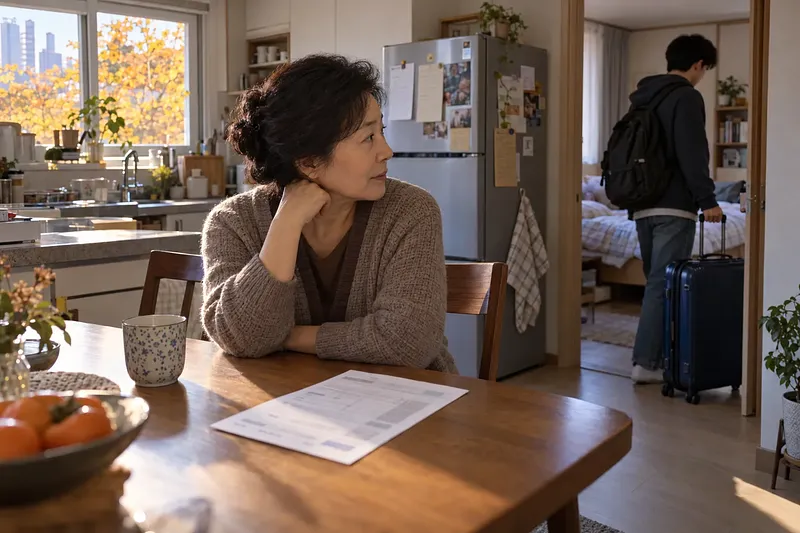
A couple reviews financial documents related to property tax deductions.

Key points

  • The government proposal was revised to retain the current ₩1.2 billion basic deduction for single-home owners who do not live in the property.
  • The deduction for married couples with joint ownership will remain at ₩600 million per person, or ₩1.2 billion combined.
  • The plan to raise the property tax burden cap to 200% was withdrawn.
  • The proposed ₩1.4 billion deduction for owner-occupiers with one home and the direction toward stronger taxation remain.
  • Because the government proposal is not law, the National Assembly's review and the final amendments must be checked.

The government has withdrawn its plan to reduce the basic comprehensive real estate holding tax deduction for single-home owners who do not reside in the home to 900 million won. The combined deduction for jointly owned homes will remain at 1.2 billion won. The tax burden cap will also remain at the current 150%, while the proposal to expand the deduction for owner-occupants will continue to move forward.

Based on the revised government tax reform proposal as of September 2026

Key Points of the Revised 2026 Comprehensive Real Estate Holding Tax Proposal

The main point of this revision is the reversal of some proposals that would have increased the tax burden. The deduction for single-home owners who do not reside in the home and the tax burden cap will remain unchanged. Here, non-occupancy means not actually living in the home concerned.

Category Current Original Government Proposal Revised Government Proposal
Basic deduction for owner-occupants with one home 1.2 billion won 1.4 billion won 1.4 billion won
Basic deduction for non-occupants with one home 1.2 billion won 900 million won 1.2 billion won
Deduction for homes jointly owned by married couples 600 million won per person, 1.2 billion won combined 400 million won per person, 800 million won combined 600 million won per person, 1.2 billion won combined
Property holding tax burden cap 150% 200% 150%

The revised government proposal in the table is not a law that takes effect immediately. Tax law revisions require deliberation by the National Assembly and statutory amendments. When filing, taxpayers must check the laws applicable to the relevant tax year.

The exact official wording should be checked in the Ministry of Economy and Finance’s revised materials for the 2026 tax reform proposal. Whether the changes have taken effect can be cross-checked against the Comprehensive Real Estate Holding Tax Act on the Korean Law Information Center. Individual eligibility criteria should be verified through guidance from the National Tax Service.

Deduction Criteria by Circumstance

How the rules apply varies depending on actual occupancy and the form of ownership. The revised proposal withdrew the planned reductions for non-occupants and joint owners. The proposed deduction increase for owner-occupants with one home remains in place.

Ownership Conditions Deduction Under the Revised Government Proposal What to Check
Sole ownership and actual occupancy Proposed 1.4 billion won deduction retained Check current criteria until the law is amended
Sole ownership without actual occupancy 1.2 billion won retained Proposed reduction to 900 million won withdrawn
One home jointly owned by a married couple 600 million won per person, 1.2 billion won combined retained Proposed reduction to 400 million won per person withdrawn
Those subject to the tax burden cap 150% retained Compare with the previous year’s property holding tax

The final tax amount is not determined solely by whether the owner actually resides in the home. The officially assessed value and ownership share also affect individual calculations. The tax classification must be determined based on the final law and National Tax Service criteria.

Example of Calculating the Tax Burden Cap

The tax burden cap limits sharp year-on-year increases in property holding taxes. The revised government proposal retains the cap at 150%. The following is a simplified example provided in the announcement.

  1. Assume that last year’s combined property tax and comprehensive real estate holding tax totaled 1 million won.
  2. This year’s calculated property holding taxes total 2 million won.
  3. Applying the 150% cap limits the amount payable to 1.5 million won.
  4. Under the original 200% proposal, the full calculated amount of 2 million won would apply.

The difference resulting from the revised cap in this example should be checked in the Ministry of Economy and Finance’s revised tax reform proposal materials. It does not represent the tax reduction for every taxpayer. If this year’s calculated tax is below the cap, the cap has no limiting effect.

Why a 1.2 Billion Won Deduction Does Not Mean a 1.2 Billion Won Tax Reduction

The basic deduction is not an amount directly subtracted from the tax payable. It is the threshold used to determine the taxable amount from the officially assessed value. Therefore, the deduction amount and the actual tax savings are different.

For comprehensive real estate holding tax calculations, the amount remaining after the deduction is the starting point. The fair market value ratio and tax rate are then applied. At the final stage, the applicable tax burden cap is reviewed.

  • A 1.2 billion won deduction does not mean eliminating 1.2 billion won in taxes.
  • Even with the same officially assessed value, ownership and occupancy conditions may differ.
  • If the fair market value ratio rises, the taxable amount may increase.
  • The exact tax must be calculated using the statutory formula for the relevant year.

Comprehensive Real Estate Holding Tax Reforms That Were Not Withdrawn

The entire comprehensive real estate holding tax reform proposal was not withdrawn. The proposal to raise the deduction for owner-occupants with one home to 1.4 billion won remains in place. The policy direction of strengthening taxation on high-value homes was also retained.

Remaining Reform Direction Status After Revision Potential Effect on Tax
Expanded deduction for owner-occupants with one home Proposal to increase it from 1.2 billion won to 1.4 billion won retained The taxable amount may decrease
Higher tax rates for high-value homes Policy direction retained The tax burden may increase if the relevant bracket applies
Increase in the fair market value ratio Direction of phased increases retained The tax base may increase

The final tax rates and ratios depend on statutes and subordinate regulations. An individual’s tax liability cannot be finalized based solely on the government proposal. The details may change again during National Assembly deliberations.

Order for Checking the Government Proposal and Applicable Law

When assessing taxes, the announced proposal must be distinguished from the law in force. A government proposal presents the direction of a planned amendment. Actual tax obligations are determined under the laws currently in effect.

  1. Check whether the home is solely or jointly owned.
  2. Determine whether the owner actually resides in the home.
  3. Check the Ministry of Economy and Finance materials for changes to the government proposal.
  4. Check the final amended law on the Korean Law Information Center.
  5. Cross-check the calculation criteria for the relevant tax year in National Tax Service guidance.

After receiving a tax notice, first check the tax year stated on it. Applying a deduction from a different year will change the calculation. It is safer not to assume the amount payable based only on a government announcement.

Common Mistakes

The most common misunderstanding is treating 1.2 billion won as a tax credit. Some also interpret the 150% cap as meaning that taxes can rise by only 50%. Another mistake is assuming that the government proposal is already in force.

  • Do not confuse a single-home owner who does not reside in the home with an overseas nonresident under tax law.
  • Do not subtract the basic deduction directly from the tax payable.
  • Do not treat the tax burden cap and the comprehensive real estate holding tax rate as the same concept.
  • Do not assume that the revised government proposal is a finalized law in force.
  • Do not skip individual calculations based only on the combined deduction for joint owners.

The tax burden cap is a mechanism that limits the extent of an increase. It does not refer to the tax rate or deduction itself. The final amount payable must be checked using each individual’s tax assessment information.

Frequently Asked Questions

Will the deduction for single-home owners who do not reside in the home be reduced to 900 million won?

The revised government proposal withdrew the plan to reduce it to 900 million won. The deduction is intended to remain at the current 1.2 billion won. The amended law must be checked to confirm whether it ultimately applies.

Is the deduction for owner-occupants with one home also 1.2 billion won?

The current deduction is stated as 1.2 billion won. The government proposal retains the increase to 1.4 billion won. Until the law is amended, the government proposal and current law must be distinguished.

How much is the deduction for a home jointly owned by a married couple?

The revised proposal retains the deduction of 600 million won per person. The combined amount for a married couple is 1.2 billion won. Individual application must be determined by checking both ownership shares and tax classifications.

What is the 150% tax burden cap?

It is a mechanism that limits this year’s property holding tax to no more than 150% of the comparison amount. It mitigates sharp increases in the burden from property tax and comprehensive real estate holding tax. It does not mean that the comprehensive real estate holding tax rate is 150%.

Was the entire comprehensive real estate holding tax reform proposal withdrawn?

Only some proposals that would have increased the tax burden were withdrawn. The proposed deduction increase for owner-occupants with one home remains in place. The policy direction of strengthening taxation on high-value homes and increasing the ratio was also retained.

Sign-in required

Sign in with your Google account to like, comment, and save highlights.

Images

A couple reviews financial documents related to property tax deductions.
The scene symbolizes debate over property tax deductions and reform.

FAQ

Will the comprehensive real estate holding tax deduction for a non-resident single-home owner be reduced to 900 million won?

The government withdrew its plan to lower it to 900 million won. The revised government proposal retains the current 1.2 billion won deduction.

Was the proposed 1.4 billion won deduction for owner-occupier single-home owners also withdrawn?

The proposal to increase the deduction for owner-occupier single-home owners to 1.4 billion won was retained. However, since it is a government proposal, the final legislation must be checked.

What is the deduction for a jointly owned single home held by a married couple?

The revised proposal retains the deduction of 600 million won per person. For a married couple combined, it is 1.2 billion won.

Will the comprehensive real estate holding tax burden cap rise to 200%?

The plan to raise it to 200% was withdrawn. The revised government proposal retains the current 150% cap.

Does the 150% tax burden cap refer to the comprehensive real estate holding tax rate?

It is not a tax rate but a mechanism that limits increases in property holding taxes. It ensures that this year's comparative tax amount does not exceed 150% of the previous year's amount.

Does the 1.2 billion won basic deduction mean that 1.2 billion won is deducted from the tax?

The basic deduction is not an amount deducted directly from the tax payable. It is a threshold applied when calculating the taxable amount from the officially assessed value.

When will the revised government proposal take effect?

It does not take effect immediately upon the government's announcement. The implementation rules for the relevant tax year must be checked after National Assembly deliberation and legislative amendment.

Sources

Data formats

This content is available in several machine-friendly formats.

Data-only languages (machine translated, files only)

Indonesian JSON MD Portuguese JSON MD Chinese (Traditional) JSON MD Deutsch JSON MD

Verification

This article was drafted with AI and then reviewed and edited by a person.

Reviewed by 신익희 · 편집장 · 2026-09-09

Figures in this article were checked against the source material during generation. 1 correction(s) applied. · 2026-09-09

This translation has been cross-checked by AI. · 2026-09-09

Reuse & AI usage

Search indexing and AI citation with attribution are welcome. See the license policy for details.

CC BY · License

Loading…

Loading…

Related content

From Injoys

Request the content you want and take 70% of what it earns

Just leave the subject. We handle production, review, translation and distribution.

See how revenue sharing works

Comments