Injoys
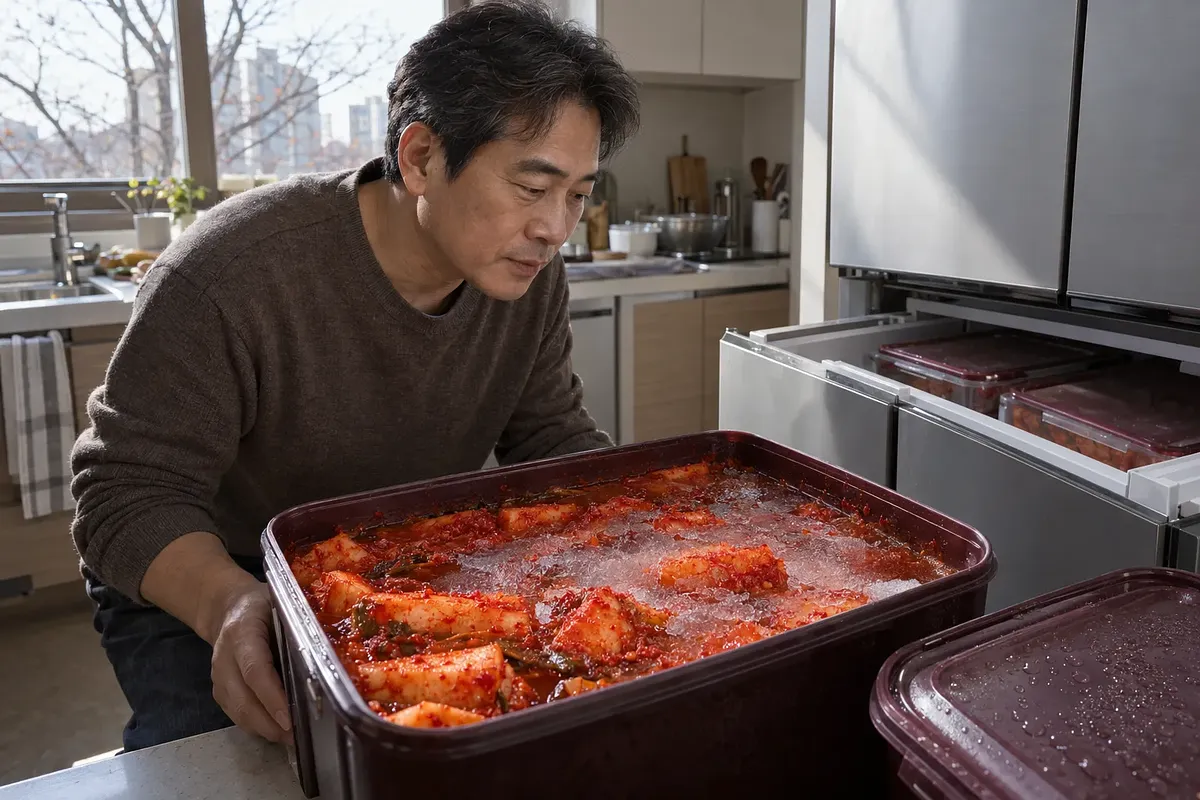
The High, Medium, and Low settings on a kimchi refrigerator indicate different storage temperatures. For less salty kimchi, consider Low or a supported low-salt setting. If a thin layer of ice forms, check the next lower cooling level and the condition of the container. The model’s manual is the authority for exact temperatures. (Verified values from LG Electronics’ general guidance dated May 29, 2026, for Taste-Keeping Kimchi settings: Low -1.0℃, Medium -1.5℃, High -2.0℃. · Source lge.co.kr · Checked 2026-05-29)
The setting guidance is based on LG Electronics’ May 29, 2026, guidance and other sources.
What Do High, Medium, and Low Control?
High, Medium, and Low indicate cooling levels within the same storage function. Switching to High keeps food colder than Medium. Low keeps it less cold than Medium within that function.
A dedicated kimchi refrigerator maintains temperatures suited to storing kimchi. Supported models also let you select different food storage functions for individual compartments. A function that ferments kimchi serves a different purpose from one that keeps it in its fermented state.
| Setting or function | Meaning | What to check when selecting it |
|---|---|---|
| Kimchi Storage High | Keeps food colder within the same storage mode | Whether it suits salty kimchi and whether the kimchi freezes |
| Kimchi Storage Medium | The middle storage level for that mode | The type of kimchi and its actual salt content |
| Kimchi Storage Low | Keeps food less cold within the same storage mode | Whether the kimchi is less salty or a thin layer of ice has formed |
| Dedicated low-salt setting | Separate storage conditions for low-salt kimchi | Whether the model supports it and which compartments can use it |
| Fermentation·Aging | A function for fermenting kimchi | Which kimchi it applies to and how to switch modes afterward |
| Vegetables·Fruit, etc. | Storage functions suited to those foods | Temperature conditions that differ from kimchi storage |
The name High alone does not tell you the actual temperature. High for kimchi storage and High for vegetable storage are different settings. You also cannot determine the temperature from whether the refrigerator is a chest or upright model.
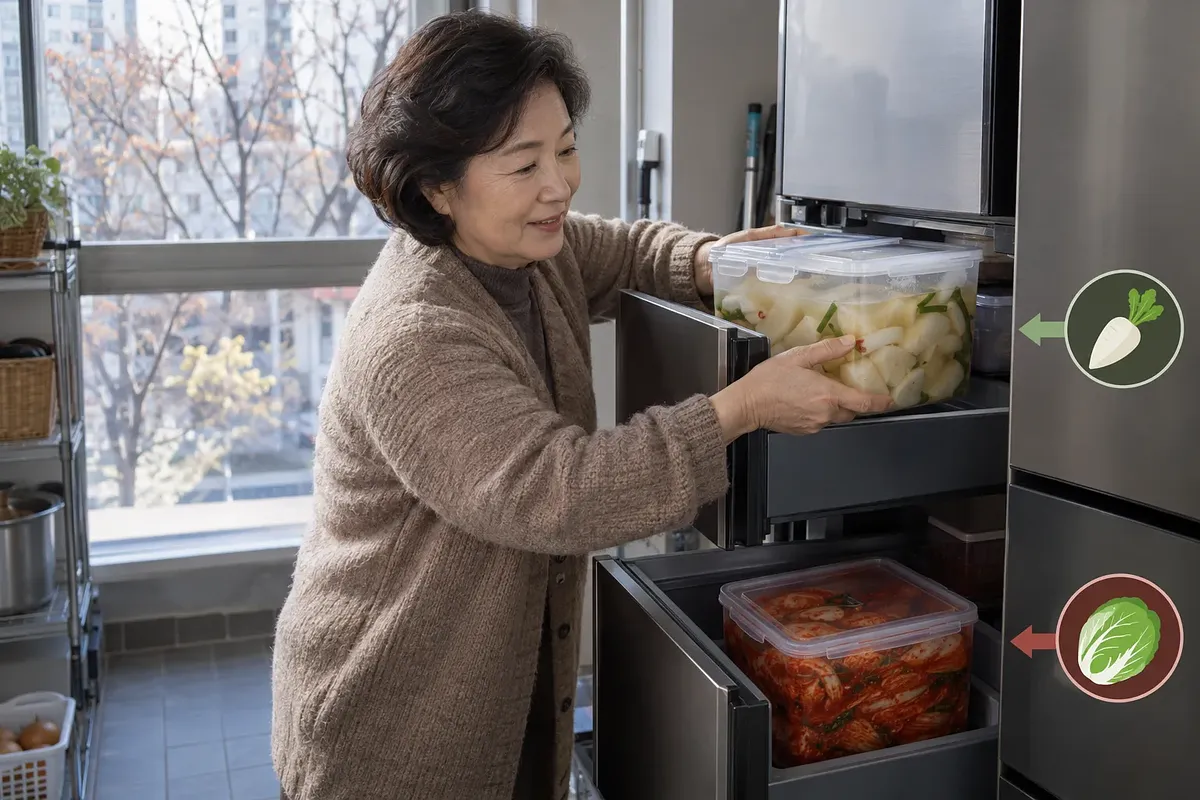
Check the settings and supported functions for the specific compartment you use.
Settings by Kimchi Type and Salt Content
Judge the storage level by how salty the kimchi actually is, as well as by its name. Salt content means the amount of salt in a food. Even napa cabbage kimchi can vary in salt content depending on how it is made.
LG Electronics and Samsung Electronics Service recommend Low for less salty kimchi. They suggest Medium for whole-head kimchi with ordinary salt content. For high-salt kimchi or salty aged kimchi, you can consider High.
| Kimchi condition | Setting found in manufacturer guidance | Easy mistake to make |
|---|---|---|
| Less salty water kimchi·radish kimchi | Low or a supported dedicated low-salt setting | Assuming a dedicated mode is supported just because it is called water kimchi |
| Napa cabbage kimchi·mustard leaf kimchi with ordinary salt content | Medium or the model’s standard setting | Treating all napa cabbage kimchi as having the same salt content |
| Salty kimchi·high-salt aged kimchi | High or conditions for High Cooling | Assuming all aged kimchi is salty |
| Napa cabbage kimchi made with less salt | Low-salt storage guidance | Keeping the regular setting just because it is napa cabbage kimchi |
| Kimchi with unknown salt content | Preparation information or the seller’s storage guidance | Assigning a precise salt-content figure based on taste alone |
The type of kimchi is a clue for finding a setting, not a measurement of salt content. Salt-content ranges in different manufacturers’ guidance should not be combined into one common standard. Give priority to the applicable conditions in the purchased product’s manual.
Why Does Low-Salt Kimchi Need a Separate Setting?
Less salty kimchi can freeze at the low temperatures intended for regular kimchi. Samsung Electronics Service distinguishes between storage temperatures for regular and low-salt kimchi. The low-salt setting is designed for the storage conditions of kimchi with less salt.
This function does not remove salt from kimchi. Putting regular kimchi on the low-salt setting does not turn it into a low-salt food. Using the low-salt setting for all kimchi is not appropriate either.
If the product has no dedicated function, check the manual’s guidance for storing less salty kimchi. It may recommend Low, but that recommendation cannot be applied to every product. Check support and actual setting temperatures for each model. (Verified values from Samsung Electronics Service guidance dated August 16, 2023, for regular kimchi storage temperatures: Low Cooling -0.8℃, Standard -1.3℃, High Cooling -1.8℃. Low-salt kimchi storage temperatures: Low Cooling 0.0℃, Standard -0.5℃, High Cooling -1.0℃. · Source samsungsvc.co.kr · Checked 2023-08-16)
What to Check When a Thin Layer of Ice Forms on Kimchi
If a thin layer of ice forms, check both the temperature setting and the condition of the container. Samsung Electronics Service identifies low temperature and low salt content as causes. Droplets on the lid can also fall and form a thin layer of ice.
Samsung Electronics Service’s “Storage Temperatures by Type of Kimchi” gives this advice:
Select a temperature one level lower and store the kimchi
This indicates which way to adjust the setting if you see a thin layer of ice during storage. Follow the model’s manual for the actual button操作.
- Check whether ice has formed inside the kimchi or only on its surface.
- Check whether the compartment is set to a kimchi storage function.
- Compare the cooling level with the recommendations for the kimchi type and salt content.
- Follow the manual to consider a cooling setting one level lower.
- Wipe moisture from the container lid and check that it is sealed.
- If the kimchi continues to freeze after adjusting the setting, consider having the manufacturer inspect the product.
Manufacturers consistently advise keeping kimchi submerged in its liquid. It is best to use a dedicated container suited to the product. LG Electronics explains that using other containers can affect the circulation of cold air.