Injoys
Sickness benefits provide a certain level of income replacement when an employed person stops working due to an illness or injury unrelated to work. In 2026, the program operates in Phase 2 and Phase 3 pilot areas, with the daily benefit amount and the sales recognition criteria for self-employed people adjusted from January.
Sickness benefits are not paid merely because someone has an illness. Eligibility is determined by reviewing all requirements, including the pilot area, age, employment status, income criteria, and whether the applicant actually stopped working. Before obtaining a medical certificate, it is therefore advisable to check eligibility and the application deadline with the National Health Insurance Service branch responsible for your area.
Differences Between 2026 Pilot Areas and Eligible Applicants
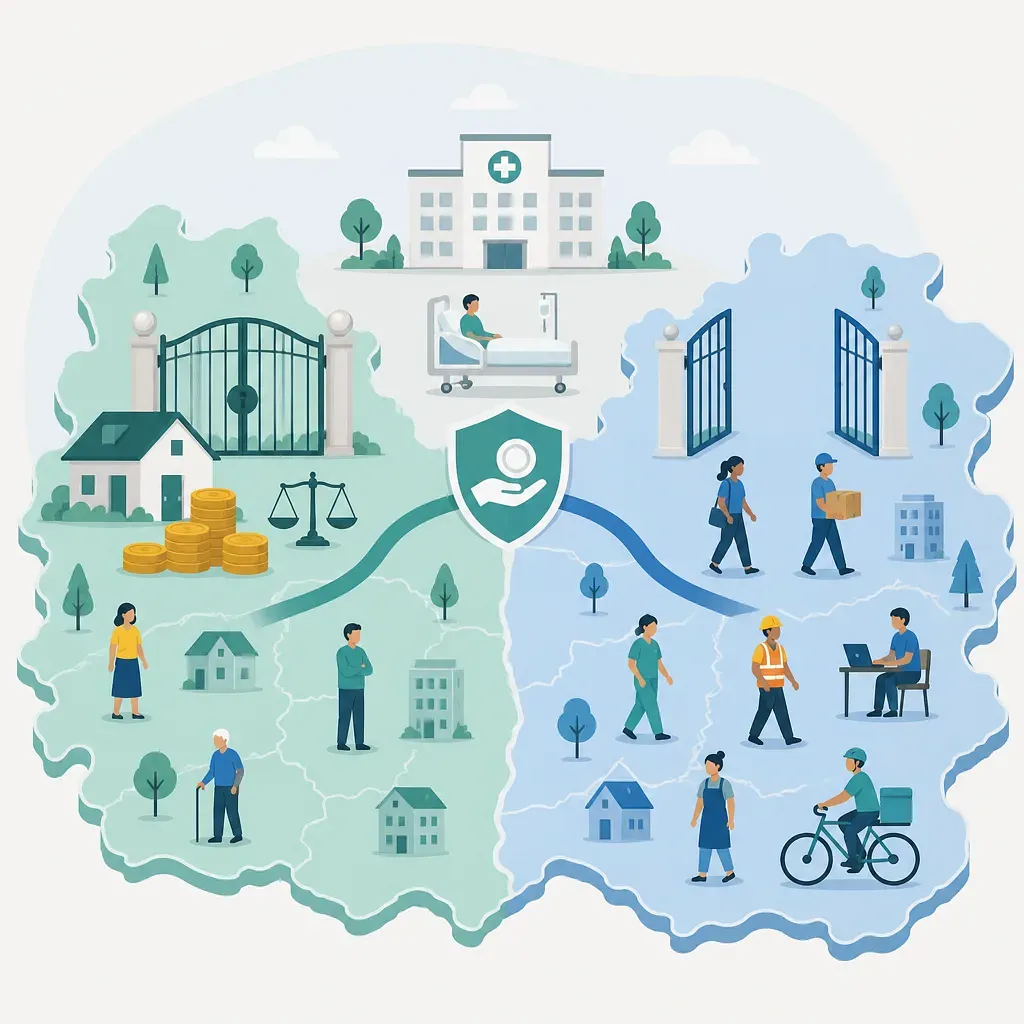
The biggest differences between Phase 2 and Phase 3 are whether household income and assets are assessed and how benefit amounts are calculated for some insured people.
| Category | Pilot areas | Income and asset requirements | 2026 daily benefit amount |
|---|---|---|---|
| Phase 2 | Anyang and Yongin, Gyeonggi; Dalseo-gu, Daegu; Iksan, Jeonbuk | Combined household health insurance premiums must correspond to at most 120% of the median income, and asset criteria apply | KRW 49,540 |
| Phase 3 | Chungju, Chungbuk; Hongseong-gun, Chungnam; Jeonju, Jeonbuk; Wonju, Gangwon | No income or asset restrictions | For employee-insured National Health Insurance members, 60% of average wages, or KRW 49,540–68,100 per day. For other eligible applicants, KRW 49,540 depending on the applicable criteria |
Common Basic Requirements
In principle, employed people who meet the following conditions are eligible for assessment.
- At the time of application, reside in a Phase 2 or Phase 3 pilot area or work at an eligible workplace in that area
- Generally be an employed person aged at least 15 and less than 65
- Have a recognized employment status, such as an employee-insured National Health Insurance member, an Employment Insurance or Industrial Accident Compensation Insurance member, or a self-employed person who meets the requirements
- Be genuinely unable to work due to an illness or injury that is not work-related
- Stop working beyond the prescribed waiting period and experience a reduction in income
In some cases, eligibility may be recognized based on the location of the workplace rather than the applicant’s residence, and coverage for foreign nationals may vary depending on their status of stay and other factors. People covered by separate paid sick leave or income protection programs, such as public officials and teaching staff, and recipients of other benefits may be excluded or have their payments restricted.
Phase 2 Income and Asset Requirements
Phase 2 assesses applicants by household rather than looking only at individual income. Health insurance premiums paid by household members are used to determine whether household income is at most 120% of the median income, while asset criteria are also reviewed using the property tax base and other information.
Because the result may vary depending on household composition and how health insurance premiums are calculated, eligibility cannot be accurately determined simply by comparing monthly wages with a median income table. Additional documents concerning family relationships and health insurance eligibility may be requested during the application process.
No Income Restrictions in Phase 3
Phase 3 does not restrict applicants based on household income or assets. However, having no income restrictions does not mean that benefits are paid automatically. The pilot area, age, employment eligibility requirements, non-work-related illness or injury, work stoppage, and restrictions on overlapping benefits are assessed separately.
2026 Daily Benefit Amounts and Payment Periods
Phase 2 Benefit Amount
The 2026 Phase 2 sickness benefit is KRW 49,540 for each approved benefit day. The actual payment may differ from simply multiplying this amount by the total number of days the applicant did not work. The waiting period for each model is excluded from benefit days, and payment is made only for work-stoppage days or healthcare utilization days approved through the assessment.
Phase 3 Benefit Amount
For employee-insured National Health Insurance members in Phase 3, the amount is based on 60% of the calculated average wage. In 2026, the daily minimum is KRW 49,540 and the maximum is KRW 68,100, so payment cannot exceed the maximum even if the actual average wage is higher.
Employment Insurance or Industrial Accident Compensation Insurance members, self-employed people, and others who are not covered by the average-wage-linked calculation must check the fixed amount applicable to their eligibility category. If the employment relationship or insurance status changed immediately before the application, the amount is calculated based on the eligibility status confirmed by the National Health Insurance Service.
Waiting Period and Maximum Coverage Period
The pilot program includes a work-incapacity model that recognizes periods during which a person could not work because of illness and a model based on hospitalization and healthcare utilization days. The waiting period and annual maximum coverage period vary by regional model, and no benefit is paid for the waiting period.
| Main model | Examples of applicable areas | Basis for payment determination | Waiting period and limit details to check |
|---|---|---|---|
| Work-incapacity model | Anyang, Dalseo-gu in Daegu, and Phase 3 areas, among others | Reviews the period during which a doctor determined that the applicant could not work and whether the applicant actually stopped working | Approved days after the prescribed waiting period are generally paid, subject to the maximum coverage period for each area |
| Healthcare utilization days model | Yongin and Iksan | Primarily reviews healthcare utilization days associated with hospitalization | Hospitalization requirements, a waiting period, and a maximum number of payment days may apply separately |
The operating model and coverage period may be adjusted under the program guidelines for each year. Before applying, applicants should check the National Health Insurance Service’s 2026 regional guidance for the waiting period and maximum number of payment days applicable to their address.
What to Check Before Applying
If any of the following is unclear, it is advisable to contact the National Health Insurance Service before obtaining a medical certificate. This is because a fee for issuing a medical certificate specifically for a sickness benefit application may be charged separately from general medical expenses, and a standard medical certificate may not substitute for the designated certificate.
- Confirm whether your residence or workplace meets the 2026 pilot area requirements.
- Confirm whether you are recognized as employed based on your National Health Insurance, Employment Insurance, or Industrial Accident Compensation Insurance enrollment history or self-employment requirements.
- Determine whether the illness or injury is unrelated to work.
- Confirm whether the medical institution providing treatment participates in the sickness benefit program.
- Confirm the application deadline, waiting period, and maximum coverage period applicable to your area.
- Check whether you are receiving unemployment benefits, Industrial Accident Compensation Insurance temporary disability benefits, or other benefits for the same period.
For injuries or illnesses that occurred during work or have a substantial causal relationship with work, eligibility for Industrial Accident Compensation Insurance should be checked before applying for sickness benefits.
Application Process
1. Receive Treatment at a Participating Medical Institution
Find a medical institution participating in the sickness benefit program, receive treatment, and have a doctor determine whether the illness or injury prevents you from working. Under the work-incapacity model, a medical certificate specifically for a sickness benefit application is required rather than a standard medical certificate.
In areas where the healthcare utilization days model applies, medical records, hospitalization and discharge certificates, and other documents proving hospitalization and related healthcare utilization may be the primary documents. Applicants should therefore check the regional model first.
2. Complete a Work Stoppage Plan
Employees should complete a work stoppage plan after confirming with their employer the planned work stoppage period, work arrangement, whether wages will be paid, and other details. Special-type workers, platform workers, and self-employed people should prepare materials proving their contractual relationships and plans to suspend business activities.
Periods covered by paid sick leave or temporary closure allowances may be excluded from or adjusted against sickness benefit payment days, so whether wages were paid must be stated accurately.
3. Prepare Evidence of Eligibility, Employment, and Sales
Prepare employment and income documents appropriate for your type of work. Self-employed people must check the sales recognition criteria and the evidentiary period that apply from 2026. Employment status is not recognized solely based on business registration; evidence of actual business operations and sales may be required.
4. Apply to the National Health Insurance Service
Submit the documents to the National Health Insurance Service branch responsible for sickness benefit matters. If an online civil service application channel is available on the Service’s website, applicants may apply online. Confirm with the competent branch which other submission methods are permitted, such as in person, by mail, or by fax.
Sickness benefit applications may be submitted at any time throughout the year, but individual deadlines apply based on the date of the medical certificate or discharge. Under the work-incapacity model, applicants must apply within the prescribed period after the medical certificate is issued. Under the healthcare utilization days model, they must apply within the prescribed period after discharge. The deadline should therefore be confirmed as soon as the documents are issued.
5. Undergo Eligibility and Work Stoppage Assessment
The National Health Insurance Service verifies the area, age, insurance enrollment, income requirements, and medical condition. If necessary, it may additionally ask the workplace or applicant to verify whether the applicant actually worked and whether wages or sales were generated.
6. Receive Payment After Actual Work Stoppage Is Confirmed
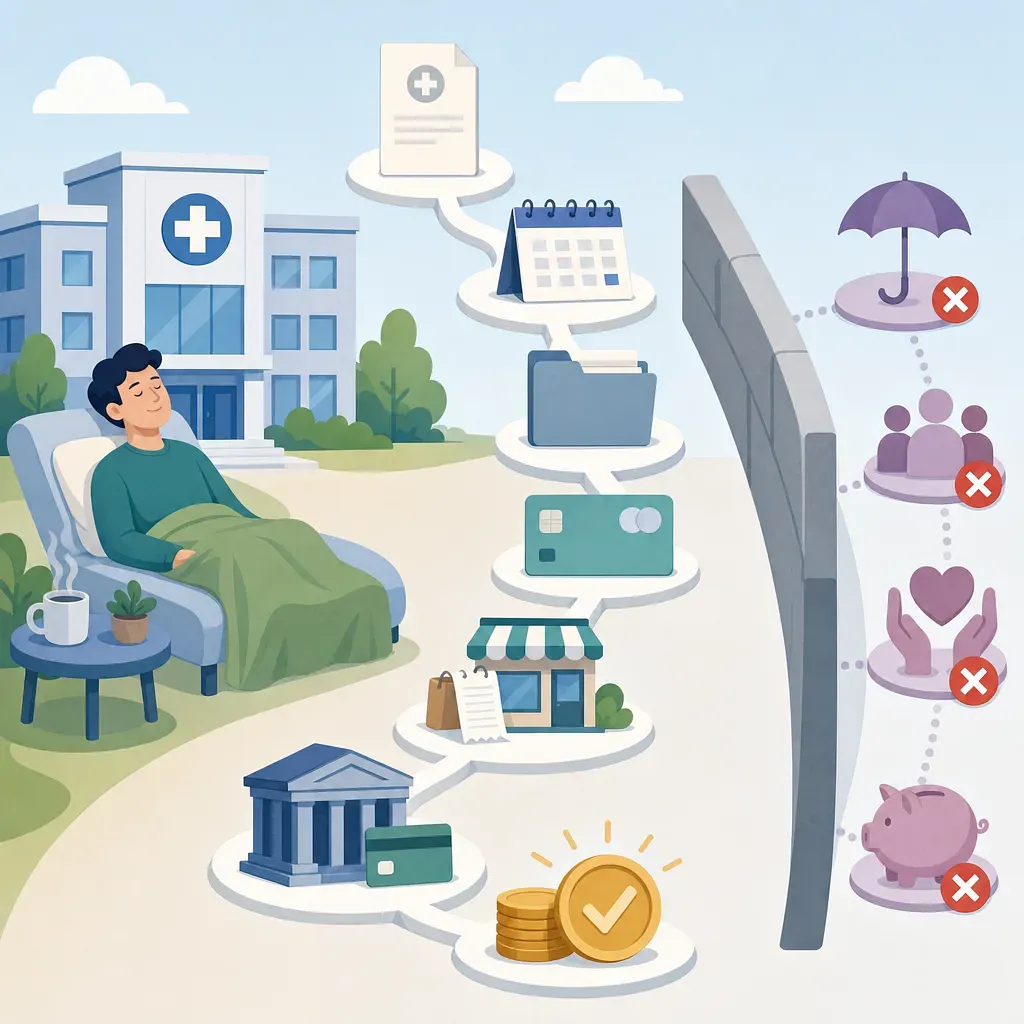
The entire planned period is not automatically approved based solely on the initial application. After confirming that the applicant actually stopped working, the Service pays benefits for approved days excluding the waiting period. If treatment continues for an extended period, documents for an extension application may be required depending on the medical professional’s assessment and the program guidelines.