Skip to content
Knowledge Base

Flu Symptoms: 38°C Fever, Reinfection and Statistics

Flu is a respiratory infection that causes sudden fever, cough, muscle aches and other symptoms. This article explains the difference between surveillance criteria for suspected cases and actual diagnosis, the possibility of reinfection, and what the outbreak statistics for week 44 of 2026 mean.

Read text only

10 min read

Just the words, no images.

Flu Symptoms: 38°C Fever, Reinfection and Statistics

10 min read

Flu Symptoms: 38°C Fever, Reinfection and Statistics
Flu is a respiratory infection that causes sudden fever, cough, muscle aches and other symptoms. This article explains the difference between surveillance criteria for suspected cases and actual diagnosis, the possibility of reinfection, and what the outbreak statistics for week 44 of 2026 mean.
A fever of at least 38℃ with a cough or sore throat meets the surveillance criteria for a suspected case, not the criteria for a confirmed diagnosis.
Flu can occur without a fever, and a negative rapid antigen test does not rule it out.
After infection with one type of flu virus, you can still be infected again with another type.
In week 44 of 2026, the proportion of suspected cases was 22.8 per 1,000 outpatients.
The proportion of suspected cases among outpatients and the number of hospitalized patients in sentinel surveillance have different denominators and cannot be added together directly.
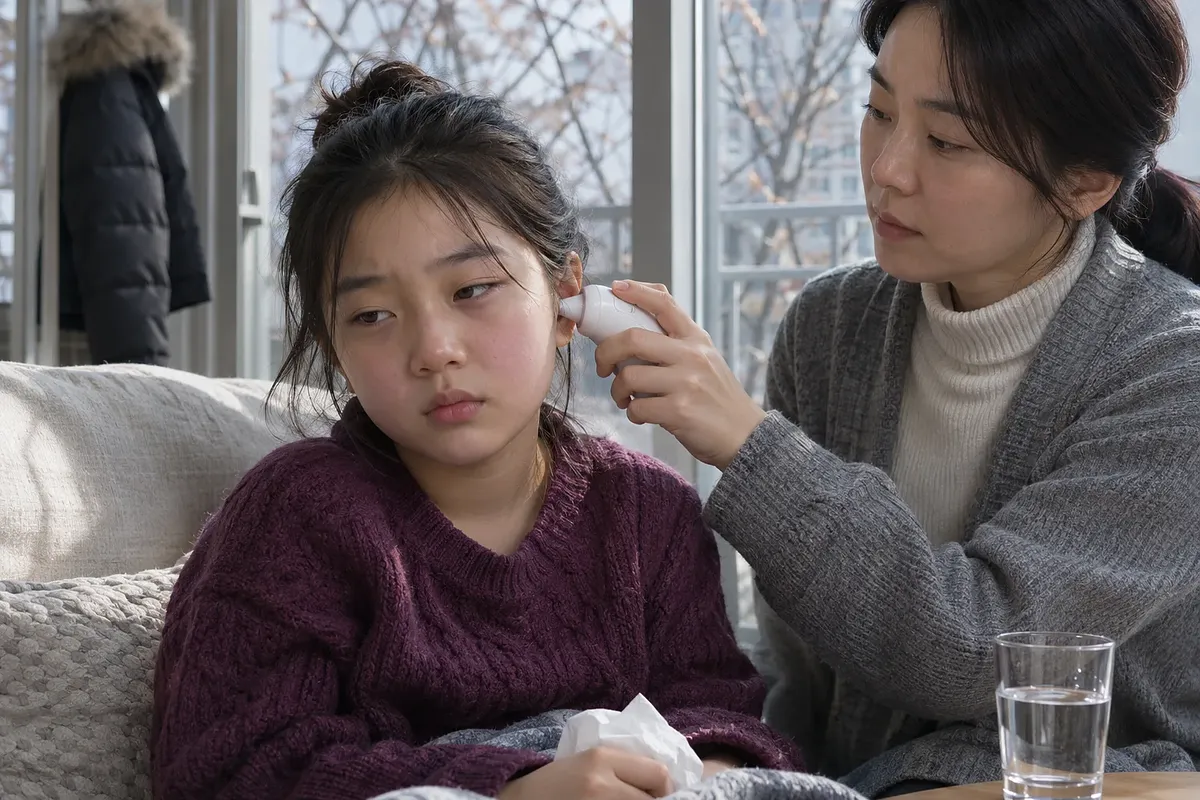
Typical flu symptoms include sudden fever, cough, and muscle aches. A fever of at least 38℃ with a cough or sore throat meets the surveillance definition of a suspected case. Symptoms alone cannot confirm a diagnosis. Even after having the flu, you can be reinfected with a different type of virus.
The outbreak figures are based on week 44 data in the Korea Disease Control and Prevention Agency’s November 6, 2026 announcement.
What causes the flu and how it spreads
The flu is an acute respiratory infection caused by influenza viruses. A common cold does not turn into the flu when it gets worse. The flu can affect not only the nose and throat but also the lungs.
Types A and B are the main viruses responsible for seasonal outbreaks. Type A includes subtypes such as A(H1N1)pdm09 and A(H3N2). A(H1N1)pdm09 is the virus lineage that caused the 2009 pandemic. The appearance of this name does not mean a new pandemic has begun. WHO seasonal influenza fact sheet
· Transmission: The virus spreads between people through coughing, sneezing, and similar activities by an infected person. · Contact: Infection can also occur when you touch your eyes, nose, or mouth with hands contaminated with the virus. · Incubation period: According to WHO, symptoms usually begin 1 to 4 days after infection.
How do cold and flu symptoms differ?
Flu symptoms tend to start more suddenly than cold symptoms. Fever, muscle aches, headache, and severe fatigue may occur together. Children may also have vomiting or diarrhea.
Feature | Common pattern with a cold | Common pattern with the flu Symptom onset | Gradual | Sudden Fever | Relatively uncommon | Common, but may be absent Muscle aches | Usually mild | Can be severe Stuffy nose and sneezing | Common | May occur Headache and fatigue | Relatively less noticeable | Can be pronounced
This table compares typical patterns. The combination of symptoms alone cannot reliably distinguish the two illnesses. Symptoms also overlap with other respiratory infections, including COVID-19. CDC symptom guidance
The difference between the 38-degree fever threshold and an actual diagnosis
The 38℃ threshold is part of the suspected-case definition used to monitor outbreaks. The Korea Disease Control and Prevention Agency wrote the following in its November 6, 2026 press briefing material.
“A fever of at least 38℃ accompanied by a cough or sore throat” Korea Disease Control and Prevention Agency, “Influenza Cases Rising Again! Children and Older Adults Urged to Get Vaccinated Promptly, and Anyone with Suspected Symptoms Advised to Seek Prompt Medical Care”
The condition is a fever accompanied by either a cough or sore throat. It does not mean both a cough and sore throat must be present. Meeting this definition does not confirm which virus is responsible. Korea Disease Control and Prevention Agency press briefing material
Interpreting different situations
Suspected symptoms and test results are interpreted together during medical care.
Situation | Meaning Fever of at least 38℃ with a cough or sore throat | Meets the surveillance definition of a suspected case Cough, body aches, or similar symptoms without a fever | The flu cannot be ruled out Negative rapid antigen test | The test may have missed an actual infection Overlapping flu and COVID-19 symptoms | Test for both infections if needed
Healthcare professionals decide whether testing is needed based on symptoms and examination findings. Tests include rapid antigen tests and genetic tests such as PCR. Not every patient must be tested to receive medical care or treatment. CDC testing guidance
Treatment timing and the risk of complications
Antiviral drugs are prescription medicines that act against influenza viruses. The CDC explains that treatment works best within 1 to 2 days after symptoms begin. Treatment may still help after that period for people at high risk or those who are hospitalized.
Antibiotics do not treat the influenza virus itself. Healthcare professionals decide which antiviral drug to use and whether to prescribe it. Prescribed medicines should be taken at the specified dose and for the specified duration. CDC antiviral drug guidance
Older adults, young children, and pregnant people are among those at higher risk of complications. Chronic heart, lung, or kidney disease and a weakened immune system are also risk factors. Pneumonia may develop, or existing chronic conditions may worsen. WHO seasonal influenza fact sheet
Signs that require immediate medical care
The CDC advises seeking immediate medical care for the following warning signs.
· Difficulty breathing or very rapid breathing · Persistent chest pain or bluish lips or face · Reduced alertness or seizures · Signs of severe dehydration, such as not urinating · Fever or cough that improves but then returns or worsens
Do not wait for these signs simply because your fever is not high. Severe or concerning symptoms require medical care even if they are not on this list. CDC warning signs of complications
Why you can get infected again after having the flu
Immunity developed after infection with one type does not provide sufficient protection against other types. The Korea Disease Control and Prevention Agency explained that reinfection can occur within the same season. Having already had the flu therefore does not eliminate the need for vaccination.
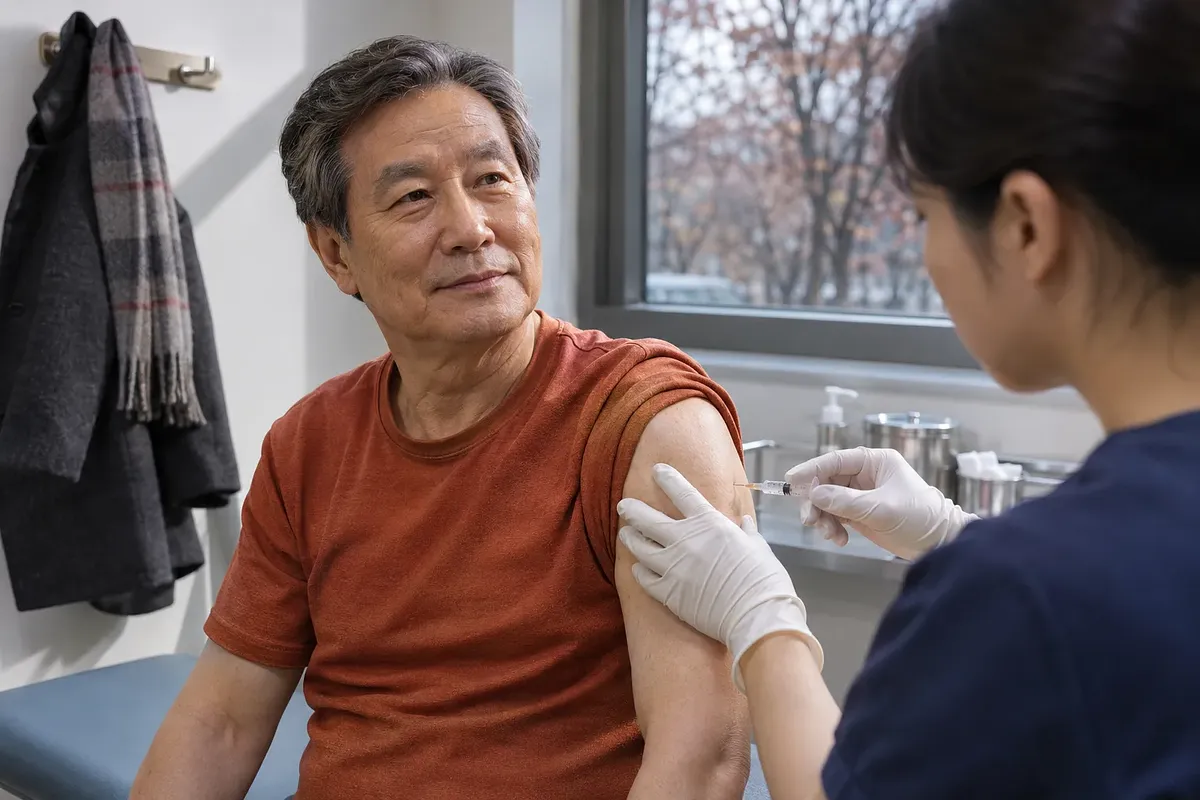
If you were recently infected, get vaccinated after your fever has subsided and your symptoms have improved, following a pre-vaccination assessment. Vaccines aim to prevent infection and reduce the risk of severe illness and death. Vaccination does not completely eliminate the possibility of infection. Korea Disease Control and Prevention Agency vaccination Q&A
WHO explains that vaccine-induced immunity weakens over time. It therefore recommends annual vaccination. Vaccine composition is also updated to match circulating viruses. WHO vaccination information
What is the suspected influenza case rate?
The suspected-case rate is the proportion of suspected cases among outpatients at sentinel surveillance healthcare facilities. It is expressed as the number of cases per 1,000 outpatients. It does not represent the total number of confirmed cases nationwide.
Item | Value in the 2026 announcement | Interpretation Announcement date | November 6 | Date the data were released Week 44 reporting period | October 25 to 31 | Period covered by the statistics Week 43 suspected-case rate | 19.2 per 1,000 outpatients | Previous week’s comparison value Week 44 suspected-case rate | 22.8 per 1,000 outpatients | Proportion of suspected cases Week 44 inpatients | 461 at 223 hospital-level sentinel surveillance facilities | Separate inpatient surveillance indicator
These figures should not be read as the number of patients as of November 18 or 19. The outpatient indicator and inpatient count also cover different surveillance populations. The two values cannot be added to calculate the total number of patients. Korea Policy Briefing summary of the November 6 announcement
Calculation example
The week-over-week difference calculated from the announced figures is 3.6 per 1,000 outpatients. This is calculated by subtracting 19.2 from 22.8. It must not be interpreted as an increase of 3.6 patients nationwide.
Why children’s outpatient figures differ from older adults’ share of inpatients
The age group with the most suspected outpatient cases differed from the age group accounting for the largest share of inpatients. This is because the two indicators count different populations.
Indicator for week 44 of 2026 | Reported value | Denominator Suspected-case rate among those aged 7 to 12 | 60.9 per 1,000 outpatients | Outpatients in that age group Suspected-case rate among those aged 65 and older | 10.1 per 1,000 outpatients | Outpatients in that age group Share of inpatients aged 65 and older | 64.9% | Inpatients in hospital-level sentinel surveillance
A lower outpatient rate does not necessarily mean a lower risk of hospitalization. These data alone also cannot be used to calculate the probability of hospitalization among infected people by age. The statistics do not use the same population as their denominator. Korea Policy Briefing surveillance results by age
Prevention and daily life during recovery
The basics are vaccination combined with respiratory infection prevention measures. The Korea Disease Control and Prevention Agency urged people to wear masks in crowded places. It recommended prompt medical care for anyone with a fever or respiratory symptoms.
· Wash your hands with soap under running water for at least 30 seconds. · Cover your nose and mouth with a tissue or your sleeve when coughing. · Do not touch your eyes, nose, or mouth with unwashed hands. · Ventilate indoor spaces frequently. · Wear a mask if you have respiratory symptoms.
These are the respiratory infection prevention measures in the Korea Disease Control and Prevention Agency’s press briefing material. Korea Disease Control and Prevention Agency prevention guidance
Getting plenty of rest is essential when recovering at home with mild symptoms. WHO recommends drinking fluids and staying home to avoid spreading the infection to others. Seek medical care if symptoms worsen. WHO treatment guidance
Frequently asked questions
Does having no fever mean it is not the flu?
The flu can occur without a fever. The 38℃ threshold is a condition in the surveillance definition. It cannot be used to rule out infection in an individual.
Can I stop worrying if my rapid antigen test is negative?
A negative result alone cannot rule out infection. Tests sometimes miss actual infections. People at high risk who have suspected symptoms need prompt medical care. CDC testing guidance
Is treatment useless more than two days after symptoms begin?
Treatment does not become entirely pointless after two days. People at high risk or with severe illness may benefit even if treatment starts later. Healthcare professionals decide whether treatment is needed. CDC antiviral drug guidance
Does 22.8 per 1,000 outpatients mean that 2.28% of the population is infected?
It cannot be interpreted that way. The denominator is outpatients in sentinel surveillance, not the entire population. The numerator is also suspected cases, not confirmed cases.
Where can I check the latest outbreak situation?
You can check the weekly newsletter on the Korea Disease Control and Prevention Agency’s Infectious Disease Portal. (Verified figure: 28.9 per 1,000 outpatients, week 45 of 2026 · Source: dportal.kdca.go.kr · As of 2026-11-12 · Checked on 2026-11-19) The menu is under Publications and Newsletters in Infectious Disease News. Check both the publication date and the actual reporting week. Korea Disease Control and Prevention Agency weekly newsletter guidance
0:00 0:00
1 / 63

Advertisement

Download text

File name
flu-symptoms-fever-reinfection-surveillance-en.txt
Format
TXT (text/plain)
Paragraphs
63

Downloads exactly what you see as a text file.

Please cite the source when quoting.

Advertisement

Large text

Makes the text larger and the colors clearer. Turn it on if the text feels too small.

Fever alone does not confirm influenza.

Key points

  • A fever of at least 38℃ with a cough or sore throat meets the surveillance criteria for a suspected case, not the criteria for a confirmed diagnosis.
  • Flu can occur without a fever, and a negative rapid antigen test does not rule it out.
  • After infection with one type of flu virus, you can still be infected again with another type.
  • In week 44 of 2026, the proportion of suspected cases was 22.8 per 1,000 outpatients.
  • The proportion of suspected cases among outpatients and the number of hospitalized patients in sentinel surveillance have different denominators and cannot be added together directly.

Typical flu symptoms include sudden fever, cough, and muscle aches. A fever of at least 38℃ with a cough or sore throat meets the surveillance definition of a suspected case. Symptoms alone cannot confirm a diagnosis. Even after having the flu, you can be reinfected with a different type of virus.

The outbreak figures are based on week 44 data in the Korea Disease Control and Prevention Agency’s November 6, 2026 announcement.

What causes the flu and how it spreads

The flu is an acute respiratory infection caused by influenza viruses. A common cold does not turn into the flu when it gets worse. The flu can affect not only the nose and throat but also the lungs.

Types A and B are the main viruses responsible for seasonal outbreaks. Type A includes subtypes such as A(H1N1)pdm09 and A(H3N2). A(H1N1)pdm09 is the virus lineage that caused the 2009 pandemic. The appearance of this name does not mean a new pandemic has begun. WHO seasonal influenza fact sheet

  • Transmission: The virus spreads between people through coughing, sneezing, and similar activities by an infected person.
  • Contact: Infection can also occur when you touch your eyes, nose, or mouth with hands contaminated with the virus.
  • Incubation period: According to WHO, symptoms usually begin 1 to 4 days after infection.
After having flu, it is still possible to become infected with a different type of influenza virus.

How do cold and flu symptoms differ?

Flu symptoms tend to start more suddenly than cold symptoms. Fever, muscle aches, headache, and severe fatigue may occur together. Children may also have vomiting or diarrhea.

Feature Common pattern with a cold Common pattern with the flu
Symptom onset Gradual Sudden
Fever Relatively uncommon Common, but may be absent
Muscle aches Usually mild Can be severe
Stuffy nose and sneezing Common May occur
Headache and fatigue Relatively less noticeable Can be pronounced

This table compares typical patterns. The combination of symptoms alone cannot reliably distinguish the two illnesses. Symptoms also overlap with other respiratory infections, including COVID-19. CDC symptom guidance

The difference between the 38-degree fever threshold and an actual diagnosis

The 38℃ threshold is part of the suspected-case definition used to monitor outbreaks. The Korea Disease Control and Prevention Agency wrote the following in its November 6, 2026 press briefing material.

“A fever of at least 38℃ accompanied by a cough or sore throat”

Korea Disease Control and Prevention Agency, “Influenza Cases Rising Again! Children and Older Adults Urged to Get Vaccinated Promptly, and Anyone with Suspected Symptoms Advised to Seek Prompt Medical Care”

The condition is a fever accompanied by either a cough or sore throat. It does not mean both a cough and sore throat must be present. Meeting this definition does not confirm which virus is responsible. Korea Disease Control and Prevention Agency press briefing material

Interpreting different situations

Suspected symptoms and test results are interpreted together during medical care.

Situation Meaning
Fever of at least 38℃ with a cough or sore throat Meets the surveillance definition of a suspected case
Cough, body aches, or similar symptoms without a fever The flu cannot be ruled out
Negative rapid antigen test The test may have missed an actual infection
Overlapping flu and COVID-19 symptoms Test for both infections if needed

Healthcare professionals decide whether testing is needed based on symptoms and examination findings. Tests include rapid antigen tests and genetic tests such as PCR. Not every patient must be tested to receive medical care or treatment. CDC testing guidance

Treatment timing and the risk of complications

Antiviral drugs are prescription medicines that act against influenza viruses. The CDC explains that treatment works best within 1 to 2 days after symptoms begin. Treatment may still help after that period for people at high risk or those who are hospitalized.

Antibiotics do not treat the influenza virus itself. Healthcare professionals decide which antiviral drug to use and whether to prescribe it. Prescribed medicines should be taken at the specified dose and for the specified duration. CDC antiviral drug guidance

Older adults, young children, and pregnant people are among those at higher risk of complications. Chronic heart, lung, or kidney disease and a weakened immune system are also risk factors. Pneumonia may develop, or existing chronic conditions may worsen. WHO seasonal influenza fact sheet

Signs that require immediate medical care

The CDC advises seeking immediate medical care for the following warning signs.

  • Difficulty breathing or very rapid breathing
  • Persistent chest pain or bluish lips or face
  • Reduced alertness or seizures
  • Signs of severe dehydration, such as not urinating
  • Fever or cough that improves but then returns or worsens

Do not wait for these signs simply because your fever is not high. Severe or concerning symptoms require medical care even if they are not on this list. CDC warning signs of complications

Why you can get infected again after having the flu

Immunity developed after infection with one type does not provide sufficient protection against other types. The Korea Disease Control and Prevention Agency explained that reinfection can occur within the same season. Having already had the flu therefore does not eliminate the need for vaccination.

If you were recently infected, get vaccinated after your fever has subsided and your symptoms have improved, following a pre-vaccination assessment. Vaccines aim to prevent infection and reduce the risk of severe illness and death. Vaccination does not completely eliminate the possibility of infection. Korea Disease Control and Prevention Agency vaccination Q&A

WHO explains that vaccine-induced immunity weakens over time. It therefore recommends annual vaccination. Vaccine composition is also updated to match circulating viruses. WHO vaccination information

What is the suspected influenza case rate?

The suspected-case rate is the proportion of suspected cases among outpatients at sentinel surveillance healthcare facilities. It is expressed as the number of cases per 1,000 outpatients. It does not represent the total number of confirmed cases nationwide.

Item Value in the 2026 announcement Interpretation
Announcement date November 6 Date the data were released
Week 44 reporting period October 25 to 31 Period covered by the statistics
Week 43 suspected-case rate 19.2 per 1,000 outpatients Previous week’s comparison value
Week 44 suspected-case rate 22.8 per 1,000 outpatients Proportion of suspected cases
Week 44 inpatients 461 at 223 hospital-level sentinel surveillance facilities Separate inpatient surveillance indicator

These figures should not be read as the number of patients as of November 18 or 19. The outpatient indicator and inpatient count also cover different surveillance populations. The two values cannot be added to calculate the total number of patients. Korea Policy Briefing summary of the November 6 announcement

Calculation example

The week-over-week difference calculated from the announced figures is 3.6 per 1,000 outpatients. This is calculated by subtracting 19.2 from 22.8. It must not be interpreted as an increase of 3.6 patients nationwide.

Why children’s outpatient figures differ from older adults’ share of inpatients

The age group with the most suspected outpatient cases differed from the age group accounting for the largest share of inpatients. This is because the two indicators count different populations.

Indicator for week 44 of 2026 Reported value Denominator
Suspected-case rate among those aged 7 to 12 60.9 per 1,000 outpatients Outpatients in that age group
Suspected-case rate among those aged 65 and older 10.1 per 1,000 outpatients Outpatients in that age group
Share of inpatients aged 65 and older 64.9% Inpatients in hospital-level sentinel surveillance

A lower outpatient rate does not necessarily mean a lower risk of hospitalization. These data alone also cannot be used to calculate the probability of hospitalization among infected people by age. The statistics do not use the same population as their denominator. Korea Policy Briefing surveillance results by age

Prevention and daily life during recovery

The basics are vaccination combined with respiratory infection prevention measures. The Korea Disease Control and Prevention Agency urged people to wear masks in crowded places. It recommended prompt medical care for anyone with a fever or respiratory symptoms.

  • Wash your hands with soap under running water for at least 30 seconds.
  • Cover your nose and mouth with a tissue or your sleeve when coughing.
  • Do not touch your eyes, nose, or mouth with unwashed hands.
  • Ventilate indoor spaces frequently.
  • Wear a mask if you have respiratory symptoms.

These are the respiratory infection prevention measures in the Korea Disease Control and Prevention Agency’s press briefing material. Korea Disease Control and Prevention Agency prevention guidance

Getting plenty of rest is essential when recovering at home with mild symptoms. WHO recommends drinking fluids and staying home to avoid spreading the infection to others. Seek medical care if symptoms worsen. WHO treatment guidance

Key questions in this article

Does having no fever mean it is not the flu?

The flu can occur without a fever. The 38℃ threshold is a condition in the surveillance definition. It cannot be used to rule out infection in an individual.

Can I stop worrying if my rapid antigen test is negative?

A negative result alone cannot rule out infection. Tests sometimes miss actual infections. People at high risk who have suspected symptoms need prompt medical care. CDC testing guidance

Is treatment useless more than two days after symptoms begin?

Treatment does not become entirely pointless after two days. People at high risk or with severe illness may benefit even if treatment starts later. Healthcare professionals decide whether treatment is needed. CDC antiviral drug guidance

Does 22.8 per 1,000 outpatients mean that 2.28% of the population is infected?

It cannot be interpreted that way. The denominator is outpatients in sentinel surveillance, not the entire population. The numerator is also suspected cases, not confirmed cases.

Where can I check the latest outbreak situation?

You can check the weekly newsletter on the Korea Disease Control and Prevention Agency’s Infectious Disease Portal. (Verified figure: 28.9 per 1,000 outpatients, week 45 of 2026 · Source: dportal.kdca.go.kr · As of 2026-11-12 · Checked on 2026-11-19) The menu is under Publications and Newsletters in Infectious Disease News. Check both the publication date and the actual reporting week. Korea Disease Control and Prevention Agency weekly newsletter guidance

Open the link

Opens in a new window.

Advertisement

Sign-in required

Sign in with your Google or Apple account to like, comment, and save highlights.

FAQ

Are the flu and the common cold the same illness?

They are different illnesses caused by different viruses. The flu can cause prominent symptoms such as a sudden fever and muscle aches.

Do a fever of at least 38℃ and a cough confirm the flu?

These symptoms meet the surveillance definition of a suspected case, but do not confirm the diagnosis. Other respiratory infections can cause similar symptoms.

Can you have the flu without a fever?

The flu can occur without a fever. Infection cannot be ruled out based solely on whether a fever is present.

Can you have the flu even if a rapid antigen test is negative?

The test can miss an actual infection. Medical professionals assess both symptoms and examination findings.

Can you get the flu again in the same season?

You can be reinfected with a different type of virus. If you have recently had the flu, get vaccinated after recovering and undergoing a pre-vaccination assessment.

When should antiviral treatment start?

It is most effective when started within 1 to 2 days of symptom onset. It may still help after that for people at high risk or hospitalized patients.

How long does the flu last?

WHO explains that people generally recover from fever and other symptoms within a week. A cough can last for at least 2 weeks. If symptoms worsen again after improving, immediate medical attention is needed.

What period does the figure of 22.8 per 1,000 outpatients refer to?

The figure is for October 25 to 31, week 44 of 2026. It was released on November 6 and does not represent the number of patients as of November 18.

Does the figure of 461 hospitalized patients include all hospitalized patients nationwide?

It is the number of hospitalized patients at 223 hospital-level sentinel surveillance institutions in week 44 of 2026. It is not the total number of hospitalized patients at all medical institutions nationwide.

Does getting a flu vaccine prevent infection?

You can still become infected after vaccination. The vaccine also helps reduce the risk of severe illness and death.

Sources

Data formats

This content is available in several machine-friendly formats.

Data-only languages (machine translated, files only)

Indonesian JSON MD Portuguese JSON MD Chinese (Traditional) JSON MD Deutsch JSON MD

Verification

This article was drafted with AI and then reviewed and edited by a person.

Reviewed by 신익희 · 편집장 · 2026-11-19

Figures in this article were checked against the source material during generation. · 2026-11-19

This translation has been cross-checked by AI. · 2026-11-19

Reuse & AI usage

Search indexing and AI citation with attribution are welcome. See the license policy for details.

CC BY · License

Loading…

Loading…

Loading…

Where this content lives

Related content

From Injoys

Request the content you want and take 70% of what it earns

Just leave the subject. We handle production, review, translation and distribution.

See how revenue sharing works

Comments