Skip to content
Injoys
Policy Guide 🇰🇷 South Korea

This content applies specifically to South Korea.

Jeonse and Monthly Rent Security Trust: ₩2 Billion Home Cap

The Jeonse and Monthly Rent Security Trust is a program in which HUG manages tenants' deposits and pays landlords an agreed return. Consider the eligibility requirements separately from the schedule announced at the time, and compare housing costs by calculating loan interest and the cash you need.

Listen or read this article

13:45

Listen, or read the text only.

Jeonse and Monthly Rent Security Trust: ₩2 Billion Home Cap

Kokoro 82M AI-generated voice 14 min read

0:00 13:45

Advertisement

Download audio

File name
jeonwolse-safe-trust-housing-eligibility-en.mp3
Format
MP3 (audio/mpeg)
Duration
13:45
File size
9.44 MB
Engine
Kokoro 82M

This audio was generated by AI.

You may download and use it freely for personal use.

Jeonse and Monthly Rent Security Trust: ₩2 Billion Home Cap

10 min read

Jeonse and Monthly Rent Security Trust: ₩2 Billion Home Cap
The Jeonse and Monthly Rent Security Trust is a program in which HUG manages tenants' deposits and pays landlords an agreed return. Consider the eligibility requirements separately from the schedule announced at the time, and compare housing costs by calculating loan interest and the cash you need.
The Jeonse and Monthly Rent Security Trust is a program that landlords and tenants join voluntarily.
The August 2026 announcement outlined a plan to start with homes worth at most ₩2 billion, with no income or asset limits.
Tenants place their deposits with the Jeonse and Monthly Rent Stabilization Agency, while landlords receive an agreed monthly return.
If you borrow ₩160 million of a ₩200 million jeonse deposit at an annual rate of 3.97%, the monthly interest is approximately ₩529,333 by simple calculation.
At the time of the announcement, applications were planned for October 2026. Check HUG's application notice for the actual application dates and required documents.
The Jeonse and Monthly Rent Safe Trust is a program in which tenants place their deposit with HUG and live in a home under a jeonse lease. People can apply voluntarily, with no income or asset limits. The initial focus is on homes with a market value of 2 billion won or less. Participating homes undergo a separate review.
The figures and rollout schedule are based on the Ministry of Land, Infrastructure and Transport’s announcement of August 20, 2026.
What is the Jeonse and Monthly Rent Safe Trust?
The program makes homes listed for monthly rent available under jeonse leases. It connects tenants who want a jeonse lease with landlords who want monthly income. The Korea Housing & Urban Guarantee Corporation (HUG) serves as the Jeonse and Monthly Rent Stabilization Agency.
The program’s funds flow as follows.
· The landlord, tenant, and stabilization agency sign a three-party agreement. · The tenant deposits the agreed amount into the agency’s designated account. · The agency invests the deposit and other funds and pays the landlord the agreed return. · When the lease ends, the agency returns the deposit to the tenant.
Under this structure, the agency is responsible for returning the tenant’s deposit. Instead of receiving and using the deposit directly, the landlord receives monthly income. This is not a subsidy program that pays tenants cash each month.
How are the participation requirements divided?
Check a person’s eligibility to apply separately from the criteria used to review a home. The absence of income and asset limits does not mean every home will be approved. Anyone seeking a jeonse loan must also meet the loan requirements separately.
Category | Announcement and guidance | What to check Landlord and tenant | Voluntary applications, with no income or asset limits | Willingness to participate and contract terms Home price | Initial rollout for homes with a market value of 2 billion won or less, according to the August 2026 announcement | How the application notice determines the price Home condition | Basic checks, including for building code violations | Reasons participation may be restricted Deposit amount | Review for jeonse deposits that are excessive relative to market value | Permitted deposit range Jeonse loan | Available if the requirements for the loan product are met | Available loan amount and applicable interest rate
Participation is not mandatory. HUG’s “Introduction to the Jeonse and Monthly Rent Safe Trust” FAQ explains:
Participation in this program is not legally required.
Existing jeonse leases do not automatically become Safe Trust leases. Changing an existing lease requires agreement among the parties. The program’s review and agreement procedures must then be completed.
How to apply and when move-ins begin
Landlords can apply on their own, or landlords and tenants can apply after discussing participation in advance. The schedule below is the rollout plan announced in August 2026. It is not a schedule confirming whether applications have actually opened.
Stage | Plan at the time of the announcement | What to check Program notice | Late September 2026 | Application process, agreement, monthly return rate Applications | October 2026 | Opening date, where to apply, required documents Agreement and deposit | Beginning November 2026 | Timing of the three-party agreement and deposit payment Move-in | In stages beginning December 2026 | Move-in date for each home
To prepare an application, check the following in order.
· Find the Jeonse and Monthly Rent Safe Trust application notice on the HUG Safe Jeonse Portal. · Discuss the deposit amount and willingness to participate with the landlord. · If you need a loan, check the available amount and interest rate with a financial institution. · Apply using the documents and method specified in the notice. · After the review, check the agreement’s terms for deposit payment, return, and move-in.
Landlords who have not found a tenant can also apply. In that case, they can use HUG’s tenant recruitment support. If a tenant has been found, the parties can agree on the deposit amount before applying.
The announcement listed HUG’s website and branches nationwide as application channels. Check the application notice to see whether applications are currently open and which documents are required. Look for the notice under the portal’s “Jeonse and Monthly Rent Safe Trust Program” menu.
Example: monthly rent of 740,000 won versus jeonse loan interest
In the example from the announcement, the calculated loan interest is lower than the monthly rent. Actual savings depend on the amount borrowed and the interest rate. The calculation below assumes the loan principal remains unchanged.
Item | Announced example and calculated amount Home market value | 300 million won Jeonse deposit | 200 million won Existing monthly rent lease | Deposit of 10 million won, monthly rent of 740,000 won Jeonse loan | 160 million won, 80% of the jeonse deposit Interest rate | 3.97% per year in the announced example Annual interest | 160 million won × 3.97% = 6,352,000 won Average monthly interest | 6,352,000 won ÷ 12 months = approximately 529,333 won Difference between monthly rent and monthly interest | Approximately 210,667 won Annual difference | 8,880,000 won - 6,352,000 won = 2,528,000 won
Under these conditions, the difference between monthly rent and interest is approximately 200,000 won per month. This calculation spells out the announcement’s figure of approximately 530,000 won in monthly interest. The interest actually charged may vary depending on factors such as the number of days used to calculate it.
The annual rate of 3.97% was used for the announced example. It is not a confirmed rate for current applicants. A loan covering 80% of the jeonse deposit is not guaranteed for every applicant either.
Comparing the personal funds needed beyond monthly interest
In the example above, moving to a jeonse lease requires 40 million won of the tenant’s own funds. That is the 200 million won jeonse deposit minus the 160 million won loan. Even if monthly interest is lower, the lump sum needed to move in may be higher.
Comparison | Existing monthly rent lease | Safe Trust jeonse example Total deposit | 10 million won | 200 million won Deposit loan | Not specified in the example | 160 million won Deposit to pay from personal funds | 10 million won, if paid from personal funds | 40 million won Monthly expense compared | Monthly rent of 740,000 won | Loan interest of approximately 529,333 won
If the existing deposit was paid entirely from personal funds, an additional 30 million won is needed. This assumes the 10 million won existing deposit is returned and used. Check whether its return date lines up with the payment date for the new deposit.
The difference between rent and interest does not include the following costs.
· Interest that could be earned by depositing the additional personal funds elsewhere · Brokerage fees and moving costs incurred under the actual lease · Differences in maintenance fees between homes · Principal repayments or additional costs under the loan agreement
Therefore, do not assume that approximately 200,000 won per month is the total reduction in living costs. Compare again using an actual loan quote and move-in costs. Also consider whether you can raise the required personal funds.
How is the landlord’s return paid?
The landlord receives the agreed return from the stabilization agency each month. Under the program’s structure, the agency invests deposits and other funds through the Housing Supply Promotion Fund. Its investments include construction project loans backed by HUG guarantees.
The August 2026 announcement described investment returns in the 4% annual range. Do not treat that figure as a guaranteed payment rate for each landlord. Check the applicable return rate and payment terms in the program notice and agreement.
Factor | What landlords should check Monthly income | Agreed return and payment start date Use of deposit | The landlord cannot use the deposit directly under this structure Vacancy | Tenant recruitment support and conditions for starting return payments Guarantee fees | Whether the exemption from the guarantee enrollment requirement applies to registered rental business operators Tax support | The distinction between planned support and actual eligibility requirements once implemented
Reducing the burden of overdue rent is an expected benefit of the program. Do not assume tenant recruitment support guarantees returns throughout any vacancy. Check the agreement to see when payments begin.
The announcement also included a proposal to link the program with a housing pension if a landlord moves to a region outside the capital area. Do not count this as additional income for every participating landlord. Separate enrollment requirements and implementation details must be checked.
Deposit returns and common misunderstandings
HUG’s responsibility for returning the deposit is central to this program. HUG says it guarantees the tenant’s full deposit even if investments incur losses. It has also stated that a separate jeonse deposit return guarantee is unnecessary.
Deposit protection should, however, be distinguished from resolving every lease dispute. Matters such as repairs and maintenance fees need to be checked separately in the contract. Check the agreement for the deposit return process when the lease ends.
Common misunderstanding | What to distinguish All jeonse deposits must be placed with the government | This applies to leases voluntarily entered into under the program The tenant receives the investment return | The landlord receives the agreed return Loan approval follows from eligibility to apply | Loan requirements must be checked separately Only part of the jeonse deposit needs to be placed with HUG | HUG’s guidance requires the full lease deposit to be deposited Monthly rent leases with a deposit cannot participate | A review is needed, including of the amount calculated by converting the deposit and monthly rent Move-in is guaranteed in the announced month | The agreement and deposit schedule for each home must be checked
Monthly rent leases with a deposit are also listed as an eligible lease type. This does not mean the monthly rent automatically disappears. Check the final deposit and monthly rent terms in the participation agreement.
Is the LH pilot supply the same as general participation?
The LH pilot supply of purchased rental housing should be distinguished from participation by general housing. The pilot supply plan in the August 2026 announcement is for 500 homes in 2026. The plan aims to reduce housing costs for young households that do not own a home.
Do not assume the income and asset criteria for general participation apply unchanged. Check the relevant application notice for the conditions for moving into an LH home. Use that notice to determine the supply areas and application period as well.
0:00 0:00
1 / 53

Advertisement

Download text

File name
jeonwolse-safe-trust-housing-eligibility-en.txt
Format
TXT (text/plain)
Paragraphs
53

Downloads exactly what you see as a text file.

Please cite the source when quoting.

Large text

Makes the text larger and the colors clearer. Turn it on if the text feels too small.

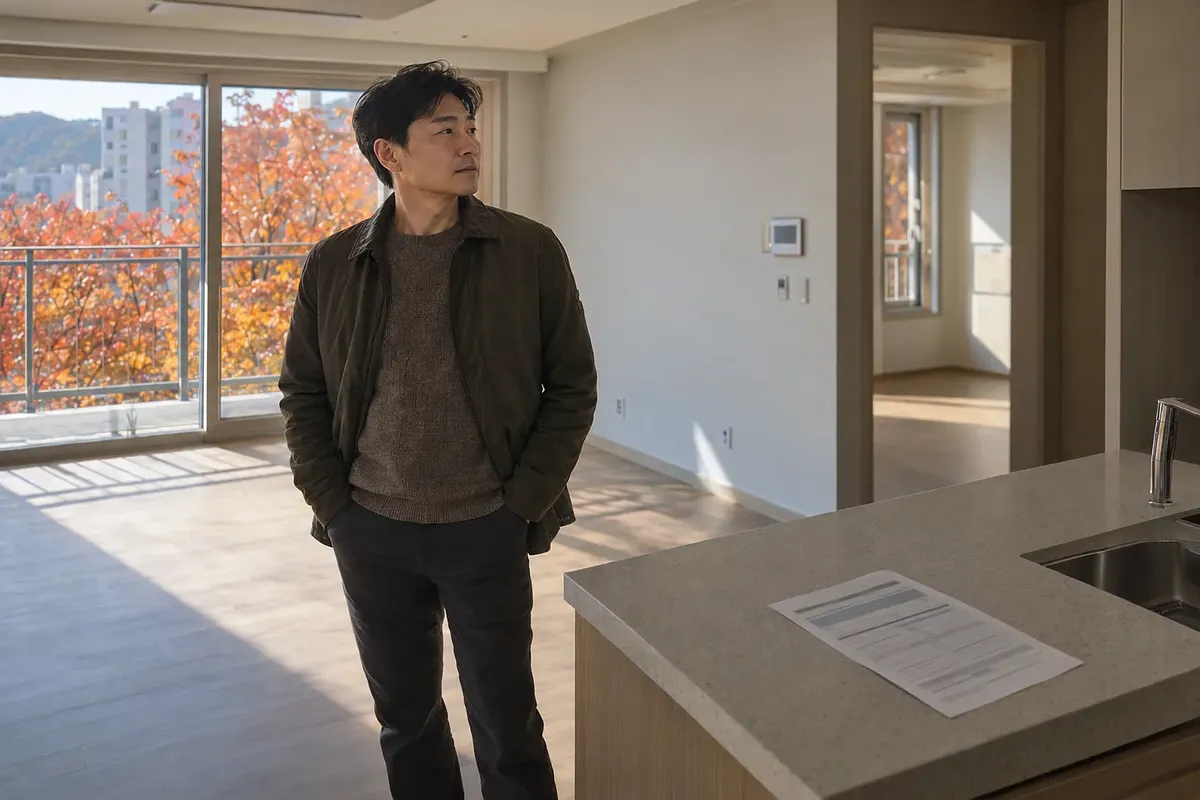
Comparing housing costs means accounting for both loan interest and the cash needed upfront.

Key points

  • The Jeonse and Monthly Rent Security Trust is a program that landlords and tenants join voluntarily.
  • The August 2026 announcement outlined a plan to start with homes worth at most ₩2 billion, with no income or asset limits.
  • Tenants place their deposits with the Jeonse and Monthly Rent Stabilization Agency, while landlords receive an agreed monthly return.
  • If you borrow ₩160 million of a ₩200 million jeonse deposit at an annual rate of 3.97%, the monthly interest is approximately ₩529,333 by simple calculation.
  • At the time of the announcement, applications were planned for October 2026. Check HUG's application notice for the actual application dates and required documents.

The Jeonse and Monthly Rent Safe Trust is a program in which tenants place their deposit with HUG and live in a home under a jeonse lease. People can apply voluntarily, with no income or asset limits. The initial focus is on homes with a market value of 2 billion won or less. Participating homes undergo a separate review.

The figures and rollout schedule are based on the Ministry of Land, Infrastructure and Transport’s announcement of August 20, 2026.

What is the Jeonse and Monthly Rent Safe Trust?

The program makes homes listed for monthly rent available under jeonse leases. It connects tenants who want a jeonse lease with landlords who want monthly income. The Korea Housing & Urban Guarantee Corporation (HUG) serves as the Jeonse and Monthly Rent Stabilization Agency.

The program’s funds flow as follows.

  1. The landlord, tenant, and stabilization agency sign a three-party agreement.
  2. The tenant deposits the agreed amount into the agency’s designated account.
  3. The agency invests the deposit and other funds and pays the landlord the agreed return.
  4. When the lease ends, the agency returns the deposit to the tenant.

Under this structure, the agency is responsible for returning the tenant’s deposit. Instead of receiving and using the deposit directly, the landlord receives monthly income. This is not a subsidy program that pays tenants cash each month.

Landlords who join the rental-deposit trust receive an agreed monthly return.

How are the participation requirements divided?

Check a person’s eligibility to apply separately from the criteria used to review a home. The absence of income and asset limits does not mean every home will be approved. Anyone seeking a jeonse loan must also meet the loan requirements separately.

Category Announcement and guidance What to check
Landlord and tenant Voluntary applications, with no income or asset limits Willingness to participate and contract terms
Home price Initial rollout for homes with a market value of 2 billion won or less, according to the August 2026 announcement How the application notice determines the price
Home condition Basic checks, including for building code violations Reasons participation may be restricted
Deposit amount Review for jeonse deposits that are excessive relative to market value Permitted deposit range
Jeonse loan Available if the requirements for the loan product are met Available loan amount and applicable interest rate

Participation is not mandatory. HUG’s “Introduction to the Jeonse and Monthly Rent Safe Trust” FAQ explains:

Participation in this program is not legally required.

Existing jeonse leases do not automatically become Safe Trust leases. Changing an existing lease requires agreement among the parties. The program’s review and agreement procedures must then be completed.

How to apply and when move-ins begin

Landlords can apply on their own, or landlords and tenants can apply after discussing participation in advance. The schedule below is the rollout plan announced in August 2026. It is not a schedule confirming whether applications have actually opened.

Stage Plan at the time of the announcement What to check
Program notice Late September 2026 Application process, agreement, monthly return rate
Applications October 2026 Opening date, where to apply, required documents
Agreement and deposit Beginning November 2026 Timing of the three-party agreement and deposit payment
Move-in In stages beginning December 2026 Move-in date for each home

To prepare an application, check the following in order.

  1. Find the Jeonse and Monthly Rent Safe Trust application notice on the HUG Safe Jeonse Portal.
  2. Discuss the deposit amount and willingness to participate with the landlord.
  3. If you need a loan, check the available amount and interest rate with a financial institution.
  4. Apply using the documents and method specified in the notice.
  5. After the review, check the agreement’s terms for deposit payment, return, and move-in.

Landlords who have not found a tenant can also apply. In that case, they can use HUG’s tenant recruitment support. If a tenant has been found, the parties can agree on the deposit amount before applying.

The announcement listed HUG’s website and branches nationwide as application channels. Check the application notice to see whether applications are currently open and which documents are required. Look for the notice under the portal’s “Jeonse and Monthly Rent Safe Trust Program” menu.

Example: monthly rent of 740,000 won versus jeonse loan interest

In the example from the announcement, the calculated loan interest is lower than the monthly rent. Actual savings depend on the amount borrowed and the interest rate. The calculation below assumes the loan principal remains unchanged.

Item Announced example and calculated amount
Home market value 300 million won
Jeonse deposit 200 million won
Existing monthly rent lease Deposit of 10 million won, monthly rent of 740,000 won
Jeonse loan 160 million won, 80% of the jeonse deposit
Interest rate 3.97% per year in the announced example
Annual interest 160 million won × 3.97% = 6,352,000 won
Average monthly interest 6,352,000 won ÷ 12 months = approximately 529,333 won
Difference between monthly rent and monthly interest Approximately 210,667 won
Annual difference 8,880,000 won - 6,352,000 won = 2,528,000 won

Under these conditions, the difference between monthly rent and interest is approximately 200,000 won per month. This calculation spells out the announcement’s figure of approximately 530,000 won in monthly interest. The interest actually charged may vary depending on factors such as the number of days used to calculate it.

The annual rate of 3.97% was used for the announced example. It is not a confirmed rate for current applicants. A loan covering 80% of the jeonse deposit is not guaranteed for every applicant either.

Comparing the personal funds needed beyond monthly interest

In the example above, moving to a jeonse lease requires 40 million won of the tenant’s own funds. That is the 200 million won jeonse deposit minus the 160 million won loan. Even if monthly interest is lower, the lump sum needed to move in may be higher.

Comparison Existing monthly rent lease Safe Trust jeonse example
Total deposit 10 million won 200 million won
Deposit loan Not specified in the example 160 million won
Deposit to pay from personal funds 10 million won, if paid from personal funds 40 million won
Monthly expense compared Monthly rent of 740,000 won Loan interest of approximately 529,333 won

If the existing deposit was paid entirely from personal funds, an additional 30 million won is needed. This assumes the 10 million won existing deposit is returned and used. Check whether its return date lines up with the payment date for the new deposit.

The difference between rent and interest does not include the following costs.

  • Interest that could be earned by depositing the additional personal funds elsewhere
  • Brokerage fees and moving costs incurred under the actual lease
  • Differences in maintenance fees between homes
  • Principal repayments or additional costs under the loan agreement

Therefore, do not assume that approximately 200,000 won per month is the total reduction in living costs. Compare again using an actual loan quote and move-in costs. Also consider whether you can raise the required personal funds.

How is the landlord’s return paid?

The landlord receives the agreed return from the stabilization agency each month. Under the program’s structure, the agency invests deposits and other funds through the Housing Supply Promotion Fund. Its investments include construction project loans backed by HUG guarantees.

The August 2026 announcement described investment returns in the 4% annual range. Do not treat that figure as a guaranteed payment rate for each landlord. Check the applicable return rate and payment terms in the program notice and agreement.

Factor What landlords should check
Monthly income Agreed return and payment start date
Use of deposit The landlord cannot use the deposit directly under this structure
Vacancy Tenant recruitment support and conditions for starting return payments
Guarantee fees Whether the exemption from the guarantee enrollment requirement applies to registered rental business operators
Tax support The distinction between planned support and actual eligibility requirements once implemented

Reducing the burden of overdue rent is an expected benefit of the program. Do not assume tenant recruitment support guarantees returns throughout any vacancy. Check the agreement to see when payments begin.

The announcement also included a proposal to link the program with a housing pension if a landlord moves to a region outside the capital area. Do not count this as additional income for every participating landlord. Separate enrollment requirements and implementation details must be checked.

Deposit returns and common misunderstandings

HUG’s responsibility for returning the deposit is central to this program. HUG says it guarantees the tenant’s full deposit even if investments incur losses. It has also stated that a separate jeonse deposit return guarantee is unnecessary.

Deposit protection should, however, be distinguished from resolving every lease dispute. Matters such as repairs and maintenance fees need to be checked separately in the contract. Check the agreement for the deposit return process when the lease ends.

Common misunderstanding What to distinguish
All jeonse deposits must be placed with the government This applies to leases voluntarily entered into under the program
The tenant receives the investment return The landlord receives the agreed return
Loan approval follows from eligibility to apply Loan requirements must be checked separately
Only part of the jeonse deposit needs to be placed with HUG HUG’s guidance requires the full lease deposit to be deposited
Monthly rent leases with a deposit cannot participate A review is needed, including of the amount calculated by converting the deposit and monthly rent
Move-in is guaranteed in the announced month The agreement and deposit schedule for each home must be checked

Monthly rent leases with a deposit are also listed as an eligible lease type. This does not mean the monthly rent automatically disappears. Check the final deposit and monthly rent terms in the participation agreement.

Is the LH pilot supply the same as general participation?

The LH pilot supply of purchased rental housing should be distinguished from participation by general housing. The pilot supply plan in the August 2026 announcement is for 500 homes in 2026. The plan aims to reduce housing costs for young households that do not own a home.

Do not assume the income and asset criteria for general participation apply unchanged. Check the relevant application notice for the conditions for moving into an LH home. Use that notice to determine the supply areas and application period as well.

Open the link

Opens in a new window.

Advertisement

Sign-in required

Sign in with your Google account to like, comment, and save highlights.

FAQ

Are there income or asset limits for the Jeonse and Monthly Rent Safe Trust?

The guidance says people can apply for the general program without income or asset limits. However, the property and deposit must be verified. Check the separate requirements for jeonse loans and the LH pilot supply.

Does the 2 billion won limit refer to the jeonse deposit?

The 2 billion won figure announced in August 2026 refers to the property's market value, not a limit on the jeonse deposit. Whether the deposit is excessive relative to the market value is checked separately.

Are all landlords required to join?

Participation is not legally required. The program is based on voluntary applications by landlords and tenants.

Who do I pay the jeonse deposit to?

Under the three-party contract, the deposit is placed in an account designated by the stabilization organization. The organization is also responsible for returning it. Before paying, check the account details in the agreement and official guidance.

Is the monthly interest always 530,000 won for a 200 million won jeonse deposit?

No. That figure is an example based on a 160 million won loan at an annual interest rate of 3.97%. Actual interest depends on the loan amount and the rate applied.

If I borrow 80% of the jeonse deposit, how much of my own money do I need?

In the example of a 200 million won jeonse deposit, you need 40 million won of your own money. Brokerage fees and moving costs are separate. Check with the financial institution to find out how much you can actually borrow.

When can I apply for the Jeonse and Monthly Rent Safe Trust?

The announcement in August 2026 planned for applications to open that October. Check HUG's application notice for the actual opening and closing dates. Do not assume applications are currently open based only on the announced schedule.

Can a landlord apply without having found a tenant yet?

The guidance says landlords can apply on their own. If they wish, they can receive help from HUG in finding a tenant. Check the agreement for when payments of returns begin.

Can monthly rental contracts with a deposit participate?

HUG says monthly rental contracts with a deposit can also participate. The amount calculated from the deposit and monthly rent is checked to see whether it is reasonable. The deposit portion must be deposited in full.

If there are investment losses, will the deposit be reduced?

HUG says it guarantees the tenant's deposit in full even if investment losses occur. Check the agreement for the return procedure and required documents when the contract ends.

Is occupancy already confirmed for the 500 LH purchased rental homes?

The 500 homes are part of a pilot supply plan announced in August 2026. This does not mean occupancy has been confirmed for individual homes. Check the relevant application notice for the detailed requirements and schedule for young people who do not own a home.

Sources

Data formats

This content is available in several machine-friendly formats.

Data-only languages (machine translated, files only)

Indonesian JSON MD Portuguese JSON MD Chinese (Traditional) JSON MD Deutsch JSON MD

Verification

This article was drafted with AI and then reviewed and edited by a person.

Reviewed by 신익희 · 편집장 · 2026-10-07

Figures in this article were checked against the source material during generation. 2 correction(s) applied. · 2026-10-07

This translation has been cross-checked by AI. · 2026-10-07

Reuse & AI usage

Search indexing and AI citation with attribution are welcome. See the license policy for details.

CC BY · License

Loading…

Loading…

Loading…

Related content

From Injoys

Request the content you want and take 70% of what it earns

Just leave the subject. We handle production, review, translation and distribution.

See how revenue sharing works

Comments