Skip to content
Injoys
Report

Mongtan New Town: Korean Brands in Urbanizing Ulaanbaatar

Mongtan New Town is an unofficial nickname for Ulaanbaatar's Korean-style commercial landscape. The presence of Korean companies and student exchanges is documented, but the term should not be used to describe the tastes or living standards of the entire population.

Listen or read this article

16:07

Listen, or read the text only.

Mongtan New Town: Korean Brands in Urbanizing Ulaanbaatar

Kokoro 82M AI-generated voice 17 min read

0:00 16:07

Advertisement

Download audio

File name
mongtan-ulaanbaatar-korean-brands-urbanization-en.mp3
Format
MP3 (audio/mpeg)
Duration
16:07
File size
11.1 MB
Engine
Kokoro 82M

This audio was generated by AI.

You may download and use it freely for personal use.

Mongtan New Town: Korean Brands in Urbanizing Ulaanbaatar

10 min read

Mongtan New Town: Korean Brands in Urbanizing Ulaanbaatar
Mongtan New Town is an unofficial nickname for Ulaanbaatar's Korean-style commercial landscape. The presence of Korean companies and student exchanges is documented, but the term should not be used to describe the tastes or living standards of the entire population.
Mongtan New Town is an unofficial nickname combining Mongolia and Dongtan New Town.
BGF's company history records CU reaching its 500th store in Mongolia in August 2025.
The Korean Educational Development Institute's 2025 statistics list 15,270 international students from Mongolia.
The scale of Korean brands' expansion cannot be used to judge Mongolians' food tastes or attitudes toward dating.
Ulaanbaatar's winter air pollution and Mongolia's desertification require different responses.
Mongtan New Town is an informal nickname for Ulaanbaatar’s Korean-style commercial landscape. Corporate records confirm that Korean brands have entered the market. But the nickname alone cannot explain living standards or tastes across Mongolia.
Store counts and student numbers are based on each company’s 2025 materials and the Korean Educational Development Institute’s 2025 statistics.
What does Mongtan New Town mean?
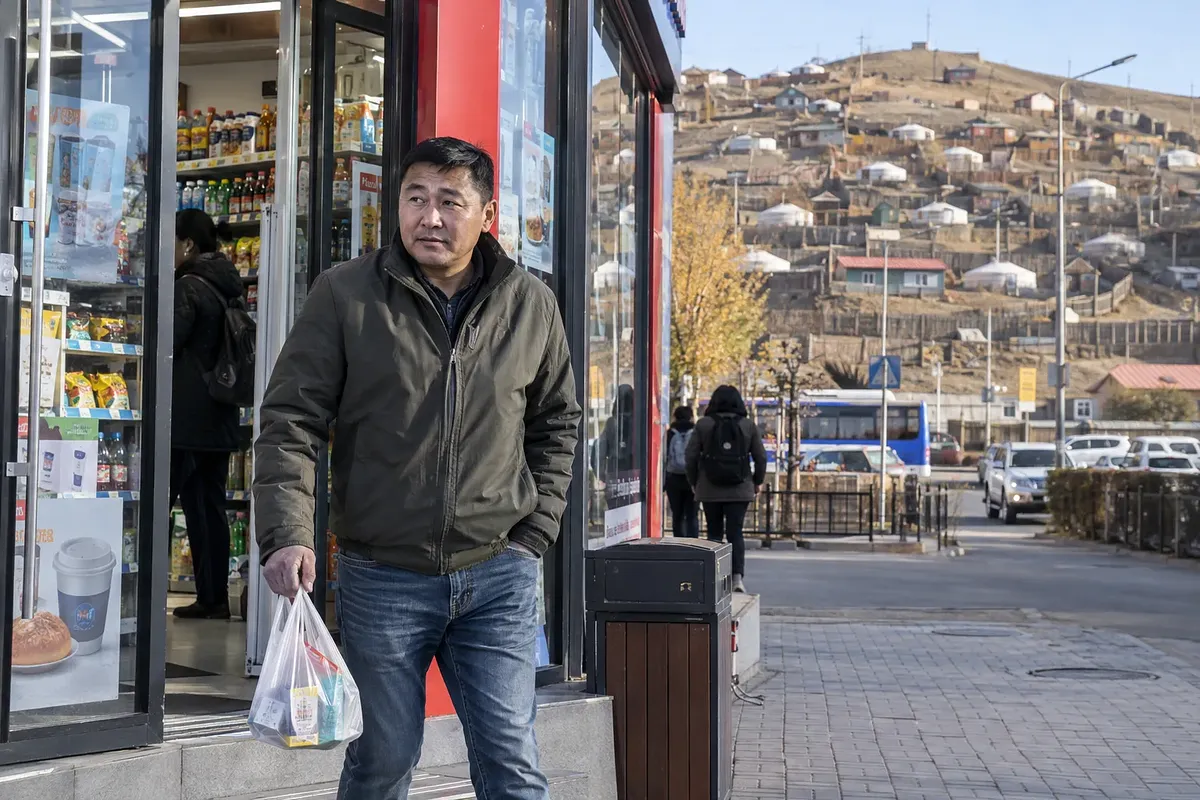
Mongtan New Town combines Mongolia and Dongtan New Town. It conveys the impression of seeing signs and commercial facilities familiar from Korea. It is not the name of an official administrative district or urban development project.
The term can describe only Ulaanbaatar’s consumer landscape. Stores seen on a particular street do not represent all of Mongolia. The presence of brands and residents’ living conditions must also be assessed separately.
Category | What it can show | What the term alone cannot tell us Korean brand signs | That those brands have entered the local market | Whether all residents prefer those brands Convenience stores and large supermarkets | The presence of a modern retail network | Household purchasing power and living standards Korean-style food and cafes | Opportunities to encounter Korean-related products | The food preferences of the entire population Commercial facilities downtown | The urban landscape of a particular area | Living conditions in outlying residential areas and rural areas
How concentrated is Mongolia’s population in Ulaanbaatar?
More than half of Mongolia’s population lives in Ulaanbaatar. The World Bank gave this figure in an explanation dated March 19, 2026. It is therefore more accurate not to state that the share is at least half without specifying the basis. World Bank explanation of urban development and water supply
Movement to the capital is also difficult to explain solely as a preference for a more sophisticated lifestyle. A 2025 World Bank project document points to both climate and changes in livelihoods. Livestock losses caused by natural disasters are another factor in rural residents’ migration. World Bank project document on Mongolian cities
The grasslands and the city are not separate worlds. Changes in rural livelihoods can create demand for housing in the capital. This connection helps explain nomadism and urbanization together.
How extensively have Korean brands entered the market?
Corporate histories and performance reports confirm that Korean retailers have entered Mongolia. But the number of stores nationwide and the number in Ulaanbaatar are different measures. A record of a particular numbered store opening must also be distinguished from the current number of operating stores.
Brand | Confirmed record | Date | Scope CU | Reached 500 stores in Mongolia | August 2025 | Store-opening milestone for all of Mongolia GS25 | 267 stores in Mongolia | Second quarter of 2025 | Overseas store count for that quarter Emart | Opened its sixth Mongolia Tengger store | 2025 | Opening recorded in the company’s history Mega MGC Coffee | Opened its first overseas store in Ulaanbaatar | May 30, 2024 | Date of entry into the local market
CU’s 500-store milestone in Mongolia appears in BGF’s 2025 company history. The GS25 store count comes from GS Retail’s second-quarter results for the same year. Because the figures were compiled at different times, they are difficult to use for a market comparison on the same date. BGF company history, GS Retail’s second-quarter 2025 results
Emart’s store opening is recorded in Shinsegae Group’s history. (Confirmed value: Emart opened its sixth Mongolia Tengger store in 2025 · Source: shinsegaegroupnewsroom.com · Checked: 2026-10-16) Mega MGC Coffee’s entry date is stated in a September 2024 report. These records show that places to access Korean-related products and services do exist. Shinsegae Group history, Korea Economic Daily report on Mega MGC Coffee’s entry
What can Korean food and dating preferences tell us?
The sale of Korean food and the preferences of an entire population are different kinds of claims. Saying that Korean restaurants outnumber traditional restaurants requires a count by type of business. A claim that jeyuk-bokkeum is especially popular also needs menu-specific data.
Samgyeopsal and jeyuk-bokkeum are dishes prepared with different seasonings. An enjoyment of meat alone does not explain a preference for spicy seasoning. It is also best to avoid asserting that Mongolians do not eat spicy food at all.
Liking characters in dramas must also be distinguished from choosing a real-life romantic partner. The materials reviewed contain no survey representative of Mongolian women’s ideal partners. There is insufficient evidence to present a particular build as a nationwide preference.
Claim | Evidence needed | What can currently be said Korean restaurants outnumber traditional restaurants | A business count using consistent geographic areas and business categories | Impressions from a street one has visited are not enough to judge Mongolians do not eat spicy food | A dietary survey with a disclosed sample and questions | The claim must allow for individual differences Women prefer men of a particular build | A representative preference survey | A few interviews cannot be generalized People trust Korean products because of their quality | A survey of reasons for purchase and satisfaction | Store counts alone cannot establish purchasing motives
How are study in Korea and Korean-language learning connected?
Studying in Korea is one aspect of exchange between the two countries that can be measured statistically. The Korean Educational Development Institute’s 2025 statistics record 15,270 students from Mongolia. The figure can be found in Study in Korea’s country-by-country breakdown by program. (Confirmed values for students from Mongolia in 2025: universities and junior colleges 6,968, master’s programs 2,764, doctoral programs 838, language training 4,491, other training 209, total 15,270 · Source: was2.studyinkorea.go.kr · Checked: 2026-10-16) Study in Korea international student statistics
Program | Students from Mongolia, 2025 Universities and junior colleges | 6,968 Master’s programs | 2,764 Doctoral programs | 838 Language training | 4,491 Other training | 209 Total | 15,270
These statistics show how many people are studying in Korea. They do not rank the countries where young Mongolians prefer to study abroad. The same figure cannot explain preferences for employment destinations either.
Korean and Khalkha Mongolian have a basic word-order feature in common. The language-structure database WALS classifies both as SOV. That means subject, object, verb order. WALS Korean entry, WALS Khalkha Mongolian entry
Similar word order is not evidence of comparable learning speeds. It does not mean pronunciation and vocabulary are the same. There is no verified basis for explaining the ability to adapt abroad through nomadic DNA.
How do China, Russia, and the Third Neighbor relate to one another?
Mongolia’s foreign relations need to be viewed in terms of both its neighbors and its other partners. Mongolia is a landlocked country between China and Russia. Its Third Neighbor policy is an approach to expanding cooperation beyond those two countries.
Korea is also a partner associated with this policy. Related cooperation appears in the Ministry of Foreign Affairs’ explanation of a summit on July 10, 2026. The document is available among the ministry’s records of summit diplomacy. Ministry of Foreign Affairs explanation of the Korea-Mongolia summit
Cooperation between governments is a different measure from how individual citizens feel. Wariness toward China and affinity for Russia cannot be applied uniformly. Nor can more courteous treatment for someone speaking Korean be guaranteed.
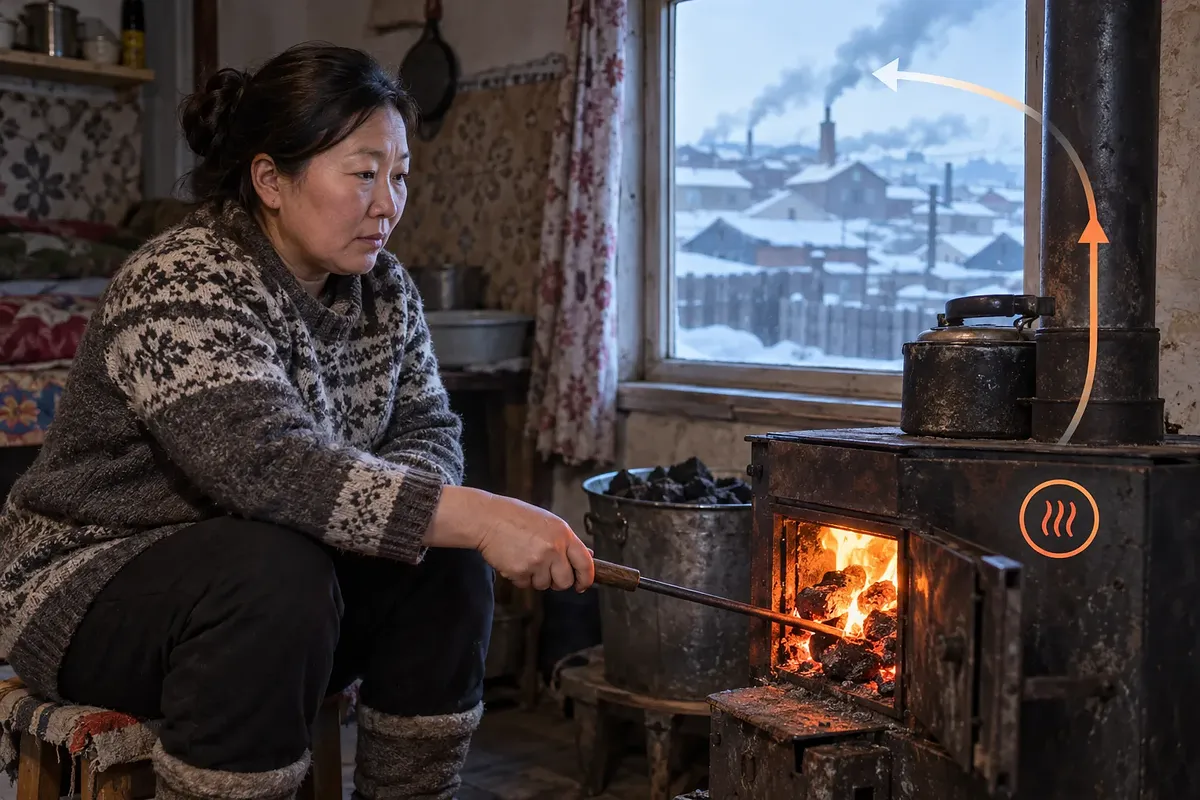
Why does winter air pollution occur in ger districts?
Air pollution in ger districts is linked to heating methods and residential infrastructure. A ger is a traditional Mongolian portable dwelling. Urban ger districts are residential areas that take their name from it.
The World Bank identifies coal and wood heating as major sources of pollution. Households not connected to district heating rely on individual stoves and other means. Fuel use is therefore difficult to explain solely as residents’ carelessness. World Bank explanation of Ulaanbaatar’s clean air project
A World Bank explanation from April 2026 also points to poor housing conditions. A lack of basic services is another problem identified in ger districts. This is why commercial facilities downtown cannot establish the housing standards of the entire city. World Bank analysis of urban housing in Mongolia
· Home insulation: a factor affecting how much heating is needed · Heating supply method: infrastructure linked to individual fuel use · Fuels and heating equipment: factors to examine when assessing pollutant emissions · Measurements by area: data for assessing actual air conditions
Comparing responses to desertification and winter air pollution
Tree planting and reducing winter pollution from heating have different goals and measures of success. The Korea Forest Service has pursued forestry cooperation through the Korea-Mongolia Greenbelt Project. An October 2025 announcement describes forest restoration training for Mongolian officials. Digital Jiphyeonjeon material containing the Korea Forest Service announcement
Category | Problem addressed | Response | Evidence of results Response to desertification and land degradation | Damage to land and vegetation | Tree planting, forest restoration, stronger management capacity | Records of vegetation recovery and management of planted areas Response to winter urban air pollution | Pollutants from heating and other sources | Better insulation, improved heating supply, reduced emissions | Air-quality measurements from the same season and locations
Both are forms of environmental cooperation, but results in one cannot stand in for results in the other. Planting trees alone is not enough to conclude that winter smog has decreased. A separate survey is also needed to conclude that public goodwill has increased.
Water supply and heating infrastructure behind the commercial facilities
Connections between water supply and heating also affect living conditions in Ulaanbaatar. In March 2026, the World Bank described pressure from groundwater depletion. Groundwater is the city’s main water source. World Bank explanation of a water reuse project
The same document discusses securing water for the Amgalan heat supply facility. It describes cooperation to reuse treated wastewater for industrial purposes. This is an example of how a reliable water supply is connected to heating supply.
The example shows what else needs to be considered when assessing a city. Convenience stores and cafes are indicators of consumer services. Housing, water supply, and heating are indicators of the infrastructure that sustains daily life.
Common mistakes when reading information about Mongolia
The most common error is extending a conclusion beyond the scope of an observation. Treating a nationwide store count as the capital’s store count changes its meaning. The same is true of reading a student count as a ranking of preferred countries.
· Confusing the country with the capital: distinguish figures for all of Mongolia from figures for Ulaanbaatar · Confusing past records with current conditions: check both opening dates and the dates figures were compiled · Confusing sales with preferences: do not infer reasons for purchases from the presence of stores alone · Confusing examples with the whole population: do not turn individual tastes into national traits · Confusing a project with its effects: distinguish the implementation of an environmental project from measured improvements
Before citing data, check who or what was counted and when. Also consider which question the figure answers. It is more accurate not to make definitive claims about unverified rankings or preferences.
0:00 0:00
1 / 54

Advertisement

Download text

File name
mongtan-ulaanbaatar-korean-brands-urbanization-en.txt
Format
TXT (text/plain)
Paragraphs
54

Downloads exactly what you see as a text file.

Please cite the source when quoting.

Large text

Makes the text larger and the colors clearer. Turn it on if the text feels too small.

A Korean-style commercial presence does not define the tastes of all Mongolians.

Key points

  • Mongtan New Town is an unofficial nickname combining Mongolia and Dongtan New Town.
  • BGF's company history records CU reaching its 500th store in Mongolia in August 2025.
  • The Korean Educational Development Institute's 2025 statistics list 15,270 international students from Mongolia.
  • The scale of Korean brands' expansion cannot be used to judge Mongolians' food tastes or attitudes toward dating.
  • Ulaanbaatar's winter air pollution and Mongolia's desertification require different responses.

Mongtan New Town is an informal nickname for Ulaanbaatar’s Korean-style commercial landscape. Corporate records confirm that Korean brands have entered the market. But the nickname alone cannot explain living standards or tastes across Mongolia.

Store counts and student numbers are based on each company’s 2025 materials and the Korean Educational Development Institute’s 2025 statistics.

What does Mongtan New Town mean?

Mongtan New Town combines Mongolia and Dongtan New Town. It conveys the impression of seeing signs and commercial facilities familiar from Korea. It is not the name of an official administrative district or urban development project.

The term can describe only Ulaanbaatar’s consumer landscape. Stores seen on a particular street do not represent all of Mongolia. The presence of brands and residents’ living conditions must also be assessed separately.

Category What it can show What the term alone cannot tell us
Korean brand signs That those brands have entered the local market Whether all residents prefer those brands
Convenience stores and large supermarkets The presence of a modern retail network Household purchasing power and living standards
Korean-style food and cafes Opportunities to encounter Korean-related products The food preferences of the entire population
Commercial facilities downtown The urban landscape of a particular area Living conditions in outlying residential areas and rural areas
Winter air pollution in Ulaanbaatar and desertification in Mongolia require different responses.

How concentrated is Mongolia’s population in Ulaanbaatar?

More than half of Mongolia’s population lives in Ulaanbaatar. The World Bank gave this figure in an explanation dated March 19, 2026. It is therefore more accurate not to state that the share is at least half without specifying the basis. World Bank explanation of urban development and water supply

Movement to the capital is also difficult to explain solely as a preference for a more sophisticated lifestyle. A 2025 World Bank project document points to both climate and changes in livelihoods. Livestock losses caused by natural disasters are another factor in rural residents’ migration. World Bank project document on Mongolian cities

The grasslands and the city are not separate worlds. Changes in rural livelihoods can create demand for housing in the capital. This connection helps explain nomadism and urbanization together.

How extensively have Korean brands entered the market?

Corporate histories and performance reports confirm that Korean retailers have entered Mongolia. But the number of stores nationwide and the number in Ulaanbaatar are different measures. A record of a particular numbered store opening must also be distinguished from the current number of operating stores.

Brand Confirmed record Date Scope
CU Reached 500 stores in Mongolia August 2025 Store-opening milestone for all of Mongolia
GS25 267 stores in Mongolia Second quarter of 2025 Overseas store count for that quarter
Emart Opened its sixth Mongolia Tengger store 2025 Opening recorded in the company’s history
Mega MGC Coffee Opened its first overseas store in Ulaanbaatar May 30, 2024 Date of entry into the local market

CU’s 500-store milestone in Mongolia appears in BGF’s 2025 company history. The GS25 store count comes from GS Retail’s second-quarter results for the same year. Because the figures were compiled at different times, they are difficult to use for a market comparison on the same date. BGF company history, GS Retail’s second-quarter 2025 results

Emart’s store opening is recorded in Shinsegae Group’s history. (Confirmed value: Emart opened its sixth Mongolia Tengger store in 2025 · Source: shinsegaegroupnewsroom.com · Checked: 2026-10-16) Mega MGC Coffee’s entry date is stated in a September 2024 report. These records show that places to access Korean-related products and services do exist. Shinsegae Group history, Korea Economic Daily report on Mega MGC Coffee’s entry

What can Korean food and dating preferences tell us?

The sale of Korean food and the preferences of an entire population are different kinds of claims. Saying that Korean restaurants outnumber traditional restaurants requires a count by type of business. A claim that jeyuk-bokkeum is especially popular also needs menu-specific data.

Samgyeopsal and jeyuk-bokkeum are dishes prepared with different seasonings. An enjoyment of meat alone does not explain a preference for spicy seasoning. It is also best to avoid asserting that Mongolians do not eat spicy food at all.

Liking characters in dramas must also be distinguished from choosing a real-life romantic partner. The materials reviewed contain no survey representative of Mongolian women’s ideal partners. There is insufficient evidence to present a particular build as a nationwide preference.

Claim Evidence needed What can currently be said
Korean restaurants outnumber traditional restaurants A business count using consistent geographic areas and business categories Impressions from a street one has visited are not enough to judge
Mongolians do not eat spicy food A dietary survey with a disclosed sample and questions The claim must allow for individual differences
Women prefer men of a particular build A representative preference survey A few interviews cannot be generalized
People trust Korean products because of their quality A survey of reasons for purchase and satisfaction Store counts alone cannot establish purchasing motives

How are study in Korea and Korean-language learning connected?

Studying in Korea is one aspect of exchange between the two countries that can be measured statistically. The Korean Educational Development Institute’s 2025 statistics record 15,270 students from Mongolia. The figure can be found in Study in Korea’s country-by-country breakdown by program. (Confirmed values for students from Mongolia in 2025: universities and junior colleges 6,968, master’s programs 2,764, doctoral programs 838, language training 4,491, other training 209, total 15,270 · Source: was2.studyinkorea.go.kr · Checked: 2026-10-16) Study in Korea international student statistics

Program Students from Mongolia, 2025
Universities and junior colleges 6,968
Master’s programs 2,764
Doctoral programs 838
Language training 4,491
Other training 209
Total 15,270

These statistics show how many people are studying in Korea. They do not rank the countries where young Mongolians prefer to study abroad. The same figure cannot explain preferences for employment destinations either.

Korean and Khalkha Mongolian have a basic word-order feature in common. The language-structure database WALS classifies both as SOV. That means subject, object, verb order. WALS Korean entry, WALS Khalkha Mongolian entry

Similar word order is not evidence of comparable learning speeds. It does not mean pronunciation and vocabulary are the same. There is no verified basis for explaining the ability to adapt abroad through nomadic DNA.


How do China, Russia, and the Third Neighbor relate to one another?

Mongolia’s foreign relations need to be viewed in terms of both its neighbors and its other partners. Mongolia is a landlocked country between China and Russia. Its Third Neighbor policy is an approach to expanding cooperation beyond those two countries.

Korea is also a partner associated with this policy. Related cooperation appears in the Ministry of Foreign Affairs’ explanation of a summit on July 10, 2026. The document is available among the ministry’s records of summit diplomacy. Ministry of Foreign Affairs explanation of the Korea-Mongolia summit

Cooperation between governments is a different measure from how individual citizens feel. Wariness toward China and affinity for Russia cannot be applied uniformly. Nor can more courteous treatment for someone speaking Korean be guaranteed.

Why does winter air pollution occur in ger districts?

Air pollution in ger districts is linked to heating methods and residential infrastructure. A ger is a traditional Mongolian portable dwelling. Urban ger districts are residential areas that take their name from it.

The World Bank identifies coal and wood heating as major sources of pollution. Households not connected to district heating rely on individual stoves and other means. Fuel use is therefore difficult to explain solely as residents’ carelessness. World Bank explanation of Ulaanbaatar’s clean air project

A World Bank explanation from April 2026 also points to poor housing conditions. A lack of basic services is another problem identified in ger districts. This is why commercial facilities downtown cannot establish the housing standards of the entire city. World Bank analysis of urban housing in Mongolia

  • Home insulation: a factor affecting how much heating is needed
  • Heating supply method: infrastructure linked to individual fuel use
  • Fuels and heating equipment: factors to examine when assessing pollutant emissions
  • Measurements by area: data for assessing actual air conditions

Comparing responses to desertification and winter air pollution

Tree planting and reducing winter pollution from heating have different goals and measures of success. The Korea Forest Service has pursued forestry cooperation through the Korea-Mongolia Greenbelt Project. An October 2025 announcement describes forest restoration training for Mongolian officials. Digital Jiphyeonjeon material containing the Korea Forest Service announcement

Category Problem addressed Response Evidence of results
Response to desertification and land degradation Damage to land and vegetation Tree planting, forest restoration, stronger management capacity Records of vegetation recovery and management of planted areas
Response to winter urban air pollution Pollutants from heating and other sources Better insulation, improved heating supply, reduced emissions Air-quality measurements from the same season and locations

Both are forms of environmental cooperation, but results in one cannot stand in for results in the other. Planting trees alone is not enough to conclude that winter smog has decreased. A separate survey is also needed to conclude that public goodwill has increased.

Water supply and heating infrastructure behind the commercial facilities

Connections between water supply and heating also affect living conditions in Ulaanbaatar. In March 2026, the World Bank described pressure from groundwater depletion. Groundwater is the city’s main water source. World Bank explanation of a water reuse project

The same document discusses securing water for the Amgalan heat supply facility. It describes cooperation to reuse treated wastewater for industrial purposes. This is an example of how a reliable water supply is connected to heating supply.

The example shows what else needs to be considered when assessing a city. Convenience stores and cafes are indicators of consumer services. Housing, water supply, and heating are indicators of the infrastructure that sustains daily life.

Common mistakes when reading information about Mongolia

The most common error is extending a conclusion beyond the scope of an observation. Treating a nationwide store count as the capital’s store count changes its meaning. The same is true of reading a student count as a ranking of preferred countries.

  • Confusing the country with the capital: distinguish figures for all of Mongolia from figures for Ulaanbaatar
  • Confusing past records with current conditions: check both opening dates and the dates figures were compiled
  • Confusing sales with preferences: do not infer reasons for purchases from the presence of stores alone
  • Confusing examples with the whole population: do not turn individual tastes into national traits
  • Confusing a project with its effects: distinguish the implementation of an environmental project from measured improvements

Before citing data, check who or what was counted and when. Also consider which question the figure answers. It is more accurate not to make definitive claims about unverified rankings or preferences.

Open the link

Opens in a new window.

Advertisement

Sign-in required

Sign in with your Google account to like, comment, and save highlights.

FAQ

Is Mongtan New Town the name of a real city?

It is an unofficial nickname combining Mongolia and Dongtan New Town. It describes Ulaanbaatar's Korean-style commercial landscape, not an official administrative district.

Does at least half of Mongolia's population live in Ulaanbaatar?

The World Bank's March 2026 description puts the figure at close to half. To determine whether it is at least half, the populations of the country and its capital must be compared using the same reference date.

Are all 500 CU stores in Mongolia in Ulaanbaatar?

BGF's August 2025 record says CU reached 500 stores across Mongolia. It should not be read as meaning there are 500 stores in Ulaanbaatar alone.

How many GS25 stores are there in Mongolia?

GS Retail's second-quarter 2025 earnings report lists 267 stores. The current number of stores should be checked against later earnings reports.

How many Mongolian students study in Korea?

The Korea Educational Development Institute's 2025 statistics put the number at 15,270. The figure includes university and junior college students, graduate students, and people in language and other training programs.

Is Korea young Mongolians' top choice for studying abroad?

The number of Mongolian students in Korea alone cannot establish how countries rank in preference. A representative survey of young Mongolians' preferences is needed.

Do Mongolian and Korean have the same word order?

WALS classifies the basic word order of Khalkha Mongolian and Korean as SOV. This means subject, object, then verb; it does not mean their entire grammars are the same.

Do Mongolians not eat spicy food?

There is no confirmed basis for saying that Mongolians as a whole do not eat spicy food. Sales of a particular food should be distinguished from individual preferences for spicy food.

What is Mongolia's Third Neighbor policy?

It is a foreign policy approach to expanding cooperation with countries other than China and Russia, which share borders with Mongolia. Korea is also a partner in cooperation linked to this policy.

Can planting trees solve Ulaanbaatar's winter smog?

Tree-planting results alone cannot show whether winter air pollution has improved. Heating emissions, home insulation, and heating supply conditions must also be considered.

Why is the water supply connected to heating in Ulaanbaatar?

Heating supply facilities also need a stable water supply to operate. In March 2026, the World Bank described cooperation on reusing industrial water at the Amgalan facility.

Sources

Data formats

This content is available in several machine-friendly formats.

Data-only languages (machine translated, files only)

Indonesian JSON MD Portuguese JSON MD Chinese (Traditional) JSON MD Deutsch JSON MD

Verification

This article was drafted with AI and then reviewed and edited by a person.

Reviewed by 신익희 · 편집장 · 2026-10-16

Figures in this article were checked against the source material during generation. 1 correction(s) applied. · 2026-10-16

This translation has been cross-checked by AI. · 2026-10-16

Reuse & AI usage

Search indexing and AI citation with attribution are welcome. See the license policy for details.

CC BY · License

Loading…

Loading…

Related content

From Injoys

Request the content you want and take 70% of what it earns

Just leave the subject. We handle production, review, translation and distribution.

See how revenue sharing works

Comments