Portable Generator 20-Foot Rule for U.S. Outages
Fuel-powered portable generators must be placed outdoors at least 20 feet from doors, windows, and vents. This explains alarm placement and emergency contact guidelines for U.S. power outages, as well as how to prepare for power gaps affecting medical devices.
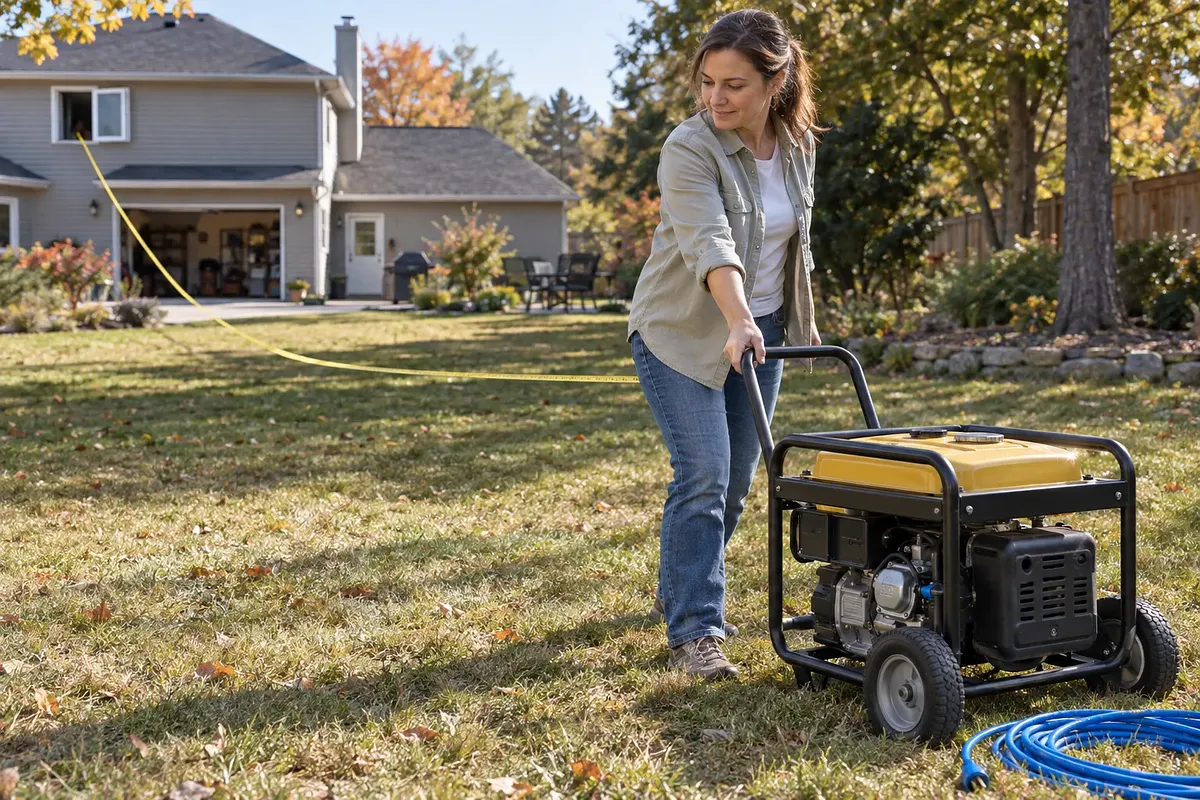
The CDC advises placing fuel-powered generators outdoors at least 20 feet from doors, windows, and vents.
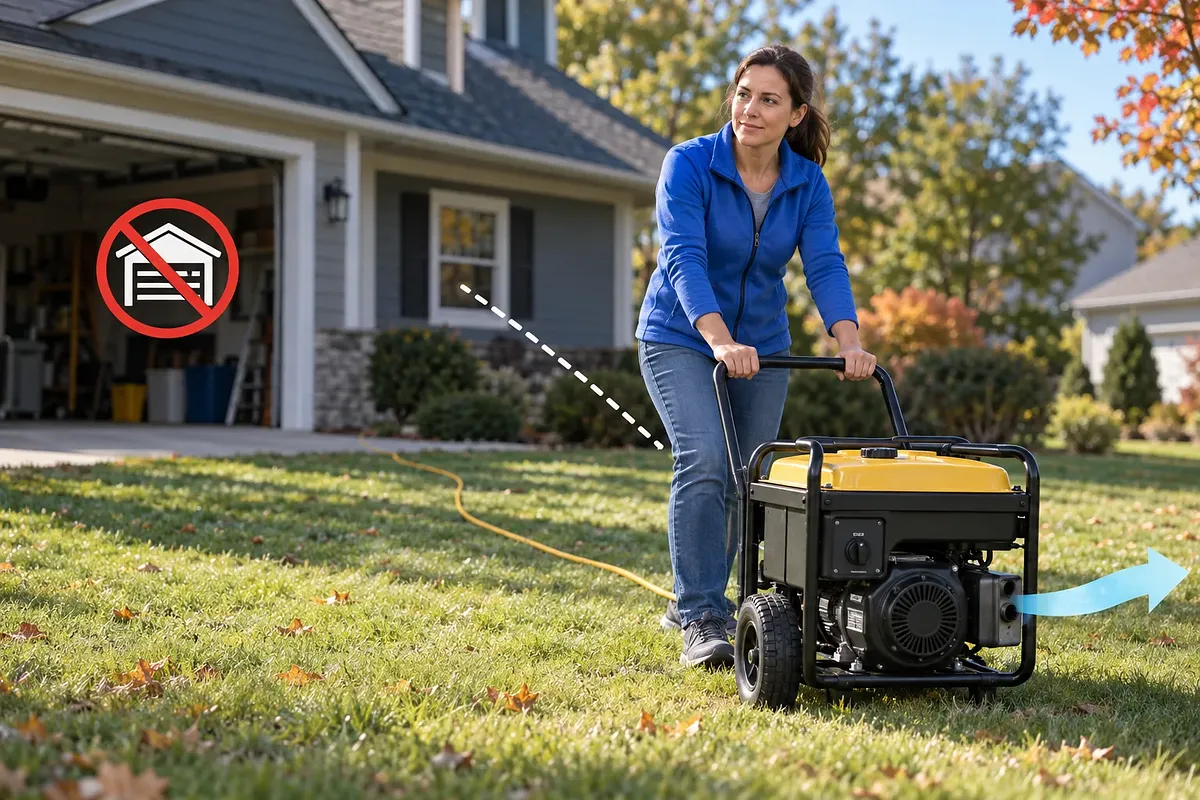
Opening the garage door or turning on a fan does not make indoor generator use safe.
CO alarms must work during power outages and be installed on every level of the home and outside sleeping areas.
If a CO alarm sounds or poisoning is suspected, evacuate outdoors immediately and then call 911 in the United States.
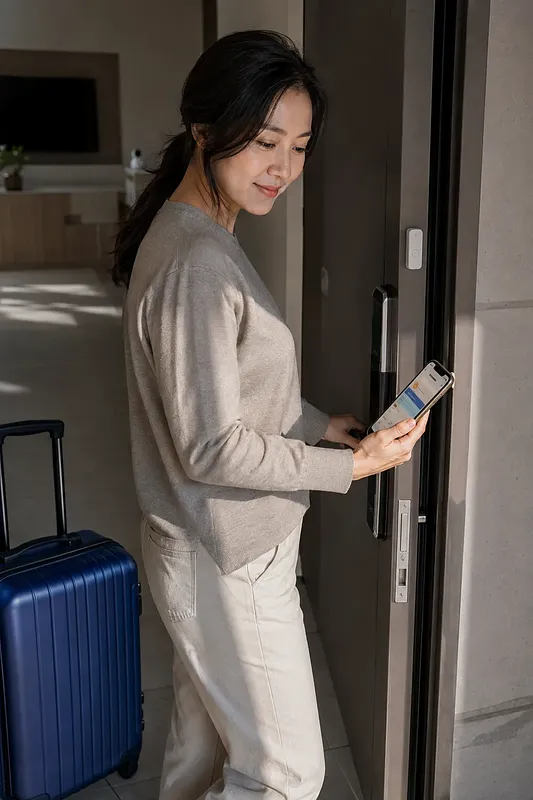
Households that use medical devices must plan for power gaps during refueling and cooling, as well as power during evacuation.
Fuel-powered portable generators must be placed outdoors at least 20 feet away from doors, windows, and vents. Indoor use is prohibited even if the garage door is open. If a carbon monoxide alarm sounds or poisoning is suspected, evacuate outdoors immediately.
The 20-foot standard is based on CDC power outage guidance that completed expert review on August 26, 2026.
What the 20-Foot Standard for Portable Generators Means
Twenty feet is the minimum distance needed to reduce the risk of exhaust entering the home. The exact metric conversion is 6.096m. Simply placing a generator outdoors does not guarantee safety.
The CDC power outage guidance specifies the distance from doors, windows, and vents. CPSC requires at least 20 feet from homes and buildings. The exhaust must face away from openings in nearby buildings.
Comparison of Distance Recommendations by Agency
NIST recommends a distance of 25 feet, which is farther than 20 feet. This does not mean that all risk disappears once 20 feet is secured. The distance and exhaust direction specified in each document must be considered together.
Agency and document | Distance recommendation | Additional condition to check
CDC power outage safety guidance, reviewed August 26, 2026 | At least 20 feet from doors, windows, and vents | Outdoor use
CPSC hurricane safety announcement, May 27, 2026 | At least 20 feet from homes and buildings | Exhaust faces away from doors, windows, and vents
NIST Generator Safety | At least 25 feet from the home | Position so exhaust does not face open doors, windows, or vents
The exact conversion of 25 feet is 7.62m. The NIST guidance lists it as 7.6m. This comparison covers safety recommendations for portable generators. Separate standards are needed when determining the installation of permanently installed standby generators. NIST Generator Safety
Why a Generator Cannot Be Used Even With the Garage Door Open
Carbon monoxide can build up even in a partially enclosed space such as a garage with the door open. Carbon monoxide is a colorless, odorless toxic gas. Exposure can occur even when no exhaust odor is noticeable.
CDC's notice linking to the Generator Safety Fact Sheet states:
Never use a generator inside your home or garage, even if doors and windows are open.
This means a generator must not be used inside a home or garage even when doors or windows are open. Ventilation using a fan does not override this prohibition. Basements and sheds are also not acceptable places for use. CDC generator safety guidance
Installation Conditions by Location
Whether a generator can be installed must be determined by considering both your home and neighboring buildings. EPA advises placing it outdoors away from all homes. Balconies and porches are also included among prohibited locations. EPA generator placement guidance
Location or situation | Assessment | Reason or additional condition
Open garage, basement, or shed | Use prohibited | Space where CO can accumulate
Apartment balcony, home deck, or porch | Use prohibited | Location close to buildings and openings
Far from your home but close to a neighbor's window | Unsuitable placement | Risk of exhaust entering the neighbor's home
Open yard sufficiently far from buildings | Use after checking conditions | Check distance, exhaust direction, and flood risk together
Property where a safe distance cannot be secured | Consider another power source or evacuation location | A condition that cannot be resolved by moving the generator indoors
This table applies agency placement guidance to residential situations. A small property does not reduce the distance requirement. In multifamily housing, a balcony must not be treated as an emergency generator space.
CO Alarm Placement and Automatic Shutoff
CO alarms must be able to operate during a power outage. Battery-powered models and models with battery backup meet this requirement. CPSC recommends installing them on every level of the home and outside sleeping areas.
· Test each alarm every month.
· Replace batteries when needed.
· With interconnected alarms, an alarm from one unit is transmitted to the others.
· Follow the product manual for specific installation locations.
Some generators automatically stop when the surrounding CO concentration becomes dangerous. CPSC recommends products with this automatic CO shutoff feature. This feature does not permit indoor use. Separate indoor alarms are still needed. CPSC 2026 hurricane safety announcement
Carbon Monoxide Symptoms and U.S. Emergency Contact Guidelines
If CO poisoning is suspected, move immediately to fresh air. Symptoms may include headache, dizziness, nausea, vomiting, and weakness. Chest pain and confusion are also known symptoms. A sleeping person may not notice the symptoms.
If several people become ill at the same time, suspect a shared exposure. Symptoms that improve after going outdoors can also be a clue. This change alone cannot confirm or rule out poisoning. Poison Control carbon monoxide guidance
· If an alarm sounds or poisoning is suspected, evacuate the building immediately.
· If an alarm sounds, call 911 from a safe location outdoors.
· If anyone has decreased consciousness, difficulty breathing, or seizures, call 911 without delay.
· For other exposure consultations, call 1-800-222-1222 after evacuating.
1-800-222-1222 connects callers to a U.S. poison control center. Do not delay evacuation or an emergency call while waiting for a consultation. Do not reenter the building to look for the cause. Follow the responding fire department's safety clearance before reentry. Poison Control first aid guidance
Risks From Rain, Extension Cords, and Refueling
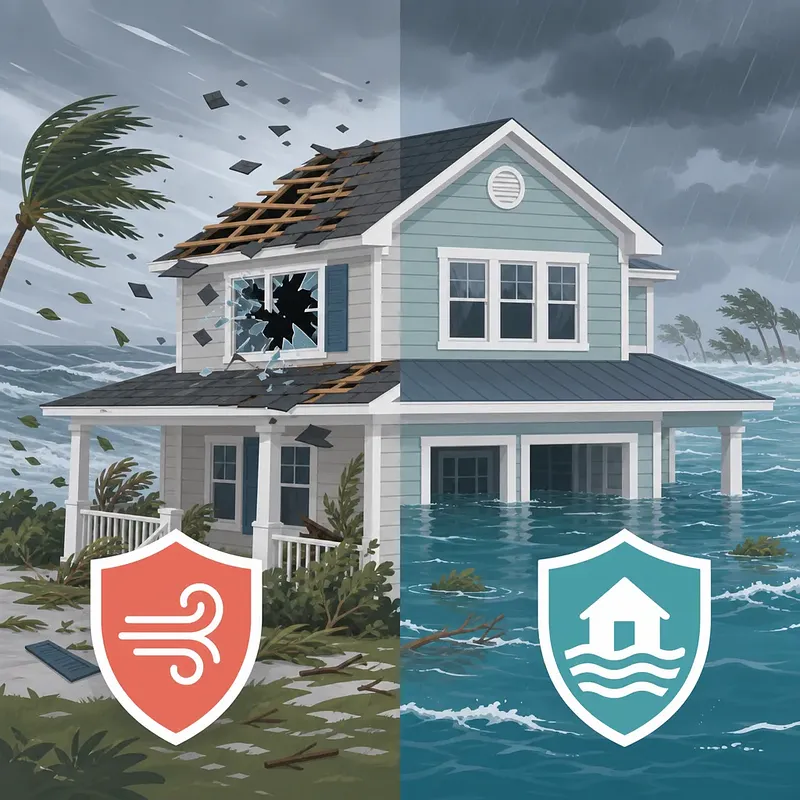
Generators pose risks of electric shock and fire in addition to CO. Moving a generator into a garage to protect it from rain is not permitted. Follow the manufacturer's instructions for use in severe weather.
Item to check | Standard to apply
Ground and cover | A dry location where water does not pool or flow in, with a protective structure that allows open ventilation
Hands and connections | Do not operate with wet hands, and protect electrical connections from water
Extension cord capacity | An outdoor-rated product with a rating greater than the total power consumption of connected devices
Extension cord condition | Check for damaged insulation, missing grounding pins, and crushing in doorways
Extension cord length | Long enough to maintain the generator's safe distance and cover the actual wiring route
Refueling | Turn off the generator and allow it to cool sufficiently before refueling
Fuel storage | Use a suitable safety container outside living areas
Fuel spilled on a hot engine can ignite. Do not arbitrarily set the cooling period to a few minutes. Check the product manual's refueling requirements. CPSC Portable Generator Hazards
Do not plug a generator into a wall outlet to send power into home wiring. This is called backfeeding. Electricity can flow into external power lines and electrocute workers. Connections to home wiring must use a suitable transfer device installed by a professional. PSE generator safety guidance
Power Gaps During Refueling in Households With Medical Devices
Households with medical devices must also arrange power for periods when the generator is stopped. A generator must be stopped and allowed to cool before refueling. Therefore, securing generator fuel does not provide an uninterrupted power supply. This conclusion applies generator safety guidance together with FDA power outage planning.
FDA advises checking the backup power available for each device and the acceptable period of interrupted operation. Life-sustaining devices such as ventilators especially require individual plans. Do not determine whether a backup battery can be connected based only on its appearance. FDA guide to power outage planning for home medical devices
Preparation item | What to confirm | Who to ask
Generator and extension cord | Whether the device may be connected and the required power conditions | Manufacturer or supplier
Backup battery | Compatibility, operating time, and power switching method | Manufacturer or supplier
Refueling and cooling | Alternative power to use while the generator is stopped | Supplier or medical team
Treatment interruption | Whether interruption is permitted and how to resume treatment | Medical team
Evacuation | Destination where the device can be used and means of transportation | Local emergency management agency or medical team
Battery operating time must be confirmed under the conditions of the specific device. Do not assume operating time based only on an unverified capacity. If a power gap cannot be tolerated, an advance evacuation plan is needed.
FDA recommends informing the power company and fire department that medical devices are in use. Emergency assistance is needed if power for a life-sustaining device cannot be secured. After power is restored, check whether the device settings have changed. FDA medical device disaster preparedness guidance
Common Mistakes
It is incorrect to treat one safety measure as a substitute for another condition. Distance, alarms, and refueling rules each reduce different risks. The following distinctions apply guidance from several agencies together.
Common interpretation | Correction
The generator is 20 feet away, so exhaust direction does not matter | Exhaust must face away from building openings
The extension cord is 20 feet long, so the separation distance is sufficient | The actual placement distance and the route indoors are different
A CO automatic shutoff feature allows use in a garage | Automatic shutoff does not change the prohibition on indoor use
The alarm is silent, so the symptoms are not caused by CO | Suspected symptoms alone require evacuation and evaluation
The generator is off, so it is safe to go inside immediately | CO that has already accumulated may remain after shutdown
A generator means power to medical devices will remain continuous | Power gaps remain during refueling, equipment failure, and evacuation
The 2026 Hurricane Season and Document Dates
September 2026 falls within the official Atlantic hurricane season. The official season described by NHC runs from June 1 through November 30. This schedule does not indicate the current risk level for a specific area. Check the latest forecasts and alerts for local risk. NHC tropical cyclone climatology guidance
The expert review date for the CDC generator guidance page is August 21, 2026. The review date for the power outage response page is August 26, 2026. A review date must not be interpreted as the date a new safe-distance standard was established. CDC generator guidance page
Frequently Asked Questions
Can 20 Feet Be Treated as 6m?
The exact conversion is 6.096m. Securing exactly 6m falls short of 20 feet. It is appropriate to allow extra distance when measuring.
How Is NIST's 25 Feet Different From 20 Feet?
NIST recommends at least 25 feet from the home. This is farther than the 20 feet recommended by CDC and CPSC. Neither distance eliminates requirements for exhaust direction and alarms.
Is an Apartment Balcony Acceptable Because It Is Outdoors?
EPA identifies balconies as prohibited locations for generator use. Being an open space alone does not make a location suitable. If safe placement is impossible, another power source or evacuation location is needed.
If the Alarm Sounds but I Feel Fine, Can I Wait?
Evacuate outdoors immediately even if you have no symptoms. CPSC advises calling 911 after evacuating. Waiting until symptoms appear is not appropriate.
Should I Contact 911 or Poison Control First?
In the United States, call 911 first for a CO alarm or emergency symptoms. Decreased consciousness, difficulty breathing, and seizures require an immediate call. For other exposure consultations, call 1-800-222-1222 after evacuating.
Do Battery Power Devices Also Emit CO?
Battery power devices that do not burn fuel do not produce combustion exhaust. EPA identifies battery devices as an alternative power source for small devices. The manufacturer must confirm whether a medical device can be connected. EPA guidance on power outages and indoor air
How Many Hours of Battery Power Should Be Prepared for a Medical Device?
There is no single duration that applies to every device. The FDA guide advises checking the battery operating time for each device. Power during evacuation and the acceptable duration of treatment interruption must also be included in the individual plan.
 Injoys