Salted Cabbage: Washing After at Least 1 Day at Room Temp
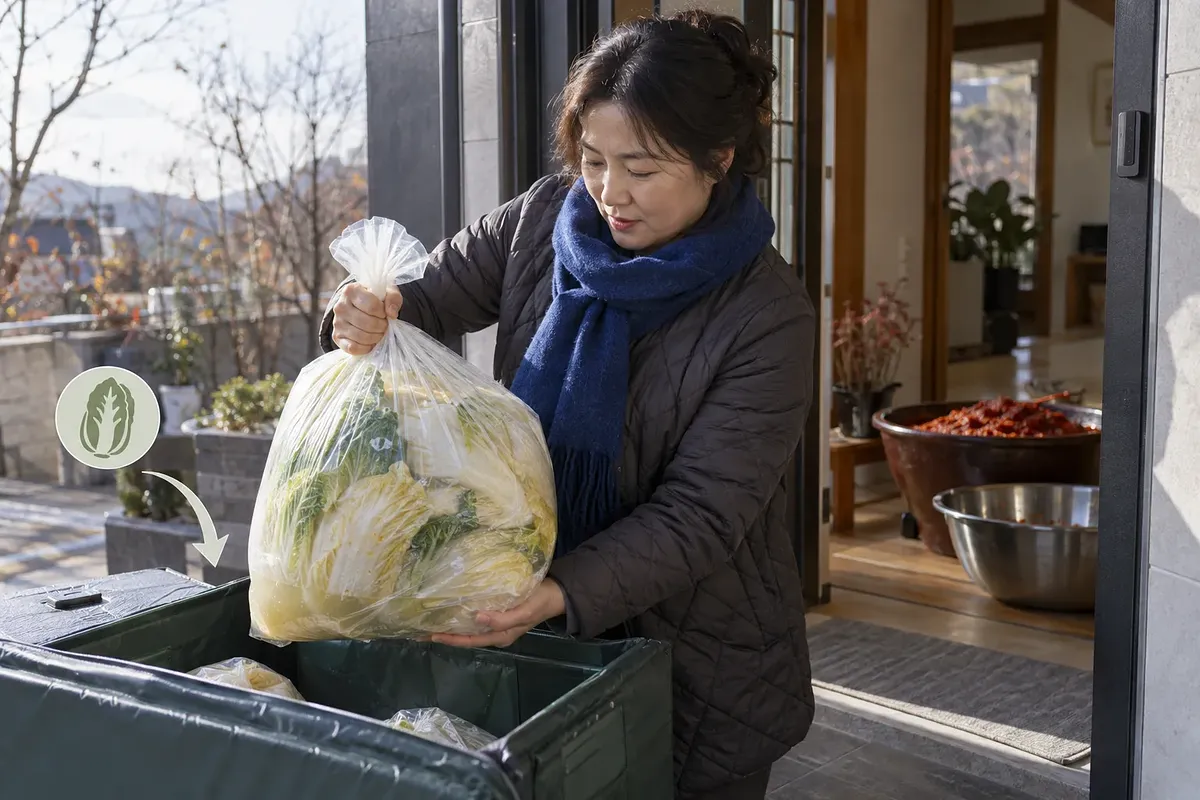
Using salted cabbage on the day it is received is recommended. The Ministry of Food and Drug Safety's 2015 guidance recommends washing it if it has been kept at room temperature for at least 1 day, so if the date for making kimchi changes, check the actual storage conditions as well.
The Ministry of Food and Drug Safety advised using salted cabbage on the day it is received.
If it has been kept at room temperature for at least 1 day, washing it before use is recommended.
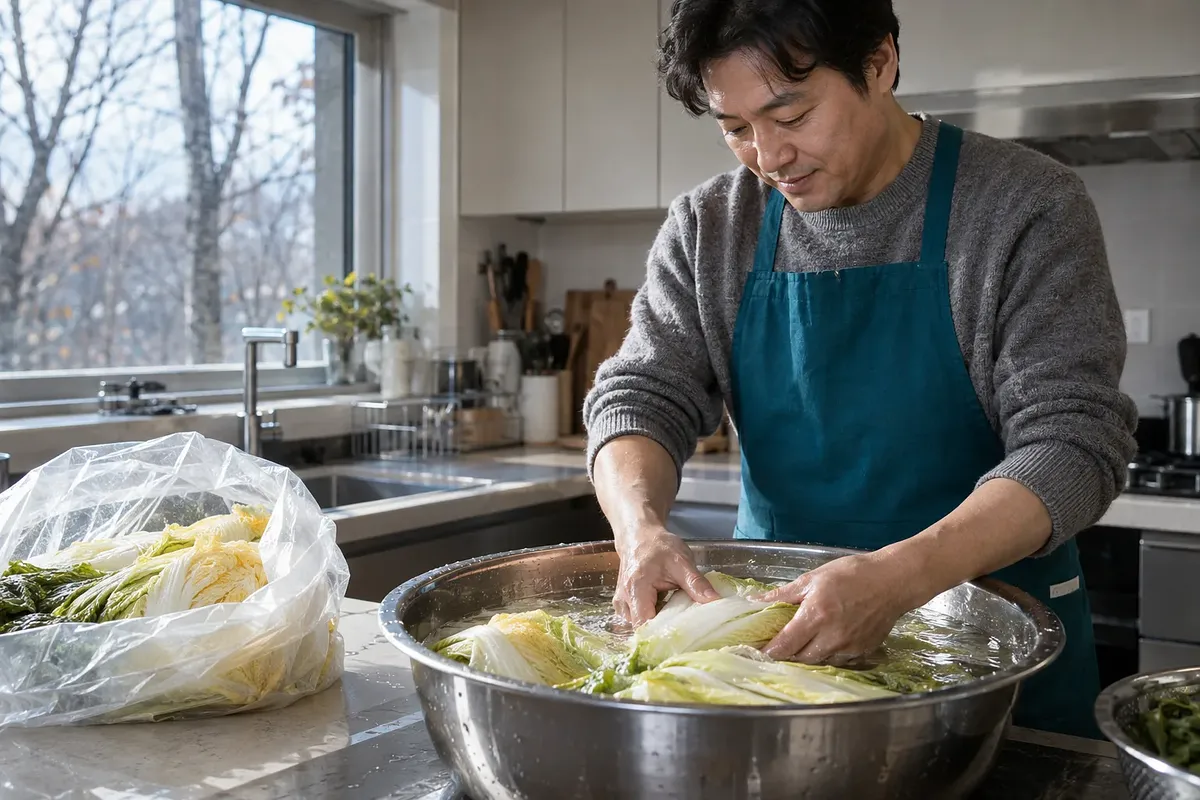
To wash it, soak it in water, rub it gently, then rinse it twice with water.
The 2015 guidance does not specify how long it can be kept refrigerated.
When ordering, distinguish the shipping date from the expected delivery date and also decide when you will actually start making kimchi.
Salted cabbage is best used on the day you receive it. If it has been stored at room temperature for at least 1 day, washing it before use is recommended. If you receive it on a different day from when you make kimchi, check the actual storage conditions as well as the time between those days.
The storage and washing guidance and experimental figures are based on the Ministry of Food and Drug Safety’s October 27, 2015 guidance.
Why use it on the day you receive it
Coliform bacteria can increase during room-temperature storage. Coliforms are a group of bacteria used as an indicator of hygiene. The Ministry of Food and Drug Safety explained that they can increase when salted cabbage is stored at room temperature for at least 1 day.
The ministry’s press release, “Use Salted Cabbage Safely During Kimchi-Making Season,” says:
It is best to use salted cabbage on the day you receive it.
Salted cabbage is soaked in brine, then washed and drained. Some products come with instructions to use them without washing or draining them again. This does not mean every product must be washed again before use.
Salted cabbage storage conditions
The time since receipt alone is not enough to determine whether washing is needed. The ministry’s guidance also takes storage temperature into account. The following table breaks down the guidance by situation.
Situation | Applicable guidance | What to check
Used on the day of receipt | Recommendation to use it that day | Product instructions for washing and draining
Stored at room temperature for at least 1 day | Recommendation to wash before use | Washing steps below
Stored in a refrigerator | The guidance gives no refrigerated storage period | Product label and the manufacturer’s or seller’s storage instructions
Storage conditions unknown | The date alone is not enough to determine which recommendation applies | Actual storage location and elapsed time
You cannot assume that refrigeration keeps the cabbage suitable for a set number of days. The 2015 guidance gives neither a refrigeration temperature nor a permitted number of days. If kimchi-making is delayed, check the storage conditions for the specific product first.
How to wash salted cabbage
If washing is needed, wash it gently, then rinse it twice with water. The ministry gives these steps:
· Place the cabbage in water.
· Gently rub the root area and between the leaves with your fingers to wash them.
· Rinse twice with water.
The rinsing follows the gentle washing step. It does not mean washing by rubbing 3 times and then adding rinses. The ministry explained that excessive washing can damage the cabbage. It therefore recommended washing it no more than 3 times.
What the bacterial reduction figures mean
The bacterial reduction rates are experimental results included in the 2015 guidance. They are not figures from a new study conducted in 2026. The experiment found the following reductions after about 3 washings.
Measurement | Reduction compared with before washing
Total bacterial count | 95%
Coliforms | 93%
The figures also appear in the ministry guidance published by Korea Policy Briefing at the time. These results do not guarantee the same reduction each time cabbage is washed at home. Nor do they mean the bacteria were completely removed.
Checklist for the receipt date and kimchi-making schedule
When ordering, check whether you can actually make kimchi on the day you receive the cabbage. On September 30, 2026, Yonhap News Agency reported on advance reservations for kimchi-making ingredients. The report described an option to pick them up at a store on a chosen date. That report was separate from any revision to hygiene guidance. Yonhap News Agency’s advance reservation report
· Set a day for making kimchi, including preparing the seasoning.
· Check whether the date shown when ordering is the dispatch date or the date you will receive the cabbage.
· Compare the expected receipt time with the time you will actually start work.
· If the schedule does not line up, ask the seller about the storage conditions needed.
· Check whether you can change the receipt date if delivery is delayed or your schedule changes.
Weight and place of origin are no substitute for checking the schedule. The report featured 20kg products from Haenam, Goesan, and Pyeongchang. But the ministry’s guidance did not specify different numbers of washings by origin or package weight. Check the instructions for the cabbage and seasoning products separately to determine how much seasoning you need.
The difference between the dispatch date and the actual work time
It is better to record the time you will receive the cabbage, not just the date, in your schedule. The dispatch date is the day the seller sends the product. The receipt date is the day you actually receive it, so the two should not be treated as the same.
The fact that you receive the cabbage on one day and make kimchi on another does not, by itself, tell you how long it has been stored. Even if you use it the next day, the elapsed time depends on when you received it. Conversely, “use on the day of receipt” is not a timetable permitting the cabbage to be left at room temperature. The “1 day” in the ministry’s guidance should not be treated as a threshold that guarantees safety.
Common mistakes
The most common misunderstanding is applying a conditional recommendation to every situation. Following the recommended number of washings does not resolve every storage issue. The following distinctions can help.
Misunderstanding | What to distinguish
Always wash it again if using it the next day | The guidance applies when it has been stored at room temperature for at least 1 day
Refrigeration keeps it safe for a set number of days | The guidance gives no permitted number of days for refrigerated storage
The more you wash it, the better | Excessive washing can damage the cabbage
The bacterial reduction rate guarantees safety | A reduction rate from a specific experiment is different from assessing the safety of an individual product
Frequently asked questions
If I make kimchi on the day I receive it, can I skip washing it again?
Some products come with instructions to use them without washing again. Check the product’s instructions.
What should I check if I put off making kimchi until the next day?
Check both the actual storage temperature and the elapsed time. The change of date alone does not tell you whether the room-temperature storage condition applies.
How many days can it be refrigerated?
The 2015 ministry guidance alone does not specify a period. Check the product label and the manufacturer’s or seller’s instructions.
Is there a set time for draining it?
The guidance gives no standard draining time. It provides no basis for applying the same time to every product.
Was this guidance newly issued in 2026?
No. The storage and washing guidance and experimental results were published on October 27, 2015.
 Injoys