Skip to content
Injoys
How-to 🇰🇷 South Korea

This content applies specifically to South Korea.

2026 Housing Benefit Eligibility: Recognized Income, Rent, and Home Repair Costs

Households can apply for the 2026 Housing Benefit if their recognized income is at most 48% of the standard median income. Renter households receive rental benefits based on the region and household size, while owner-occupier households receive repair and maintenance benefits based on the condition of the home and income bracket.

Views 32 10 min read KO EN JA ES

Listen or read this article

Listen, or read the text only.

2026 Housing Benefit Eligibility: Recognized Income, Rent, and Home Repair Costs

Kokoro 82M AI-generated voice

0:00 16:02

Download audio

File name
2026-korea-housing-benefit-eligibility-application-en.mp3
Format
MP3 (audio/mpeg)
Duration
16:02
File size
11 MB
Engine
Kokoro 82M

This audio was generated by AI.

You may download and use it freely for personal use.

2026 Housing Benefit Eligibility: Recognized Income, Rent, and Home Repair Costs

11 min read

2026 Housing Benefit Eligibility: Recognized Income, Rent, and Home Repair Costs
Households can apply for the 2026 Housing Benefit if their recognized income is at most 48% of the standard median income. Renter households receive rental benefits based on the region and household size, while owner-occupier households receive repair and maintenance benefits based on the condition of the home and income bracket.
Households qualify for the 2026 Housing Benefit if their recognized income is at most 48% of the standard median income.
The monthly recognized income limit is KRW 1,230,834 for a one-person household and KRW 3,117,474 for a four-person household.
The rental benefit is calculated based on the lower of the standard rent and actual rent, and an out-of-pocket contribution may apply depending on income level.
Instead of cash, owner-occupier households receive minor, medium, or major repairs based on the results of a home inspection.
Applications for the Housing Benefit can be submitted year-round through Bokjiro or at the eup, myeon, or dong Administrative Welfare Center for the applicant’s registered address.
The 2026 housing benefit is part of the National Basic Livelihood Security System, which supports rent for low-income households or repairs deteriorated parts of owner-occupied homes. Eligibility is determined based not only on monthly wages but on recognized income, which converts both income and assets into a combined amount.
The amounts below are based on the eligibility criteria and minimum benefit levels effective from January 1, 2026. The standard rent or repair limits are not fixed amounts guaranteed to be paid, and the assistance provided varies according to the results of household and housing inspections.
2026 Housing Benefit Eligibility and Income Criteria
The basic eligibility criterion for housing benefit is that the household’s recognized income must be at most 48% of the standard median income. The income or assets of persons obligated to provide support are not considered in the housing benefit eligibility criteria, but the applicant household’s own income, assets, and actual residential status are investigated.
Monthly Recognized Income Limits by Household Size
Household size | 48% of the 2026 standard median income 1 person | KRW 1,230,834 2 people | KRW 2,015,660 3 people | KRW 2,572,337 4 people | KRW 3,117,474 5 people | KRW 3,627,225 6 people | KRW 4,106,857
The amounts in the table are not benefit amounts but the monthly recognized income ceilings used to determine eligibility. Households of 7 or more people must separately check the official standard applicable to their household size.
How Is Recognized Income Calculated?
Recognized income is the sum of the following two items.
Recognized income = assessed income + income-converted value of assets
· Assessed income: The amount calculated by applying deductions recognized under the system to earned income, business income, property income, public transfer income, and other income · Income-converted value of assets: The amount calculated by accounting for the basic asset allowance and recognized debts in assets such as homes, land, rental deposits, savings, and automobiles, and then applying the conversion rate
Accordingly, even if monthly wages are below the eligibility threshold, assets may cause the household to exceed the threshold. Conversely, earned-income deductions and other adjustments may result in recognized income being lower than the applicant expected. The exact amount is determined through a review of official records and an investigation by the relevant city, county, or district.
Standard Rent and Payment Method for Renter Households
Eligible households renting and residing in another person’s home receive rental benefits. The amount of assistance is calculated by considering the area of residence, household size, actual rent, and recognized income together.
2026 Standard Rent
The following amounts are monthly ceilings, in KRW.
Grade | Area classification | 1 person | 2 people | 3 people | 4 people | 5 people | 6 people Grade 1 | Seoul | 369,000 | 414,000 | 492,000 | 571,000 | 594,000 | 703,000 Grade 2 | Gyeonggi·Incheon | 300,000 | 335,000 | 397,000 | 459,000 | 480,000 | 568,000 Grade 3 | Metropolitan cities·Sejong City·Special-status cities outside the Seoul metropolitan area | 247,000 | 275,000 | 327,000 | 377,000 | 397,000 | 470,000 Grade 4 | Other areas | 212,000 | 237,000 | 281,000 | 325,000 | 340,000 | 403,000
For households of 7 people, the standard rent for 6 people applies. For households of 8–9 people, 10% is added to the standard rent for 6 people, with an additional 10% added for every subsequent increase of 2 household members.
When Actual Monthly Rent Is Lower Than the Standard Rent
The rental benefit does not automatically pay the full standard rent. In principle, it is calculated based on the lower of the standard rent and the actual rent.
For example, although the standard rent for a one-person household in Seoul is KRW 369,000 per month, if the verified actual rent is KRW 300,000 per month, KRW 300,000 becomes the starting point for the calculation. Conversely, if the actual rent is KRW 450,000, the standard rent of KRW 369,000 applies as the ceiling. If recognized income is more than the livelihood benefit eligibility threshold, a household contribution may be deducted, so the actual benefit may be lower.
Actual rent reflects not only monthly rent but also the rental deposit converted into a monthly amount at a specified rate. Maintenance fees may be investigated separately from the rent specified in the lease agreement.
Key Points in Calculating Rental Benefits
· If recognized income is at most the livelihood benefit eligibility threshold, the benefit is calculated primarily based on the lower of the standard rent and actual rent. · If recognized income is more than the livelihood benefit eligibility threshold, a household contribution based on the difference between recognized income and the livelihood benefit threshold is reflected. · Additional verification may be conducted depending on actual occupancy, the validity of the lease agreement, and the relationship between the landlord and tenant. · Residents of public rental housing may also be eligible, but payment outcomes vary depending on rental data and how other housing assistance is taken into account.
Repair and Maintenance Benefit Criteria for Owner-Occupier Households
Eligible households residing in their own homes generally do not receive rent payments in cash. Instead, the deterioration of the home is assessed based on a housing inspection by the Korea Land and Housing Corporation or another relevant organization, and repairs are supported under the categories of minor, medium, or major repairs.
2026 Repair Scope and Limits
Category | Typical scope of repairs | Repair cycle | Repair limit Minor repairs | Relatively light repairs, such as improving finishing materials | 3 years | KRW 7.95 million Medium repairs | Repairs focused on functional improvements, such as windows, insulation, and heating | 5 years | KRW 13.99 million Major repairs | Repairs to structures and major facilities, such as roofs, columns, bathrooms, and kitchens | 7 years | KRW 20.06 million
The repair limit is not paid to the applicant as a lump sum in cash. Repairs are carried out according to the condition of the home identified during the on-site inspection, repair priorities, and the actual scope of construction.
Support Rates by Income Bracket
Recognized income bracket | Percentage of repair limit applied At most the livelihood benefit eligibility threshold | 100% More than the livelihood benefit threshold and at most 35% of the standard median income | 90% More than 35% and at most 48% of the standard median income | 80%
For example, even if the home is assessed as requiring major repairs, if the household’s recognized income is more than 35% of the standard median income, assistance is provided within 80% of the major repair limit. The actual construction cost and scope are determined based on the inspection results.
For homes occupied by persons with disabilities or older adults, the need to install accessibility facilities may also be reviewed. However, additional assistance is not automatically provided to every household; the eligibility requirements and on-site inspection criteria must be met.
How to Apply for the 2026 Housing Benefit
New applications for housing benefit are not restricted to a particular application period and may be submitted year-round. Because the application date may affect benefit calculations, those who may be eligible should apply through an official channel for confirmation rather than assuming the review outcome in advance.
Who Can Apply
· The eligible beneficiary · A household member, relative, or other related person · A public official responsible for social welfare who determines that an application is necessary and submits an application ex officio after obtaining consent
Online applications may be restricted depending on the household’s circumstances or whether someone is applying on the household’s behalf. If online processing is difficult, applicants may use the eup, myeon, or dong Administrative Welfare Center for their registered address.
Application Channels
· Go to the online application process from the housing benefit information page on Bokjiro. · Alternatively, visit the eup, myeon, or dong Administrative Welfare Center with jurisdiction over the registered address. · Submit the application and documents related to income, assets, and the lease. · Undergo an income and asset investigation and a housing inspection by the relevant city, county, or district. · Receive notification of the eligibility decision and benefit details.
Existing beneficiaries generally do not need to reapply every year. However, matters affecting benefits, such as moving in or out, changes in household members, changes to the lease agreement, or changes in income and assets, must be reported to the competent authority.
Documents to Prepare When Applying
Additional documents may be required depending on the household’s circumstances and application method, but the following materials are generally prepared.
· Identification · Application for the provision or modification of social security benefits · Income and asset declaration · Consent form for the provision of financial information and other data · Lease agreement or documentation confirming a loan-for-use arrangement · Copy of the bankbook for the account into which benefits will be paid · Documents verifying income, assets, and debts · When applying through a representative, a power of attorney and identity verification documents for both the applicant and representative
Documents that can be verified through the joint use of administrative information may not need to be submitted separately. Conversely, if the lease terms differ from official records or the income and asset situation is complex, supplementary documents such as records of deposit transfers or proof of debt may be requested.
Investigation and Decision Process After Applying
Once an application is received, the city, county, or district investigates income and assets, while the organization responsible for the housing inspection verifies actual occupancy and housing conditions.
Items Investigated for Renter Households
· Whether the applicant household actually resides in the home · Whether the deposit and monthly rent in the lease agreement match the facts · Housing type, facility conditions, and relationship with the landlord · Whether rent has been paid and whether the agreement is valid
Items Investigated for Owner-Occupier Households
· Structural safety and the condition of facilities and finishes · Degree of deterioration of the roof, walls, windows, heating, water supply, drainage, and other elements · Repair items needed to classify the work as minor, medium, or major repairs · Need to install accessibility facilities for persons with disabilities or older adults
If applicants do not cooperate with a home visit or fail to submit necessary documents, the decision may be delayed or it may be difficult to calculate the benefit. When contacted to schedule an inspection, it is advisable to prepare verification materials such as information about the actual occupants, contact details, and the original lease agreement.
Points to Check Before Applying
· Do not compare only monthly wages; check recognized income, including savings, deposits, real estate, automobiles, and recognized debts. · The standard rent is not the same as the maximum monthly rental assistance that can be received. · Loan-for-use arrangements involving a family-owned home, jointly owned homes, and rent-free housing may have different payment methods from ordinary leases. · The repair and maintenance benefit for owner-occupier households does not provide the desired construction costs in cash. · If planning to move or change the lease agreement, check with the competent Administrative Welfare Center about when to report the benefit-related change and which documents are required.
0:00 0:00
1 / 61

Download text

File name
2026-korea-housing-benefit-eligibility-application-en.txt
Format
TXT (text/plain)
Paragraphs
61

Downloads exactly what you see as a text file.

Please cite the source when quoting.

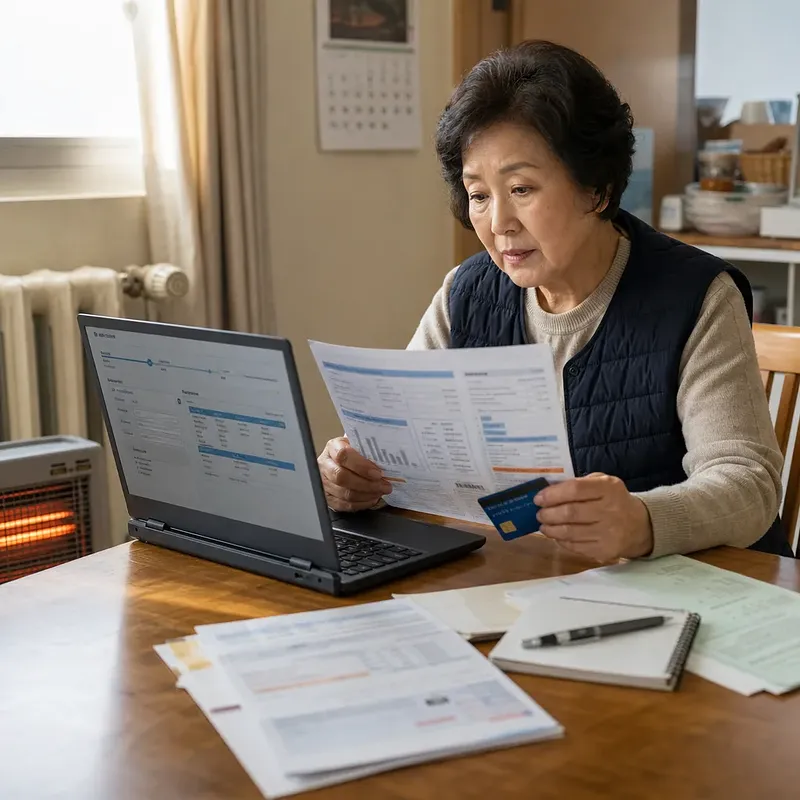
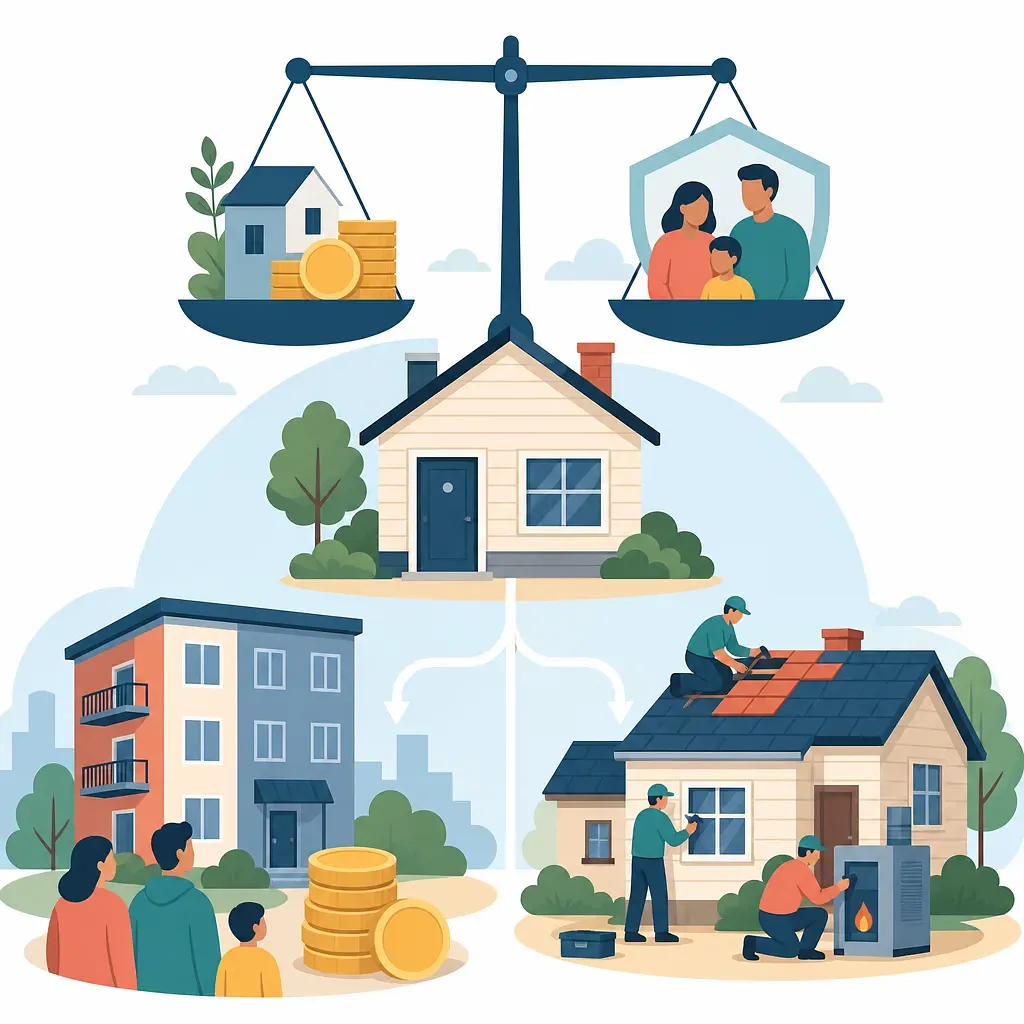
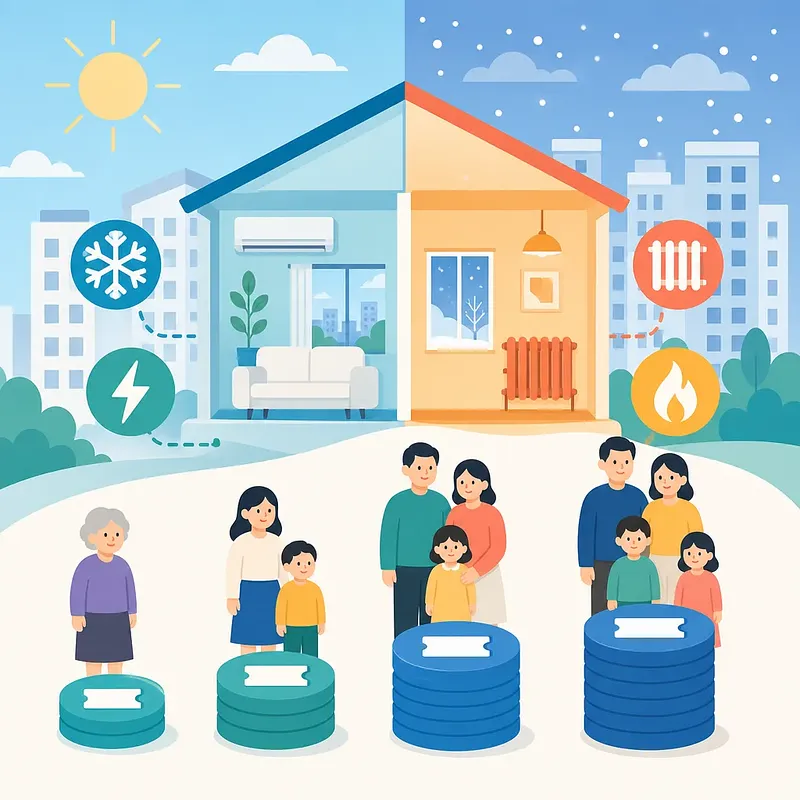
The illustration represents rent assistance and repair support for owner-occupied homes.

Key points

  • Households qualify for the 2026 Housing Benefit if their recognized income is at most 48% of the standard median income.
  • The monthly recognized income limit is KRW 1,230,834 for a one-person household and KRW 3,117,474 for a four-person household.
  • The rental benefit is calculated based on the lower of the standard rent and actual rent, and an out-of-pocket contribution may apply depending on income level.
  • Instead of cash, owner-occupier households receive minor, medium, or major repairs based on the results of a home inspection.
  • Applications for the Housing Benefit can be submitted year-round through Bokjiro or at the eup, myeon, or dong Administrative Welfare Center for the applicant’s registered address.

The 2026 housing benefit is part of the National Basic Livelihood Security System, which supports rent for low-income households or repairs deteriorated parts of owner-occupied homes. Eligibility is determined based not only on monthly wages but on recognized income, which converts both income and assets into a combined amount.

The amounts below are based on the eligibility criteria and minimum benefit levels effective from January 1, 2026. The standard rent or repair limits are not fixed amounts guaranteed to be paid, and the assistance provided varies according to the results of household and housing inspections.

2026 Housing Benefit Eligibility and Income Criteria

The basic eligibility criterion for housing benefit is that the household’s recognized income must be at most 48% of the standard median income. The income or assets of persons obligated to provide support are not considered in the housing benefit eligibility criteria, but the applicant household’s own income, assets, and actual residential status are investigated.

Monthly Recognized Income Limits by Household Size

Household size 48% of the 2026 standard median income
1 person KRW 1,230,834
2 people KRW 2,015,660
3 people KRW 2,572,337
4 people KRW 3,117,474
5 people KRW 3,627,225
6 people KRW 4,106,857

The amounts in the table are not benefit amounts but the monthly recognized income ceilings used to determine eligibility. Households of 7 or more people must separately check the official standard applicable to their household size.

How Is Recognized Income Calculated?

Recognized income is the sum of the following two items.

Recognized income = assessed income + income-converted value of assets

  • Assessed income: The amount calculated by applying deductions recognized under the system to earned income, business income, property income, public transfer income, and other income
  • Income-converted value of assets: The amount calculated by accounting for the basic asset allowance and recognized debts in assets such as homes, land, rental deposits, savings, and automobiles, and then applying the conversion rate

Accordingly, even if monthly wages are below the eligibility threshold, assets may cause the household to exceed the threshold. Conversely, earned-income deductions and other adjustments may result in recognized income being lower than the applicant expected. The exact amount is determined through a review of official records and an investigation by the relevant city, county, or district.

Standard Rent and Payment Method for Renter Households

Eligible households renting and residing in another person’s home receive rental benefits. The amount of assistance is calculated by considering the area of residence, household size, actual rent, and recognized income together.

2026 Standard Rent

The following amounts are monthly ceilings, in KRW.

Grade Area classification 1 person 2 people 3 people 4 people 5 people 6 people
Grade 1 Seoul 369,000 414,000 492,000 571,000 594,000 703,000
Grade 2 Gyeonggi·Incheon 300,000 335,000 397,000 459,000 480,000 568,000
Grade 3 Metropolitan cities·Sejong City·Special-status cities outside the Seoul metropolitan area 247,000 275,000 327,000 377,000 397,000 470,000
Grade 4 Other areas 212,000 237,000 281,000 325,000 340,000 403,000

For households of 7 people, the standard rent for 6 people applies. For households of 8–9 people, 10% is added to the standard rent for 6 people, with an additional 10% added for every subsequent increase of 2 household members.

When Actual Monthly Rent Is Lower Than the Standard Rent

The rental benefit does not automatically pay the full standard rent. In principle, it is calculated based on the lower of the standard rent and the actual rent.

For example, although the standard rent for a one-person household in Seoul is KRW 369,000 per month, if the verified actual rent is KRW 300,000 per month, KRW 300,000 becomes the starting point for the calculation. Conversely, if the actual rent is KRW 450,000, the standard rent of KRW 369,000 applies as the ceiling. If recognized income is more than the livelihood benefit eligibility threshold, a household contribution may be deducted, so the actual benefit may be lower.

Actual rent reflects not only monthly rent but also the rental deposit converted into a monthly amount at a specified rate. Maintenance fees may be investigated separately from the rent specified in the lease agreement.

Key Points in Calculating Rental Benefits

  • If recognized income is at most the livelihood benefit eligibility threshold, the benefit is calculated primarily based on the lower of the standard rent and actual rent.
  • If recognized income is more than the livelihood benefit eligibility threshold, a household contribution based on the difference between recognized income and the livelihood benefit threshold is reflected.
  • Additional verification may be conducted depending on actual occupancy, the validity of the lease agreement, and the relationship between the landlord and tenant.
  • Residents of public rental housing may also be eligible, but payment outcomes vary depending on rental data and how other housing assistance is taken into account.

Repair and Maintenance Benefit Criteria for Owner-Occupier Households

Eligible households residing in their own homes generally do not receive rent payments in cash. Instead, the deterioration of the home is assessed based on a housing inspection by the Korea Land and Housing Corporation or another relevant organization, and repairs are supported under the categories of minor, medium, or major repairs.

2026 Repair Scope and Limits

Category Typical scope of repairs Repair cycle Repair limit
Minor repairs Relatively light repairs, such as improving finishing materials 3 years KRW 7.95 million
Medium repairs Repairs focused on functional improvements, such as windows, insulation, and heating 5 years KRW 13.99 million
Major repairs Repairs to structures and major facilities, such as roofs, columns, bathrooms, and kitchens 7 years KRW 20.06 million

The repair limit is not paid to the applicant as a lump sum in cash. Repairs are carried out according to the condition of the home identified during the on-site inspection, repair priorities, and the actual scope of construction.

Support Rates by Income Bracket

Recognized income bracket Percentage of repair limit applied
At most the livelihood benefit eligibility threshold 100%
More than the livelihood benefit threshold and at most 35% of the standard median income 90%
More than 35% and at most 48% of the standard median income 80%

For example, even if the home is assessed as requiring major repairs, if the household’s recognized income is more than 35% of the standard median income, assistance is provided within 80% of the major repair limit. The actual construction cost and scope are determined based on the inspection results.

For homes occupied by persons with disabilities or older adults, the need to install accessibility facilities may also be reviewed. However, additional assistance is not automatically provided to every household; the eligibility requirements and on-site inspection criteria must be met.

How to Apply for the 2026 Housing Benefit

New applications for housing benefit are not restricted to a particular application period and may be submitted year-round. Because the application date may affect benefit calculations, those who may be eligible should apply through an official channel for confirmation rather than assuming the review outcome in advance.

Who Can Apply

  • The eligible beneficiary
  • A household member, relative, or other related person
  • A public official responsible for social welfare who determines that an application is necessary and submits an application ex officio after obtaining consent

Online applications may be restricted depending on the household’s circumstances or whether someone is applying on the household’s behalf. If online processing is difficult, applicants may use the eup, myeon, or dong Administrative Welfare Center for their registered address.

Application Channels

  1. Go to the online application process from the housing benefit information page on Bokjiro.
  2. Alternatively, visit the eup, myeon, or dong Administrative Welfare Center with jurisdiction over the registered address.
  3. Submit the application and documents related to income, assets, and the lease.
  4. Undergo an income and asset investigation and a housing inspection by the relevant city, county, or district.
  5. Receive notification of the eligibility decision and benefit details.

Existing beneficiaries generally do not need to reapply every year. However, matters affecting benefits, such as moving in or out, changes in household members, changes to the lease agreement, or changes in income and assets, must be reported to the competent authority.

Documents to Prepare When Applying

Additional documents may be required depending on the household’s circumstances and application method, but the following materials are generally prepared.

  • Identification
  • Application for the provision or modification of social security benefits
  • Income and asset declaration
  • Consent form for the provision of financial information and other data
  • Lease agreement or documentation confirming a loan-for-use arrangement
  • Copy of the bankbook for the account into which benefits will be paid
  • Documents verifying income, assets, and debts
  • When applying through a representative, a power of attorney and identity verification documents for both the applicant and representative

Documents that can be verified through the joint use of administrative information may not need to be submitted separately. Conversely, if the lease terms differ from official records or the income and asset situation is complex, supplementary documents such as records of deposit transfers or proof of debt may be requested.

Investigation and Decision Process After Applying

Once an application is received, the city, county, or district investigates income and assets, while the organization responsible for the housing inspection verifies actual occupancy and housing conditions.

Items Investigated for Renter Households

  • Whether the applicant household actually resides in the home
  • Whether the deposit and monthly rent in the lease agreement match the facts
  • Housing type, facility conditions, and relationship with the landlord
  • Whether rent has been paid and whether the agreement is valid

Items Investigated for Owner-Occupier Households

  • Structural safety and the condition of facilities and finishes
  • Degree of deterioration of the roof, walls, windows, heating, water supply, drainage, and other elements
  • Repair items needed to classify the work as minor, medium, or major repairs
  • Need to install accessibility facilities for persons with disabilities or older adults

If applicants do not cooperate with a home visit or fail to submit necessary documents, the decision may be delayed or it may be difficult to calculate the benefit. When contacted to schedule an inspection, it is advisable to prepare verification materials such as information about the actual occupants, contact details, and the original lease agreement.

Points to Check Before Applying

  • Do not compare only monthly wages; check recognized income, including savings, deposits, real estate, automobiles, and recognized debts.
  • The standard rent is not the same as the maximum monthly rental assistance that can be received.
  • Loan-for-use arrangements involving a family-owned home, jointly owned homes, and rent-free housing may have different payment methods from ordinary leases.
  • The repair and maintenance benefit for owner-occupier households does not provide the desired construction costs in cash.
  • If planning to move or change the lease agreement, check with the competent Administrative Welfare Center about when to report the benefit-related change and which documents are required.

Apply now

Apply for Housing Benefit on Bokjiro

Households with recognized income at or below 48% of the median income in 2026 may apply year-round, and final eligibility is determined through an investigation of income, assets, and housing. Prepare a lease agreement, a copy of your bankbook, a consent form for the provision of financial information, and documents verifying income and assets. If applying online is difficult, visit the administrative welfare center for your registered address.

You are leaving for an external site that Injoys does not operate. Please re-check eligibility, dates, and amounts on that institution's own notice.

Go to the official page

Opens in a new window.

Advertisement

Images

The illustration represents rent assistance and repair support for owner-occupied homes.
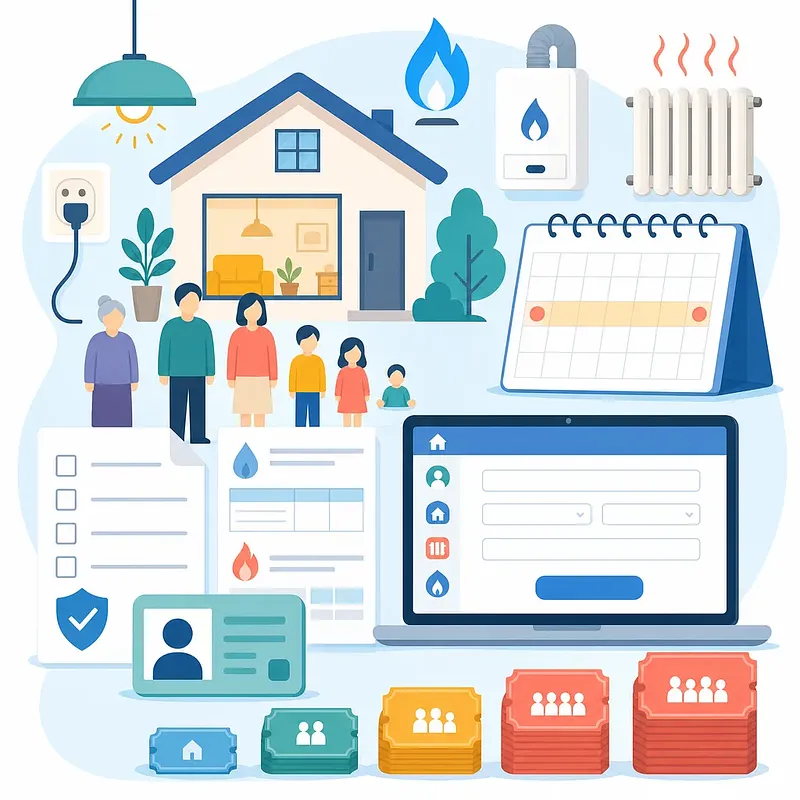
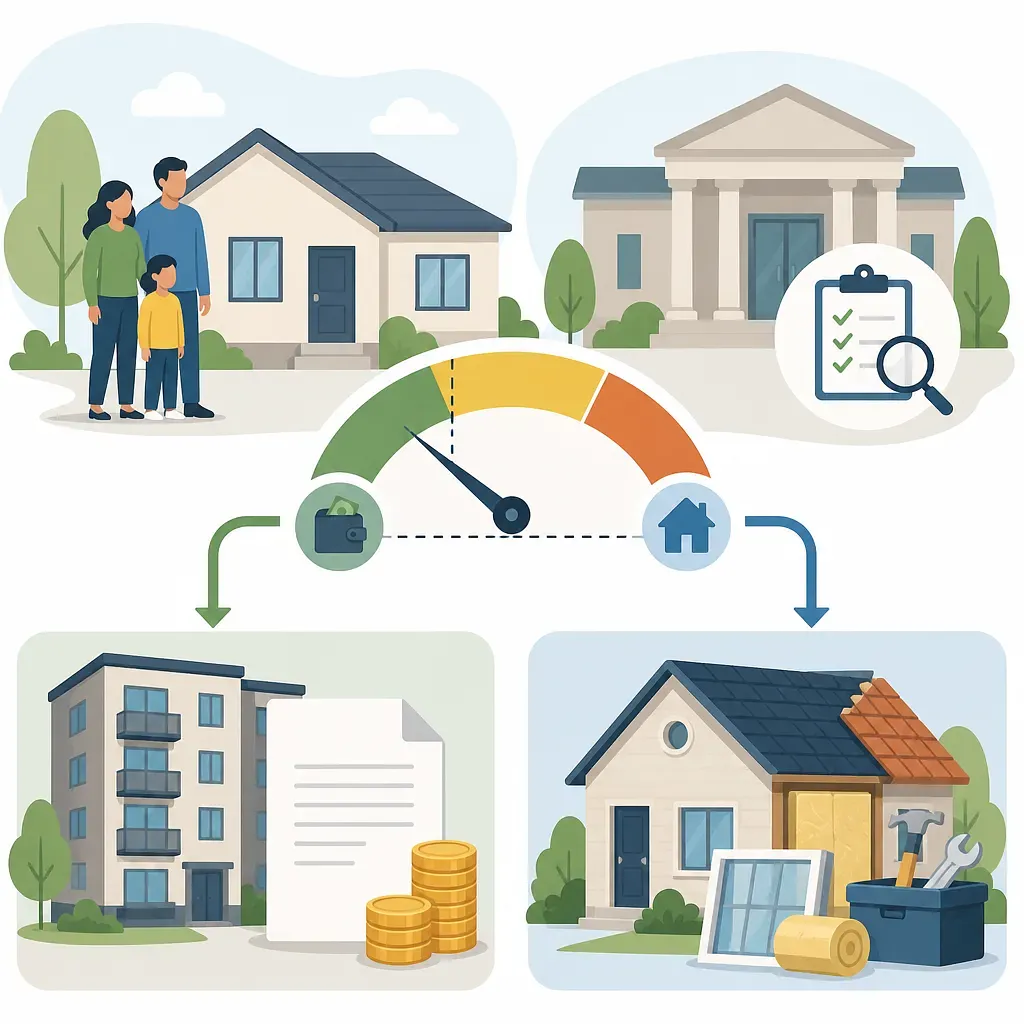
The graphic illustrates income assessment, rental assistance, and home repair support for housing benefits.

FAQ

What is the maximum monthly income allowed to apply for housing benefits in 2026?

Eligibility is determined not by salary alone, but by recognized income, which is calculated based on income and assets. In 2026, the monthly limits are KRW 1,230,834 for a one-person household, KRW 2,015,660 for a two-person household, KRW 2,572,337 for a three-person household, and KRW 3,117,474 for a four-person household.

Am I ineligible for housing benefits if my parents or children have a high income?

The family support obligation criterion does not apply to housing benefits. However, the income, assets, and living arrangements of household members included in the applicant household are subject to review, so the outcome may vary depending on the household's actual composition.

If the actual monthly rent is lower than the standard rent, which amount is used?

The benefit is calculated based on the lower of the standard rent and the actual rent. If recognized income exceeds the eligibility threshold for livelihood benefits, the beneficiary's required contribution is applied, so the actual payment may be lower than that amount.

Can tenants with a jeonse lease also apply for housing benefits?

Tenants with a jeonse lease may also apply if they meet the income and residency requirements. The jeonse deposit is converted into a monthly rent amount using the prescribed method and reflected in the calculation of actual rent.

If I own my home, do I receive repair costs in cash?

As a general rule, the repair limit is not paid as a lump sum in cash. After an on-site inspection determines the home's degree of deterioration, the necessary work is provided within the scope of minor, moderate, or major repairs.

Is there an application period or deadline for housing benefits?

New applications for housing benefits can be submitted year-round, so there is no fixed annual application deadline. However, since the timing of the application may affect benefit calculations, anyone who may be eligible should check through Bokjiro or the administrative welfare center serving their registered address.

Where can I apply for housing benefits?

You can apply online through Bokjiro or in person at the eup, myeon, or dong administrative welfare center serving your registered address. If online processing is restricted due to household type, an application by proxy, or other circumstances, you must apply in person.

Do I need to report a move even if I am currently receiving housing benefits?

If your address, deposit, monthly rent, or landlord changes due to a move, you must report the change because the benefit amount and the authority responsible for payment may change. It is advisable to prepare the new lease agreement and documents related to your change of address and confirm the requirements with the administrative welfare center with jurisdiction.

Sources

Data formats

This content is available in several machine-friendly formats.

Data-only languages (machine translated, files only)

Indonesian JSON MD Portuguese JSON MD Chinese (Traditional) JSON MD Deutsch JSON MD

Reuse & AI usage

Search indexing and AI citation with attribution are welcome. See the license policy for details.

CC BY · License

Corrections · Improvements · Feedback Let us know what's wrong or could be better and we'll review it. No login required.

Comments (0)

Sign-in required

Sign in with your Google account to like and comment.

Be the first to comment.

Related content