Battle of Cheoin Fortress: 1232 Resistance and Results
At Cheoin Fortress in 1232, residents of Cheoin-bugok fought against Mongol forces. The Mongol commander's death led to the end of the second invasion, but the records must be distinguished when discussing whether Kim Yun-hu himself fired the shot and when Cheoin was elevated to county status.
The resistance at Cheoin Fortress took place in the present-day Yongin area during the second Mongol invasion in 1232.
The resistance of Cheoin-bugok residents and the death of Mongol commander Salitai led to the Mongol withdrawal.
Goryeosa describes Kim Yun-hu firing an arrow but also records that he said he had no bow or arrows.
The second Mongol invasion ended, but the war between Goryeo and the Mongols continued afterward.
Cheoin's elevation to county status should not be treated as a confirmed reward granted immediately after the battle.
The Battle of Cheoin Fortress was fought in 1232, when residents of Cheoin Bugok resisted the second Mongol invasion. The monk Kim Yun-hu also took part in the defense from inside the fortress. It is remembered as a victory by local residents that led to the Mongol withdrawal after the death of their commander.
The information in this article was checked in October 2026 against Kim Yun-hu’s biography in the 『Goryeosa』.
Why did the Mongol army advance as far as Cheoin Fortress?
The Mongol army advanced to Cheoin Fortress while renewing its pressure on Goryeo. Goryeo had faced its first large-scale Mongol invasion in 1231. Even after a peace agreement, Mongol demands for tribute and hostages continued.
In 1232, the Goryeo court moved the capital to Ganghwa Island. It chose to resist the Mongol army with the sea between them. The Mongols objected to the move and invaded again.
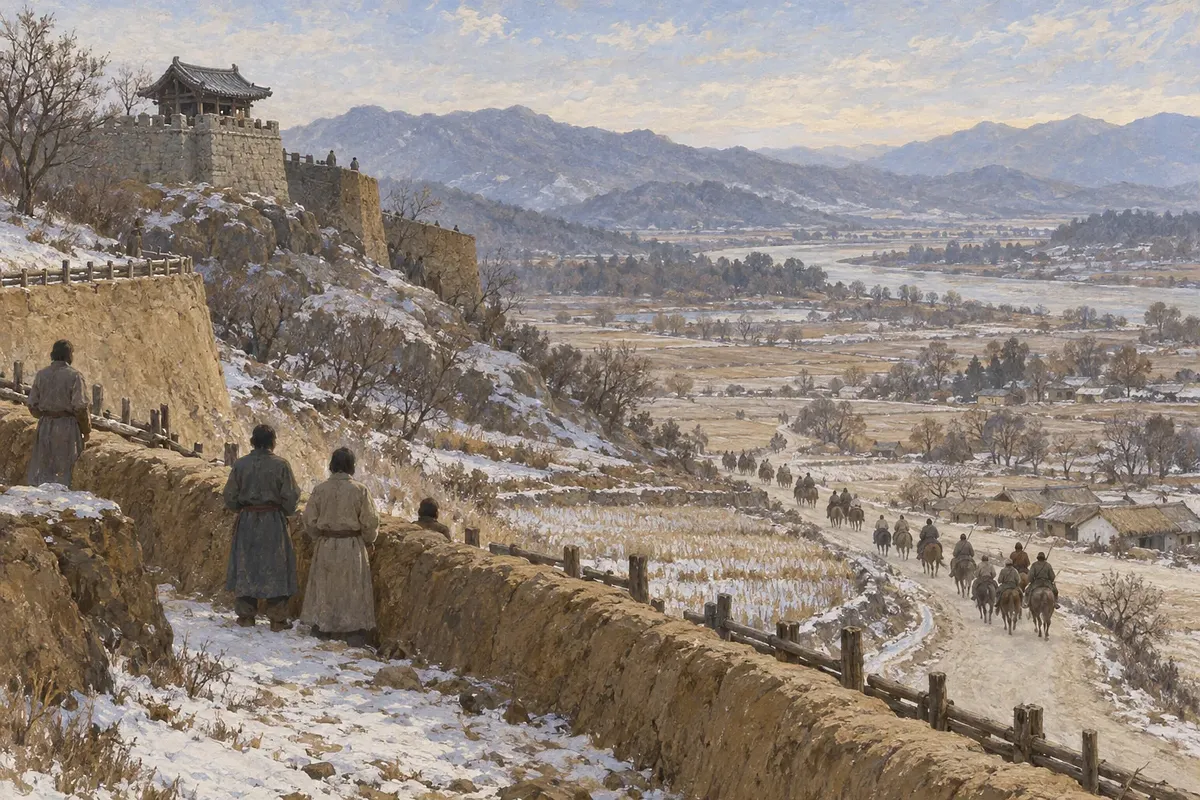
The main Mongol force, led by Salitai, passed through Gaegyeong and moved south. After meeting resistance in Gwangju, it headed toward Cheoin Fortress. Salitai is also called Saryetap in Korean historical sources.
Under what conditions did the residents resist?
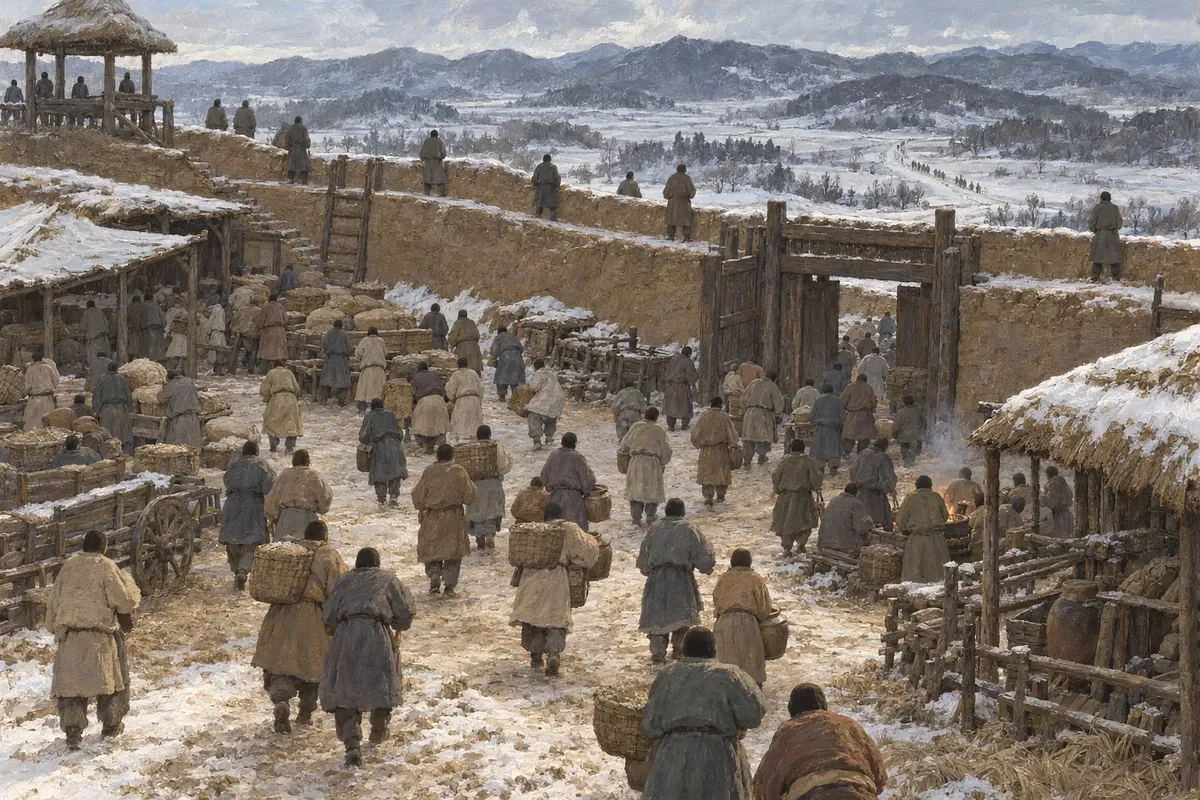
Cheoin Fortress was a defensive stronghold where nearby residents gathered to escape the invasion. Ipbo refers to the practice of seeking refuge in a fortress or on an island. At Cheoin Fortress, the displaced residents joined the fight to defend it.
At the time, Cheoin was an area designated as a bugok. A bugok was a local administrative area managed separately from ordinary counties and districts. Its residents received less favorable treatment than residents of ordinary counties and districts. That fact alone, however, does not mean all the residents were slaves.
Kim Yun-hu was a monk living at nearby Baekhyeonwon. The 『Goryeosa』 says he too entered Cheoin Fortress to escape the war. His contribution to the defense was later recognized, and he went on to serve as a military officer.
Term | Meaning in this battle
Cheoin Bugok | The local area where the residents who joined the defense lived
Cheoin Fortress | The fortress where residents took refuge and organized their defense
Fortress defense | Fighting an outside attack while remaining inside a fortress
Monk commander | A monk who led military activities
Timeline from invasion to withdrawal
The battle took place in the year Goryeo moved its capital to Ganghwa Island and the Mongols invaded again. The months below follow the lunar calendar used in historical records. The dates have not been converted to the modern solar calendar.
Period | Event | Source checked
1231 | The first large-scale Mongol invasion of Goryeo | Our History Net, “The Mongol Invasions and Kim Yun-hu’s Activities”
July 1232 | The Goryeo court moved the capital to Ganghwa Island | Our History Net, Korean History Chronology
August 1232 | The Mongols ordered Salitai to attack Goryeo | Our History Net, Korean History Chronology
November 1232 | The Mongol army attacked Gwangju but failed to break through its defenses | Our History Net, Korean History Chronology
December 1232 | Salitai was killed at Cheoin Fortress | Our History Net, Korean History Chronology
After Salitai’s death | The Mongol army withdrew, ending the second invasion | Our History Net, Korean History Chronology
1235 | The third Mongol invasion began | 『New Edition of Korean History』, vol. 20
The Cheoin Fortress History Education Center gives the battle date as the 16th day of the 12th lunar month. The Our History Net account says it occurred around the 12th month. When citing the date, it is important to retain the level of precision given by the source. Cheoin Fortress History Education Center permanent exhibition
The turning point was the death of the Mongol commander
The turning point came when Salitai, who was attacking the fortress, was struck by an arrow and killed. The Mongol army withdrew after losing its overall commander. The residents’ defense had affected the movements of the entire invading force.
There are not enough records, however, to reconstruct the battle in detail. The size of either force and the exact location from which the arrow was fired are difficult to establish. Specific ambush scenes or command orders should not be added as though they were facts.
The battle’s outcome and the wider war
The immediate result was the end of the second Mongol invasion. The residents’ defense of the fortress led to the Mongol withdrawal. But the war between Goryeo and the Mongols did not end.
The Mongols invaded Goryeo again in 1235. The victory in this battle must therefore be distinguished from the end of the long war. The later invasion is also documented in the account of resistance to the Mongols in the 『New Edition of Korean History』. 『New Edition of Korean History』, vol. 20, Resistance in the Northwestern Region
Kim Yun-hu was offered the post of sangjanggun. He declined the substantial reward, and the court appointed him seopnangjang. The 『Goryeosa』 says he later took part in the defense of Chungju as well.
Records and interpretation
Kim Yun-hu’s contribution must be considered separately from the identity of the person who fired the arrow. His biography contains accounts that appear to conflict. What the record says and how it is interpreted can be distinguished as follows.
What the 『Goryeosa』 says
Kim Yun-hu’s biography in volume 103 of the 『Goryeosa』 says he shot Salitai. It then records that Kim Yun-hu credited someone else with the achievement. It also includes his words when he declined the reward.
I had no bow or arrows during the fighting, so how dare I accept a great reward I did not earn?
These words are recorded in Kim Yun-hu’s biography in volume 103 of the 『Goryeosa』.
This statement must be considered when assessing whether he fired the arrow himself. It does not, however, identify anyone else as the archer. An explanation needs to preserve both the earlier and later parts of the source. 『Goryeosa』, vol. 103, biography of Kim Yun-hu
What historical accounts commonly emphasize
Major historical accounts discuss both Kim Yun-hu’s role and the residents’ resistance. They differ, however, in how they describe whether Kim Yun-hu fired the arrow himself. These differences should not be treated as a single conclusion shared by all scholars.
Account | How it describes Kim Yun-hu’s role
Encyclopedia of Korean Culture | Describes Kim Yun-hu firing the arrow and emphasizes the support of residents and monks
Our History Net, Korean History Chronology | Considers the record of his declining the reward and suggests he encouraged and commanded the residents
What remains difficult to determine
The identity of the person whose arrow struck Salitai should be described with care. It is also difficult to establish why Kim Yun-hu declined credit. More evidence is needed to determine whether his words expressed modesty or reflected a difference in what he actually did.
The residents’ defense of the fortress can be described separately. Uncertainty about whether one person fired the arrow does not erase the group’s resistance. These are claims about different things.
Was Cheoin promoted to hyeon status immediately after the battle?
It is difficult to say definitively that Cheoin was promoted to hyeon status immediately after the battle. Our History Net says the exact date of the promotion is unknown. It also presents the possibility that the promotion was a reward for the victory as a conjecture.
Other records describe administrative changes in the early Joseon period. The geography section of the 『Annals of King Sejong』 says a hyeollyeong was appointed in Cheoin in the sixth year of King Taejo’s reign. The Digital Yongin Cultural Encyclopedia identifies 1397 as the year Cheoin was promoted to hyeon status. The promotion and the appointment of a hyeollyeong therefore need to be examined separately.
Issue | What the record or account says | Limit when interpreting it
Relationship between the victory and Cheoin’s promotion to hyeon status | Our History Net suggests the promotion may have been a reward | It does not establish the exact date or a direct causal relationship
Appointment of a hyeollyeong | The geography section of the 『Annals of King Sejong』 records the appointment in the sixth year of King Taejo’s reign | The appointment alone cannot fully explain Cheoin’s earlier administrative status
Account of promotion in 1397 | Given by the Digital Yongin Cultural Encyclopedia | Must be assessed separately from the claim that promotion followed immediately after the battle
Terms for administrative changes may look alike even when the wording of the underlying records differs. Combining the promotion and the appointment of an official into one date obscures that difference. This is a problem when connecting the battle’s achievements to later administrative history. 『Annals of King Sejong』, geography section, Yongin-hyeon, Digital Yongin Cultural Encyclopedia, “Cheoin Fortress”
What this battle means today
The battle shows the history of Goryeo’s wars through the role of local residents. Bugok residents, who received less favorable treatment, appear as active defenders. The background of the monk Kim Yun-hu shows the variety of people who joined the resistance.
It also offers a way to examine how historical achievements are recorded. Kim Yun-hu’s biography focuses on him. Accounts of the battle also reconstruct the role of the resident community. Reading the two perspectives together helps distinguish an individual’s contribution from the group’s actions.
Frequently asked questions
Where did the battle take place?
It took place around present-day Agok-ri in Cheoin-gu, Yongin, Gyeonggi Province. Remains of Cheoin Fortress, which residents used as a defensive stronghold, survive there. The site’s present appearance alone cannot reconstruct the battle as it took place.
Was Kim Yun-hu a general from the start?
The 『Goryeosa』 introduces Kim Yun-hu as a monk living at Baekhyeonwon. He entered Cheoin Fortress to escape the war and was later recognized for his contribution. He subsequently served as a military officer and took part in the defense of Chungju.
Are Salitai and Saryetap different people?
In sources describing this battle, the names refer to the same Mongol commander. Depending on the source, he is called Salitai or Saryetap. The difference in names should not be taken to mean they were separate commanders.
Were all bugok residents slaves?
Their less favorable treatment compared with residents of ordinary counties and districts is not enough to establish that. Bugok is a term connected to local administrative organization. Accounts should avoid equating all Cheoin Bugok residents with slaves.
Did the Mongol invasions end completely after the victory?
The second invasion ended in 1232. The Mongols invaded again in 1235. The end of one invasion is different from the end of the long war.
Can we say definitively that Kim Yun-hu fired the arrow?
It is possible to say that the 『Goryeosa』 describes him doing so. But the same record also contains his statement that he had no bow or arrows. Both accounts must be considered before concluding that he fired the arrow himself.
 Injoys