The Byeolmuban was a temporary military organization that Goryeo formed at Yun Gwan's suggestion after losing a battle against the Jurchens in 1104. With its cavalry reinforced, the Goryeo army built nine fortresses on the northeastern frontier during Yejong's reign. As the burden of defending the fortresses grew, Goryeo returned them to the Jurchens in 1109.
The years and lunar dates were checked in November 2026 against the Goryeosa in the National Institute of Korean History's Korean History Database.
Why the Byeolmuban Was Formed in 1104
Yun Gwan believed that Goryeo's army, made up mainly of infantry, had trouble fighting the mounted Jurchen forces. At the time, the Wanyan clan (完顔部) of the Jurchens was extending its influence into Jurchen villages that had been under Goryeo's influence. In 1104, an army led by Im Gan was defeated near Jeongju. Yun Gwan took the field next but also withdrew after making peace with the Jurchens.
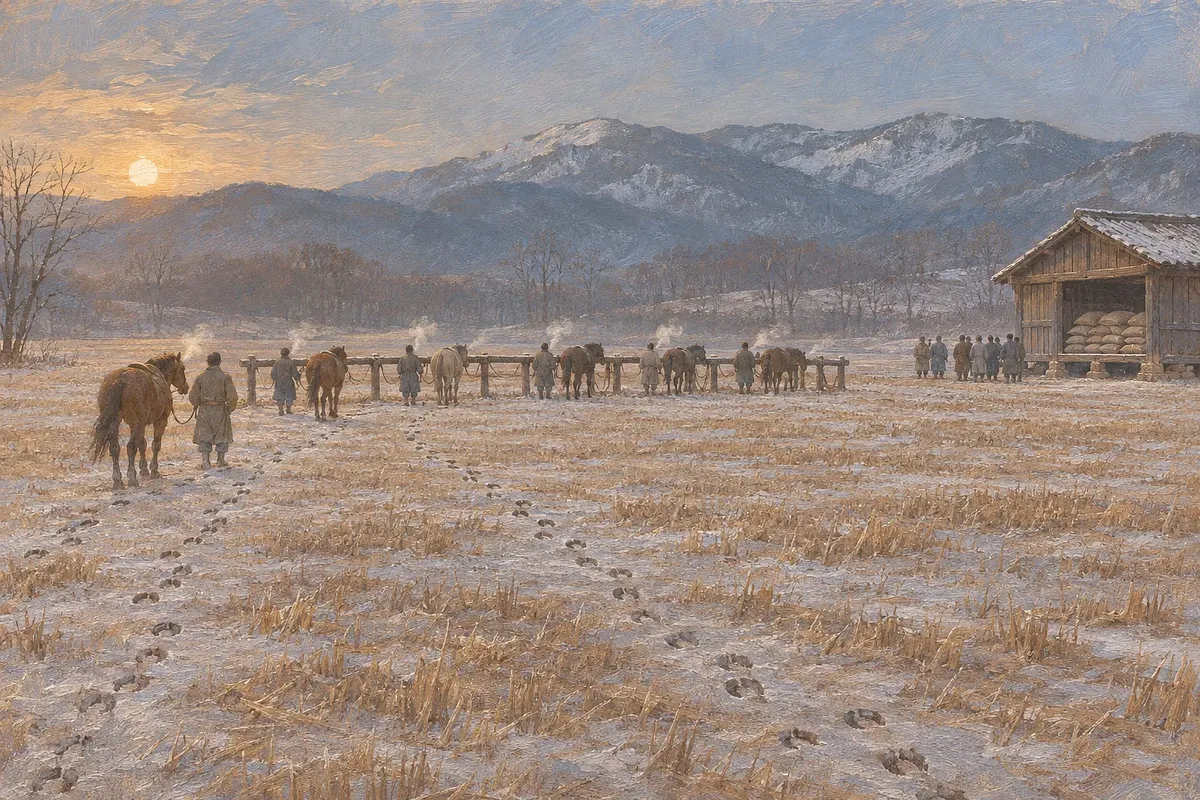
Yun Gwan's biography in volume 96 of the Goryeosa records the proposal he made to Sukjong after the defeat. Yun Gwan believed the soldiers needed time to rest and that men should be trained for the next campaign. Sukjong accepted the proposal, and Goryeo trained its newly organized troops and gathered provisions.
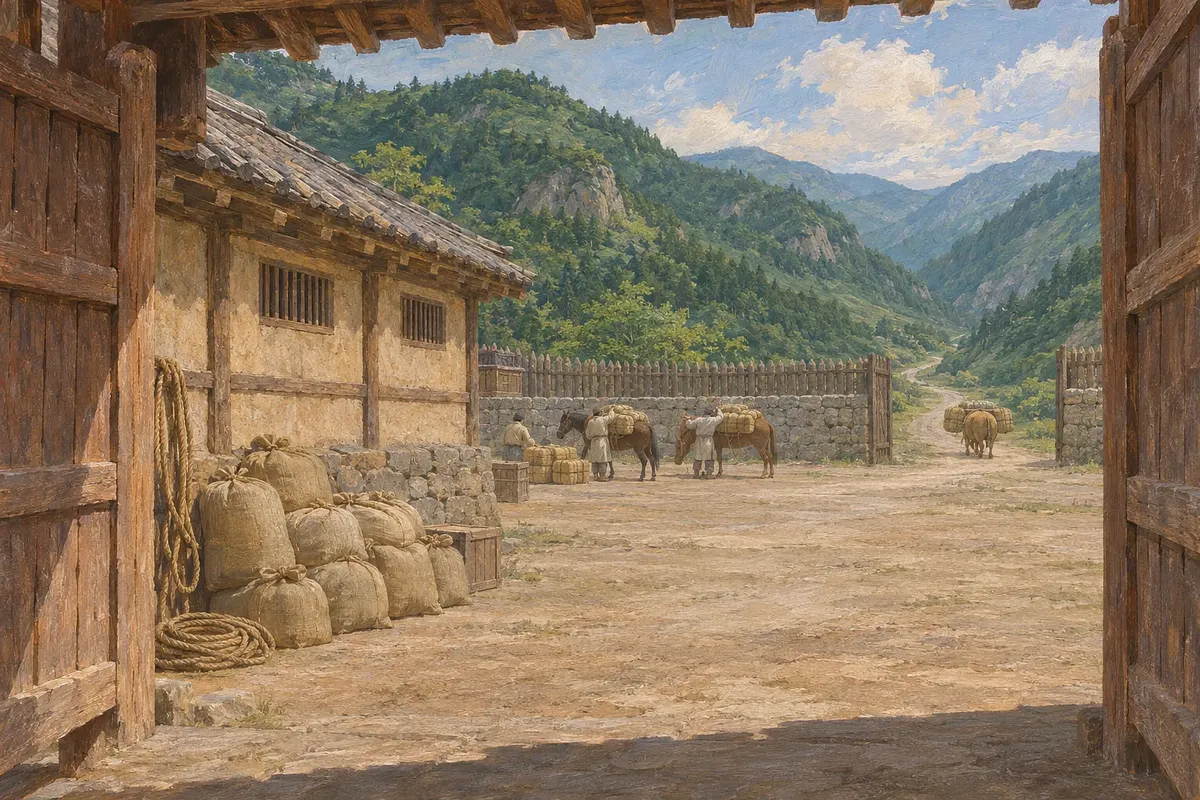
In the seventh lunar month of 1109, with King Yejong’s approval, Goryeo withdrew from the nine northeastern fortresses and returned them to the Jurchen.AI-generated image
Differences Between the Singigun, Sinbogun, and Hangmagun
In the Byeolmuban, men who owned horses became cavalrymen, and monks who were selected served as soldiers. Troops were recruited from among officials, local residents, merchants, and monks at Buddhist temples. The Military Treatise in volume 81 of the Goryeosa also preserves the names of the units into which the infantry was divided.
| Unit | Composition | Assignment criteria |
|---|---|---|
| Singigun | Cavalry who fought on horseback | Men eligible for mobilization who owned horses were assigned to this unit. |
| Sinbogun | Infantry who fought on foot | This was one of the units for men who did not own horses. |
| Hangmagun | Troops made up of Buddhist monks | Monks were selected from Buddhist temples to serve as soldiers. |
| Dotanggun, Gyeonggunggun, Jeongnogun, and Balhwagun | Units listed separately from the Sinbogun | The Military Treatise records that men without horses were also assigned to these units. |
Family Circumstances Considered When Recruiting for the Singigun
In 1106, Yejong accepted a proposal to consider the family circumstances of men selected for the Singigun and exempt them from service or reduce their service accordingly. Among those O Yeonchong proposed exempting were only sons whose parents were at least 70 years old. If 3 or 4 people from the same household were serving, 1 of them was to have his service reduced.
Timeline of Sukjong's Reorganization and Yejong's Campaign
Sukjong was the king who reorganized the army, and Yejong was the king who put Yun Gwan in charge of another campaign. In the 12th lunar month of 1107, the Goryeo army began building fortresses on the northeastern frontier. Construction continued through the 7th lunar month of 1109, by which point there were nine fortresses.
| Date | What happened | Sources and commentary |
|---|---|---|
| 1104, the 9th year of Sukjong's reign | Im Gan and then Yun Gwan fought the Jurchens, but both were defeated. | Yun Gwan's biography in the Goryeosa; “Yun Gwan's Establishment of the 9 Fortresses,” Our History Net |
| 12th lunar month of 1104 | Sukjong accepted Yun Gwan's proposal and reorganized the army. | Military Treatise, Goryeosa, volume 81 |
| 12th lunar month of 1107, the 2nd year of Yejong's reign | Yun Gwan and O Yeonchong set out on campaign and began building fortresses at Ungju, Yeongju, Bokju, and Gilju. | “Yun Gwan's Establishment of the 9 Fortresses,” Our History Net |
| 1108, the 3rd year of Yejong's reign | Fortresses were also built at Hamju, Gongheomjin, and other sites. | “Yun Gwan's Establishment of the 9 Fortresses,” Our History Net |
| 27th day of the 6th lunar month of 1109, the 4th year of Yejong's reign | Jurchen envoys including Yobul met with Yejong and asked him to return the nine fortresses. | Annals of Yejong, Goryeosa, volume 13 |
| 2nd and 3rd days of the 7th lunar month of 1109 | On the 2nd, Goryeo officials supported returning the fortresses. On the 3rd, Yejong conveyed his decision to the envoys. | Annals of Yejong, Goryeosa, volume 13 |
| 18th day of the 7th lunar month of 1109 | The Jurchen chiefs pledged to pay tribute, and Goryeo withdrew its military supplies, starting with Gilju. | Annals of Yejong, Goryeosa, volume 13 |