Skip to content
Injoys
Case Study

Battle of Guju Fortress 1231: Mongol Siege and Outcome

The Goryeo forces at Guju Fortress repelled repeated Mongol attacks in 1231. The battle ended the following year when the court made peace and the defenders surrendered by royal order.

Listen or read this article

17:25

Listen, or read the text only.

Battle of Guju Fortress 1231: Mongol Siege and Outcome

Kokoro 82M AI-generated voice 18 min read

0:00 17:25

Advertisement

Download audio

File name
guju-fortress-battle-1231-mongol-siege-process-and-outcome-en.mp3
Format
MP3 (audio/mpeg)
Duration
17:25
File size
12 MB
Engine
Kokoro 82M

This audio was generated by AI.

You may download and use it freely for personal use.

Advertisement

Battle of Guju Fortress 1231: Mongol Siege and Outcome

12 min read

Battle of Guju Fortress 1231: Mongol Siege and Outcome
The Goryeo forces at Guju Fortress repelled repeated Mongol attacks in 1231. The battle ended the following year when the court made peace and the defenders surrendered by royal order.
The Battle of Guju Fortress in 1231 was a fortress defense against Mongol forces.
Park Seo assigned Kim Jung-on, Kim Gyeong-son and others to defend different sectors.
The Goryeo forces adapted their responses to the methods of attack and repeatedly repaired collapsed fortress walls.
Guju Fortress avoided capture but surrendered by royal order in 1232.
The successful defense of Guju Fortress did not end the Mongol invasion of Goryeo as a whole.
In 1231, Bak Seo, Kim Gyeong-son, and others at Guju Fortress resisted a Mongol siege. They prevented its capture by assigning defensive sectors to different units and repairing the walls. Although they surrendered the following year under royal orders, their defense is remembered for withstanding repeated siege attacks.
This article follows the biography of Bak Seo in Goryeosa, published on Our History Net, and was checked in November 2026.
The Difference Between the Battle of Guju Fortress and the Great Victory at Gwiju
The Battle of Guju Fortress was a defensive battle against Mongol forces in 1231. On Our History Net, it can also be found under the name Battle of Gwiju Fortress. It is separate from the Great Victory at Gwiju in 1019, when Gang Gam-chan defeated the Khitan army.
Category | Battle of Guju Fortress | Great Victory at Gwiju Main year | 1231, with the fighting ending in 1232 | 1019 Opponent | Mongol forces | Khitan forces Main commanders | Bak Seo, Kim Gyeong-son, Kim Jung-on, and others | Gang Gam-chan and others Main events | Defending the fortress against repeated siege attacks | Defeating the Khitan army that invaded Goryeo How to interpret the outcome | Consider both the successful defense and the later surrender | Recognize the victory over the Khitan army
The distinction between these events is based on “Bak Seo” on Our History Net and the Great Victory at Gwiju chronology in the Korean History Database. Our History Net, “Bak Seo”, Korean History Database, Great Victory at Gwiju Chronology.
The Mongol Invasion and the Troops Gathered at Guju Fortress
Troops gathered at Guju Fortress as Mongol forces advanced south. The Mongols invaded Goryeo in the 8th month of 1231. They cited the killing of the Mongol envoy Jeogoyeo in 1225 as their justification for the invasion.
“The Mongol Invasions of Goryeo” on Our History Net also explains the broader background. It presents an interpretation linking the invasion of Goryeo to Mongol preparations to conquer the Jin dynasty. The envoy’s killing alone therefore cannot fully explain the causes of the invasion. Our History Net, “The Mongol Invasions of Goryeo”.
Guju was an inland military stronghold in northwestern Goryeo. Bak Seo, the military commander of the Northwestern Region, established his defensive headquarters there. Kim Gyeong-son and others who had withdrawn from Jeongju joined troops from nearby areas.
Commander or troops | Role at Guju Fortress Bak Seo | Commanding the assembled troops and coordinating the defense Kim Jung-on’s unit | Defending the eastern and western sides of the fortress Kim Gyeong-son’s unit | Defending the southern side of the fortress Select troops from Anbuk-bu, Wiju, and Taeju | Divided among three sides of the fortress
This deployment assigned troops from several regions to different defensive sectors. It is one reason the defense of Guju Fortress cannot readily be described as the achievement of a single commander. The gathering and deployment of troops are explained in New History of Korea. New History of Korea, “Victories at Gwiju Fortress and Jaju Fortress”.
A Battle Chronology from 1231 to 1232
Fighting at Guju Fortress recurred from autumn through winter in 1231. The surrender under royal orders is described as taking place in the first month of the following year. The months below follow the lunar calendar used in the records.
Period | Events at Guju Fortress and the Course of the War | Source 8th month of 1231 | Mongol forces led by Saritai invade Goryeo | Our History Net, “The Mongol Invasions of Goryeo” Early 9th month of 1231 | The siege of Guju Fortress and full-scale fighting begin | New History of Korea, “Victories at Gwiju Fortress and Jaju Fortress” 10th month of 1231 | Mongol forces attack again and damage the walls, which Goryeo’s defenders repair | New History of Korea, “Victories at Gwiju Fortress and Jaju Fortress” 11th month of 1231 | Walls damaged by pocha attacks are reinforced again | New History of Korea, “Victories at Gwiju Fortress and Jaju Fortress” 12th month of 1231 | Resistance at Guju Fortress continues while the Goryeo court negotiates peace | Our History Net, “Bak Seo” and “The Mongol Invasions of Goryeo” First month of 1232 | Guju Fortress surrenders under royal orders, as the first invasion moves toward its conclusion | Our History Net, “Bak Seo” and “The Mongol Invasions of Goryeo”
This month-by-month chronology was compiled by comparing the accounts in New History of Korea and Our History Net. New History of Korea, “Victories at Gwiju Fortress and Jaju Fortress”, Our History Net, “Bak Seo”.
Responses to Encirclement and Siege Attacks
Goryeo’s defenders adjusted their defenses to the Mongols’ methods of attack. Siege warfare means fighting to attack and capture a fortress. The biography of Bak Seo in Goryeosa describes attacks ranging from assaults on the gates to attacks using ladders.
Mongol method of attack | Goryeo’s response as recorded Attacks on several gates | Dividing the defensive sectors and sometimes making sorties outside the fortress Approaching the base of the walls to dig tunnels | Blocking equipment used to approach the walls Attacking the walls with pocha | Launching stones from pocha atop the walls in response Attacks using fire | Using water mixed with mud or stored water, depending on the form of attack Approaching with siege ladders called unje | Blocking the ladders with daewupo fitted with large blades
Here, pocha refers to stone-throwing siege equipment. The name in the record cannot simply be equated with modern gunpowder cannons. Daewupo, too, is described in this record as a weapon fitted with a large blade. Original Text of the Biography of Bak Seo in Goryeosa and Commentary from Our History Net.
How Wall Repairs and Royal Orders Changed the Course of the Battle
The key to sustaining the defense was immediately restoring collapsed sections of wall. Goryeosa describes repairs made whenever the walls were damaged. It also records that iron cables were used to reinforce them.
Damage to the walls did not immediately lead to the fall of the entire fortress. The defenders repaired damaged sections and prepared for the next attack. New History of Korea highlights the residents’ role in this repair work. New History of Korea, “Victories at Gwiju Fortress and Jaju Fortress”.
The turning point that ended the fighting was a royal order sent from the court. Bak Seo had earlier rejected an appeal to surrender conveyed in a document from Wang Jeong, Duke of Hoean. The following year, Choe Rim-su and Min Hui delivered the royal order.
We have already sent Jeong, Duke of Hoean, to make peace with the Mongol army, and our three armies have also surrendered. Stop fighting, come out, and surrender.
Goryeosa, volume 103, “Biographies” 16, “Bak Seo”: Choe Rim-su and Min Hui’s appeal to surrender.
After repeated persuasion, Bak Seo surrendered under royal orders. The immediate reason the fighting ended must therefore be distinguished from the fortress falling through military action. These circumstances are recorded in the biography of Bak Seo in Goryeosa. Our History Net, “Bak Seo’s Battle at Gwiju Fortress”.
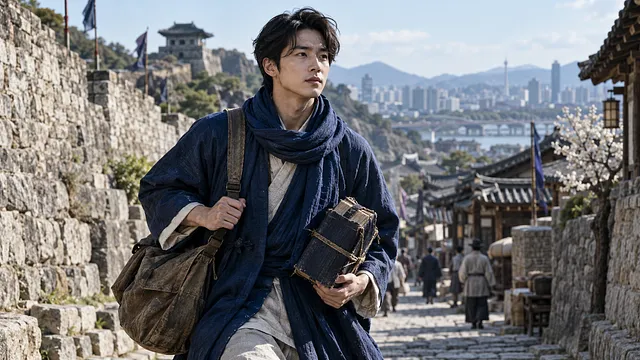
The Battle’s Outcome and the Continuing Mongol Invasions
Guju Fortress avoided capture, but its defense did not reverse the course of the war across Goryeo. Goryeo’s main army was defeated at the Battle of Anbuk-bu. When Mongol forces advanced toward Gaegyeong, the court sought peace.
What is being assessed | Confirmed outcome The defense at Guju Fortress | Repeated Mongol attacks were repelled The end of fighting at Guju Fortress | Surrender under royal orders after the court negotiated peace The first Mongol invasion | Brought to a close by the Mongol withdrawal in the first month of 1232 The long war between Goryeo and the Mongols | Invasions and resistance continued afterward
Here, ganghwa means an agreement to stop fighting. It is a different term from the Ganghwa in the relocation of the capital to Ganghwa Island that same year. Goryeo moved its capital to Ganghwa Island in 1232. A second Mongol invasion followed that year. Our History Net, “The Mongol Invasions of Goryeo”.
How to Read the Numbers in the Records
Numbers relating to the Battle of Guju Fortress must be read with attention to what they count. Treating the size of a particular unit as the entire fortress garrison changes the meaning. The duration of one round of fighting must also be distinguished from that of the battle as a whole.
Figure in the record | What the figure covers | Caution when interpreting it 30 days | One round of siege fighting before the Mongols withdrew | Not the entire period, including later renewed attacks About 250 men | Select troops from the Protectorate, Wiju, and Taeju | Not the total number of defenders at Guju Fortress 50 kan of wall | A recorded section of wall destroyed during a renewed attack | There is no basis for converting kan into an arbitrary number of meters
These figures appear in the original text of Bak Seo’s biography in Goryeosa. The record also goes on to describe renewed attacks after the initial fighting. The beginning and end of the Battle of Guju Fortress therefore cannot be defined by the 30 days alone. Our History Net, Original Text of “Bak Seo’s Battle at Gwiju Fortress”.
Records and Interpretations
What Is Directly Recorded
The main historical source is Goryeosa, volume 103, “Biographies” 16, “Bak Seo.” It covers troop deployments, responses to siege attacks, wall repairs, and surrender under royal orders. It also describes the circumstances of Bak Seo’s retirement to his hometown after the battle.
It also recounts a veteran Mongol commander’s praise for the defense. This should be read as an assessment included in Goryeosa. That statement alone cannot establish how this battle ranks against battles from other periods. Our History Net, “Bak Seo’s Battle at Gwiju Fortress”.
Assessments Shared by the Historical Commentaries
The commentaries consulted recognize the successful defense of Guju Fortress. New History of Korea discusses the participation of both regional troops and residents. “Bak Seo” on Our History Net distinguishes the military achievement from the subsequent surrender.
Reading these accounts together also reveals the roles of people other than the commanders. Troops fighting in their assigned sectors and residents repairing the walls supported the defense. This explanation draws together the commentaries consulted; it is not a single view shared by all historians. New History of Korea, “Victories at Gwiju Fortress and Jaju Fortress”, Our History Net, “Bak Seo”.
What Remains Uncertain
The commentaries differ in their accounts of Bak Seo’s activities after the war. New History of Korea states that he was later reappointed to office. “Bak Seo” on Our History Net considers the timing of his appointment as munha pyeongjangsa uncertain. It also leaves unresolved whether the appointment was made during his lifetime or awarded posthumously.
It is therefore difficult to turn Bak Seo’s later life into a detailed chronology of his return to office. The records consulted also do not establish the total troop strength on either side. Nor is there any basis for adding accounts of Bak Seo’s feelings or speeches of encouragement absent from the records. Our History Net, “Bak Seo”.
Why This Battle Is Studied as a Distinct Event Today
The Battle of Guju Fortress shows both local defense and national decisions about war. The successful defense of the fortress and the court’s decision to make peace were events at different levels. Both must be considered to understand the circumstances behind the eventual surrender.
The records of wall repairs also draw attention to the work that sustained the fighting. This perspective considers the commanders’ actions alongside the residents’ roles. These are details lost when military history is reduced to victories, defeats, and the names of individuals.
Frequently Asked Questions
Did Goryeo Win the Battle of Guju Fortress?
The defense succeeded in preventing the fortress from being captured. However, the defenders later surrendered under royal orders. The achievements of the local defense must be distinguished from the political conclusion.
Did Guju Fortress Refuse to Surrender to the End?
It did not give in to Mongol attacks or the initial appeals to surrender. However, it surrendered under royal orders in 1232. Any statement that it did not surrender needs to distinguish between these points in time.
Did the Battle Last Only 30 Days?
The 30 days refer to one round of siege fighting described in the record. The Mongols attacked again afterward. The full course of events must be considered from autumn 1231 to the first lunar month of 1232.
What Roles Did Kim Gyeong-son and Bak Seo Play?
Bak Seo commanded the troops gathered at Guju Fortress. Kim Gyeong-son’s unit was responsible for the southern side. Kim Jung-on’s unit defended the eastern and western sides.
Who Delivered the Royal Order?
Choe Rim-su and Min Hui appear in the biography of Bak Seo in Goryeosa. They conveyed news of the court’s peace agreement and the surrender of the three armies. After repeated persuasion, Bak Seo obeyed the royal order.
Where Can the Original Text and Translation Be Found?
They can be found in “Bak Seo’s Battle at Gwiju Fortress” on Our History Net. The page includes the original text of Bak Seo’s biography from Goryeosa. A translation and separate commentary are also provided.
0:00 0:00
1 / 68

Advertisement

Download text

File name
guju-fortress-battle-1231-mongol-siege-process-and-outcome-en.txt
Format
TXT (text/plain)
Paragraphs
68

Downloads exactly what you see as a text file.

Please cite the source when quoting.

Advertisement

Large text

Makes the text larger and the colors clearer. Turn it on if the text feels too small.

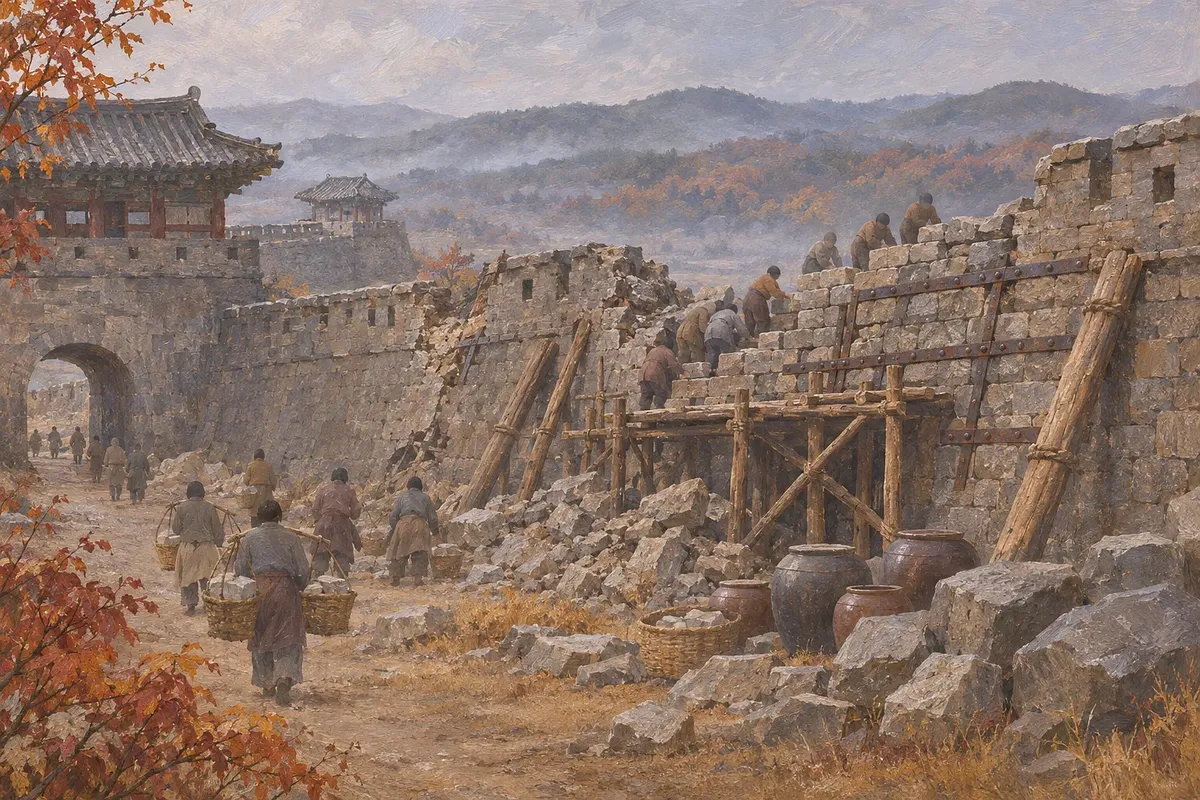
Repeated repairs helped Goryeo sustain its defense against Mongol attacks at Guju Fortress.AI-generated image

Key points

  • The Battle of Guju Fortress in 1231 was a fortress defense against Mongol forces.
  • Park Seo assigned Kim Jung-on, Kim Gyeong-son and others to defend different sectors.
  • The Goryeo forces adapted their responses to the methods of attack and repeatedly repaired collapsed fortress walls.
  • Guju Fortress avoided capture but surrendered by royal order in 1232.
  • The successful defense of Guju Fortress did not end the Mongol invasion of Goryeo as a whole.

In 1231, Bak Seo, Kim Gyeong-son, and others at Guju Fortress resisted a Mongol siege. They prevented its capture by assigning defensive sectors to different units and repairing the walls. Although they surrendered the following year under royal orders, their defense is remembered for withstanding repeated siege attacks.

This article follows the biography of Bak Seo in Goryeosa, published on Our History Net, and was checked in November 2026.

The Difference Between the Battle of Guju Fortress and the Great Victory at Gwiju

The Battle of Guju Fortress was a defensive battle against Mongol forces in 1231. On Our History Net, it can also be found under the name Battle of Gwiju Fortress. It is separate from the Great Victory at Gwiju in 1019, when Gang Gam-chan defeated the Khitan army.

Category Battle of Guju Fortress Great Victory at Gwiju
Main year 1231, with the fighting ending in 1232 1019
Opponent Mongol forces Khitan forces
Main commanders Bak Seo, Kim Gyeong-son, Kim Jung-on, and others Gang Gam-chan and others
Main events Defending the fortress against repeated siege attacks Defeating the Khitan army that invaded Goryeo
How to interpret the outcome Consider both the successful defense and the later surrender Recognize the victory over the Khitan army

The distinction between these events is based on “Bak Seo” on Our History Net and the Great Victory at Gwiju chronology in the Korean History Database. Our History Net, “Bak Seo”, Korean History Database, Great Victory at Gwiju Chronology.

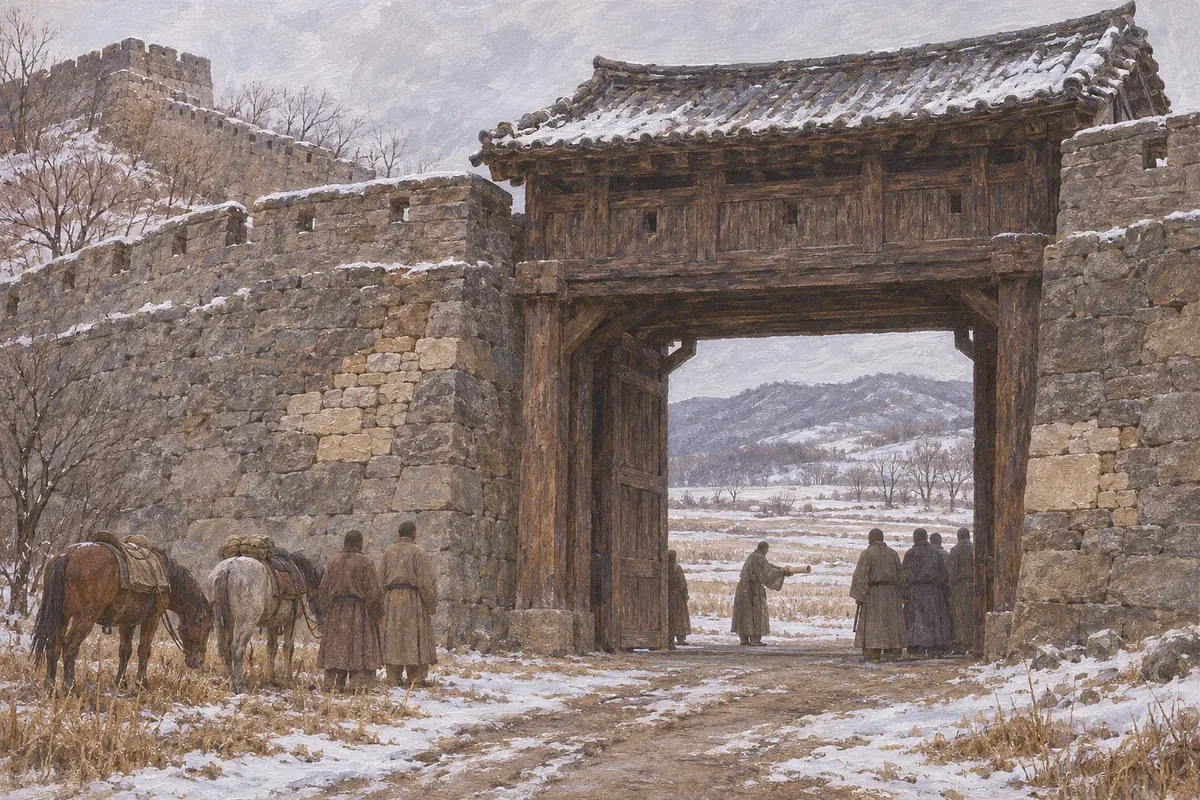
Guju Fortress resisted capture but submitted in 1232 by royal order after the court agreed to peace.AI-generated image

The Mongol Invasion and the Troops Gathered at Guju Fortress

Troops gathered at Guju Fortress as Mongol forces advanced south. The Mongols invaded Goryeo in the 8th month of 1231. They cited the killing of the Mongol envoy Jeogoyeo in 1225 as their justification for the invasion.

“The Mongol Invasions of Goryeo” on Our History Net also explains the broader background. It presents an interpretation linking the invasion of Goryeo to Mongol preparations to conquer the Jin dynasty. The envoy’s killing alone therefore cannot fully explain the causes of the invasion. Our History Net, “The Mongol Invasions of Goryeo”.

Guju was an inland military stronghold in northwestern Goryeo. Bak Seo, the military commander of the Northwestern Region, established his defensive headquarters there. Kim Gyeong-son and others who had withdrawn from Jeongju joined troops from nearby areas.

Commander or troops Role at Guju Fortress
Bak Seo Commanding the assembled troops and coordinating the defense
Kim Jung-on’s unit Defending the eastern and western sides of the fortress
Kim Gyeong-son’s unit Defending the southern side of the fortress
Select troops from Anbuk-bu, Wiju, and Taeju Divided among three sides of the fortress

This deployment assigned troops from several regions to different defensive sectors. It is one reason the defense of Guju Fortress cannot readily be described as the achievement of a single commander. The gathering and deployment of troops are explained in New History of Korea. New History of Korea, “Victories at Gwiju Fortress and Jaju Fortress”.

A Battle Chronology from 1231 to 1232

Fighting at Guju Fortress recurred from autumn through winter in 1231. The surrender under royal orders is described as taking place in the first month of the following year. The months below follow the lunar calendar used in the records.

Period Events at Guju Fortress and the Course of the War Source
8th month of 1231 Mongol forces led by Saritai invade Goryeo Our History Net, “The Mongol Invasions of Goryeo”
Early 9th month of 1231 The siege of Guju Fortress and full-scale fighting begin New History of Korea, “Victories at Gwiju Fortress and Jaju Fortress”
10th month of 1231 Mongol forces attack again and damage the walls, which Goryeo’s defenders repair New History of Korea, “Victories at Gwiju Fortress and Jaju Fortress”
11th month of 1231 Walls damaged by pocha attacks are reinforced again New History of Korea, “Victories at Gwiju Fortress and Jaju Fortress”
12th month of 1231 Resistance at Guju Fortress continues while the Goryeo court negotiates peace Our History Net, “Bak Seo” and “The Mongol Invasions of Goryeo”
First month of 1232 Guju Fortress surrenders under royal orders, as the first invasion moves toward its conclusion Our History Net, “Bak Seo” and “The Mongol Invasions of Goryeo”

This month-by-month chronology was compiled by comparing the accounts in New History of Korea and Our History Net. New History of Korea, “Victories at Gwiju Fortress and Jaju Fortress”, Our History Net, “Bak Seo”.

Responses to Encirclement and Siege Attacks

Goryeo’s defenders adjusted their defenses to the Mongols’ methods of attack. Siege warfare means fighting to attack and capture a fortress. The biography of Bak Seo in Goryeosa describes attacks ranging from assaults on the gates to attacks using ladders.

Mongol method of attack Goryeo’s response as recorded
Attacks on several gates Dividing the defensive sectors and sometimes making sorties outside the fortress
Approaching the base of the walls to dig tunnels Blocking equipment used to approach the walls
Attacking the walls with pocha Launching stones from pocha atop the walls in response
Attacks using fire Using water mixed with mud or stored water, depending on the form of attack
Approaching with siege ladders called unje Blocking the ladders with daewupo fitted with large blades

Here, pocha refers to stone-throwing siege equipment. The name in the record cannot simply be equated with modern gunpowder cannons. Daewupo, too, is described in this record as a weapon fitted with a large blade. Original Text of the Biography of Bak Seo in Goryeosa and Commentary from Our History Net.

How Wall Repairs and Royal Orders Changed the Course of the Battle

The key to sustaining the defense was immediately restoring collapsed sections of wall. Goryeosa describes repairs made whenever the walls were damaged. It also records that iron cables were used to reinforce them.

Damage to the walls did not immediately lead to the fall of the entire fortress. The defenders repaired damaged sections and prepared for the next attack. New History of Korea highlights the residents’ role in this repair work. New History of Korea, “Victories at Gwiju Fortress and Jaju Fortress”.

The turning point that ended the fighting was a royal order sent from the court. Bak Seo had earlier rejected an appeal to surrender conveyed in a document from Wang Jeong, Duke of Hoean. The following year, Choe Rim-su and Min Hui delivered the royal order.

We have already sent Jeong, Duke of Hoean, to make peace with the Mongol army, and our three armies have also surrendered. Stop fighting, come out, and surrender.

Goryeosa, volume 103, “Biographies” 16, “Bak Seo”: Choe Rim-su and Min Hui’s appeal to surrender.

After repeated persuasion, Bak Seo surrendered under royal orders. The immediate reason the fighting ended must therefore be distinguished from the fortress falling through military action. These circumstances are recorded in the biography of Bak Seo in Goryeosa. Our History Net, “Bak Seo’s Battle at Gwiju Fortress”.

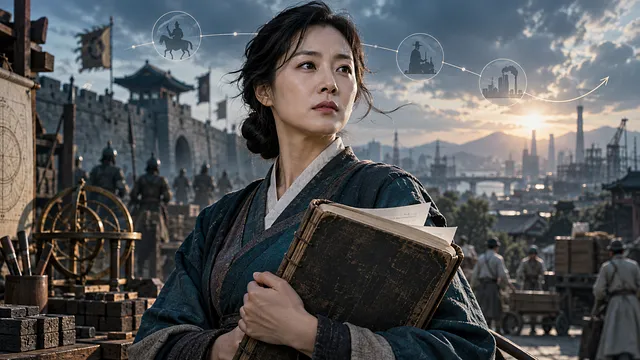
The Battle’s Outcome and the Continuing Mongol Invasions

Guju Fortress avoided capture, but its defense did not reverse the course of the war across Goryeo. Goryeo’s main army was defeated at the Battle of Anbuk-bu. When Mongol forces advanced toward Gaegyeong, the court sought peace.

What is being assessed Confirmed outcome
The defense at Guju Fortress Repeated Mongol attacks were repelled
The end of fighting at Guju Fortress Surrender under royal orders after the court negotiated peace
The first Mongol invasion Brought to a close by the Mongol withdrawal in the first month of 1232
The long war between Goryeo and the Mongols Invasions and resistance continued afterward

Here, ganghwa means an agreement to stop fighting. It is a different term from the Ganghwa in the relocation of the capital to Ganghwa Island that same year. Goryeo moved its capital to Ganghwa Island in 1232. A second Mongol invasion followed that year. Our History Net, “The Mongol Invasions of Goryeo”.

How to Read the Numbers in the Records

Numbers relating to the Battle of Guju Fortress must be read with attention to what they count. Treating the size of a particular unit as the entire fortress garrison changes the meaning. The duration of one round of fighting must also be distinguished from that of the battle as a whole.

Figure in the record What the figure covers Caution when interpreting it
30 days One round of siege fighting before the Mongols withdrew Not the entire period, including later renewed attacks
About 250 men Select troops from the Protectorate, Wiju, and Taeju Not the total number of defenders at Guju Fortress
50 kan of wall A recorded section of wall destroyed during a renewed attack There is no basis for converting kan into an arbitrary number of meters

These figures appear in the original text of Bak Seo’s biography in Goryeosa. The record also goes on to describe renewed attacks after the initial fighting. The beginning and end of the Battle of Guju Fortress therefore cannot be defined by the 30 days alone. Our History Net, Original Text of “Bak Seo’s Battle at Gwiju Fortress”.
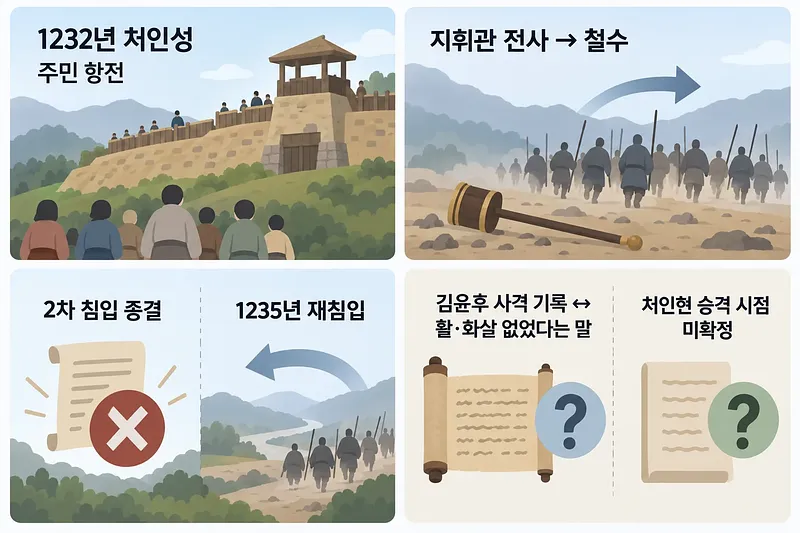
Records and Interpretations

What Is Directly Recorded

The main historical source is Goryeosa, volume 103, “Biographies” 16, “Bak Seo.” It covers troop deployments, responses to siege attacks, wall repairs, and surrender under royal orders. It also describes the circumstances of Bak Seo’s retirement to his hometown after the battle.

It also recounts a veteran Mongol commander’s praise for the defense. This should be read as an assessment included in Goryeosa. That statement alone cannot establish how this battle ranks against battles from other periods. Our History Net, “Bak Seo’s Battle at Gwiju Fortress”.
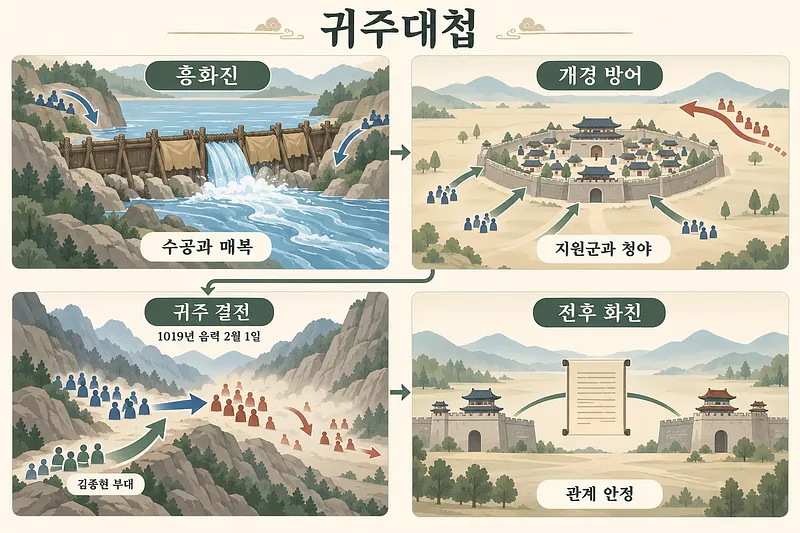
Assessments Shared by the Historical Commentaries

The commentaries consulted recognize the successful defense of Guju Fortress. New History of Korea discusses the participation of both regional troops and residents. “Bak Seo” on Our History Net distinguishes the military achievement from the subsequent surrender.

Reading these accounts together also reveals the roles of people other than the commanders. Troops fighting in their assigned sectors and residents repairing the walls supported the defense. This explanation draws together the commentaries consulted; it is not a single view shared by all historians. New History of Korea, “Victories at Gwiju Fortress and Jaju Fortress”, Our History Net, “Bak Seo”.

What Remains Uncertain

The commentaries differ in their accounts of Bak Seo’s activities after the war. New History of Korea states that he was later reappointed to office. “Bak Seo” on Our History Net considers the timing of his appointment as munha pyeongjangsa uncertain. It also leaves unresolved whether the appointment was made during his lifetime or awarded posthumously.

It is therefore difficult to turn Bak Seo’s later life into a detailed chronology of his return to office. The records consulted also do not establish the total troop strength on either side. Nor is there any basis for adding accounts of Bak Seo’s feelings or speeches of encouragement absent from the records. Our History Net, “Bak Seo”.

Why This Battle Is Studied as a Distinct Event Today

The Battle of Guju Fortress shows both local defense and national decisions about war. The successful defense of the fortress and the court’s decision to make peace were events at different levels. Both must be considered to understand the circumstances behind the eventual surrender.

The records of wall repairs also draw attention to the work that sustained the fighting. This perspective considers the commanders’ actions alongside the residents’ roles. These are details lost when military history is reduced to victories, defeats, and the names of individuals.

Questions checked against the record

Did Goryeo Win the Battle of Guju Fortress?

The defense succeeded in preventing the fortress from being captured. However, the defenders later surrendered under royal orders. The achievements of the local defense must be distinguished from the political conclusion.

Did Guju Fortress Refuse to Surrender to the End?

It did not give in to Mongol attacks or the initial appeals to surrender. However, it surrendered under royal orders in 1232. Any statement that it did not surrender needs to distinguish between these points in time.

Did the Battle Last Only 30 Days?

The 30 days refer to one round of siege fighting described in the record. The Mongols attacked again afterward. The full course of events must be considered from autumn 1231 to the first lunar month of 1232.

What Roles Did Kim Gyeong-son and Bak Seo Play?

Bak Seo commanded the troops gathered at Guju Fortress. Kim Gyeong-son’s unit was responsible for the southern side. Kim Jung-on’s unit defended the eastern and western sides.

Who Delivered the Royal Order?

Choe Rim-su and Min Hui appear in the biography of Bak Seo in Goryeosa. They conveyed news of the court’s peace agreement and the surrender of the three armies. After repeated persuasion, Bak Seo obeyed the royal order.

Where Can the Original Text and Translation Be Found?

They can be found in “Bak Seo’s Battle at Gwiju Fortress” on Our History Net. The page includes the original text of Bak Seo’s biography from Goryeosa. A translation and separate commentary are also provided.

Open the link

Opens in a new window.

Advertisement

Sign-in required

Sign in with your Google account to like, comment, and save highlights.

FAQ

Are the Battle of Guju Fortress and the Battle of Gwiju the same battle?

They are different battles. The Battle of Guju Fortress was a defensive battle against Mongol forces in 1231. The Battle of Gwiju was a battle in which Gang Gam-chan and others defeated Khitan forces in 1019.

Did Goryeo win the Battle of Guju Fortress?

The defense succeeded in preventing the fortress from falling to Mongol attacks. However, in 1232, the defenders surrendered following the court's peace agreement and royal orders. This cannot be described as a victory that ended the entire war against the Mongols.

When did the Battle of Guju Fortress end?

The "Bak Seo" entry on Our History Net describes it as a surrender in the first month of 1232 under royal orders. The first month here refers to the lunar calendar used in the records of the time. It should not be arbitrarily converted to a solar calendar date.

How did Bak Seo and Kim Gyeong-son divide responsibility for defending Guju Fortress?

Bak Seo commanded the assembled troops and coordinated the defense. Kim Gyeong-son's unit was responsible for the south. Kim Jung-on's unit defended the east and west.

How did Guju Fortress hold out even after its walls collapsed?

The biography of Bak Seo in Goryeosa describes repeated repairs to the damaged fortress walls. It also records reinforcement using iron cables. New Edition of Korean History explains the residents' role in repairing the fortress walls.

Did the Battle of Guju Fortress last only 30 days?

The 30 days refer to a record of one siege engagement. Mongol forces attacked again even after withdrawing. The duration of the entire battle should not be limited to 30 days.

Did the defenders of Guju Fortress number only about 250 in total?

The figure of about 250 refers to the special troops from the protectorate, Wiju, and Taeju. It is not the total number of troops defending the entire fortress. It is difficult to determine the total troop strength from the records checked.

Were the pocha mentioned in the Battle of Guju Fortress modern cannons?

The pocha in these records were stone-throwing siege engines. They cannot simply be regarded as the same weapons as modern gunpowder cannons. The daeupo is described as a weapon fitted with a large blade.

Who were the royal envoys who urged Guju Fortress to surrender?

The biography of Bak Seo in Goryeosa names Choe Rim-su and Min Hui. The two announced the court's peace agreement and the surrender of the three armies. After repeated persuasion, Bak Seo surrendered under royal orders.

Did the Mongol invasions end after the Battle of Guju Fortress?

The first Mongol invasion came to a close with the withdrawal in the first month of 1232. A second invasion followed that same year. The defense of Guju Fortress did not end the long war between Goryeo and the Mongols.

What happened to Bak Seo after the battle?

Goryeosa states that he retired to his hometown following pressure from the Mongols. There is also a record that he later became munha pyeongjangsa. However, the "Bak Seo" entry on Our History Net does not establish when he was appointed or whether the appointment was made during his lifetime.

What is the key primary source for the Battle of Guju Fortress?

The key primary source is the biography of Bak Seo in Goryeosa, volume 103, "Biographies" 16. The original text is available in "Bak Seo's Battle at Gwiju Fortress" on Our History Net. A translation and historical commentary are also provided.

Sources

Data formats

This content is available in several machine-friendly formats.

Data-only languages (machine translated, files only)

Indonesian JSON MD Portuguese JSON MD Chinese (Traditional) JSON MD Deutsch JSON MD

Verification

This article was drafted with AI and then reviewed and edited by a person.

Reviewed by 신익희 · 편집장 · 2026-11-08

Figures in this article were checked against the source material during generation. · 2026-11-08

This translation has been cross-checked by AI. · 2026-11-08

Reuse & AI usage

Search indexing and AI citation with attribution are welcome. See the license policy for details.

CC BY · License

Loading…

Loading…

Where this content lives

Related content

From Injoys

Request the content you want and take 70% of what it earns

Just leave the subject. We handle production, review, translation and distribution.

See how revenue sharing works

Comments