Injoys
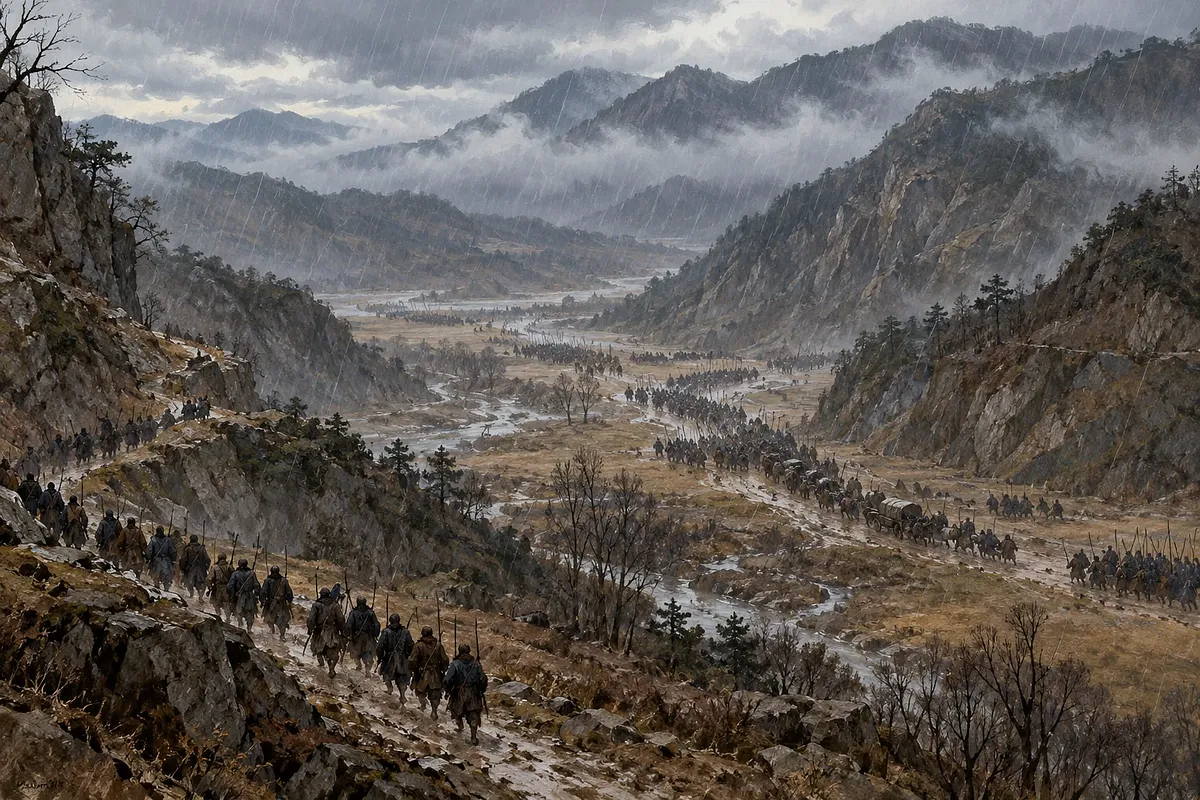
The Battle of Gwiju was a victory won in 1019 by the Goryeo army under Gang Gam-chan. Goryeo stopped the Khitan army's advance on the capital by defending Gaegyeong. Its forces then worked together at Gwiju to inflict a major defeat on the retreating army. Relations later stabilized through a peace agreement, and the battle is remembered as a turning point in the war.
This article follows the accounts in Goryeosa and Goryeosa jeoryo, checked in October 2026.
The Battle of Gwiju and the War Timeline
The decisive battle at Gwiju took place on the 1st day of the 2nd lunar month of 1019. The site is around present-day Kusong, North Pyongan Province, North Korea. The battle brought the third Khitan invasion, which began in 1018, to a close. The month and day follow the lunar dates in the historical sources.
| Period | Event | Supporting records and commentary |
|---|---|---|
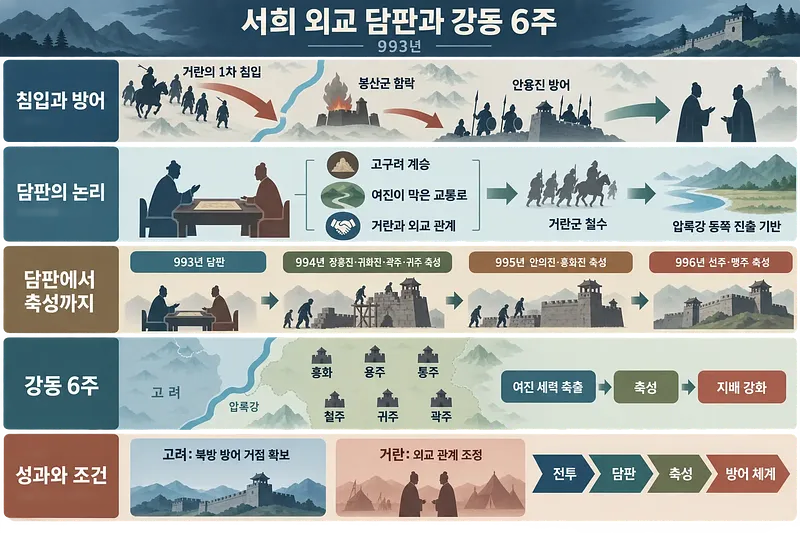
| 993 | First Khitan invasion and Seo Hui's negotiations | Uriyeoksanet, “Foreign Relations in Early Goryeo,” “The Battle of Gwiju” |
| 1010 | Gaegyeong falls during the second invasion, and Hyeonjong flees | Uriyeoksanet, “Foreign Relations in Early Goryeo,” “Gang Gam-chan's Battle of Gwiju” |
| 12th lunar month of 1018 | Khitan forces under So Bae-ap invade; Goryeo wins at Heunghwajin | Goryeosa jeoryo, volume 3, Hyeonjong, year 9, 12th month |
| After the Battle of Heunghwajin | Khitan forces advance on Gaegyeong; Goryeo forces pursue them | Goryeosa, volume 94, Biographies 7 |
| 1st lunar month of 1019 | Gaegyeong's defenses are strengthened; the Khitan advance is thwarted, and the army changes direction | Goryeosa, volume 94, Biographies 7; Uriyeoksanet, “The Battle of Gwiju” |
| 1st day of the 2nd lunar month of 1019 | Goryeo wins at Gwiju | Goryeosa jeoryo, volume 3, Hyeonjong, year 10, 2nd month |
| After the war | Peace agreement and reorganization of diplomatic relations | Uriyeoksanet, “Gang Gam-chan's Battle of Gwiju” |
The Battle of Gwiju was an individual battle and must be distinguished from the war as a whole. The victory at Heunghwajin did not end the Khitan advance. The defense of the capital and attacks on the retreating army followed. The date of the decisive battle can be confirmed in the relevant entry in Goryeosa jeoryo.
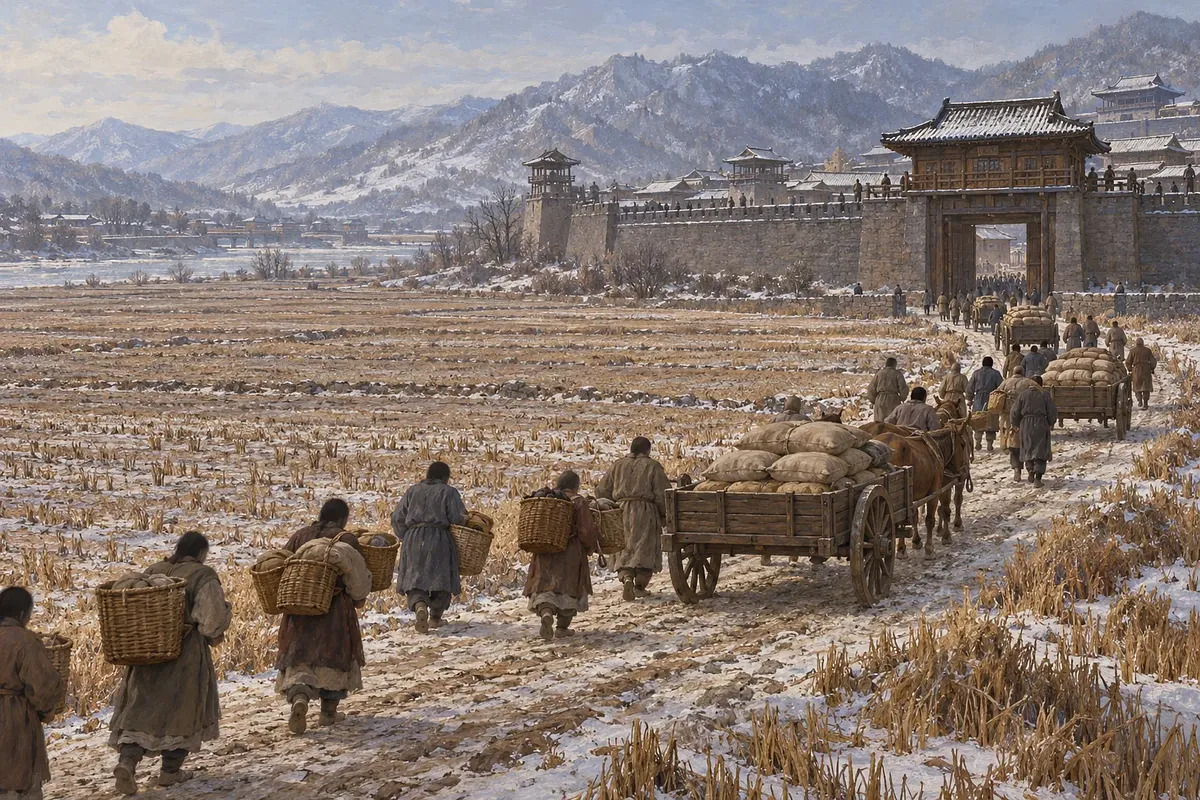
Hyeonjong's scorched-earth measures helped defend Gaegyeong against the Khitan army.AI-generated image
Why Did the Khitan Invade Again?
The third invasion arose from disputes over the 6 prefectures of Gangdong and the king's personal visit to the Khitan court. Such a visit meant the Goryeo king going in person to the Khitan emperor's court. After the second invasion, the Khitan demanded that this promise be fulfilled. They also continued to demand the return of the 6 prefectures of Gangdong.
Military pressure continued when Goryeo refused these demands. So Bae-ap's expedition in 1018 began amid this conflict. Goryeo still faced the possibility of another threat to its capital. Gaegyeong had, in fact, fallen during the earlier war in 1010.
The Role of a Commander-in-Chief with a Civil Official's Background
The commander-in-chief was a civil official who had passed the state examination. After placing first in the examination in 983, he took on major state responsibilities. During the war in 1010, he advised Hyeonjong to flee. He later also handled military affairs in the northeastern region.
His background as a civil official therefore does not mean that he lacked military experience. In 1018, he was appointed supreme commander and placed in charge of the entire Goryeo army. Deputy commander Gang Min-cheom assisted him and took part in the pursuit. His career and the background to his appointment are outlined in Uriyeoksanet's commentary on the historical sources.
Why Was Gaegyeong in Danger Despite the Victory at Heunghwajin?
The victory at Heunghwajin did not stop the advance of the entire Khitan army. Even after their defeat, Khitan forces continued south toward Gaegyeong. Goryeo forces responded by pursuing them, but separate preparations were also needed to defend the capital.
Goryeosa records that Goryeo forces blocked a waterway and concealed soldiers at Heunghwajin. When the enemy approached, they released the water, and the hidden troops attacked. Gang Min-cheom then attacked Khitan forces at Naegusan in Jaju. Jo Won also fought at Matan.
| Category | Battle of Heunghwajin | Battle of Gwiju |
|---|---|---|
| Stage of the war | While Khitan forces were advancing south | While Khitan forces were withdrawing north |
| Main tactics recorded | Blocking and releasing water, followed by an ambush | Engaging the enemy on its retreat route, with supporting units joining |
| Developments after the battle | Khitan forces continue advancing on Gaegyeong | Major Khitan defeat and pursuit by Goryeo forces |
| Distinction to remember | The site of the water attack using oxhides | A site to which the account of the water attack must not be transferred |
Winning a local battle and removing the threat to the capital were separate matters. Uriyeoksanet suggests that the Khitan army may have sought the king's surrender. This is an interpretation based on its route of advance. It must be distinguished from a statement directly confirming the Khitan commanders' intentions.
The Defense of Gaegyeong and the Arrival of Kim Jong-hyeon's Unit
The turning points in the campaign were the defense of the capital and the reinforcements at Gwiju. The successful defense of Gaegyeong thwarted the objective of the Khitan advance. Later, at Gwiju, the arrival of another unit changed the standoff.
The Defense of Gaegyeong and Scorched-Earth Measures
Hyeonjong moved residents from outside the city walls into the city. He also ordered grain removed from the fields. Scorched-earth measures prevent the enemy from using local food and supplies. These measures made it difficult for Khitan forces to sustain themselves around the capital.
Kim Jong-hyeon led 10,000 soldiers to defend Gaegyeong. Another 3,300 soldiers were sent from the northeastern region. Unable to capture Gaegyeong, the Khitan army turned north. Goryeo forces continued their attacks around Yeonju and Wiju.
The Reinforcements That Changed the Standoff at Gwiju
The arrival of Kim Jong-hyeon's unit at Gwiju is recorded as a turning point in the battle. At first, the two sides faced each other without either gaining victory. After the supporting troops arrived, Goryeo forces intensified their offensive. Goryeosa also records that wind and rain came from the south at this time.
Goryeo forces continued their pursuit toward Seokcheon and Ballyeong. Gwiju was a passage surrounded by mountains and valleys. Uriyeoksanet describes this terrain as favorable for blocking a retreating army. The sequence connecting Gaegyeong and Gwiju can be found in the commentary in the Chronology of Korean History.
Factors Behind the Victory at Gwiju
The victory can be explained as the result of coordination between the defense of the capital and the actions of field units. The tactics at Heunghwajin alone cannot adequately explain the entire war. The following table is an interpretation that groups events in the historical sources by their function.
| Factor | Response confirmed in the records | Role in the war |
|---|---|---|
| Disrupting the initial advance | Water attack and ambush at Heunghwajin | Inflicted losses on Khitan forces advancing south |
| Continued pursuit | Attacks by Gang Min-cheom and Jo Won | Put pressure on Khitan forces as they moved |
| Defense of the capital | Dispatch of reinforcements and Hyeonjong's scorched-earth measures | Made it difficult to capture Gaegyeong |
| Blocking the retreat route | Engaging the enemy on the eastern outskirts of Gwiju | Brought the withdrawing Khitan army into a decisive battle |
| Cooperation between units | Arrival of Kim Jong-hyeon's unit | Turned an evenly matched battle in Goryeo's favor |
Uriyeoksanet's commentary also identifies the transmission of battlefield information as a factor behind the victory. It also discusses the state's control over Gaegyeong's residents. These conditions allowed commanders' decisions to translate into military action. However, the sources examined do not allow the specific means of communication to be reconstructed.