Skip to content
How-to 🇰🇷 South Korea

This content applies specifically to South Korea.

Cold Wave Alerts 2026: Criteria and How to Prepare

Cold wave alerts are issued from October through April when a sharp temperature drop or persistent severe cold is expected. Check this site's alert banner and [Nationwide] list, and get ready to insulate pipes and care for vulnerable family members' health.

Listen or read this article

15:34

Listen, or read the text only.

Cold Wave Alerts 2026: Criteria and How to Prepare

Kokoro 82M AI-generated voice 16 min read

0:00 15:34

Advertisement

Download audio

File name
cold-wave-alert-2026-criteria-winter-preparation-en.mp3
Format
MP3 (audio/mpeg)
Duration
15:34
File size
10.7 MB
Engine
Kokoro 82M

This audio was generated by AI.

You may download and use it freely for personal use.

Advertisement

Cold Wave Alerts 2026: Criteria and How to Prepare

12 min read

Cold Wave Alerts 2026: Criteria and How to Prepare
Cold wave alerts are issued from October through April when a sharp temperature drop or persistent severe cold is expected. Check this site's alert banner and [Nationwide] list, and get ready to insulate pipes and care for vulnerable family members' health.
Check which areas are affected in the alert banner in this site's left-hand weather panel and the [Nationwide] alert list.
Check the latest cold wave alerts and response guidance in cold wave impact forecasts on the Korea Meteorological Administration's Weather Nuri website.
Insulate water meter boxes and exposed pipes, and prepare to prevent freeze damage when you are away from home for an extended period.
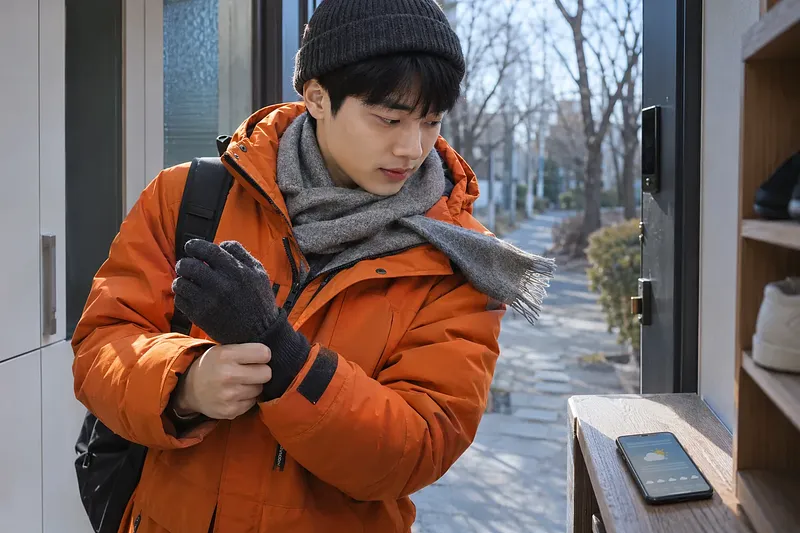
Check the weather before going out, and prepare warm clothing, gloves, a scarf, and a hat.
Check plans for outings and whether indoor spaces are warm enough for older family members and those with cognitive impairments.
To prepare for a cold wave, start by checking this site's alert banner and [Nationwide] list. Cold wave alerts are issued when a sharp drop in temperature or prolonged severe cold is expected. Insulate water meters and pipes. Also check on family members who are vulnerable to the cold, including older adults.
The criteria and figures are based on official guidance and seasonal surveillance data accessed on November 11, 2026.
How to check the alert banner and nationwide list
Start with the alert banner in the weather panel on the left side of this site. The banner appears only when an alert is in effect. The [Nationwide] tab contains a list of weather alerts.
· Check the alert banner at the top of the weather panel on the left. · Look for your area and any areas you plan to visit in the list under the [Nationwide] tab. · Check whether the alert is for a cold wave. If it is, distinguish between an advisory and a warning. · Check the latest announcements and affected areas on the Korea Meteorological Administration's Weather Nuri. · Use the response guidance in the cold wave impact forecast to prepare your home and get ready to go out.
The alert shown in the banner may be for something other than a cold wave. Read both the area name and the alert type. Check this site's alert banner and [Nationwide] alert list to see whether an alert is currently in effect.
Comparing cold wave advisory and warning criteria
Cold wave alerts are issued from October to April when either of two conditions is met. The first involves a sharp drop in temperature. The second involves persistently low temperatures.
The Korea Meteorological Administration's Criteria for Issuing Weather Alerts specify the applicable conditions as follows.
When any one of the following conditions is met during the period from October to April
The table below separates the cold wave criteria in the same document by condition.
Condition | Cold wave advisory | Cold wave warning ① Sharp temperature drop | When the morning low is expected to fall by at least 10℃ from the previous day, reach at most 3℃, and be at least 3℃ below the climate normal | When the morning low is expected to fall by at least 15℃ from the previous day, reach at most 3℃, and be at least 3℃ below the climate normal ② Prolonged severe cold | When morning lows of at most -12℃ are expected to persist for at least 2 days | When morning lows of at most -15℃ are expected to persist for at least 2 days
All requirements within ① must be met. Do not judge solely by how much the temperature has fallen from the previous day. However, ① and ② do not have to be met at the same time.
Where can I find climate normals for each area?
Climate normals are available under Korea Climate Normals on the Open MET Data Portal. Mean temperature and minimum temperature are separate categories. To understand the cold wave criteria, look at values related to morning minimum temperatures.
· On the Open MET Data Portal, go to Climate Statistical Analysis > Climate Normals > Korea Climate Normals. · In the graph menu, check your location of interest and the minimum temperature category. · If you need data for individual dates, check the daily climate normals in the file set.
You can check how daily data are provided in the Guide to Korea Climate Normals. Do not mix values from different areas or dates when comparing them. Follow the Korea Meteorological Administration's announcements to determine whether an alert has actually been issued.
The 11 types of weather alerts and cold wave impact forecasts
Cold waves are one of the 11 types of weather alerts issued by the Korea Meteorological Administration. Weather alerts are issued when hazardous weather is expected. Cold wave impact forecasts provide response guidance tailored to the expected damage.
The alert types listed in the Korea Meteorological Administration's Guide to Forecasting Services are as follows.
· Strong winds, high waves, heavy rain, heavy snow · Dry weather, storm surges, typhoons, yellow dust · Heat waves, tropical nights, cold waves
Cold wave alerts and impact forecasts use different level names and serve different purposes.
Category | Levels | What to check Cold wave alerts | Advisory, Warning | Announcements about sharp temperature drops or prolonged severe cold Cold wave impact forecasts | Attention, Caution, Warning, Danger | Expected impacts by sector and response guidance for each risk level
The Korea Meteorological Administration provides impact forecasts for heat waves and cold waves. Do not interpret “Caution” in an impact forecast as meaning the same thing as a cold wave advisory. After checking the alert, review the impact forecast for responses relevant to your daily life.
How to prevent water meters and boiler pipes from freezing and bursting
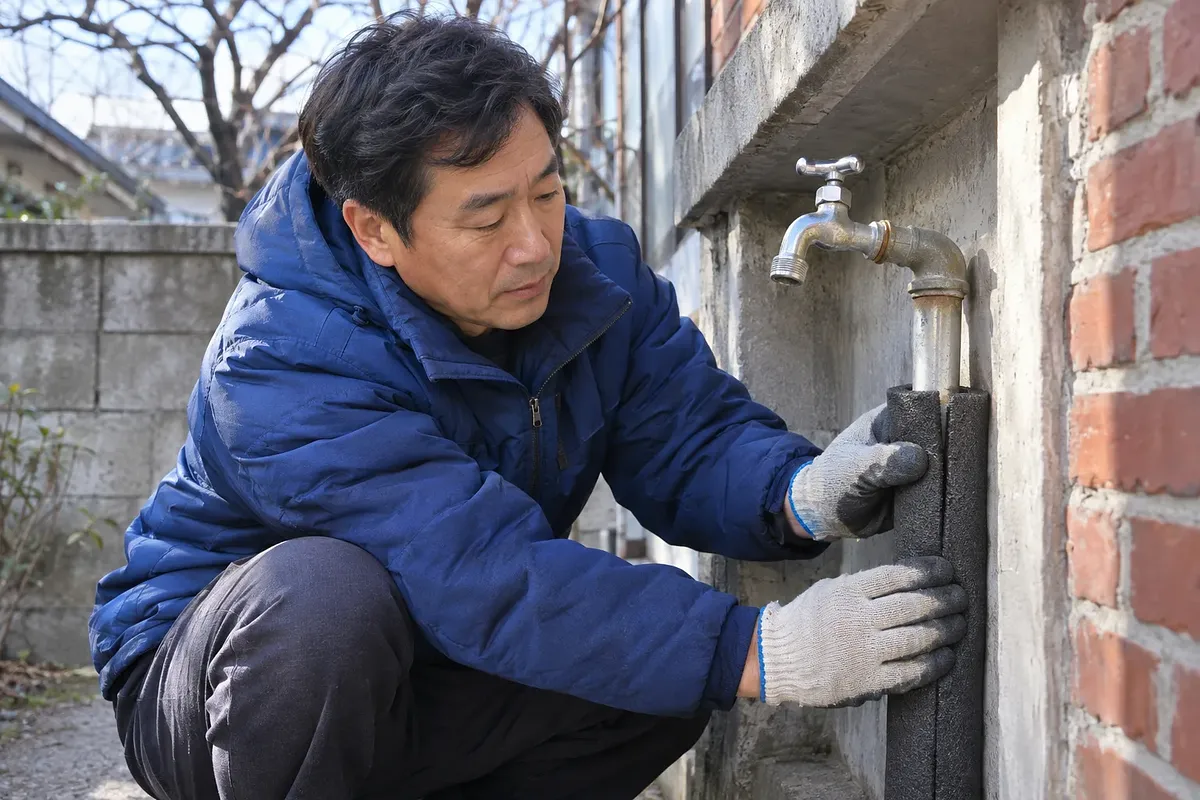
Start by insulating water meter boxes and exposed pipes to prevent them from freezing and bursting. Prepare insulating materials such as old clothes. The Ministry of the Interior and Safety's National Safety 24 Cold Wave Safety Guidelines recommend the following measures.
· Fill the water meter box with insulating materials such as old clothes. Seal gaps on the outside with tape to keep cold air out. · Wrap exposed water pipes and boiler pipes in insulating material. · When leaving home for an extended period, leave a faucet slightly open so water can flow. · If a water pipe freezes, thaw it with lukewarm water or a hair dryer. Follow the National Safety 24 guidance and never use an open flame. · If freezing causes a pipe or meter to burst, contact your local government or local waterworks department.
Check your boiler's manual for its freeze-protection operating settings. Leaving a faucet open and setting the boiler's operating mode are separate measures. Check how to manage each before leaving home for an extended period.
Risks shown by cold-related illness surveillance results
Last season, cold-related illnesses were particularly common outdoors and during the morning. Older adults accounted for at least half of reported patients. Cases also occurred indoors.
The Korea Disease Control and Prevention Agency's 2025-2026 Season Results are shown below. The reporting period was from December 1, 2025, to February 28, 2026. As of December 1, 2025, 512 emergency medical institutions were participating.
Item | Reported results for the 2025-2026 season Total patients with cold-related illnesses | 364 people Suspected cold-related deaths | 14 people Number of patients compared with the previous season | 1.09 times as many Number of suspected deaths compared with the previous season | 1.75 times as many Hypothermia | 79.7% of all patients, 290 people Aged at least 65 | 57.4% of all patients, 209 people Cases occurring outdoors | 75.0% of all patients, 273 people Cases occurring indoors | 25.0% of all patients, 91 people Cases occurring from 6 to 9 a.m. | 20.9% of all patients, 76 people, the highest of any time period Coexisting cognitive impairment, such as dementia | 5 of the 14 suspected deaths, 35.7%
These statistics cover patients reported through participating emergency departments. They do not represent an individual's probability of developing an illness. The denominator for the proportion with cognitive impairment is suspected deaths, not all patients.
Which season do the alcohol-related figures come from?
The figure of 21.3% for patients who had been drinking comes from the previous year's surveillance data. The Korea Disease Control and Prevention Agency presented it in its Cold-Related Illness Advisory on December 31, 2025. Do not combine it with the final 2025-2026 season results as if it covered the same period.
Drinking alcohol can make it difficult to notice a drop in body temperature. The Korea Disease Control and Prevention Agency explains that this can increase the risk of cold-related illness. After drinking, take care to stay warm even if you feel less cold.
What should you prepare for different everyday situations?
Adjust your preparations to when you go out and who you live with. The table below groups official safety guidance by everyday situation. It does not introduce new alert criteria or diagnostic criteria.
Everyday situation | What to do first | Supporting guidance Commuting or doing outdoor activities in the morning | Check the weather before going out and prepare warm clothing. | Last season, the highest proportion of cases occurred from 6 to 9 a.m. An older family member is going out | Help them reduce outdoor activities on cold days. | The Korea Disease Control and Prevention Agency advises that older adults are less able to maintain their body temperature. A family member has cognitive impairment, such as dementia | Check their plans for going out and their cold-weather preparations together. | The Korea Disease Control and Prevention Agency asks those around them to help ensure they follow health guidelines. Children, older adults, or people in poor health are at home | Check their body temperature and the indoor temperature often. | National Safety 24 advises keeping indoor spaces sufficiently warm. Returning home after drinking alcohol | Take care to stay warm and reduce exposure to the cold. | Drinking alcohol can make it difficult to notice a drop in body temperature. Leaving home for an extended period | Check the insulation around meters and pipes. | National Safety 24 advises leaving a faucet slightly open.
For preparations before going out, see the Korea Disease Control and Prevention Agency's Health Guidelines for Cold Waves. Wear layers of thin clothing and prepare gloves, a scarf, and a hat. If your clothes or shoes get wet, it is best to change into dry ones promptly.
How to check on family members who live elsewhere
After sharing cold wave information, check how well they have actually prepared. If they have cognitive impairment, help them follow health guidelines. The Korea Disease Control and Prevention Agency calls for attention from caregivers and those around them.
· Tell them about alerts and the expected cold in their area. · Check whether they plan to go out. · Check whether they have prepared warm clothing. · Check whether their home is being kept warm.
The winter 2026 outlook and cold wave preparations
Cold wave preparations are necessary even when warmer-than-normal conditions are expected. On November 6, 2026, the Korea Meteorological Administration forecast that a strong El Niño would persist through the winter. It expected El Niño to peak in December 2026.
The Korea Meteorological Administration forecast that this El Niño would become the strongest on record. Winters with a developed El Niño tend to bring higher-than-normal temperatures in Korea. Precipitation also tends to be higher overall. The source is the Korea Meteorological Administration's November 6, 2026, El Niño Press Release.
The outlook issued on October 23, 2026, and cited in the same document is as follows.
Period | Temperature outlook November and December 2026 | Expected to be higher than normal January 2027 | Expected to be generally higher than normal, but highly variable due to brief inflows of cold air
Climate factors other than El Niño also affect winter weather. The Korea Meteorological Administration urged people to prepare for sudden changes, including cold waves. When going out or managing facilities, check the latest alerts along with short- and medium-range forecasts.
Common mistakes in cold wave preparation
Do not judge alert conditions and everyday risks by the same criteria. Cold wave alerts follow the Korea Meteorological Administration's issuance criteria. The condition of your home's pipes and your family's health need to be checked separately.
Common interpretation | Correction A cold wave advisory is issued only when the temperature reaches -12℃. | It can also be issued based on a sharp temperature drop. A drop of 10℃ from the previous day immediately meets the advisory criteria. | The temperature must also be at most 3℃ and at least 3℃ below normal. An alert is issued only after severe cold has actually lasted 2 days. | The criterion is that it is expected to persist for at least 2 days. Caution in an impact forecast is the same as a cold wave advisory. | An impact forecast is separate information that explains the risk of damage and how to respond. There is no need to worry about cold-related illness indoors. | Cases were also reported indoors last season. Preparations to prevent freezing and bursting can wait if the winter average temperature outlook is high. | The Korea Meteorological Administration advises preparing for brief inflows of cold air and sudden changes.
0:00 0:00
1 / 59

Advertisement

Download text

File name
cold-wave-alert-2026-criteria-winter-preparation-en.txt
Format
TXT (text/plain)
Paragraphs
59

Downloads exactly what you see as a text file.

Please cite the source when quoting.

Advertisement

Large text

Makes the text larger and the colors clearer. Turn it on if the text feels too small.

Prepare in advance to prevent freeze damage during a cold snap.

Key points

  • Check which areas are affected in the alert banner in this site's left-hand weather panel and the [Nationwide] alert list.
  • Check the latest cold wave alerts and response guidance in cold wave impact forecasts on the Korea Meteorological Administration's Weather Nuri website.
  • Insulate water meter boxes and exposed pipes, and prepare to prevent freeze damage when you are away from home for an extended period.
  • Check the weather before going out, and prepare warm clothing, gloves, a scarf, and a hat.
  • Check plans for outings and whether indoor spaces are warm enough for older family members and those with cognitive impairments.

To prepare for a cold wave, start by checking this site's alert banner and [Nationwide] list. Cold wave alerts are issued when a sharp drop in temperature or prolonged severe cold is expected. Insulate water meters and pipes. Also check on family members who are vulnerable to the cold, including older adults.

The criteria and figures are based on official guidance and seasonal surveillance data accessed on November 11, 2026.

How to check the alert banner and nationwide list

Start with the alert banner in the weather panel on the left side of this site. The banner appears only when an alert is in effect. The [Nationwide] tab contains a list of weather alerts.

  1. Check the alert banner at the top of the weather panel on the left.
  2. Look for your area and any areas you plan to visit in the list under the [Nationwide] tab.
  3. Check whether the alert is for a cold wave. If it is, distinguish between an advisory and a warning.
  4. Check the latest announcements and affected areas on the Korea Meteorological Administration's Weather Nuri.
  5. Use the response guidance in the cold wave impact forecast to prepare your home and get ready to go out.

The alert shown in the banner may be for something other than a cold wave. Read both the area name and the alert type. Check this site's alert banner and [Nationwide] alert list to see whether an alert is currently in effect.

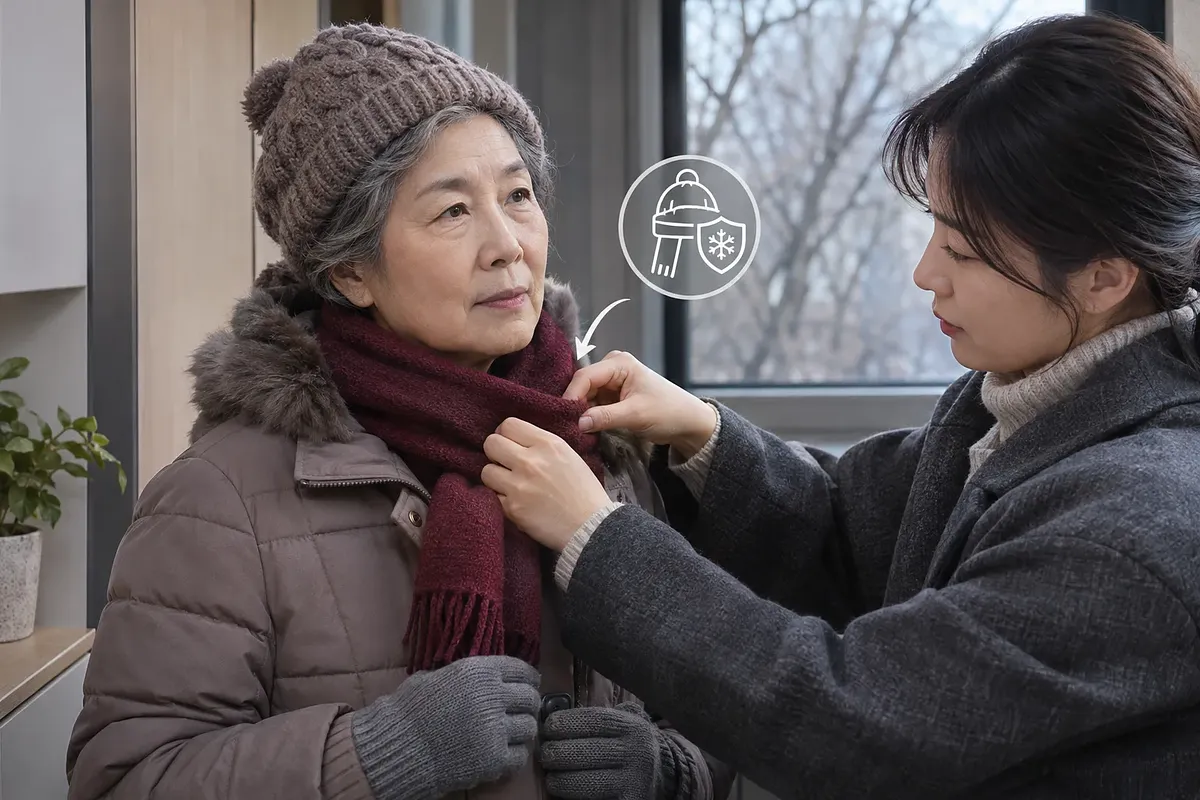
During a cold wave, check that older family members are dressed warmly before going out.

Comparing cold wave advisory and warning criteria

Cold wave alerts are issued from October to April when either of two conditions is met. The first involves a sharp drop in temperature. The second involves persistently low temperatures.

The Korea Meteorological Administration's Criteria for Issuing Weather Alerts specify the applicable conditions as follows.

When any one of the following conditions is met during the period from October to April

The table below separates the cold wave criteria in the same document by condition.

Condition Cold wave advisory Cold wave warning
① Sharp temperature drop When the morning low is expected to fall by at least 10℃ from the previous day, reach at most 3℃, and be at least 3℃ below the climate normal When the morning low is expected to fall by at least 15℃ from the previous day, reach at most 3℃, and be at least 3℃ below the climate normal
② Prolonged severe cold When morning lows of at most -12℃ are expected to persist for at least 2 days When morning lows of at most -15℃ are expected to persist for at least 2 days

All requirements within ① must be met. Do not judge solely by how much the temperature has fallen from the previous day. However, ① and ② do not have to be met at the same time.

Where can I find climate normals for each area?

Climate normals are available under Korea Climate Normals on the Open MET Data Portal. Mean temperature and minimum temperature are separate categories. To understand the cold wave criteria, look at values related to morning minimum temperatures.

  1. On the Open MET Data Portal, go to Climate Statistical Analysis > Climate Normals > Korea Climate Normals.
  2. In the graph menu, check your location of interest and the minimum temperature category.
  3. If you need data for individual dates, check the daily climate normals in the file set.

You can check how daily data are provided in the Guide to Korea Climate Normals. Do not mix values from different areas or dates when comparing them. Follow the Korea Meteorological Administration's announcements to determine whether an alert has actually been issued.

The 11 types of weather alerts and cold wave impact forecasts

Cold waves are one of the 11 types of weather alerts issued by the Korea Meteorological Administration. Weather alerts are issued when hazardous weather is expected. Cold wave impact forecasts provide response guidance tailored to the expected damage.

The alert types listed in the Korea Meteorological Administration's Guide to Forecasting Services are as follows.

  • Strong winds, high waves, heavy rain, heavy snow
  • Dry weather, storm surges, typhoons, yellow dust
  • Heat waves, tropical nights, cold waves

Cold wave alerts and impact forecasts use different level names and serve different purposes.

Category Levels What to check
Cold wave alerts Advisory, Warning Announcements about sharp temperature drops or prolonged severe cold
Cold wave impact forecasts Attention, Caution, Warning, Danger Expected impacts by sector and response guidance for each risk level

The Korea Meteorological Administration provides impact forecasts for heat waves and cold waves. Do not interpret “Caution” in an impact forecast as meaning the same thing as a cold wave advisory. After checking the alert, review the impact forecast for responses relevant to your daily life.

How to prevent water meters and boiler pipes from freezing and bursting

Start by insulating water meter boxes and exposed pipes to prevent them from freezing and bursting. Prepare insulating materials such as old clothes. The Ministry of the Interior and Safety's National Safety 24 Cold Wave Safety Guidelines recommend the following measures.

  1. Fill the water meter box with insulating materials such as old clothes. Seal gaps on the outside with tape to keep cold air out.
  2. Wrap exposed water pipes and boiler pipes in insulating material.
  3. When leaving home for an extended period, leave a faucet slightly open so water can flow.
  4. If a water pipe freezes, thaw it with lukewarm water or a hair dryer. Follow the National Safety 24 guidance and never use an open flame.
  5. If freezing causes a pipe or meter to burst, contact your local government or local waterworks department.

Check your boiler's manual for its freeze-protection operating settings. Leaving a faucet open and setting the boiler's operating mode are separate measures. Check how to manage each before leaving home for an extended period.

Last season, cold-related illnesses were particularly common outdoors and during the morning. Older adults accounted for at least half of reported patients. Cases also occurred indoors.

The Korea Disease Control and Prevention Agency's 2025-2026 Season Results are shown below. The reporting period was from December 1, 2025, to February 28, 2026. As of December 1, 2025, 512 emergency medical institutions were participating.

Item Reported results for the 2025-2026 season
Total patients with cold-related illnesses 364 people
Suspected cold-related deaths 14 people
Number of patients compared with the previous season 1.09 times as many
Number of suspected deaths compared with the previous season 1.75 times as many
Hypothermia 79.7% of all patients, 290 people
Aged at least 65 57.4% of all patients, 209 people
Cases occurring outdoors 75.0% of all patients, 273 people
Cases occurring indoors 25.0% of all patients, 91 people
Cases occurring from 6 to 9 a.m. 20.9% of all patients, 76 people, the highest of any time period
Coexisting cognitive impairment, such as dementia 5 of the 14 suspected deaths, 35.7%

These statistics cover patients reported through participating emergency departments. They do not represent an individual's probability of developing an illness. The denominator for the proportion with cognitive impairment is suspected deaths, not all patients.

The figure of 21.3% for patients who had been drinking comes from the previous year's surveillance data. The Korea Disease Control and Prevention Agency presented it in its Cold-Related Illness Advisory on December 31, 2025. Do not combine it with the final 2025-2026 season results as if it covered the same period.

Drinking alcohol can make it difficult to notice a drop in body temperature. The Korea Disease Control and Prevention Agency explains that this can increase the risk of cold-related illness. After drinking, take care to stay warm even if you feel less cold.

What should you prepare for different everyday situations?

Adjust your preparations to when you go out and who you live with. The table below groups official safety guidance by everyday situation. It does not introduce new alert criteria or diagnostic criteria.

Everyday situation What to do first Supporting guidance
Commuting or doing outdoor activities in the morning Check the weather before going out and prepare warm clothing. Last season, the highest proportion of cases occurred from 6 to 9 a.m.
An older family member is going out Help them reduce outdoor activities on cold days. The Korea Disease Control and Prevention Agency advises that older adults are less able to maintain their body temperature.
A family member has cognitive impairment, such as dementia Check their plans for going out and their cold-weather preparations together. The Korea Disease Control and Prevention Agency asks those around them to help ensure they follow health guidelines.
Children, older adults, or people in poor health are at home Check their body temperature and the indoor temperature often. National Safety 24 advises keeping indoor spaces sufficiently warm.
Returning home after drinking alcohol Take care to stay warm and reduce exposure to the cold. Drinking alcohol can make it difficult to notice a drop in body temperature.
Leaving home for an extended period Check the insulation around meters and pipes. National Safety 24 advises leaving a faucet slightly open.

For preparations before going out, see the Korea Disease Control and Prevention Agency's Health Guidelines for Cold Waves. Wear layers of thin clothing and prepare gloves, a scarf, and a hat. If your clothes or shoes get wet, it is best to change into dry ones promptly.

How to check on family members who live elsewhere

After sharing cold wave information, check how well they have actually prepared. If they have cognitive impairment, help them follow health guidelines. The Korea Disease Control and Prevention Agency calls for attention from caregivers and those around them.

  1. Tell them about alerts and the expected cold in their area.
  2. Check whether they plan to go out.
  3. Check whether they have prepared warm clothing.
  4. Check whether their home is being kept warm.

The winter 2026 outlook and cold wave preparations

Cold wave preparations are necessary even when warmer-than-normal conditions are expected. On November 6, 2026, the Korea Meteorological Administration forecast that a strong El Niño would persist through the winter. It expected El Niño to peak in December 2026.

The Korea Meteorological Administration forecast that this El Niño would become the strongest on record. Winters with a developed El Niño tend to bring higher-than-normal temperatures in Korea. Precipitation also tends to be higher overall. The source is the Korea Meteorological Administration's November 6, 2026, El Niño Press Release.

The outlook issued on October 23, 2026, and cited in the same document is as follows.

Period Temperature outlook
November and December 2026 Expected to be higher than normal
January 2027 Expected to be generally higher than normal, but highly variable due to brief inflows of cold air

Climate factors other than El Niño also affect winter weather. The Korea Meteorological Administration urged people to prepare for sudden changes, including cold waves. When going out or managing facilities, check the latest alerts along with short- and medium-range forecasts.

Common mistakes in cold wave preparation

Do not judge alert conditions and everyday risks by the same criteria. Cold wave alerts follow the Korea Meteorological Administration's issuance criteria. The condition of your home's pipes and your family's health need to be checked separately.

Common interpretation Correction
A cold wave advisory is issued only when the temperature reaches -12℃. It can also be issued based on a sharp temperature drop.
A drop of 10℃ from the previous day immediately meets the advisory criteria. The temperature must also be at most 3℃ and at least 3℃ below normal.
An alert is issued only after severe cold has actually lasted 2 days. The criterion is that it is expected to persist for at least 2 days.
Caution in an impact forecast is the same as a cold wave advisory. An impact forecast is separate information that explains the risk of damage and how to respond.
There is no need to worry about cold-related illness indoors. Cases were also reported indoors last season.
Preparations to prevent freezing and bursting can wait if the winter average temperature outlook is high. The Korea Meteorological Administration advises preparing for brief inflows of cold air and sudden changes.
Open the link

Opens in a new window.

Advertisement

Sign-in required

Sign in with your Google or Apple account to like, comment, and save highlights.

FAQ

When are cold wave advisories and cold wave warnings issued?

They are issued from October to April when either the conditions for a sharp temperature drop or those for prolonged severe cold are met. Warnings have stricter thresholds for the temperature drop and prolonged cold than advisories.

Are cold wave advisories issued only at minus 12℃?

They can also be issued based on a sharp temperature drop. The morning low must drop by at least 10℃ from the previous day. It must also be expected to be at most 3℃ and at least 3℃ below normal.

What is the prolonged severe cold criterion for a cold wave warning?

Morning lows of at most -15℃ must be expected to continue for at least 2 days. This does not mean a warning is issued only after 2 days have actually passed.

Where can I find climate normals for each region?

Go to Climate Statistical Analysis > Climate Normals > Climate Normals for Korea on the Open MET Data Portal. You can look up minimum temperatures in the Graph menu. Daily data is also available in the File Set menu.

Where can I check cold wave alerts on this site?

Check the alert banner at the very top of the weather panel on the left and the alert list in the [Nationwide] tab. The alert banner appears only when an alert is in effect. Check the region name and whether the alert type is a cold wave.

Does caution in a cold wave impact forecast mean the same thing as a cold wave advisory?

They are different types of information. Cold wave alerts are divided into advisories and warnings. Impact forecasts have four levels, attention, caution, warning, and danger, and provide response guidance for each sector.

How can I prevent pipes from freezing and bursting when I am away from home for a long time?

Insulate the water meter box and exposed pipes. National Safety 24 advises leaving a faucet slightly open so that water flows. Check your boiler's manual for its freeze protection settings.

Can I use fire to thaw a frozen water pipe?

National Safety 24's cold wave safety guidelines say never to use fire. They advise thawing pipes with lukewarm water or a hair dryer. If a pipe freezes and bursts, contact your local government or local water utility.

At what times and in what places did cold-related illnesses occur most often?

In the 2025-2026 season, 75.0% of reported cases occurred outdoors. The largest share by time of day was from 6 to 9 a.m., at 20.9%. Since 25.0% also occurred indoors, pay attention to keeping indoor spaces warm as well.

How should I look after older family members and those with cognitive impairments?

Check their outing plans and preparations for the cold together. At home, check their body temperature and the indoor temperature often. The Korea Disease Control and Prevention Agency urges those around people with cognitive impairments to help them follow health guidelines.

Am I safe if drinking alcohol makes me feel warm?

After drinking alcohol, it may be difficult to notice a drop in body temperature. The Korea Disease Control and Prevention Agency explains that this can increase the risk of cold-related illness. Be mindful of limiting alcohol and keeping warm.

If El Niño continues into the winter of 2026, will there be no cold waves?

The Korea Meteorological Administration advised preparing for abrupt changes such as cold waves. A tendency toward warmer-than-normal conditions should be distinguished from the weather on individual days. It forecast variability due to temporary influxes of cold air in January 2027.

When does the cold-related illness surveillance system for the 2026-2027 season start?

The start date for the new season has not been confirmed based solely on the official documents reviewed. Check the Korea Disease Control and Prevention Agency's press release on operations for that season. Do not apply the previous season's start date unchanged to the new season's schedule.

Is the Pipe Freeze Risk Index currently available?

The Weather Nuri Living Weather Index page still includes a description of the Pipe Freeze Risk Index. However, it has not been confirmed whether regional forecast values are currently being provided normally. When using it, check the date shown and whether the values are up to date.

Sources

Also available as video and a short read

Videos and a short write-up made from this content. Watch instead of reading, or skim the gist first.

Short version

Loading…

Data formats

This content is available in several machine-friendly formats.

Data-only languages (machine translated, files only)

Indonesian JSON MD Portuguese JSON MD Chinese (Traditional) JSON MD Deutsch JSON MD

Verification

This article was drafted with AI and then reviewed and edited by a person.

Reviewed by 신익희 · 편집장 · 2026-11-14

Figures in this article were checked against the source material during generation. · 2026-11-14

This translation has been cross-checked by AI. · 2026-11-14

Reuse & AI usage

Search indexing and AI citation with attribution are welcome. See the license policy for details.

CC BY · License

Loading…

Loading…

Loading…

Where this content lives

Related content

From Injoys

Request the content you want and take 70% of what it earns

Just leave the subject. We handle production, review, translation and distribution.

See how revenue sharing works

Comments