Injoys
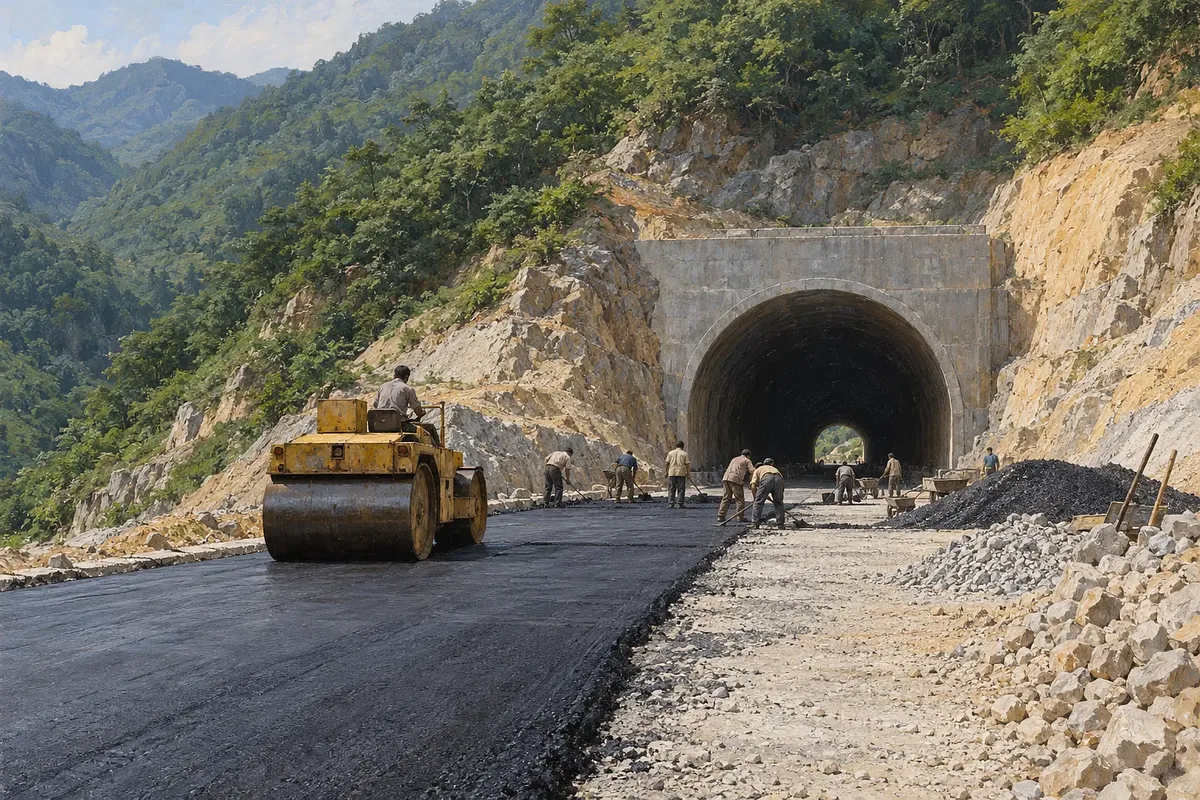
The Gyeongbu Expressway was built to address transport shortages caused by industrialization. After construction began in 1968, the project overcame funding shortages and difficult work between Daejeon and Daegu. With domestic funding secured and construction carried out by section, it was completed in 1970 and is remembered as a turning point in the transport network supporting industrialization.
This article follows the National Archives of Korea’s records on the Gyeongbu Expressway and was checked as of October 2026.
Background to the Construction of the Gyeongbu Expressway
Construction was prompted by transport capacity that could not keep pace with rising production. The First Economic Development Plan also pursued the restoration and expansion of transport facilities. However, the National Archives of Korea explains that transport shortages worsened from 1965. Transport capacity could not keep up with the growing economy. National Archives of Korea’s explanation of the construction background
The expressway plan took shape alongside national land development policy. The Comprehensive National Land Construction Planning Act was enacted in 1963. The 1967 “Grand National Land Construction Plan (Draft)” included expressway construction. The Gyeongbu route was intended to connect major cities and centers of production and consumption.
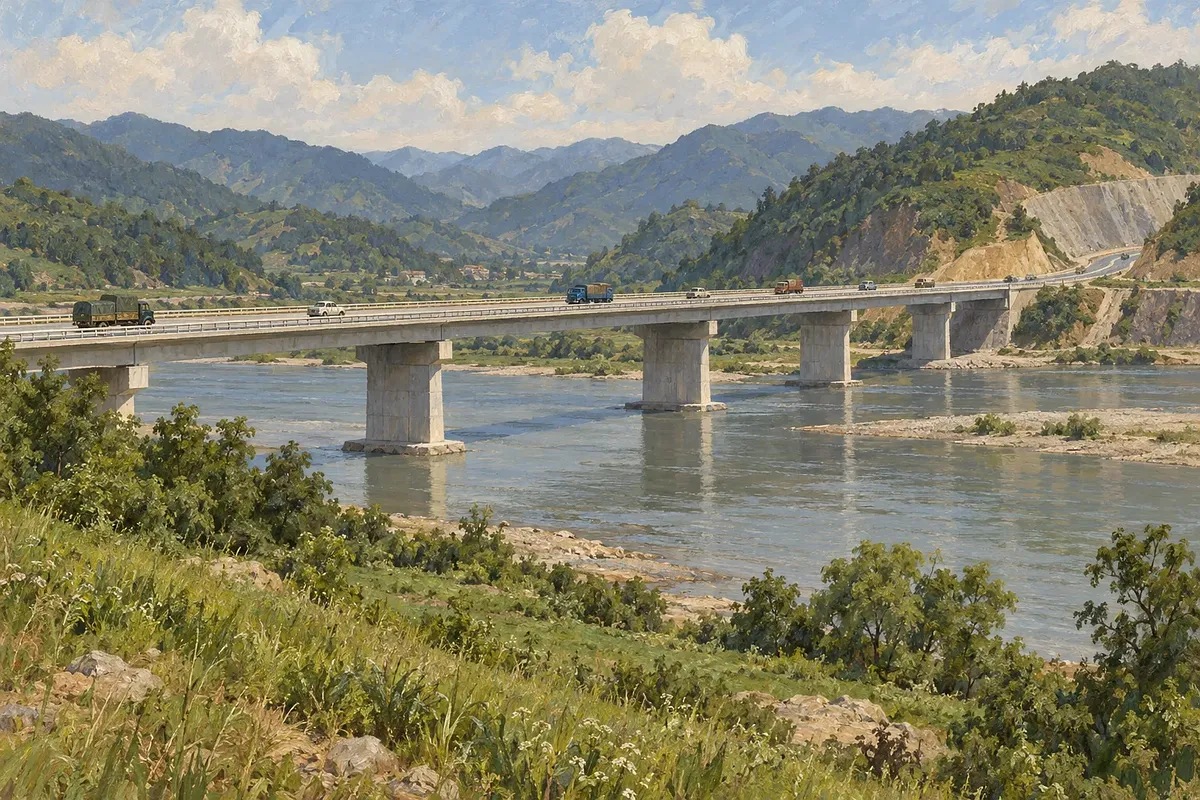
The Daejeon–Daegu section posed difficult construction challenges as it crossed the Geum River and mountainous terrain.AI-generated image
Timeline of Construction, Completion, and Opening
The start of construction marks the beginning of the work, while completion means the work is finished. Opening is the stage when the completed road is made available to traffic. Completed sections of the Gyeongbu Expressway opened before the rest. The opening dates of individual sections therefore differ from the opening date of the entire route.
| Date | Event | Source |
|---|---|---|
| April 29, 1967 | President Park Chung-hee announced a plan to build an expressway between Seoul and Busan | Kim Won-gi, “The Significance of the Opening of the Gyeongbu Expressway” |
| December 15, 1967 | A survey team for the national trunk expressway construction plan was established | Project overview in the same article |
| February 1, 1968 | The project began with construction of the Seoul to Suwon section | Schedule in the same article |
| December 21, 1968 | The Seoul to Suwon section opened | Schedule in the same article |
| December 30, 1968 | The Suwon to Osan section opened | Schedule in the same article |
| September 29, 1969 | The Osan to Cheonan section opened | Schedule in the same article |
| December 10, 1969 | The Cheonan to Daejeon section opened | Schedule in the same article |
| December 29, 1969 | The Daegu to Busan section opened | Schedule in the same article |
| June 27, 1970 | Paving of the approaches to Dangjae Tunnel was completed | National Archives of Korea’s explanation of the Daejeon construction section |
| June 30, 1970 | The entire route was completed with the completion of the Daejeon to Daegu section | Schedule in Kim Won-gi’s article |
| July 7, 1970 | The entire route opened | National Archives of Korea’s Records of the Month for July 2014 |
Kim Won-gi’s article was written by the vice minister of construction at the time. The project schedule was compiled from its project overview and schedule. The date of the finishing work on Dangjae Tunnel was supplemented by the National Archives of Korea’s explanations of individual construction sections. Original article by Kim Won-gi, Explanation of the Daejeon construction section
Construction Costs and Funding
Domestic funding covered almost all actual construction costs. Borrowing money from abroad was also considered early on. However, difficulties in securing foreign capital coincided with the suspension of loan plans. Not every funding option considered should be read as having actually been used. National Archives of Korea’s explanation of funding
| Category | What the records show | Distinction to keep in mind |
|---|---|---|
| Foreign funding considered | Equipment and materials loans, grain loans | Consideration does not mean borrowing actually occurred |
| Domestic funding considered | Fuel tax increases, public bonds, tolls, military support, and other sources | The list of options alone does not show how much each source contributed |
| Actual funding outcome | Domestic funding covered almost all construction costs | This should not be overstated as entirely domestic funding |
Construction costs also changed from the planning stage. The original budget set after review was 33 billion won. In March 1969, the Ministry of Construction requested 42.973 billion won. The additional amount requested was 9.973 billion won.
Kim Won-gi recorded total construction costs of 42.973 billion won for the project completed in 1970. This amount is stated in the monetary value of the time. Comparing it with construction costs today requires separate adjustments for prices and the scope of work. Revisions to project costs
The Difficult Daejeon to Daegu Section of the Gyeongbu Expressway
The Daejeon to Daegu section required bridge and tunnel construction to proceed together. A difficult construction section is one where terrain and construction conditions make the work challenging. Finishing work in the Okcheon and Yeongdong areas remained a particular problem. Construction status documents from the time also confirm the difficulties in these areas. Explanation of “Construction Status of the Seoul to Busan Expressway”
The National Archives of Korea identifies the stretch between Usan-ri and Myogeum-ri in Okcheon as a particularly difficult section. A bridge had to be built across the Geumgang River. A tunnel through Dangjae also had to be built in the same section. This meant that completing the roadbed alone would not make the road passable. Terrain and construction in the Daejeon construction section
| Construction condition | Work required | Effect on completion |
|---|---|---|
| A route crossing the Geumgang River | Construction of a bridge across the river | Roads on both sides of the river needed to be connected |
| A route passing through Dangjae | Construction of a tunnel through the mountain | Vehicles could pass only once the tunnel was completed |
| Connections between bridges, tunnels, and ordinary road sections | Paving of approaches and roads | Finishing work was still needed after the structures were completed |
The 1970 construction status document reports that the bridges had been completed. Dangjae Tunnel, however, remained a structure where progress was slow. This shows where the bottleneck lay in the final stages of construction. The document alone, however, cannot establish the effectiveness of any particular construction method.
Why Paving the Approaches to Dangjae Tunnel Was a Turning Point
The finishing work on Dangjae Tunnel marked a turning point by connecting a route that had remained broken. The National Archives of Korea explains that paving of the approaches was finished on June 27, 1970. The entire route was then completed on the 30th of the same month. This is why the completion of tunnel work must be distinguished from the completion of the overall project. Completion records for the Daejeon construction section
Road formation work on the Daejeon to Daegu section was finished by the end of 1969. Work on structures such as tunnels and long-span bridges, along with paving, continued into the following year. This sequence shows that cutting and filling earth alone does not complete a road. Kim Won-gi’s project overview