Injoys
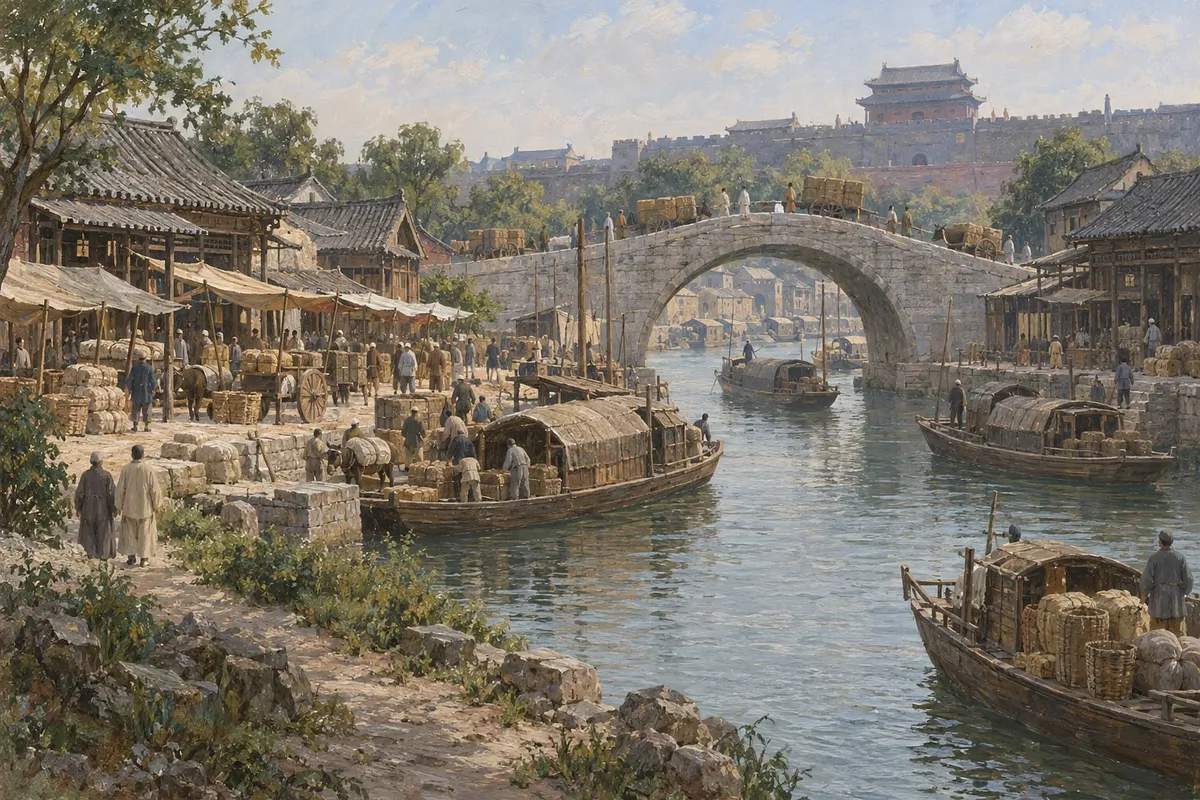
Pak Je-ga was appointed a proofreader at the Kyujanggak in 1779 despite restrictions on seoeol entering government service. A path opened for his scholarship, but discrimination based on birth remained. Bukhagui, written after his 1778 mission to Qing, is remembered as a set of reform proposals aimed at improving ordinary people’s lives.
This article follows the Bukhagui records in the Korean History Database, checked in October 2026.
The restrictions faced by a scholar born seoeol
Being seoeol limited access to government office regardless of scholarly ability. Seoeol refers to descendants born to concubines. In Joseon, the system distinguished between legitimate sons and seoeol.
Born in 1750, he was the son of a concubine of Royal Secretary Pak Pyeong. His pen name was Chojeong, and he showed talent in poetry, calligraphy, and painting. His literary work is also preserved in Jeongyujip and Jeongyusigo. Basic facts about his life can be found in the Encyclopedia of Korean Culture’s “Pak Je-ga” entry.
Scholarly relationships also formed outside official institutions. His exchanges with Pak Ji-won, Hong Dae-yong, Yi Deok-mu, and Yu Deuk-gong formed their basis. The Northern Learning school refers to intellectuals who sought to learn from Qing scholarship and culture and apply them in Joseon.
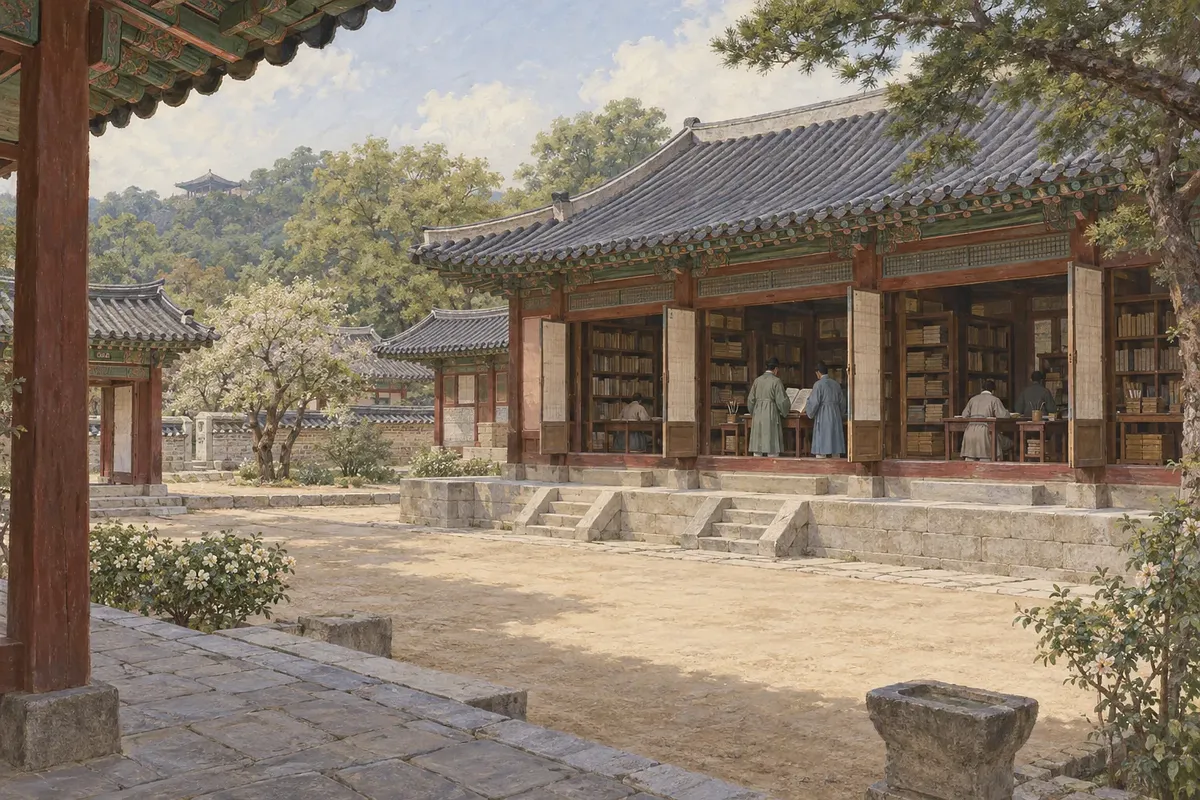
Park Je-ga’s appointment at the Gyujanggak expanded opportunities for scholars of secondary birth to hold office.AI-generated image
What did Pak Je-ga’s appointment as a Kyujanggak proofreader change?
His appointment in 1779 opened an opportunity to put his scholarship to work in state publishing projects. King Jeongjo also appointed Yi Deok-mu, Yu Deuk-gong, and Seo I-su as proofreaders. It was one example of a policy to appoint seoeol scholars to government posts.
Proofreaders assisted the Kyujanggak’s senior officials. Their practical duties included editing and publishing books. In this post, Pak Je-ga also gained opportunities to convey his views to the king.
The proofreader post, however, was a junior position at the Kyujanggak. Appointing some talented individuals did not mean equal treatment for all seoeol. Both the opportunities and the limits appear in Our History Net’s explanation of Bukhagui.
| Category | What changed | What remained limited |
|---|---|---|
| Government service | Seoeol scholars took part in Kyujanggak work | Discrimination based on birth continued |
| Scholarship | Access to the book collection and publishing projects | The status of a junior assistant |
| Policy proposals | Reform proposals could be presented to the king | A proposal did not necessarily mean adoption |
Timeline of missions to Qing and government service
Pak Je-ga began writing Bukhagui before his appointment as a proofreader. A mission to Qing meant travel by an envoy’s party to and from the Qing capital. The timeline below distinguishes the sequence of his writing and government work.
| Year | Event | Source |
|---|---|---|
| 1750 | Born seoeol | Encyclopedia of Korean Culture, “Pak Je-ga” |
| 1778 | Wrote Bukhagui after his first mission to Qing | Bukhagui, “Preface to Bukhagui”; Our History Net, “Bukhagui” |
| 1779 | Appointed a Kyujanggak proofreader | Our History Net’s explanation of Bukhagui |
| 1786 | Submitted a statement of his views containing reform plans to King Jeongjo | Our History Net, “Pak Je-ga” |
| 1790 | Took part in two missions to Qing | Encyclopedia of Korean Culture, “Pak Je-ga” |
| 1801 | Exiled to Jongseong after his last mission to Qing when he became implicated in a seditious letter incident | Our History Net, “Pak Je-ga” |
| 1805 | Died | Encyclopedia of Korean Culture, “Pak Je-ga” |
He made four missions to Qing in all. They also gave him opportunities to meet Qing scholars and artists. Accounts differ on the year his exile ended, so it is omitted from the timeline.
Why Pak Je-ga wrote Bukhagui
Pak Je-ga wrote Bukhagui to find ways to apply what he had seen to life in Joseon. The culture and practices he observed on his first mission to Qing in 1778 were his starting point. The preface also records that Yi Deok-mu accompanied him.
I recorded in the book those customs that could be put into practice in our country and would be useful in daily life.
Pak Je-ga, Bukhagui, “Preface to Bukhagui”
This passage shows how he chose what to record. His criteria were whether something could be put into practice in Joseon and whether it would help in daily life. The preface also says that he wrote about the benefits of adopting these practices and the problems caused by not doing so. The passage can be checked against the original text of “Preface to Bukhagui” in the Korean History Database.
The book’s title came from the words of Chen Liang in Mencius. Northern Learning later came to refer to an intellectual movement that sought lessons in Qing culture and institutions. Its aim was to address poverty and institutional problems in Joseon.
Differences between the Inner Section, Outer Section, and Jinso edition
Pak Je-ga continued to add to and revise Bukhagui after writing it. The Inner and Outer Sections differ in the kinds of subjects they emphasize. The Jinso edition was a version expanded with agricultural material for presentation to the king.
| Section | Main contents | Focus when reading |
|---|---|---|
| Inner Section | Carts, ships, housing, markets, household goods | Improving everyday tools and facilities |
| Outer Section | Agricultural techniques, selection of talented people, justification for Northern Learning | Reforming production and institutions |
| Jinso edition | Expanded material on agriculture and the distribution of produce | Reform plans presented to the king |
Why he discussed carts, markets, and Western technology together
He believed that poverty could be reduced by improving both everyday technology and the distribution of goods. The idea was called iyong husaeng: using tools and institutions effectively to make life more prosperous.
| Area of proposal | Specific interests | Intended effect |
|---|---|---|
| Transport | Carts, boats, roads, bridges | Moving produce to where it was needed |
| Production | Farm tools and agricultural techniques | Improving farming methods |
| Commerce | Expanding markets and trade | Encouraging trade in produce |
| Consumption | Use of needed goods | Sustaining and developing production and technology |
| Learning technology | Books, dispatching personnel, inviting experts | Acquiring and spreading technical knowledge |
His argument about consumption assumed a relationship with production. The reasoning was that if people did not use goods, the skills needed to make them would be hard to sustain. It cannot be turned into advice that people today should simply consume more.
To bring in technology, he proposed obtaining books and studying them. He also considered sending specialists to Qing to learn. He went so far as to propose inviting Western missionaries working in Qing. These plans are summarized in New History of Korea’s discussion of proposals to introduce Western technology.