Injoys
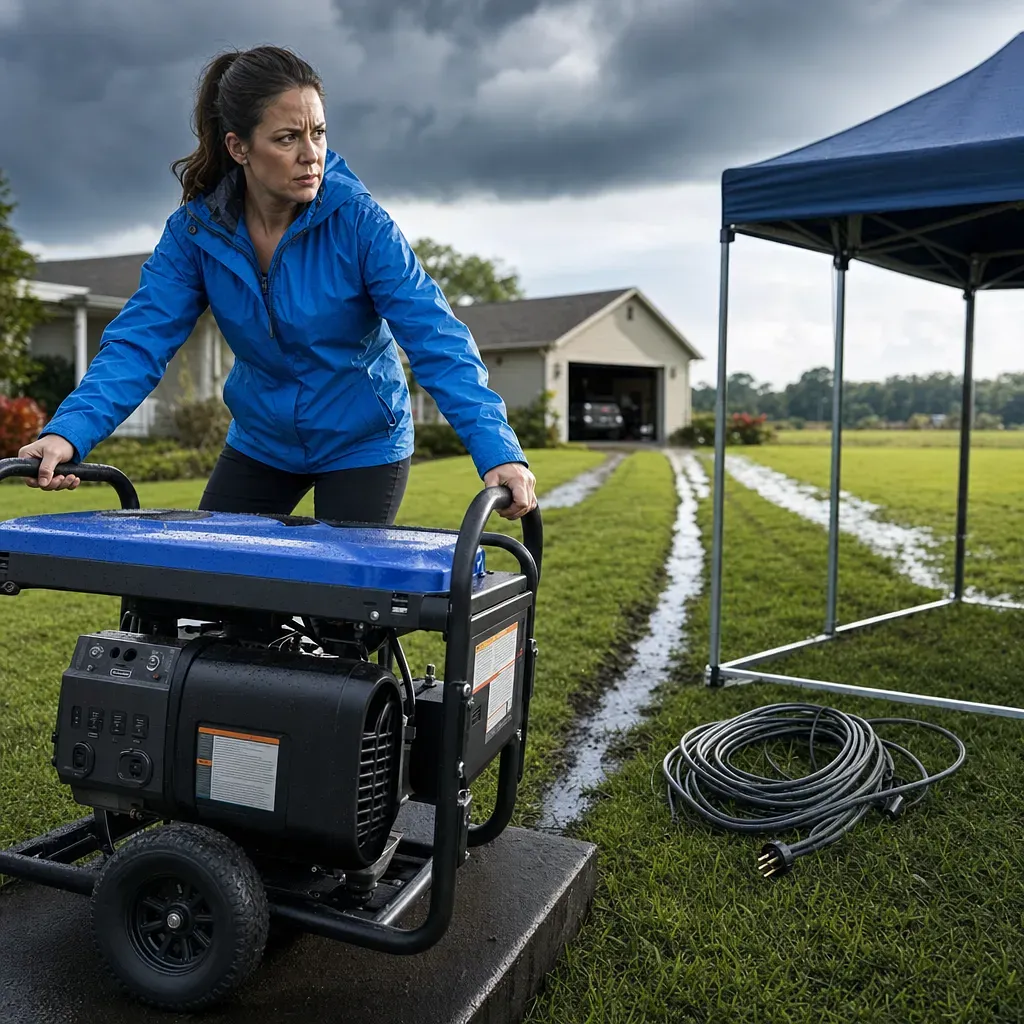
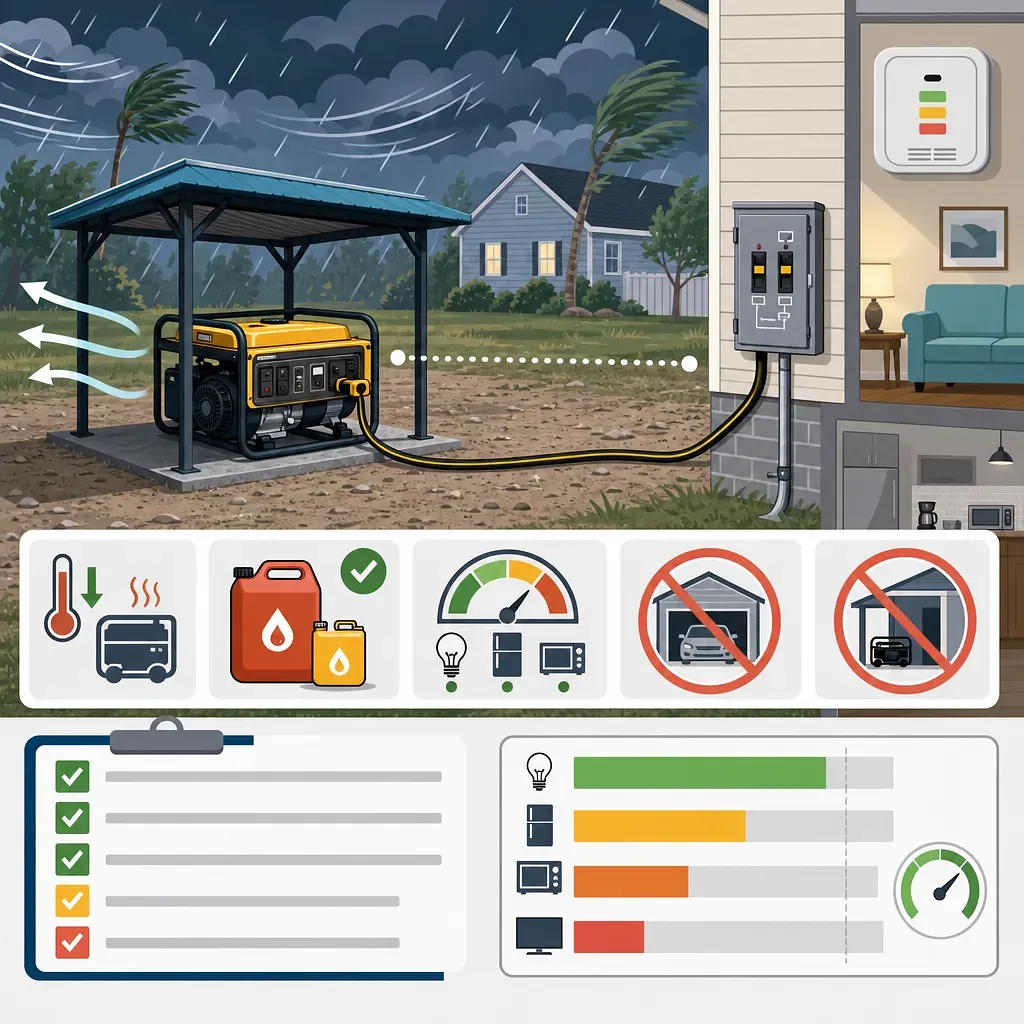
If a hurricane-related power outage is expected, do not wait until after starting the generator to decide where to put it. Before the storm arrives, determine a safe operating location and connection method. This procedure is intended for households using portable generators that burn gasoline, propane, or other fuels. Safe installation and purchasing parts may become difficult after high winds, flooding, and outages begin, so prepare in advance.
In the United States, first consult generator and carbon monoxide guidance from the EPA, CDC, and CPSC, along with the generator manufacturer’s manual. Confirm electrical connection work with the local permitting authority and a qualified electrician. If the minimum distance specified by a public agency differs from the clearance required by the manufacturer, it is safer to apply the stricter requirement.
1. Prepare the Equipment and Installation Location Before an Outage
Prepare the following before a hurricane warning is issued.
- Generator owner’s manual and rated-output chart
- List of the starting and running wattage of necessary appliances
- Outdoor-rated three-wire grounded extension cords or a properly installed generator inlet and transfer switch
- An open-sided rain cover designed for generator operation
- Battery-powered or battery-backup carbon monoxide alarms
- Approved fuel containers, a fire extinguisher, and flashlights
- Engine oil, spark plugs, and other consumables specified by the manufacturer
When test-running the generator, use the same outdoor location that you would use during an actual outage. Fuel type, oil level, starting procedure, grounding, and neutral configuration vary by model, so the manual for that specific model takes precedence over general online advice.
Reduce Your Power-Use List First
Begin by listing essential loads such as refrigerators, medical devices, communications equipment, and lights. Connecting appliances with high running and starting wattage, such as air conditioners, electric water heaters, and electric ranges, at the same time may cause an overload.
Check each appliance’s nameplate or manual for its wattage or amperage. For motor-driven equipment with a separately listed starting wattage, include that value as well. If the calculation is uncertain, reduce the load further rather than continuously operating the generator at its maximum output.
2. Place It Outdoors in an Open Area at Least 20 Feet Away
The EPA and CPSC advise operating fuel-powered portable generators outdoors at least 20 feet, approximately 6.1 meters, from the home, with the exhaust directed away from the building. Measuring the distance involves more than simply moving the generator away from one window of your home.
Check all of the following.
- Check the distance from the generator to your home and neighboring buildings.
- Locate doors, windows, garage doors, soffit vents, bathroom exhaust vents, dryer vents, and HVAC outdoor-air intakes.
- Position the exhaust outlet so that it points away from all buildings and openings.
- Choose firm, level ground that will not flood.
- Avoid fences, walls, shrubs, outdoor HVAC units, and other objects that obstruct exhaust and cooling airflow.
- Also apply the side and overhead clearances specified by the manufacturer and all local fire and building codes.
If you cannot maintain a distance of 20 feet or the exhaust may enter a neighbor’s home, do not operate the generator at that location. A shorter distance, a fan, or an open window cannot substitute for safe outdoor placement.
Locations Where Operation Is Prohibited
| Location | Use | Reason |
|---|---|---|
| Indoors, including living rooms, basements, and sheds | Prohibited | Carbon monoxide can accumulate rapidly |
| Garage with the door open | Prohibited | Even with the door open, exhaust can collect near the ceiling and enter the home |
| Roofed terrace, veranda, or porch | Prohibited in principle | A roof, walls, or railings can trap exhaust or redirect it indoors |
| Apartment balcony | Prohibited | It is too close to openings in your own unit and in units above, below, and beside it |
| Directly below a window or near an outdoor-air intake | Prohibited | Exhaust can enter the building directly |
| Location where water can collect or flooding may occur | Prohibited | Risk of electric shock, short circuits, and engine damage |
| Open outdoor area with sufficient separation | Conditionally permitted | All distance, exhaust direction, rain protection, ground, and manufacturer requirements must be met |
Do not select a terrace simply because its roof provides protection from rain. Generator exhaust contains carbon monoxide, which is difficult to detect by smell or color, and it can accumulate even in partially open areas due to roofs, walls, and wind.
3. Keep Out Rain Without Trapping Exhaust
Operating a generator while it is exposed to rain or wet ground increases the risk of electric shock. However, wrapping the generator in a tarp or enclosing it in a box for waterproofing traps exhaust and heat, creating risks of carbon monoxide poisoning, fire, and overheating.
A safe rain-protection device must meet all of the following conditions.
- Be designed for generator operation or approved by the manufacturer
- Not block the exhaust outlet, engine cooling vents, or air intake
- Have sufficiently open sides to allow exhaust to escape freely
- Prevent contact between the hot muffler and combustible materials
- Be secured so that it does not blow away in high winds or collapse onto the generator
- Protect power connections and plugs from water
- Maintain the overhead and side clearances required by the manufacturer
Do not place a tarp directly over the generator or put it in a small shed, tent, or plastic box. If you do not have a dedicated rain-protection method that maintains safe distance and ventilation, the general rule is not to operate the generator while it is raining. Do not touch plugs or controls when the generator or your hands are wet.
4. Test the Carbon Monoxide Alarms
Carbon monoxide alarms are still required even when the generator is in a safe location. Wind direction can change, or exhaust may enter through an unexpected opening.
- Check the manufacturer’s instructions for alarm placement.
- In particular, check the manufacturer’s instructions for placement requirements near sleeping areas.
- Follow the alarm manufacturer’s instructions for wall or ceiling placement and clearance from kitchens and bathrooms.
- Use battery-powered or battery-backup alarms so they continue operating during an outage.
- Before the storm, check the test button, battery status, and expiration or replacement date.
- Do not rely solely on the alarm’s display or app; test whether the audible alarm actually works.
Do not omit household alarms even if the generator has an automatic carbon monoxide shutoff feature. Automatic shutoff is a supplementary safeguard that responds to a specific concentration near the unit; it cannot monitor every situation in which exhaust enters the home.
If an Alarm Sounds or Symptoms Appear
Headache, dizziness, nausea, weakness, chest pain, and confusion may be symptoms of carbon monoxide exposure. If an alarm sounds or these symptoms occur, do not remain behind to check the generator. Immediately move all people and pets to fresh air. In the United States, call the emergency number officially designated by local authorities or contact the local fire department, and do not reenter the building until it has been declared safe.