Injoys
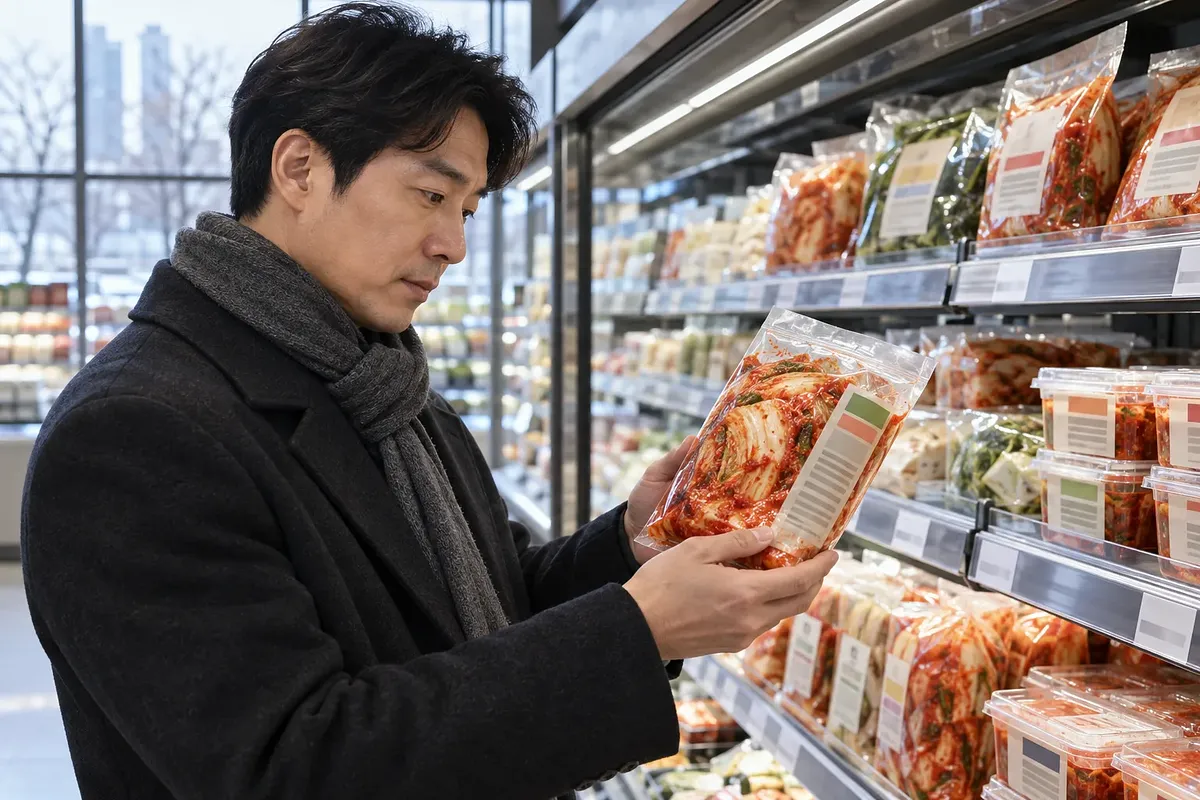
Origin labeling standards for napa cabbage kimchi differ between domestically made packaged products and restaurants. For packaged products, check the ingredients selected by their proportions, as well as red pepper powder and salt. At restaurants, napa cabbage and red pepper powder are subject to labeling.
The latest labeling standards are available under “Origin Labeling Management” from the National Agricultural Products Quality Management Service. (Verified details: Domestically made kimchi products that use red pepper powder must label the top 2 ingredients, red pepper powder, and salt. Those without red pepper powder must label the top 2 ingredients and salt. Pickled products must label the top 2 ingredients excluding salt, along with salt. · Source: naqs.go.kr · Checked 2026-10-23)
The difference between ingredient origins and manufacturing locations
An ingredient’s origin is different from the location of the factory that makes the kimchi. The napa cabbage may be grown somewhere other than where the kimchi is made. A manufacturer’s domestic address alone therefore cannot establish the origins of the ingredients.
Refers to the country, region, or waters where agricultural or fishery products were produced, gathered, or caught.
This is the definition given in “Origin Labeling Management” by the National Agricultural Products Quality Management Service. “Korean” and “domestic” have the same meaning in agricultural origin labeling. “Domestic” does not mean that imported ingredients were processed domestically. National Agricultural Products Quality Management Service: Origin Labeling Management

Restaurants must disclose the origins of the napa cabbage and chili powder used in napa cabbage kimchi.
Comparing origin checks for packaged kimchi
For domestically made products, first distinguish between kimchi products and pickled products. For kimchi products, the ingredients subject to labeling depend on whether red pepper powder is used. The following standards do not apply unchanged to imported finished products.
| Type of domestically made product | Ingredients selected by proportion | Ingredients labeled separately |
|---|---|---|
| Kimchi products made with red pepper powder | Top 2 ingredients, excluding red pepper powder and salt | Red pepper powder and salt |
| Kimchi products made without red pepper powder | Top 2 ingredients, excluding salt | Salt |
| Pickled products | Top 2 ingredients, excluding salt | Salt |
Pickled products have an exception based on ingredient proportions. If one ingredient other than salt accounts for at least 98%, that ingredient and salt must be labeled. Kimchi made with processed products containing red pepper powder also requires checking the red pepper powder’s origin. Questions and Answers on Agricultural and Food Origin Labeling
What do the top 2 ingredients mean?
The top 2 ingredients do not mean only the second ingredient. They mean the first and second ingredients after the specified exclusions. Water, food additives, ethyl alcohol, sugars, and similar ingredients are excluded from both the ranking by proportion and the labeling requirements.
Whether the origin of salt in kimchi must be labeled does not depend only on salt’s ranking by proportion. Salt is subject to separate labeling in kimchi products. Reading only the labels for napa cabbage and red pepper powder may cause you to miss an item you need to check. National Agricultural Products Quality Management Service: Label Content Guide
Origin checks for kimchi at restaurants
For napa cabbage kimchi served at restaurants, napa cabbage and red pepper powder are subject to labeling. The salt labeling standards for packaged processed products do not apply unchanged to menus. Restaurant origin labeling guidance also distinguishes between these two ingredients. National Agricultural Products Quality Management Service: Restaurant Origin Labeling Guide
| Category | Information to check | Points to note when interpreting labels |
|---|---|---|
| Domestically made kimchi | The respective origins of napa cabbage and red pepper powder | Do not assume that both ingredients have the same origin |
| Imported finished kimchi products | The origin of the imported finished product | The origin stated on the packaging may be used |
| Processed or cooked dishes, such as kimchi stew | The origin of the napa cabbage kimchi used | Labeling is not required only for kimchi served as a side dish |
For finished products processed abroad, the origin stated on the packaging may be used. This differs from ingredient-by-ingredient labeling for domestically made products. Enforcement Rule of the Act on Origin Labeling of Agricultural and Fishery Products: Labeling Methods
Processed products containing kimchi are also subject to labeling when cooked and served. The Ministry of Government Legislation interpreted the rules as also covering kimchi contained in retort-packaged kimchi stew. This interpretation was issued on December 31, 2013. Ministry of Government Legislation: Legal Interpretation 13-0341