Skip to content
Case Study

Balhae's First Mission to Japan in 727 and King Mu's Letter

Of the 24 Balhae envoys who set out for Japan in 727, 8, including Go Je-deok, survived after being washed ashore. They delivered King Mu's letter in the first lunar month of the following year. In the fourth lunar month of 728, the Japanese court entrusted the returning envoys with a reply proposing that they continue exchanging visits by sea.

Listen or read this article

8:31

Listen, or read the text only.

Balhae's First Mission to Japan in 727 and King Mu's Letter

Kokoro 82M AI-generated voice 9 min read

0:00 8:31

Advertisement

Download audio

File name
balhae-king-mu-727-first-mission-to-japan-en.mp3
Format
MP3 (audio/mpeg)
Duration
8:31
File size
5.85 MB
Engine
Kokoro 82M

This audio was generated by AI.

You may download and use it freely for personal use.

Advertisement

Balhae's First Mission to Japan in 727 and King Mu's Letter

6 min read

Balhae's First Mission to Japan in 727 and King Mu's Letter
Of the 24 Balhae envoys who set out for Japan in 727, 8, including Go Je-deok, survived after being washed ashore. They delivered King Mu's letter in the first lunar month of the following year. In the fourth lunar month of 728, the Japanese court entrusted the returning envoys with a reply proposing that they continue exchanging visits by sea.
In 727, Balhae sent its first mission to Japan, and the survivors reached the Japanese capital.
Balhae sent 24 envoys, and 8 of them delivered King Mu's letter to the Japanese court in the first lunar month of 728.
In his letter, King Mu mentioned the former lands of Goguryeo and the customs of Buyeo and asked for friendly relations with Japan.
Sinpyeon Hanguksa suggests that one reason for sending the envoys was to keep Silla in check.
In the fourth lunar month of 728, the Japanese court entrusted the returning envoys with a reply and gifts for the king of Balhae.
In 727, the first delegation that King Mu of Balhae sent to Japan ran into a storm and reached an unfamiliar coast. Of the 24 envoys, 8 survived and delivered his official letter to the Japanese court in the first lunar month of 728. When Japan replied to King Mu, who had asked for friendly relations, the two countries began formal diplomatic exchanges.
I consulted volume 10 of the Shoku Nihongi, which the National Institute of Korean History made available in November 2026.
Why King Mu Sent Envoys to Japan
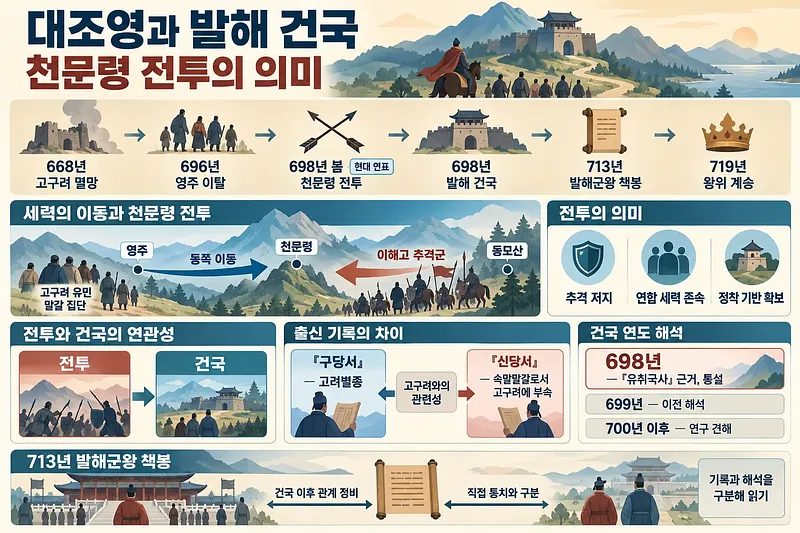
When King Mu sent envoys to Japan, Balhae was at odds with Tang over the Heuksu Malgal. King Mu's name was Dae Muye. He was the son of Dae Joyeong, who founded Balhae after the fall of Goguryeo. He succeeded his father in 719 as Balhae's second king and ruled until 737.
In 726, when Tang gave the ruler of the Heuksu Malgal an official post, King Mu ordered an attack on the Heuksu Malgal. King Mu's younger brother, Dae Munye, opposed the attack and fled to Tang. The first delegation to Japan left the following year. It was later, in 732, that King Mu sent Jang Munhyu to attack Dengzhou in Tang.
Timeline of the First Delegation's Landing and Delivery of the Official Letter
The delegation reached the Japanese coast in one year and presented the king's official letter to the court in the next. Go Inui, the first person named in the letter, died after the storm drove him ashore. The 8 survivors, including Go Jedeok, went on to the capital to continue the delegation's mission.
Date | What happened | Source record or commentary 8th month of 727 | King Mu sent 24 envoys to Japan with an official letter and gifts. | Our History Net, commentary on “The Official Letter King Mu of Balhae Sent to Japan” 9th month of 727 | The 8 survivors came ashore at the landing site in Dewa Province. | New Edition of Korean History, vol. 10, “Relations with Japan” 12th month of 727 | The group reached Nara, the capital of Japan. | New Edition of Korean History, vol. 10, “Relations with Japan” Gapin day of the first lunar month of 728 | The envoys presented King Mu's official letter and gifts to Emperor Shōmu. | Shoku Nihongi, vol. 10, entry for the Gapin day of the first lunar month Imo day of the 4th month of 728 | The Japanese court entrusted the returning envoys with a reply addressed to the king of Balhae. | Shoku Nihongi, vol. 10, entry for the Imo day of the 4th month
What the Official Letter Says and Why the Envoys May Have Been Sent
In his official letter, King Mu said he wanted to maintain friendly relations with Japan by exchanging envoys. He wrote that the long distance by sea had made it hard for the two sides to ask after each other. In describing the country he ruled, he also said that he had reclaimed Goguryeo's former lands and preserved customs handed down from Buyeo.
The New Edition of Korean History reads the passage about the former lands as a sign that Balhae's royal house saw itself as Goguryeo's successor. Interpretations differ on the political reasons for sending the envoys. The New Edition of Korean History emphasizes keeping Silla in check, while Our History Net's commentary on the letter focuses on pressure from Tang. Nowhere in his letter does King Mu ask Japan to take military action against Silla or Tang.

Who Received the Reply and the Gifts?
The Shoku Nihongi distinguishes between the honors the envoys themselves received and what was sent in return to the king of Balhae. The entry for the first lunar month says the Japanese court granted the 8 envoys the Senior Sixth Rank, Upper Grade. The entry for the 4th month says the court entrusted the returning group with a reply and gifts for King Mu.
Date | Sender and recipient | Documents and gifts Delivered in the first lunar month of 728 | King Mu to the Japanese court | The official letter lists 300 marten pelts as gifts sent with it. First lunar month and 4th month of 728 | The Japanese court to the 8 Balhae envoys | The court granted them a rank and robes befitting it in the first lunar month, then distributed textiles and other items among them in the 4th month. 4th month of 728 | Emperor Shōmu to King Mu | Silk, thread, and other items accompanied the royal reply.
In his reply, Emperor Shōmu welcomed King Mu's wish to maintain their longstanding friendship. He also expressed a wish to keep up exchanges despite the sea between them. The reply thus preserves Japan's response to Balhae's proposal.
Distinguishing the First Diplomatic Exchange from the Record of the Japan Route
The first mission led to an exchange of letters between the two rulers. The next delegation left in 739, during King Mun's reign. That was 12 years after the first mission was completed.
The New Book of Tang calls the route from Balhae's Eastern Capital at Yongwonbu to Japan the Japan Route. The name refers to the route envoys took between the two countries. This record alone tells us little about which port the first ship left from or what course it took before being driven off course by the storm in 727.
Looking Back in 2027 on the Significance of the First Mission
The year 2027 marks 1300 years since Balhae first sent envoys to Japan. King Mu's official letter shows how Balhae introduced itself to a neighbor during the Northern and Southern States period. Reading it alongside Japan's reply also shows how both sides linked their new diplomatic exchanges to their longstanding friendship.
0:00 0:00
1 / 27

Advertisement

Download text

File name
balhae-king-mu-727-first-mission-to-japan-en.txt
Format
TXT (text/plain)
Paragraphs
27

Downloads exactly what you see as a text file.

Please cite the source when quoting.

Advertisement

Large text

Makes the text larger and the colors clearer. Turn it on if the text feels too small.

Only eight of the 24 envoys Balhae sent to Japan in 727 survived to deliver King Mu’s letter to the Japanese court in early 728.AI-generated image

Key points

  • In 727, Balhae sent its first mission to Japan, and the survivors reached the Japanese capital.
  • Balhae sent 24 envoys, and 8 of them delivered King Mu's letter to the Japanese court in the first lunar month of 728.
  • In his letter, King Mu mentioned the former lands of Goguryeo and the customs of Buyeo and asked for friendly relations with Japan.
  • Sinpyeon Hanguksa suggests that one reason for sending the envoys was to keep Silla in check.
  • In the fourth lunar month of 728, the Japanese court entrusted the returning envoys with a reply and gifts for the king of Balhae.

In 727, the first delegation that King Mu of Balhae sent to Japan ran into a storm and reached an unfamiliar coast. Of the 24 envoys, 8 survived and delivered his official letter to the Japanese court in the first lunar month of 728. When Japan replied to King Mu, who had asked for friendly relations, the two countries began formal diplomatic exchanges.

I consulted volume 10 of the Shoku Nihongi, which the National Institute of Korean History made available in November 2026.

Why King Mu Sent Envoys to Japan

When King Mu sent envoys to Japan, Balhae was at odds with Tang over the Heuksu Malgal. King Mu's name was Dae Muye. He was the son of Dae Joyeong, who founded Balhae after the fall of Goguryeo. He succeeded his father in 719 as Balhae's second king and ruled until 737.

In 726, when Tang gave the ruler of the Heuksu Malgal an official post, King Mu ordered an attack on the Heuksu Malgal. King Mu's younger brother, Dae Munye, opposed the attack and fled to Tang. The first delegation to Japan left the following year. It was later, in 732, that King Mu sent Jang Munhyu to attack Dengzhou in Tang.

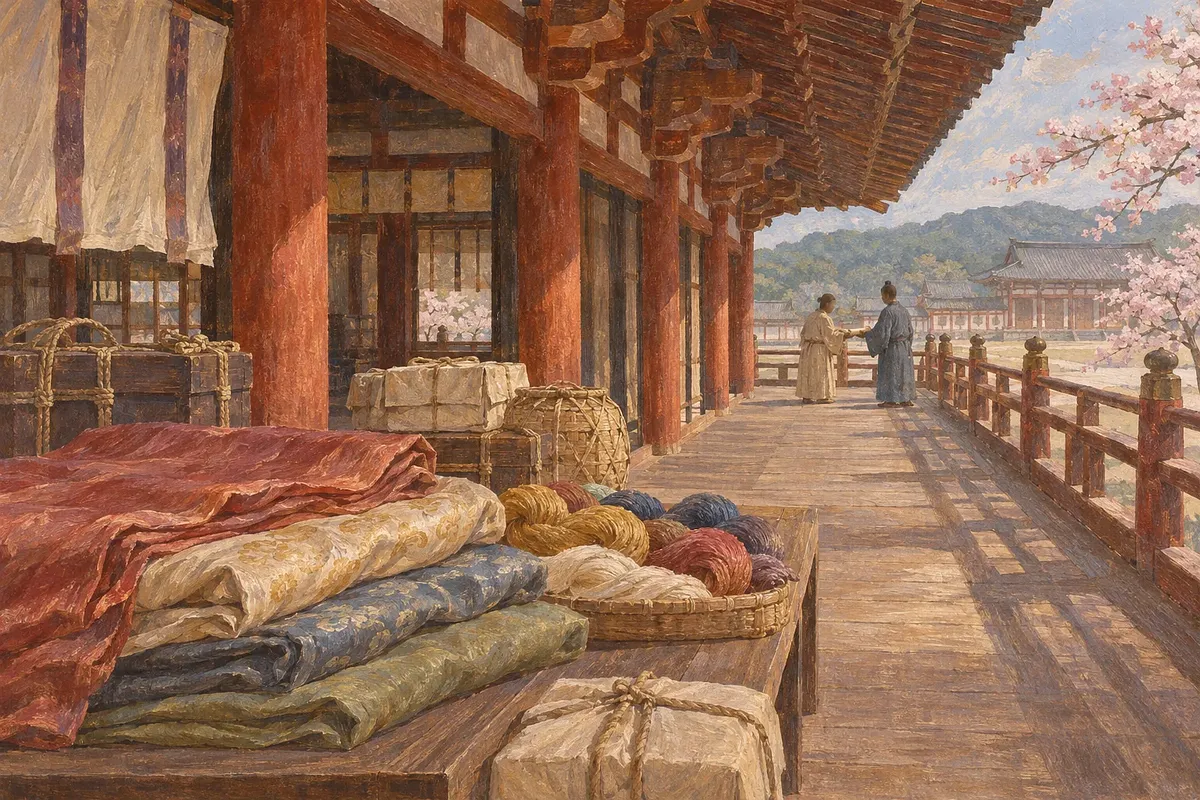
In the fourth lunar month of 728, the Japanese court used the envoys’ return to propose continued exchanges with Balhae.AI-generated image

Timeline of the First Delegation's Landing and Delivery of the Official Letter

The delegation reached the Japanese coast in one year and presented the king's official letter to the court in the next. Go Inui, the first person named in the letter, died after the storm drove him ashore. The 8 survivors, including Go Jedeok, went on to the capital to continue the delegation's mission.

Date What happened Source record or commentary
8th month of 727 King Mu sent 24 envoys to Japan with an official letter and gifts. Our History Net, commentary on “The Official Letter King Mu of Balhae Sent to Japan”
9th month of 727 The 8 survivors came ashore at the landing site in Dewa Province. New Edition of Korean History, vol. 10, “Relations with Japan”
12th month of 727 The group reached Nara, the capital of Japan. New Edition of Korean History, vol. 10, “Relations with Japan”
Gapin day of the first lunar month of 728 The envoys presented King Mu's official letter and gifts to Emperor Shōmu. Shoku Nihongi, vol. 10, entry for the Gapin day of the first lunar month
Imo day of the 4th month of 728 The Japanese court entrusted the returning envoys with a reply addressed to the king of Balhae. Shoku Nihongi, vol. 10, entry for the Imo day of the 4th month

What the Official Letter Says and Why the Envoys May Have Been Sent

In his official letter, King Mu said he wanted to maintain friendly relations with Japan by exchanging envoys. He wrote that the long distance by sea had made it hard for the two sides to ask after each other. In describing the country he ruled, he also said that he had reclaimed Goguryeo's former lands and preserved customs handed down from Buyeo.

The New Edition of Korean History reads the passage about the former lands as a sign that Balhae's royal house saw itself as Goguryeo's successor. Interpretations differ on the political reasons for sending the envoys. The New Edition of Korean History emphasizes keeping Silla in check, while Our History Net's commentary on the letter focuses on pressure from Tang. Nowhere in his letter does King Mu ask Japan to take military action against Silla or Tang.


Who Received the Reply and the Gifts?

The Shoku Nihongi distinguishes between the honors the envoys themselves received and what was sent in return to the king of Balhae. The entry for the first lunar month says the Japanese court granted the 8 envoys the Senior Sixth Rank, Upper Grade. The entry for the 4th month says the court entrusted the returning group with a reply and gifts for King Mu.

Date Sender and recipient Documents and gifts
Delivered in the first lunar month of 728 King Mu to the Japanese court The official letter lists 300 marten pelts as gifts sent with it.
First lunar month and 4th month of 728 The Japanese court to the 8 Balhae envoys The court granted them a rank and robes befitting it in the first lunar month, then distributed textiles and other items among them in the 4th month.
4th month of 728 Emperor Shōmu to King Mu Silk, thread, and other items accompanied the royal reply.

In his reply, Emperor Shōmu welcomed King Mu's wish to maintain their longstanding friendship. He also expressed a wish to keep up exchanges despite the sea between them. The reply thus preserves Japan's response to Balhae's proposal.

Distinguishing the First Diplomatic Exchange from the Record of the Japan Route

The first mission led to an exchange of letters between the two rulers. The next delegation left in 739, during King Mun's reign. That was 12 years after the first mission was completed.

The New Book of Tang calls the route from Balhae's Eastern Capital at Yongwonbu to Japan the Japan Route. The name refers to the route envoys took between the two countries. This record alone tells us little about which port the first ship left from or what course it took before being driven off course by the storm in 727.

Looking Back in 2027 on the Significance of the First Mission

The year 2027 marks 1300 years since Balhae first sent envoys to Japan. King Mu's official letter shows how Balhae introduced itself to a neighbor during the Northern and Southern States period. Reading it alongside Japan's reply also shows how both sides linked their new diplomatic exchanges to their longstanding friendship.

Open the link

Opens in a new window.

Advertisement

Sign-in required

Sign in with your Google or Apple account to like, comment, and save highlights.

FAQ

Did Balhae send its first mission to Japan in 727 or 728?

The mission was sent in 727. The surviving envoys reached Nara, Japan's capital, in the 12th month of that year and delivered the diplomatic letter on the gapin day of the first lunar month of the following year, 728.

What roles did Go In-ui and Go Je-deok play in the first mission?

Go In-ui was the first person King Mu named when he listed the members of the mission in his diplomatic letter. He died after washing ashore. Go Je-deok and the other survivors delivered the letter to the Japanese court.

Why do accounts give two different figures, 24 and 8, for the size of the mission?

King Mu sent 24 people in all. Of those, 8 survived after washing ashore and presented the diplomatic letter and gifts at the Japanese court.

Why did King Mu mention both Goguryeo and Buyeo in his diplomatic letter?

King Mu referred to Goguryeo when describing Balhae's territory and to Buyeo when describing its inherited customs. The New History of Korea treats this passage as an example of the Balhae royal house showing Japan that it saw itself as Goguryeo's successor.

Did King Mu ask Japan to attack Silla?

The surviving text of the diplomatic letter contains no such request. It proposes friendly relations between the two countries and an exchange of envoys. The idea that the aim was to keep Silla in check is an interpretation offered by the New History of Korea based on international relations at the time.

Which side sent the 300 marten pelts as a gift?

They were the gifts King Mu listed in his diplomatic letter to the Japanese court. The Japanese court sent silk, thread, and other items along with its reply to King Mu in the 4th month of 728.

Is Ilbondo the name of the place where the first mission washed ashore?

Ilbondo is the name of a travel route mentioned in the New Book of Tang. It refers to the route from Yongwonbu, Balhae's eastern capital, to Japan. The exact route the first mission sailed is hard to determine.

When did Balhae next send envoys after King Mu's first mission?

According to the New History of Korea, the second mission was sent in 739, during King Mun's reign. That was 12 years after the first mission in 727.

Sources

Data formats

This content is available in several machine-friendly formats.

Data-only languages (machine translated, files only)

Indonesian JSON MD Portuguese JSON MD Chinese (Traditional) JSON MD Deutsch JSON MD

Verification

This article was drafted with AI and then reviewed and edited by a person.

Reviewed by 신익희 · 편집장 · 2026-11-22

Figures in this article were checked against the source material during generation. · 2026-11-22

This translation has been cross-checked by AI. · 2026-11-22

Reuse & AI usage

Search indexing and AI citation with attribution are welcome. See the license policy for details.

CC BY · License

Loading…

Loading…

Where this content lives

Related content

From Injoys

Request the content you want and take 70% of what it earns

Just leave the subject. We handle production, review, translation and distribution.

See how revenue sharing works

Comments