Skip to content
Injoys
Knowledge Base

Gwangju Student Anti-Japanese Movement: 1929 Origins

The 1929 Gwangju student movement grew out of resistance to educational discrimination. Demands for self-governance and freedom in its manifestos led to a nationwide anti-Japanese movement.

Listen or read this article

16:17

Listen, or read the text only.

Gwangju Student Anti-Japanese Movement: 1929 Origins

Kokoro 82M AI-generated voice 17 min read

0:00 16:17

Advertisement

Download audio

File name
gwangju-student-independence-movement-1929-background-en.mp3
Format
MP3 (audio/mpeg)
Duration
16:17
File size
11.2 MB
Engine
Kokoro 82M

This audio was generated by AI.

You may download and use it freely for personal use.

Gwangju Student Anti-Japanese Movement: 1929 Origins

11 min read

Gwangju Student Anti-Japanese Movement: 1929 Origins
The 1929 Gwangju student movement grew out of resistance to educational discrimination. Demands for self-governance and freedom in its manifestos led to a nationwide anti-Japanese movement.
The Naju Station incident was the immediate trigger, but educational discrimination and student group activities predated it.
The November 3, 1929 protest was followed by demands set out in manifestos.
Students' demands included the release of detainees, student self-governance, and the abolition of colonial education.
Networks linking student groups and organizations such as Singanhoe helped the movement spread nationwide.
The date a manifesto was written must be distinguished from the publication year of the Government-General of Korea source that contains it.
The Gwangju Student Anti-Japanese Movement grew out of ethnic discrimination and colonial education. On November 3, 1929, students in Gwangju confronted these conditions through protests. The movement spread nationwide through manifestos and cooperation among schools. It is remembered as an event that expanded demands for education and freedom into an independence movement.
This article follows the manifesto records published by Our History Net, checked in September 2026.
Educational discrimination and student organizations laid the groundwork
The students’ resistance grew from the discrimination they experienced at school. Korean schools had poorer facilities and smaller budgets than Japanese schools. Students’ discussions and self-governing activities were also restricted. These conditions connected dissatisfaction with education to criticism of colonial rule. Our History Net source commentary
An organized response was being prepared before 1929. In November 1926, a secret student association called Seongjinhoe was formed in Gwangju. Reading clubs at individual schools continued after Seongjinhoe disbanded. In 1929, the Reading Club Central Committee was formed to connect the schools.
Students had also already used class boycotts as a form of resistance. In a class boycott, students refuse to attend classes together to press their demands. In 1928, students at Gwangju Higher Common School demanded, among other things, self-governance for their student association. This experience became an organizational foundation for the following year’s protests. New Edition of Korean History, “The Social Background of the Gwangju Student Movement”
Category | What the records show | Why it matters to understanding the event Structural background | Ethnic discrimination in education and suppression of self-governing activities | Why grievances accumulated Organizational foundation | Experience with Seongjinhoe, reading clubs, and class boycotts | Why collective action was possible Immediate trigger | The October 30, 1929, clash at Naju Station | The incident that led to protests Factors behind its spread | Biased police handling and student arrests | Why protests continued
Timeline from the Naju Station incident to nationwide spread
The Naju Station incident and the first protest in Gwangju took place on different dates. The initial clash occurred at Naju Station on October 30, 1929. The large-scale student protest in Gwangju took place on November 3. The movement then continued into the following year.
Date | What happened | Source November 1926 | Seongjinhoe, a secret student association, formed in Gwangju | New Edition of Korean History, “The Social Background of the Gwangju Student Movement” June 1928 | Class boycotts at Gwangju Higher Common School and Gwangju Agricultural School | New Edition of Korean History, “The Social Background of the Gwangju Student Movement” October 30, 1929 | Korean and Japanese students clashed at Naju Station | Our History Net, Chronology of Korean History November 3, 1929 | First large-scale anti-Japanese student protest in Gwangju | Our History Net, Chronology of Korean History November 11, 1929 | Date written on a manifesto addressed to students | Our History Net manifesto records November 12, 1929 | Second protest in Gwangju and distribution of manifestos | Our History Net manifesto records and commentary November 19, 1929 | Protest by students at Mokpo Commercial School | New Edition of Korean History, “The Nationwide Spread of the Gwangju Student Movement” November 27, 1929 | Protest by students in Naju | New Edition of Korean History, “The Nationwide Spread of the Gwangju Student Movement” December 1929 | Protests and class boycotts spread among students in Seoul | New Edition of Korean History, “The Nationwide Spread of the Gwangju Student Movement” January 15, 1930 | Second large-scale student protest in Seoul | New Edition of Korean History, “The Nationwide Spread of the Gwangju Student Movement”
This timeline compares the Chronology of Korean History with the records of the nationwide spread.
How did the November 3 protest begin?
The clash at Naju Station was the trigger that turned accumulated discrimination into collective action. Japanese male students harassed Korean female students. Park Jun-chae and others protested, and a clash broke out between the students. The police’s biased response intensified the protests.
On November 3, another clash between students occurred in Gwangju. The day was Meiji Day, commemorating the birthday of Emperor Meiji. The students’ actions grew into a street protest against colonial rule. Students from Gwangju Higher Common School and Gwangju Agricultural School took part. Our History Net, Chronology of Korean History
What did the manifestos of the Gwangju Student Anti-Japanese Movement demand?
The manifestos set out the changes students wanted as specific demands. A manifesto is a written call for people to take action. Our History Net includes documents dated November 11 and 12. Both documents bear the name of Oh Kwae-il.
Date written on the document | Main audience | Main demands November 11, 1929 | Students | Release of detainees, student self-governance, reform of the education system, and political freedom November 12, 1929 | General public | Release of detainees, opposition to organizations used to suppress students, and a call for solidarity
The document addressed to students demanded self-governance for the student association. The student association was a student organization within the school. The document also called for student representatives to take part in faculty meetings. It argued that Koreans should take charge of the education system.
Freedom of the press, assembly, association, and publication was also among the demands. These demands show that the protests extended beyond school administration. Prepared manifestos were distributed during the November 12 protest. The dates the documents were written must be distinguished from when they were distributed. “Manifestos Distributed During the 1929 Gwangju Student Movement”
How did news spread to other regions?
The movement spread through contact among student organizations and social groups. Japanese colonial authorities restricted news coverage, so the full account of the incident was not widely known. People who visited Gwangju carried news to other regions. The manifestos conveyed the students’ demands beyond the schools.
Protests in Mokpo and Naju supported the Gwangju students. In Seoul, organizations at individual schools prepared protests and class boycotts. Singanhoe pursued an investigation into the events and planned a rally. Arrests before a public rally scheduled for December 13, 1929, prevented it from taking place. New Edition of Korean History, “The Nationwide Spread of the Gwangju Student Movement”
Female students also helped organize the movement. In Gwangju, the Girls’ Association was formed in 1928 and remained active. Students at Gwangju Girls’ Higher Common School took part in protests and class boycotts. Describing female students only as victims of the Naju Station incident overlooks their history of participation. Encyclopedia of Korean Culture, “Gwangju Student Movement”
Female students’ solidarity stood out during the January 1930 protests in Seoul. People affiliated with Geunuhoe and students at girls’ schools took part in the preparations. The movement continued in several regions of Korea. Support and protests also spread to Korean communities in Manchuria. Our History Net, Chronology of Korean History
Results and limits of the nationwide spread
The movement expanded a regional protest into a nationwide independence movement. It did not, however, end colonial rule or achieve all its demands. Students faced arrest and trial. Schools continued to impose expulsions and indefinite suspensions. Encyclopedia of Korean Culture, “Gwangju Student Movement”
Its achievements and limits should be assessed separately. The formation of nationwide solidarity is a documented achievement. The disruption of students’ education was also part of the outcome. Both the expansion of organized resistance and the continuation of colonial rule need to be explained.
Aspect to consider | Documented result Scope of the movement | Students from several regions beyond Gwangju participated Demands | Educational issues were combined with demands for political freedom Harm to participants | Arrests, trials, expulsions, and indefinite suspensions Immediate limits | Colonial rule continued, and the demands were not fully met
Why were the students’ demands preserved in colonial authorities’ records?
The manifestos show both when the students wrote them and when the authorities recorded them. Our History Net identifies a 1930 document from the Government-General of Korea’s Education Bureau as its source. Its title is:
· The Truth About the Struggle Between Korean and Japanese Students in Gwangju, Jeollanam-do, and Its Effects on Various Schools in Korea
In this citation, 1930 is the year of the source document. The dates written on the manifestos are in November 1929. They should therefore not be interpreted as having first been written in 1930. Our History Net manifesto source citation
The institution that preserved the records was also different from the students who made the demands. The students’ demands have been passed down through records kept by a colonial authority. For this reason, the preserved manifestos must be distinguished from the authorities’ account of the incident. How the documents were preserved is itself a clue to reading them as historical sources.
Records and interpretation
What the historical sources say must be distinguished from later assessments. The manifestos provide evidence of the demands made at the time. The character of the movement as a whole should be judged alongside other records. Figures for participation and the date the movement ended require checking what each source counts.
What the records show
The manifestos demand student self-governance and the abolition of colonial education. This is evidence that educational and political demands were raised together. A name appearing on a document, however, cannot by itself explain the entire production process. Who wrote, printed, and distributed the documents must be checked against separate records.
Assessments commonly presented in historical accounts
The movement is regarded as one of the leading large-scale anti-Japanese movements after the March 1st Movement. Accounts also commonly describe existing student organizations as the foundation for its nationwide spread. Research also addresses the influence of socialist thought. Resistance to ethnic discrimination and ideological influences should be considered together. Our History Net, Chronology of Korean History
Points requiring further comparison
The number of participating schools varies depending on when the count was made and what it includes. Sources also give March or May 1930 as the date the movement ended. It is therefore difficult to establish its scale with a single figure. Whether the count includes protests in Korea and support activities overseas must also be stated. Our History Net explanation of the movement’s duration and scale
The meaning of the Gwangju Student Anti-Japanese Movement and its commemoration today
This movement is an example of a demand over who would run education becoming part of the struggle for independence. The students demanded self-governance and political freedom, not just better classroom conditions. Because these demands were combined, the student protests are treated as part of the history of the independence movement. Today, they provide historical evidence for understanding the relationship between school life and colonial rule.
November 3, 2026 (South Korea), marks the 97th anniversary of the first protest in Gwangju. The commemorative day is called Student Independence Movement Memorial Day. The history of the commemorative day as an official observance is distinct from the history of the events of 1929.
Year | Change to the commemorative day 1953 | Students’ Day established 1973 | Abolished during the government’s consolidation of commemorative days 1984 | Students’ Day reinstated 2006 | Renamed Student Independence Movement Memorial Day
The changes to the commemorative day are documented by the National Archives of Korea, “Student Independence Movement Memorial Day”.
Frequently asked questions
Was the Naju Station incident the movement’s only cause?
The Naju Station incident was the immediate trigger. Discrimination in education and restrictions on self-governing activities had existed before it. Seongjinhoe and reading clubs had also been active before the protests.
How did the November 3 and November 12 protests differ?
On November 3, a clash between students grew into an anti-Japanese protest. Protests against subsequent student arrests continued. On November 12, students protested again and distributed prepared manifestos.
What were the manifestos’ main demands?
Their main demands included the release of detainees and student self-governance. They also called for an education system centered on Koreans. Freedom of the press, assembly, association, and publication was another demand.
Did Singanhoe direct the entire movement?
Singanhoe supported an investigation into the events and the spread of the movement. Student organizations at individual schools also had their own foundations for action. It is difficult to conclude that one organization directed actions in every region.
Did the students achieve all their demands?
Not all their demands were met. The movement spread nationwide, but colonial rule continued. Participating students faced arrest and school disciplinary action.
0:00 0:00
1 / 64

Advertisement

Download text

File name
gwangju-student-independence-movement-1929-background-en.txt
Format
TXT (text/plain)
Paragraphs
64

Downloads exactly what you see as a text file.

Please cite the source when quoting.

Large text

Makes the text larger and the colors clearer. Turn it on if the text feels too small.

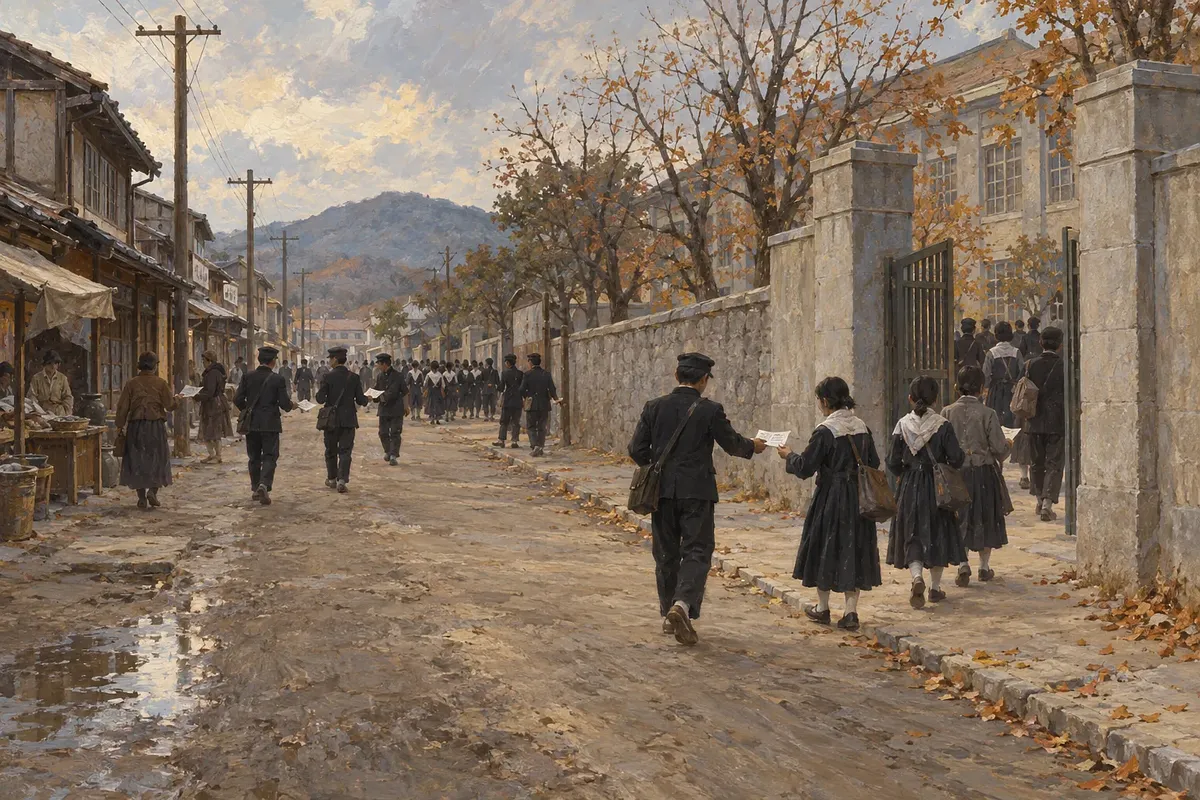
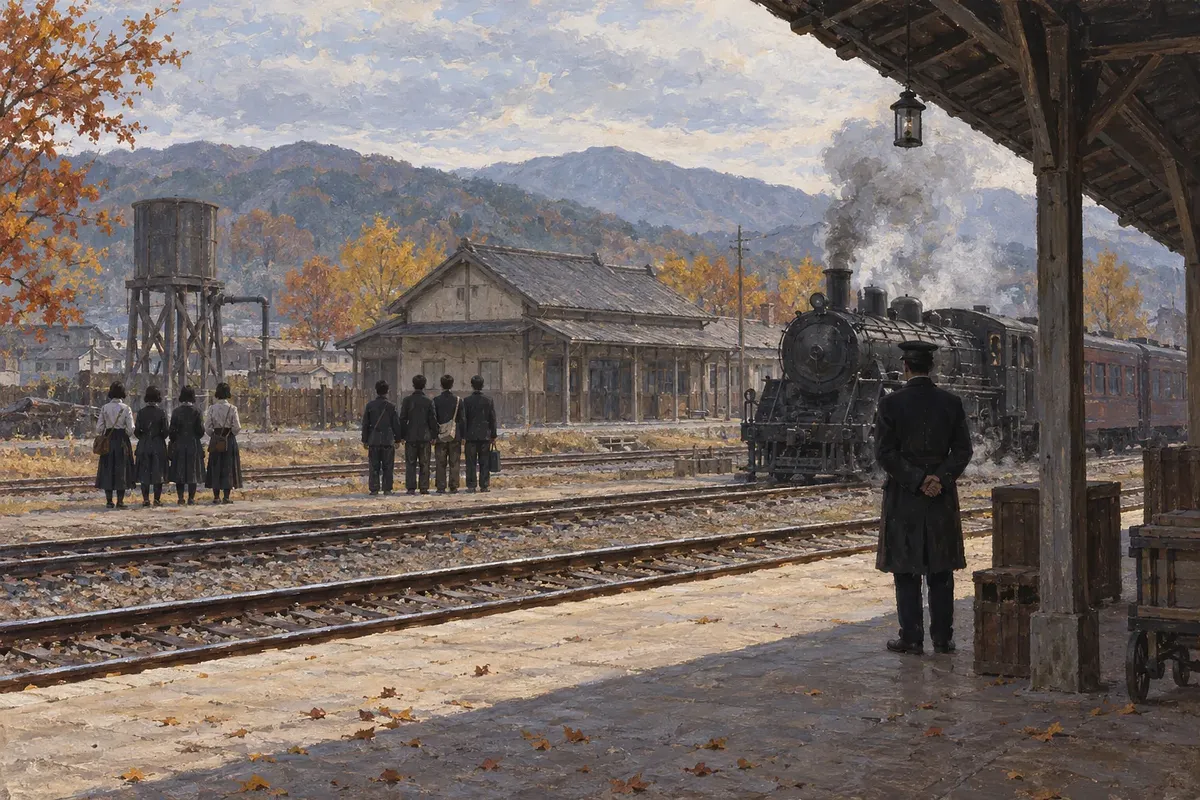
The Naju Station incident was the immediate trigger, but resistance to educational discrimination had already been growing.AI-generated image

Key points

  • The Naju Station incident was the immediate trigger, but educational discrimination and student group activities predated it.
  • The November 3, 1929 protest was followed by demands set out in manifestos.
  • Students' demands included the release of detainees, student self-governance, and the abolition of colonial education.
  • Networks linking student groups and organizations such as Singanhoe helped the movement spread nationwide.
  • The date a manifesto was written must be distinguished from the publication year of the Government-General of Korea source that contains it.

The Gwangju Student Anti-Japanese Movement grew out of ethnic discrimination and colonial education. On November 3, 1929, students in Gwangju confronted these conditions through protests. The movement spread nationwide through manifestos and cooperation among schools. It is remembered as an event that expanded demands for education and freedom into an independence movement.

This article follows the manifesto records published by Our History Net, checked in September 2026.

Educational discrimination and student organizations laid the groundwork

The students’ resistance grew from the discrimination they experienced at school. Korean schools had poorer facilities and smaller budgets than Japanese schools. Students’ discussions and self-governing activities were also restricted. These conditions connected dissatisfaction with education to criticism of colonial rule. Our History Net source commentary

An organized response was being prepared before 1929. In November 1926, a secret student association called Seongjinhoe was formed in Gwangju. Reading clubs at individual schools continued after Seongjinhoe disbanded. In 1929, the Reading Club Central Committee was formed to connect the schools.

Students had also already used class boycotts as a form of resistance. In a class boycott, students refuse to attend classes together to press their demands. In 1928, students at Gwangju Higher Common School demanded, among other things, self-governance for their student association. This experience became an organizational foundation for the following year’s protests. New Edition of Korean History, “The Social Background of the Gwangju Student Movement”

Category What the records show Why it matters to understanding the event
Structural background Ethnic discrimination in education and suppression of self-governing activities Why grievances accumulated
Organizational foundation Experience with Seongjinhoe, reading clubs, and class boycotts Why collective action was possible
Immediate trigger The October 30, 1929, clash at Naju Station The incident that led to protests
Factors behind its spread Biased police handling and student arrests Why protests continued
After the November 3 protest, students set out their demands in written appeals.AI-generated image

Timeline from the Naju Station incident to nationwide spread

The Naju Station incident and the first protest in Gwangju took place on different dates. The initial clash occurred at Naju Station on October 30, 1929. The large-scale student protest in Gwangju took place on November 3. The movement then continued into the following year.

Date What happened Source
November 1926 Seongjinhoe, a secret student association, formed in Gwangju New Edition of Korean History, “The Social Background of the Gwangju Student Movement”
June 1928 Class boycotts at Gwangju Higher Common School and Gwangju Agricultural School New Edition of Korean History, “The Social Background of the Gwangju Student Movement”
October 30, 1929 Korean and Japanese students clashed at Naju Station Our History Net, Chronology of Korean History
November 3, 1929 First large-scale anti-Japanese student protest in Gwangju Our History Net, Chronology of Korean History
November 11, 1929 Date written on a manifesto addressed to students Our History Net manifesto records
November 12, 1929 Second protest in Gwangju and distribution of manifestos Our History Net manifesto records and commentary
November 19, 1929 Protest by students at Mokpo Commercial School New Edition of Korean History, “The Nationwide Spread of the Gwangju Student Movement”
November 27, 1929 Protest by students in Naju New Edition of Korean History, “The Nationwide Spread of the Gwangju Student Movement”
December 1929 Protests and class boycotts spread among students in Seoul New Edition of Korean History, “The Nationwide Spread of the Gwangju Student Movement”
January 15, 1930 Second large-scale student protest in Seoul New Edition of Korean History, “The Nationwide Spread of the Gwangju Student Movement”

This timeline compares the Chronology of Korean History with the records of the nationwide spread.

How did the November 3 protest begin?

The clash at Naju Station was the trigger that turned accumulated discrimination into collective action. Japanese male students harassed Korean female students. Park Jun-chae and others protested, and a clash broke out between the students. The police’s biased response intensified the protests.

On November 3, another clash between students occurred in Gwangju. The day was Meiji Day, commemorating the birthday of Emperor Meiji. The students’ actions grew into a street protest against colonial rule. Students from Gwangju Higher Common School and Gwangju Agricultural School took part. Our History Net, Chronology of Korean History

What did the manifestos of the Gwangju Student Anti-Japanese Movement demand?

The manifestos set out the changes students wanted as specific demands. A manifesto is a written call for people to take action. Our History Net includes documents dated November 11 and 12. Both documents bear the name of Oh Kwae-il.

Date written on the document Main audience Main demands
November 11, 1929 Students Release of detainees, student self-governance, reform of the education system, and political freedom
November 12, 1929 General public Release of detainees, opposition to organizations used to suppress students, and a call for solidarity

The document addressed to students demanded self-governance for the student association. The student association was a student organization within the school. The document also called for student representatives to take part in faculty meetings. It argued that Koreans should take charge of the education system.

Freedom of the press, assembly, association, and publication was also among the demands. These demands show that the protests extended beyond school administration. Prepared manifestos were distributed during the November 12 protest. The dates the documents were written must be distinguished from when they were distributed. “Manifestos Distributed During the 1929 Gwangju Student Movement”

How did news spread to other regions?

The movement spread through contact among student organizations and social groups. Japanese colonial authorities restricted news coverage, so the full account of the incident was not widely known. People who visited Gwangju carried news to other regions. The manifestos conveyed the students’ demands beyond the schools.

Protests in Mokpo and Naju supported the Gwangju students. In Seoul, organizations at individual schools prepared protests and class boycotts. Singanhoe pursued an investigation into the events and planned a rally. Arrests before a public rally scheduled for December 13, 1929, prevented it from taking place. New Edition of Korean History, “The Nationwide Spread of the Gwangju Student Movement”

Female students also helped organize the movement. In Gwangju, the Girls’ Association was formed in 1928 and remained active. Students at Gwangju Girls’ Higher Common School took part in protests and class boycotts. Describing female students only as victims of the Naju Station incident overlooks their history of participation. Encyclopedia of Korean Culture, “Gwangju Student Movement”

Female students’ solidarity stood out during the January 1930 protests in Seoul. People affiliated with Geunuhoe and students at girls’ schools took part in the preparations. The movement continued in several regions of Korea. Support and protests also spread to Korean communities in Manchuria. Our History Net, Chronology of Korean History


Results and limits of the nationwide spread

The movement expanded a regional protest into a nationwide independence movement. It did not, however, end colonial rule or achieve all its demands. Students faced arrest and trial. Schools continued to impose expulsions and indefinite suspensions. Encyclopedia of Korean Culture, “Gwangju Student Movement”

Its achievements and limits should be assessed separately. The formation of nationwide solidarity is a documented achievement. The disruption of students’ education was also part of the outcome. Both the expansion of organized resistance and the continuation of colonial rule need to be explained.

Aspect to consider Documented result
Scope of the movement Students from several regions beyond Gwangju participated
Demands Educational issues were combined with demands for political freedom
Harm to participants Arrests, trials, expulsions, and indefinite suspensions
Immediate limits Colonial rule continued, and the demands were not fully met

Why were the students’ demands preserved in colonial authorities’ records?

The manifestos show both when the students wrote them and when the authorities recorded them. Our History Net identifies a 1930 document from the Government-General of Korea’s Education Bureau as its source. Its title is:

  • The Truth About the Struggle Between Korean and Japanese Students in Gwangju, Jeollanam-do, and Its Effects on Various Schools in Korea

In this citation, 1930 is the year of the source document. The dates written on the manifestos are in November 1929. They should therefore not be interpreted as having first been written in 1930. Our History Net manifesto source citation

The institution that preserved the records was also different from the students who made the demands. The students’ demands have been passed down through records kept by a colonial authority. For this reason, the preserved manifestos must be distinguished from the authorities’ account of the incident. How the documents were preserved is itself a clue to reading them as historical sources.

Records and interpretation

What the historical sources say must be distinguished from later assessments. The manifestos provide evidence of the demands made at the time. The character of the movement as a whole should be judged alongside other records. Figures for participation and the date the movement ended require checking what each source counts.

What the records show

The manifestos demand student self-governance and the abolition of colonial education. This is evidence that educational and political demands were raised together. A name appearing on a document, however, cannot by itself explain the entire production process. Who wrote, printed, and distributed the documents must be checked against separate records.

Assessments commonly presented in historical accounts

The movement is regarded as one of the leading large-scale anti-Japanese movements after the March 1st Movement. Accounts also commonly describe existing student organizations as the foundation for its nationwide spread. Research also addresses the influence of socialist thought. Resistance to ethnic discrimination and ideological influences should be considered together. Our History Net, Chronology of Korean History

Points requiring further comparison

The number of participating schools varies depending on when the count was made and what it includes. Sources also give March or May 1930 as the date the movement ended. It is therefore difficult to establish its scale with a single figure. Whether the count includes protests in Korea and support activities overseas must also be stated. Our History Net explanation of the movement’s duration and scale

The meaning of the Gwangju Student Anti-Japanese Movement and its commemoration today

This movement is an example of a demand over who would run education becoming part of the struggle for independence. The students demanded self-governance and political freedom, not just better classroom conditions. Because these demands were combined, the student protests are treated as part of the history of the independence movement. Today, they provide historical evidence for understanding the relationship between school life and colonial rule.

November 3, 2026 (South Korea), marks the 97th anniversary of the first protest in Gwangju. The commemorative day is called Student Independence Movement Memorial Day. The history of the commemorative day as an official observance is distinct from the history of the events of 1929.

Year Change to the commemorative day
1953 Students’ Day established
1973 Abolished during the government’s consolidation of commemorative days
1984 Students’ Day reinstated
2006 Renamed Student Independence Movement Memorial Day

The changes to the commemorative day are documented by the National Archives of Korea, “Student Independence Movement Memorial Day”.

Frequently asked questions

Was the Naju Station incident the movement’s only cause?

The Naju Station incident was the immediate trigger. Discrimination in education and restrictions on self-governing activities had existed before it. Seongjinhoe and reading clubs had also been active before the protests.

How did the November 3 and November 12 protests differ?

On November 3, a clash between students grew into an anti-Japanese protest. Protests against subsequent student arrests continued. On November 12, students protested again and distributed prepared manifestos.

What were the manifestos’ main demands?

Their main demands included the release of detainees and student self-governance. They also called for an education system centered on Koreans. Freedom of the press, assembly, association, and publication was another demand.

Did Singanhoe direct the entire movement?

Singanhoe supported an investigation into the events and the spread of the movement. Student organizations at individual schools also had their own foundations for action. It is difficult to conclude that one organization directed actions in every region.

Did the students achieve all their demands?

Not all their demands were met. The movement spread nationwide, but colonial rule continued. Participating students faced arrest and school disciplinary action.

Open the link

Opens in a new window.

Advertisement

Sign-in required

Sign in with your Google account to like, comment, and save highlights.

FAQ

When did the Naju Station incident take place?

It took place on October 30, 1929. This should be distinguished from November 3, when large-scale student demonstrations took place in Gwangju.

Was the Naju Station incident the sole cause of the movement?

The Naju Station incident was the immediate trigger. Educational discrimination, suppression of student self-governance, and the activities of existing student organizations were underlying factors.

What roles did Seongjinhoe and the reading clubs play?

They formed an organizational base for students to study together and keep in touch. These networks laid the groundwork for collective action.

How did the appeals dated November 11 and 12, 1929, differ?

The appeal dated November 11 was aimed primarily at students. The appeal dated November 12 called for participation by the general public.

What demands did the appeals contain?

They called for the release of detainees, student self-governance, and the abolition of colonial education. They also included freedom of the press, assembly, association, and publication.

Why is 1930 listed in the source for a 1929 appeal?

1930 is the year of the Education Bureau of the Government-General of Korea document that contains the appeal. The date written on the appeal is November 1929.

Did female students also take part in the movement?

Students at Gwangju Girls' Higher Common School took part in demonstrations and school strikes. Organized activities by female students are also documented as the movement spread to Seoul.

What role did Singanhoe play?

It investigated the incident and informed other regions about it. It also sought to hold a mass rally, but police arrests beforehand thwarted the plan.

How long did the movement continue?

It continued from late 1929 into 1930. The Korean History Chronology on Our History Net gives its end date as March or May 1930.

What anniversary will November 3, 2026, mark?

It will mark the 97th anniversary of the first large-scale demonstration in Gwangju on November 3, 1929. November 3 is commemorated as Student Independence Movement Day.

Sources

Also available as video and a short read

Videos and a short write-up made from this content. Watch instead of reading, or skim the gist first.

  • Short Goes live on YouTube at 30 Sep 16:00 17:47 한국어 광주학생항일운동 배경 1929년 전국 확산 과정

Data formats

This content is available in several machine-friendly formats.

Data-only languages (machine translated, files only)

Indonesian JSON MD Portuguese JSON MD Chinese (Traditional) JSON MD Deutsch JSON MD

Verification

This article was drafted with AI and then reviewed and edited by a person.

Reviewed by 신익희 · 편집장 · 2026-09-30

Figures in this article were checked against the source material during generation. · 2026-09-30

This translation has been cross-checked by AI. · 2026-09-30

Reuse & AI usage

Search indexing and AI citation with attribution are welcome. See the license policy for details.

CC BY · License

Loading…

Loading…

Related content

From Injoys

Request the content you want and take 70% of what it earns

Just leave the subject. We handle production, review, translation and distribution.

See how revenue sharing works

Comments