Injoys
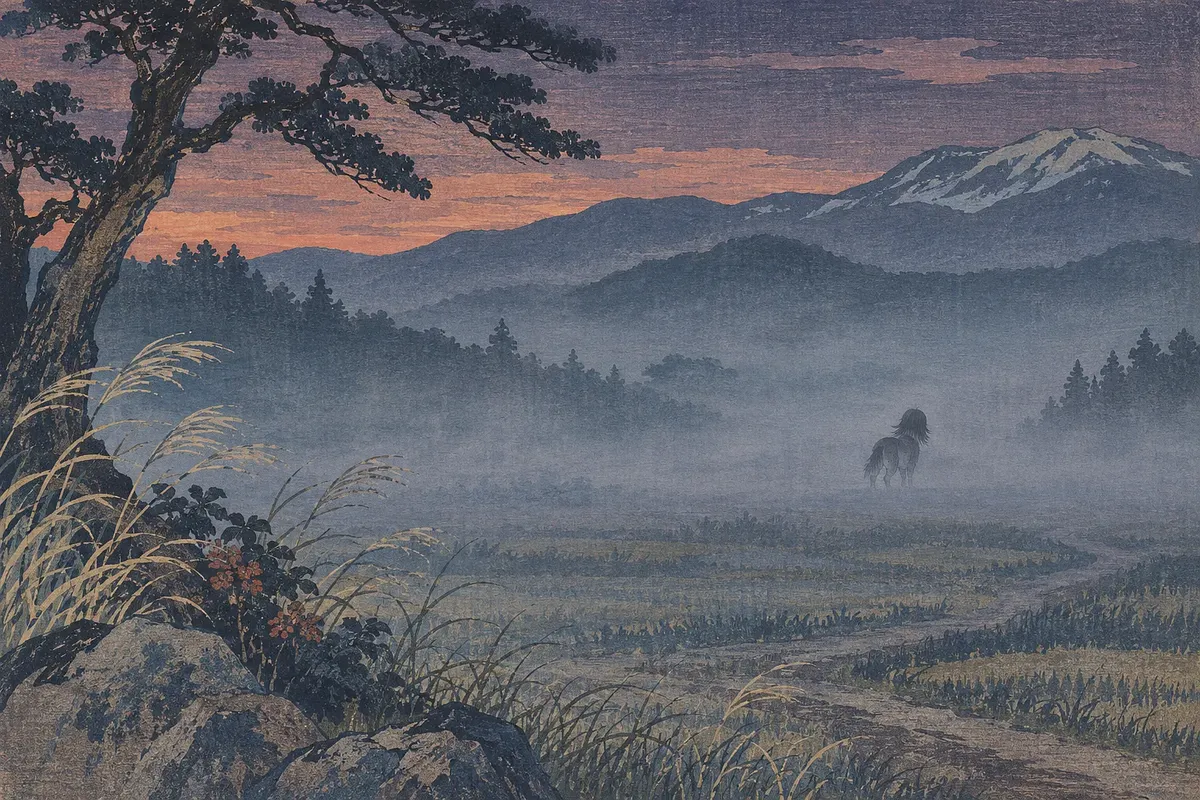
The Yamagata (山形) account of the human-faced dog (人面犬) is an oral tradition included in a 1992 folklore collection report. It tells of a human-faced dog that fled to Yamagata after attracting attention in Tokyo (東京). That brief account has been retold here in Korean.
This article follows the summary of the tradition in “Yamagata no Uwasa Ikkan” and was compiled as of November 2026.
The Story
There is said to have been a dog with a human face in Tokyo. But the commotion surrounding the human-faced dog grew too great. The dog is said to have left Tokyo to escape the fuss. The story goes that the place it fled to was Yamagata.
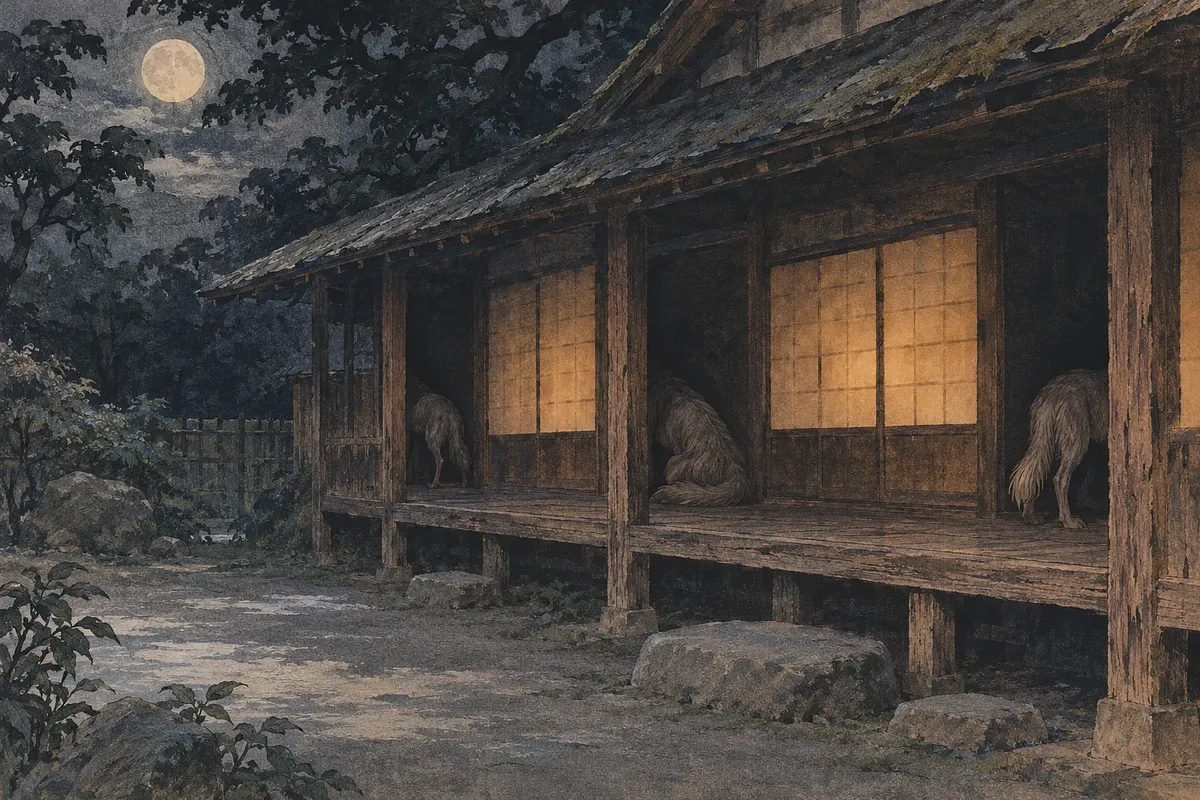
A separate entry records an account of keeping three jinmenken.AI-generated image
Source and Origins
This retelling is based on a summary of the tradition published by the International Research Center for Japanese Studies. It appears in the center’s database of strange phenomena and yōkai traditions. The original source is a folklore collection report titled “Yamagata no Uwasa Ikkan (山形の噂一観).”
The report was written by Takahashi Toshihiro (高橋敏弘). It appeared in issue 139 of Seikō Minzoku (西郊民俗). The journal’s publication date is June 21, 1992. This does not indicate when the story began or when an event occurred.
| Item checked | Details in the public record |
|---|---|
| Record number of the main account | 1140605 |
| Pages covered by the report | pp. 31~32 |
| Page containing this account | p. 31 |
| Region of the tradition | Yamagata City, Yamagata Prefecture |
| Speaker listed | An elementary school student in grade 1 |
| Publicly available content | Bibliographic information and a summary of the tradition |
The speaker’s name is not given in the public entry. The source is therefore an anonymous oral account compiled by a public research institution. There is no basis for treating the report’s author as the story’s creator. The institution’s publication of the record also does not mean that it acknowledged the existence of human-faced dogs.
Where can the original text be read
What can be viewed directly online is a summary, not the full report. The public record for the main account also includes bibliographic information. To read the full original text, you need to find a library holding issue 139 of Seikō Minzoku. The record also has a publication search feature that links to a search of Japan’s National Diet Library.
Other Versions and Similar Stories
There are two other separate records that cite the same folklore collection report. One compares the human-faced dogs of Yamagata and Tokyo. The other says that human-faced dogs are kept in an old house. The three entries should be distinguished as follows.
| Record number | Main point of the summary | Distinction addressed in the story |
|---|---|---|
| 1140605 | It fled to Yamagata after attracting too much attention in Tokyo | Reason for moving and destination |
| 1140606 | Yamagata’s human-faced dogs are smaller and more sluggish than Tokyo’s | Body size and movement |
| 1140609 | Three human-faced dogs are kept in an old house | Place where they are kept and number of dogs |
The record about body size and movement describes only relative differences. It gives no measurements, such as actual size or movement speed. It is therefore impossible to calculate how small Yamagata’s human-faced dogs are.
The record about the old house says that three dogs are kept there. The public summary does not give the house’s name or address. There is no basis for identifying any particular present-day home as the setting of this story.
Joining the three entries together creates a plot that is not in the original summaries. Writing that the dog that fled Tokyo entered that house would be one example. Explaining its small size as a result of its flight would also go beyond the records. The entries cannot be combined into one continuous story merely because they appeared in the same report.
Folklore in the Story
These records can be read as examples of how an unfamiliar being is brought into local storytelling. The main account explains that Tokyo’s human-faced dog came to Yamagata. A separate record also assigns regional differences to body size and behavior. This is an interpretation based on comparing the records, not an explanation given directly by the speaker.
Variation in oral tradition here means differences that develop in the content being passed down. Even a being with the same name is described differently depending on where it is. In this case, the route of movement and physical traits reveal those differences.
The story of dogs kept in an old house places human-faced dogs within a living space. A being that travels between cities is thus also described as something someone keeps. However, the public summaries do not establish the order of the three accounts. It is also difficult to say which story branched off from another.
Origins that this tradition cannot establish
The fact that the account was recorded in Yamagata does not establish that human-faced dogs originated there. Tokyo, too, appears only as the point of departure within this tradition. This source alone cannot explain the origins of human-faced dog stories as a whole.
The public summaries also offer no explanation involving a particular belief or ritual. There is no basis for adding that people worshipped human-faced dogs or regarded them as punishment for breaking a taboo. The folkloric significance of this tradition can be found in the way oral accounts vary by region.
Key questions in this article
Is the human-faced dog story true
The material discussed here is an oral tradition, not a verified event. The database compiles records that someone told such stories. Those records do not prove that human-faced dogs existed or moved from one place to another.
Why is it said to have left Tokyo for Yamagata
The main record says it was because the dog attracted too much noisy attention in Tokyo. No separate reason is given for choosing Yamagata as its destination. The public summary also gives no means of travel or route.
Did the story first appear in 1992
1992 is the publication year of the folklore collection report consulted. The public record alone cannot establish when the story first arose. The publication date must be distinguished from the date when the oral tradition began.
Can the full original text be read online
The public record consulted provides bibliographic information and a summary of the tradition. The full report is not included on that page. To find out whether the full text is available to read, you need to check with a library holding issue 139 of Seikō Minzoku.
Does the story say there were three small, sluggish human-faced dogs
The description of small, sluggish dogs and the account of three dogs being kept are separate entries. The public summaries do not connect the two details into a single scene. Nor can it be confirmed whether they were the same dogs as the human-faced dog that fled Tokyo.
What does this story mean
It can be read as an example of an oral tradition that explains an unfamiliar being by bringing it into the local area. Differences in body size and movement show how descriptions vary by region. This is an interpretation based on comparing the records, not a lesson explicitly stated in the tradition.