Skip to content
Injoys
Knowledge Base

Jingbirok: Ryu Seong-ryong's Account of the Imjin War

Jingbirok is a postwar account Ryu Seong-ryong wrote based on his experiences and documents from the Imjin War. It is a historical source explaining the early defeats and the response to the war, while also containing the author's self-reflection and explanation of his own responsibility.

Listen or read this article

16:27

Listen, or read the text only.

Jingbirok: Ryu Seong-ryong's Account of the Imjin War

Kokoro 82M AI-generated voice 17 min read

0:00 16:27

Advertisement

Download audio

File name
jingbirok-ryu-seong-ryong-writing-background-and-significance-en.mp3
Format
MP3 (audio/mpeg)
Duration
16:27
File size
11.3 MB
Engine
Kokoro 82M

This audio was generated by AI.

You may download and use it freely for personal use.

Advertisement

Jingbirok: Ryu Seong-ryong's Account of the Imjin War

12 min read

Jingbirok: Ryu Seong-ryong's Account of the Imjin War
Jingbirok is a postwar account Ryu Seong-ryong wrote based on his experiences and documents from the Imjin War. It is a historical source explaining the early defeats and the response to the war, while also containing the author's self-reflection and explanation of his own responsibility.
Jingbirok is a postwar work that primarily covers the Imjin War from 1592 to 1598.
Ryu Seong-ryong identified problems with military preparations and the command structure as causes of the early defeats.
Understanding the response to the war requires considering the activities of the navy, volunteer militias and government troops alongside support from Ming forces.
The period when Jingbirok was written must be distinguished from the period when the author's descendants published it.
The author's experiences and documents enhance its value as a historical source, but they do not replace the need to verify individual judgments.
Jingbirok is Ryu Seong-ryong’s account of the Imjin War, which lasted from 1592 to 1598. Joseon resisted the invasion through the efforts of its navy, righteous armies, and government forces, with support from Ming troops. After the war, Ryu Seong-ryong documented failures and responses, leaving a historical source for later generations to examine.
This article follows the author’s preface to Jingbirok and the commentary on Our History Net, consulted in November 2026.
What kind of book is Jingbirok?
Jingbirok is a historical record combining the experiences and documents of a senior official who lived through the war. Its author, Ryu Seong-ryong, is also known by his pen name, Seoae. During the war, he served as chief state councillor and chief military commissioner, among other posts. The chief military commissioner oversaw military affairs across several regions.
The book focuses on 1592 to 1598. It also covers relations with Japan before the war. This structure serves to explain how the war began. Since Ryu Seong-ryong compiled it after leaving office, it differs in character from a wartime diary.
“Jingbi” in the title means guarding against past mistakes to avoid future calamities. The phrase comes from the “Xiaobi” section of the Book of Songs. The title itself thus conveys the purpose of the work. The circumstances of its writing can be found in the author’s preface and commentary on Our History Net.
Why Jingbirok was written and the question of postwar responsibility
The book grew out of both reflection on a national crisis and questions of postwar responsibility. Ryu Seong-ryong was impeached and removed from office near the end of the war. He then returned to his hometown of Hahoe in Andong. He is known to have compiled his wartime experiences at Ogyeonjeongsa.
In his preface, Ryu Seong-ryong acknowledges his responsibility for failing to prevent the crisis despite holding important posts. He also explains that he added contemporary documents to accounts of what he had seen and heard. This approach sought to pass memories down to later generations alongside documentary evidence. The circumstances are also described in the National Folk Museum of Korea’s special exhibition guide.
· Janggye are reports submitted to the king by provincial officials and others. · Sangso and chaja are written submissions presenting opinions to the king. · Documents exchanged between government offices show the administrative responses at the time. · Miscellaneous records contain experiences and observations outside the main text.
The book also includes measures Ryu proposed and people he recommended for office. The commentary on Our History Net sees these passages as partly an explanation of his own responsibility. His reflection and self-defense therefore need to be examined together. Writing the book was not what brought the war to an end.
The reasons for the early defeats and problems with the defense system
Ryu Seong-ryong identified shortcomings in military preparations and the command structure as causes of the early defeats. This was the assessment of an author who had experienced the war. He also criticized the selection of commanders and the training of soldiers. He addressed the failure to properly understand developments in Japan as well.
He paid particular attention to the way troops were assembled under Jeseung Bangnyak. Under this arrangement, troops from several regions gathered and waited for a commander. He judged that responding would be difficult if the enemy arrived before the commander. As an alternative, Ryu Seong-ryong called for restoring the jingwan system.
Category | Jeseung Bangnyak | The jingwan system advocated by Ryu Seong-ryong Basic unit of response | Troops gathered from several regions | Regional defense organizations Command method | An appointed commander led the assembled troops | Troops were deployed at the regional level Issues identified by Ryu Seong-ryong | A commander’s late arrival left a gap in the response | A basis for responding locally could be established Reform debate | Arguments for retaining the existing system | The prewar proposal was not accepted
His account describes how Kim Su, the governor of Gyeongsang Province, opposed changing the system. The reason was that a long-established method would be difficult to change suddenly. This passage shows the difference between proposing a measure and actually adopting it. This explanation is based on Our History Net’s commentary on Jingbirok.
What responses helped turn the tide of the war?
The recovery resulted from continued responses at sea and on land. Ryu Seong-ryong emphasized the roles of the navy and righteous armies among these efforts. His account also includes support from Ming troops. Distinguishing each group’s role helps reveal the overall response to the war.
Responding force | Activities highlighted in the account | Significance for understanding the war Joseon navy | Disrupting Japanese troop movements and supplies at sea | Control of the sea also affected the war on land Righteous armies | Resisting Japanese troops locally | Resistance continued outside the government forces Joseon government forces | Land defense, counterattacks, and recapture operations | The state’s military response continued Ming troops | Sending reinforcements and recapturing Pyongyang Fortress, among other operations | Outside military support contributed to the recovery
The navy belonged to Joseon’s government forces, so the two categories overlap in part. The table separates them to explain naval operations. The activities of righteous armies also varied by region and period. These categories should not be understood as separate, disconnected wars.
The commentary on Our History Net describes the recapture of Pyongyang Fortress as a turning point in the war. Yet the war continued after this recovery. The book also covers the Jeongyu reinvasion and the withdrawal of Japanese troops. This is why a single victory cannot readily explain the entire war.
Timeline of the war, writing, and publication
The war took place at a different time from when the account began circulating as a book. Writing involves organizing experiences into an account. Publication means producing and distributing that account as a book.
Year or period | Event | Supporting source 1592 | The Imjin War began, marking the start of the period central to the account | Author’s preface to Jingbirok, Our History Net 1598 | The war ended; Ryu Seong-ryong fell from power and returned home | Our History Net’s commentary on the author’s preface, National Folk Museum of Korea Around 1604 | Described as the period when the work was completed | Encyclopedia of Korean Culture, “Gwangmyeong Translated Jingbirok” Around 1647 | A woodblock edition was published in connection with Jo Su-ik’s tenure as governor of Gyeongsang Province | Our History Net’s commentary on Jingbirok 1695 | Published in Japan | Encyclopedia of Korean Culture, “Jingbirok” 1969 | The handwritten draft was designated a National Treasure | Encyclopedia of Korean Culture, Gyeongsangbuk-do cultural heritage guide
The dating of completion to around 1604 follows the “Gwangmyeong Translated Jingbirok” entry. Researchers differ on the date of first publication. This article therefore does not present 1647 as an undisputed year of first publication.
Differences in the contents and editions of Jingbirok
Surviving editions differ in the range of documents they include. The commonly read main text must be distinguished from editions that combine it with collections of documents. The title alone is not enough to determine the book’s full composition.
Type | Main contents | Distinguishing point Handwritten draft | Records written by Ryu Seong-ryong himself | A cultural heritage item distinct from later woodblock editions 2-volume edition | Accounts of events before, during, and after the war, and Nokhu Japgi | The usual structure centered on the main text 16-volume edition | The main text, Geunpokjip, Jinsarok, Gunmun Deungnok, and other materials | A broader collection that also includes war-related documents
The main text covers prewar diplomacy and the early defeats. King Seonjo’s flight and the recapture of the capital are also major topics. It then addresses the renewed invasion and conditions toward the end of the war. Nokhu Japgi supplements events not fully covered in the main text.
Geunpokjip collects writings submitted to the king. Jinsarok contains reports from the early stages of the war. Gunmun Deungnok is a collection of official documents related to military affairs. The composition can also be checked in the Encyclopedia of Korean Culture’s “Jingbirok” entry.
The record and its interpretation
What a historical source directly states must be distinguished from later assessments. The author’s purpose can be found in his preface. The causes of individual events and responsibility for them need to be compared with other records.
What the author’s preface states directly
The preface explains that prewar events were included to describe how the conflict began. The author also acknowledges his own responsibility. He goes on to explain that he attached contemporary documents to accounts of what he had seen and heard. These passages provide evidence of his intentions in writing the book.
The value commonly recognized in scholarly commentaries
The scholarly commentaries consulted regard the book as a major source for research on the Imjin War. This is because it combines a senior official’s experiences with contemporary documents. It was also used in later historical writing. Our History Net explains that it was used in compiling the Revised Veritable Records of King Seonjo.
Areas of disagreement or matters requiring separate verification
Accounts of the first publication date differ depending on the sources and research. The extent to which the author was explaining his own responsibility is also a matter of interpretation. Assessments of particular individuals must be compared with other historical sources. The book’s value and the accuracy of every statement in it are separate judgments.
Do matching accounts in later records provide more evidence?
The same account in later books does not always constitute independent evidence. This is because Jingbirok was used as a source for later historical works. Even when matching content is found, the relationship between the records must be checked. This is a caution in verification that follows from how historical sources were transmitted.
Finding | What to check | Limits of the judgment Two books contain the same account | Whether the later book quoted the earlier one | Agreement alone does not establish independent testimony A separate contemporary document survives | Its author, date, and reporting channel | It is possible to examine whether the same event was recorded through a separate channel A later account is more specific | The source of the additional information | More descriptive detail does not guarantee accuracy
This approach distinguishes the book’s influence from factual verification. Being widely cited is an achievement in the transmission of the record. The accuracy of individual claims requires a separate examination of the evidence. This does not mean that every entry in the royal annals came from this book.
What the record achieved and what it means today
Jingbirok’s achievement lies in preserving experiences of responding to war as a record that can be examined. It was later published in Japan as well. The perspective of a Joseon official who had experienced the war thus reached readers abroad. This can be considered alongside the process by which the book was used in historical writing within Korea.
The handwritten draft is preserved as a National Treasure. It is held by the Korean Studies Institute. This shows the value of the original manuscript itself, apart from the book’s contents. Information about its custody can be found in the Gyeongsangbuk-do cultural heritage guide.
Today, it serves as material for studying both military history and the nature of historical records. Readers can examine military responses while also considering the author’s position. The distinction between contemporary documents and postwar recollections also becomes clear. This offers a more concrete subject for study than an account that merely lists a person’s achievements.
Frequently asked questions
Are Ryu Seong-ryong and Yu Seong-ryong different people?
The two spellings refer to the same person. This article consistently uses Ryu Seong-ryong. The spelling Yu Seong-ryong also appears in source titles and institutional descriptions.
Is it a diary written while the war was underway?
It is a book compiled after the war from experiences and documents. The period covered by the account must be distinguished from the time it was written. Its use of documents produced during the war must also be considered.
Does it give equal attention to every year of the Imjin War?
It does not devote the same amount of space to each year. The commentary on Our History Net explains that it places greater emphasis on the first 2 years of the war. This is connected to its aim of identifying the causes of the early defeats.
Would adopting the jingwan system have prevented the defeats?
This record alone cannot establish the outcome of an alternative that was not adopted. What can be confirmed is Ryu Seong-ryong’s proposal and the problems with the system that he described. The content of the proposal must be distinguished from assumptions about its actual effects.
Is the book designated a National Treasure the same as commercially available translations?
The National Treasure designation applies to Ryu Seong-ryong’s handwritten draft. Commercial translations are publications that present the contents to modern readers. The scope of each translation must be checked against the edition on which it is based.
How does the KBS drama differ from the historical record?
The KBS drama of the same name is a dramatic work produced in 2015. The KBS program catalog states that it was based on the book. Quoting dialogue from the drama as the actual words of a historical figure requires separate verification against historical sources.
0:00 0:00
1 / 66

Advertisement

Download text

File name
jingbirok-ryu-seong-ryong-writing-background-and-significance-en.txt
Format
TXT (text/plain)
Paragraphs
66

Downloads exactly what you see as a text file.

Please cite the source when quoting.

Advertisement

Large text

Makes the text larger and the colors clearer. Turn it on if the text feels too small.

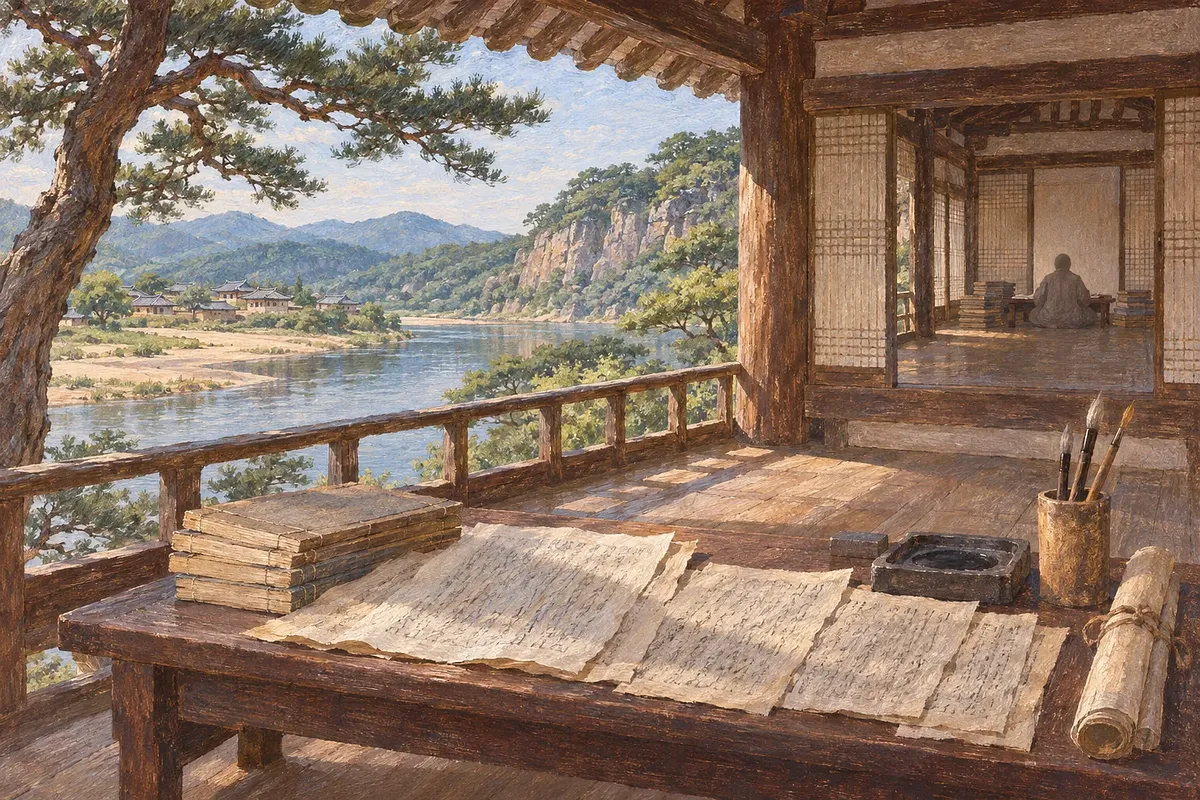
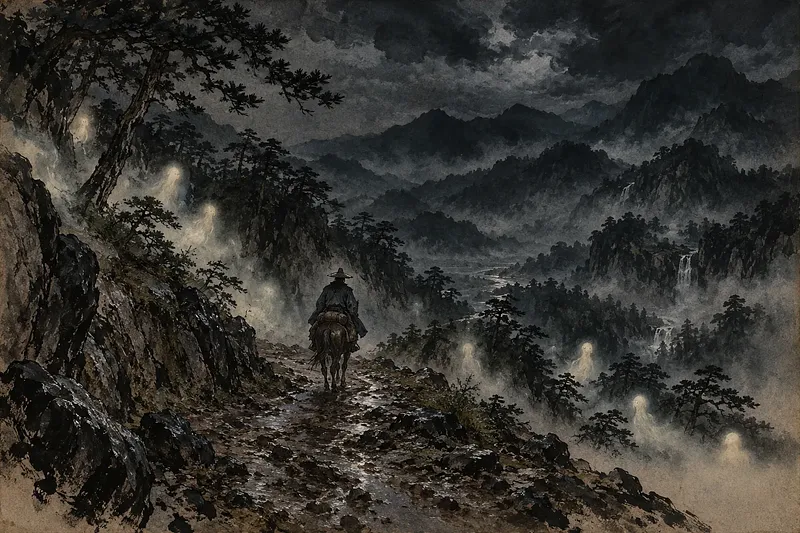
Ryu Seong-ryong compiled Jingbirok after the war from his experiences and wartime documents.AI-generated image

Key points

  • Jingbirok is a postwar work that primarily covers the Imjin War from 1592 to 1598.
  • Ryu Seong-ryong identified problems with military preparations and the command structure as causes of the early defeats.
  • Understanding the response to the war requires considering the activities of the navy, volunteer militias and government troops alongside support from Ming forces.
  • The period when Jingbirok was written must be distinguished from the period when the author's descendants published it.
  • The author's experiences and documents enhance its value as a historical source, but they do not replace the need to verify individual judgments.

Jingbirok is Ryu Seong-ryong’s account of the Imjin War, which lasted from 1592 to 1598. Joseon resisted the invasion through the efforts of its navy, righteous armies, and government forces, with support from Ming troops. After the war, Ryu Seong-ryong documented failures and responses, leaving a historical source for later generations to examine.

This article follows the author’s preface to Jingbirok and the commentary on Our History Net, consulted in November 2026.

What kind of book is Jingbirok?

Jingbirok is a historical record combining the experiences and documents of a senior official who lived through the war. Its author, Ryu Seong-ryong, is also known by his pen name, Seoae. During the war, he served as chief state councillor and chief military commissioner, among other posts. The chief military commissioner oversaw military affairs across several regions.

The book focuses on 1592 to 1598. It also covers relations with Japan before the war. This structure serves to explain how the war began. Since Ryu Seong-ryong compiled it after leaving office, it differs in character from a wartime diary.

“Jingbi” in the title means guarding against past mistakes to avoid future calamities. The phrase comes from the “Xiaobi” section of the Book of Songs. The title itself thus conveys the purpose of the work. The circumstances of its writing can be found in the author’s preface and commentary on Our History Net.

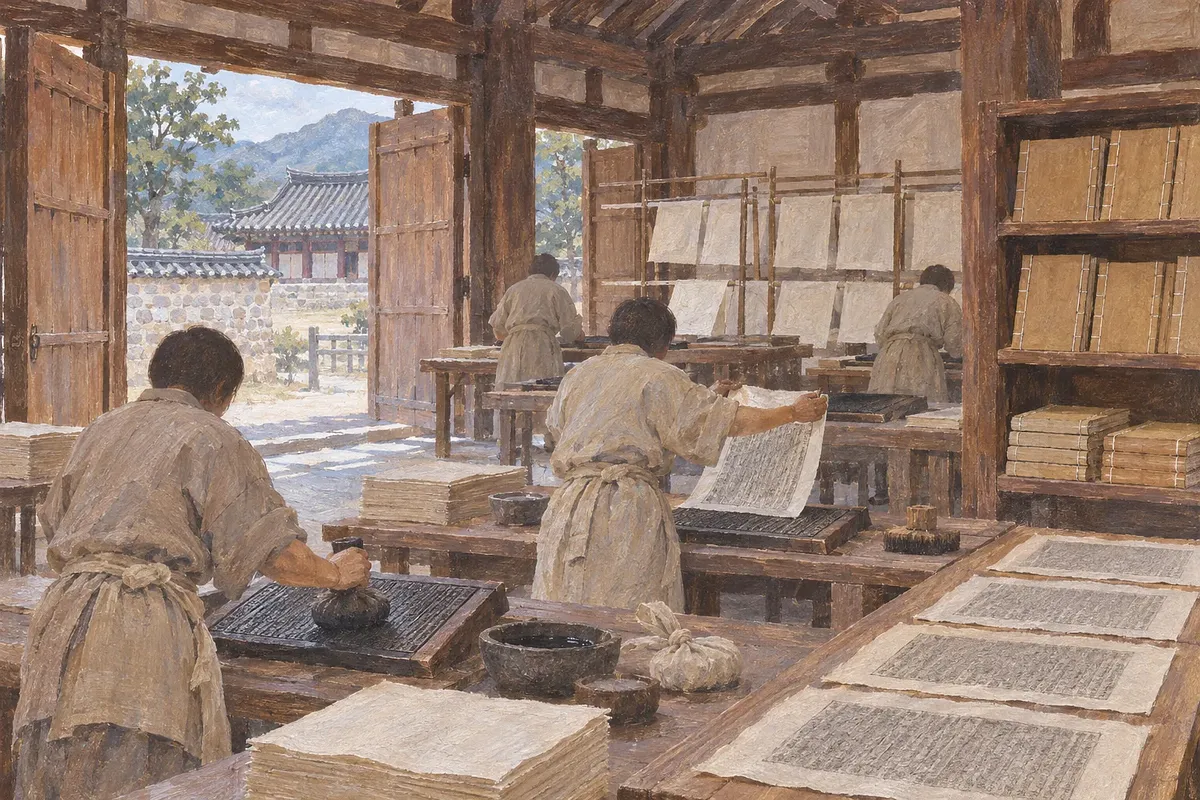
Jingbirok’s composition must be distinguished from its later publication by the author’s descendants.AI-generated image

Why Jingbirok was written and the question of postwar responsibility

The book grew out of both reflection on a national crisis and questions of postwar responsibility. Ryu Seong-ryong was impeached and removed from office near the end of the war. He then returned to his hometown of Hahoe in Andong. He is known to have compiled his wartime experiences at Ogyeonjeongsa.

In his preface, Ryu Seong-ryong acknowledges his responsibility for failing to prevent the crisis despite holding important posts. He also explains that he added contemporary documents to accounts of what he had seen and heard. This approach sought to pass memories down to later generations alongside documentary evidence. The circumstances are also described in the National Folk Museum of Korea’s special exhibition guide.

  • Janggye are reports submitted to the king by provincial officials and others.
  • Sangso and chaja are written submissions presenting opinions to the king.
  • Documents exchanged between government offices show the administrative responses at the time.
  • Miscellaneous records contain experiences and observations outside the main text.

The book also includes measures Ryu proposed and people he recommended for office. The commentary on Our History Net sees these passages as partly an explanation of his own responsibility. His reflection and self-defense therefore need to be examined together. Writing the book was not what brought the war to an end.

The reasons for the early defeats and problems with the defense system

Ryu Seong-ryong identified shortcomings in military preparations and the command structure as causes of the early defeats. This was the assessment of an author who had experienced the war. He also criticized the selection of commanders and the training of soldiers. He addressed the failure to properly understand developments in Japan as well.

He paid particular attention to the way troops were assembled under Jeseung Bangnyak. Under this arrangement, troops from several regions gathered and waited for a commander. He judged that responding would be difficult if the enemy arrived before the commander. As an alternative, Ryu Seong-ryong called for restoring the jingwan system.

Category Jeseung Bangnyak The jingwan system advocated by Ryu Seong-ryong
Basic unit of response Troops gathered from several regions Regional defense organizations
Command method An appointed commander led the assembled troops Troops were deployed at the regional level
Issues identified by Ryu Seong-ryong A commander’s late arrival left a gap in the response A basis for responding locally could be established
Reform debate Arguments for retaining the existing system The prewar proposal was not accepted

His account describes how Kim Su, the governor of Gyeongsang Province, opposed changing the system. The reason was that a long-established method would be difficult to change suddenly. This passage shows the difference between proposing a measure and actually adopting it. This explanation is based on Our History Net’s commentary on Jingbirok.

What responses helped turn the tide of the war?

The recovery resulted from continued responses at sea and on land. Ryu Seong-ryong emphasized the roles of the navy and righteous armies among these efforts. His account also includes support from Ming troops. Distinguishing each group’s role helps reveal the overall response to the war.

Responding force Activities highlighted in the account Significance for understanding the war
Joseon navy Disrupting Japanese troop movements and supplies at sea Control of the sea also affected the war on land
Righteous armies Resisting Japanese troops locally Resistance continued outside the government forces
Joseon government forces Land defense, counterattacks, and recapture operations The state’s military response continued
Ming troops Sending reinforcements and recapturing Pyongyang Fortress, among other operations Outside military support contributed to the recovery

The navy belonged to Joseon’s government forces, so the two categories overlap in part. The table separates them to explain naval operations. The activities of righteous armies also varied by region and period. These categories should not be understood as separate, disconnected wars.

The commentary on Our History Net describes the recapture of Pyongyang Fortress as a turning point in the war. Yet the war continued after this recovery. The book also covers the Jeongyu reinvasion and the withdrawal of Japanese troops. This is why a single victory cannot readily explain the entire war.

Timeline of the war, writing, and publication

The war took place at a different time from when the account began circulating as a book. Writing involves organizing experiences into an account. Publication means producing and distributing that account as a book.

Year or period Event Supporting source
1592 The Imjin War began, marking the start of the period central to the account Author’s preface to Jingbirok, Our History Net
1598 The war ended; Ryu Seong-ryong fell from power and returned home Our History Net’s commentary on the author’s preface, National Folk Museum of Korea
Around 1604 Described as the period when the work was completed Encyclopedia of Korean Culture, “Gwangmyeong Translated Jingbirok”
Around 1647 A woodblock edition was published in connection with Jo Su-ik’s tenure as governor of Gyeongsang Province Our History Net’s commentary on Jingbirok
1695 Published in Japan Encyclopedia of Korean Culture, “Jingbirok”
1969 The handwritten draft was designated a National Treasure Encyclopedia of Korean Culture, Gyeongsangbuk-do cultural heritage guide

The dating of completion to around 1604 follows the “Gwangmyeong Translated Jingbirok” entry. Researchers differ on the date of first publication. This article therefore does not present 1647 as an undisputed year of first publication.

Differences in the contents and editions of Jingbirok

Surviving editions differ in the range of documents they include. The commonly read main text must be distinguished from editions that combine it with collections of documents. The title alone is not enough to determine the book’s full composition.

Type Main contents Distinguishing point
Handwritten draft Records written by Ryu Seong-ryong himself A cultural heritage item distinct from later woodblock editions
2-volume edition Accounts of events before, during, and after the war, and Nokhu Japgi The usual structure centered on the main text
16-volume edition The main text, Geunpokjip, Jinsarok, Gunmun Deungnok, and other materials A broader collection that also includes war-related documents

The main text covers prewar diplomacy and the early defeats. King Seonjo’s flight and the recapture of the capital are also major topics. It then addresses the renewed invasion and conditions toward the end of the war. Nokhu Japgi supplements events not fully covered in the main text.

Geunpokjip collects writings submitted to the king. Jinsarok contains reports from the early stages of the war. Gunmun Deungnok is a collection of official documents related to military affairs. The composition can also be checked in the Encyclopedia of Korean Culture’s “Jingbirok” entry.

The record and its interpretation

What a historical source directly states must be distinguished from later assessments. The author’s purpose can be found in his preface. The causes of individual events and responsibility for them need to be compared with other records.

What the author’s preface states directly

The preface explains that prewar events were included to describe how the conflict began. The author also acknowledges his own responsibility. He goes on to explain that he attached contemporary documents to accounts of what he had seen and heard. These passages provide evidence of his intentions in writing the book.

The value commonly recognized in scholarly commentaries

The scholarly commentaries consulted regard the book as a major source for research on the Imjin War. This is because it combines a senior official’s experiences with contemporary documents. It was also used in later historical writing. Our History Net explains that it was used in compiling the Revised Veritable Records of King Seonjo.

Areas of disagreement or matters requiring separate verification

Accounts of the first publication date differ depending on the sources and research. The extent to which the author was explaining his own responsibility is also a matter of interpretation. Assessments of particular individuals must be compared with other historical sources. The book’s value and the accuracy of every statement in it are separate judgments.

Do matching accounts in later records provide more evidence?

The same account in later books does not always constitute independent evidence. This is because Jingbirok was used as a source for later historical works. Even when matching content is found, the relationship between the records must be checked. This is a caution in verification that follows from how historical sources were transmitted.

Finding What to check Limits of the judgment
Two books contain the same account Whether the later book quoted the earlier one Agreement alone does not establish independent testimony
A separate contemporary document survives Its author, date, and reporting channel It is possible to examine whether the same event was recorded through a separate channel
A later account is more specific The source of the additional information More descriptive detail does not guarantee accuracy

This approach distinguishes the book’s influence from factual verification. Being widely cited is an achievement in the transmission of the record. The accuracy of individual claims requires a separate examination of the evidence. This does not mean that every entry in the royal annals came from this book.

What the record achieved and what it means today

Jingbirok’s achievement lies in preserving experiences of responding to war as a record that can be examined. It was later published in Japan as well. The perspective of a Joseon official who had experienced the war thus reached readers abroad. This can be considered alongside the process by which the book was used in historical writing within Korea.

The handwritten draft is preserved as a National Treasure. It is held by the Korean Studies Institute. This shows the value of the original manuscript itself, apart from the book’s contents. Information about its custody can be found in the Gyeongsangbuk-do cultural heritage guide.

Today, it serves as material for studying both military history and the nature of historical records. Readers can examine military responses while also considering the author’s position. The distinction between contemporary documents and postwar recollections also becomes clear. This offers a more concrete subject for study than an account that merely lists a person’s achievements.

Questions checked against the record

Are Ryu Seong-ryong and Yu Seong-ryong different people?

The two spellings refer to the same person. This article consistently uses Ryu Seong-ryong. The spelling Yu Seong-ryong also appears in source titles and institutional descriptions.

Is it a diary written while the war was underway?

It is a book compiled after the war from experiences and documents. The period covered by the account must be distinguished from the time it was written. Its use of documents produced during the war must also be considered.

Does it give equal attention to every year of the Imjin War?

It does not devote the same amount of space to each year. The commentary on Our History Net explains that it places greater emphasis on the first 2 years of the war. This is connected to its aim of identifying the causes of the early defeats.

Would adopting the jingwan system have prevented the defeats?

This record alone cannot establish the outcome of an alternative that was not adopted. What can be confirmed is Ryu Seong-ryong’s proposal and the problems with the system that he described. The content of the proposal must be distinguished from assumptions about its actual effects.

Is the book designated a National Treasure the same as commercially available translations?

The National Treasure designation applies to Ryu Seong-ryong’s handwritten draft. Commercial translations are publications that present the contents to modern readers. The scope of each translation must be checked against the edition on which it is based.

How does the KBS drama differ from the historical record?

The KBS drama of the same name is a dramatic work produced in 2015. The KBS program catalog states that it was based on the book. Quoting dialogue from the drama as the actual words of a historical figure requires separate verification against historical sources.

Open the link

Opens in a new window.

Advertisement

Sign-in required

Sign in with your Google account to like, comment, and save highlights.

FAQ

Who wrote Jingbirok?

It was written by Ryu Seong-ryong, a civil official of Joseon. During the Imjin War, he served as chief state councillor and supreme military commissioner, among other posts.

What does the title Jingbirok mean?

It means to take warning from past mistakes and guard against future calamities. The title is based on the “Sobi” chapter of the Classic of Poetry.

What period does Jingbirok cover?

It mainly covers the Imjin War from 1592 to 1598. It also records relations with Japan before the war to explain how the war began.

When was Jingbirok written?

Ryu Seong-ryong wrote it after leaving office. The “Gwangmyeong Translation of Jingbirok” entry in the Encyclopedia of Korean Culture states that it was completed around 1604.

Why was Jingbirok written?

It was intended to leave a record of wartime failures and responses for later generations to examine. It is also examined as Ryu Seong-ryong's reflection on and explanation of his own responsibility.

What did Ryu Seong-ryong see as the causes of the early defeats?

He pointed to factors such as inadequate military preparations and confusion in the command structure. While explaining the limitations of the jeseung bangnyak system, he also recorded how the proposal to restore the jingwan system was not accepted.

What roles do naval forces and righteous armies play in Jingbirok?

They are the forces Ryu Seong-ryong emphasized as turning the tide of the war. To understand the overall response to the war, the activities of government troops and support from Ming forces must also be considered.

How do the 2-volume and 16-volume editions of Jingbirok differ?

The 2-volume edition focuses on the war narrative and Nokhujapgi. The 16-volume edition also includes related documents such as Geunpokjip, Jinsarok, and Gunmundeungnok.

Was Jingbirok first published in 1647?

It is widely stated that it was published around 1647. However, Our History Net notes that there are differing views on when it was first published.

Is everything in Jingbirok an objective fact?

It is an important historical source based on experience and documents. However, the author's analysis of causes and assessments of individuals must be examined against other records.

Where is Jingbirok, a National Treasure, kept?

The handwritten draft is held at the Korean Studies Institute. It was designated a National Treasure in 1969.

Can the KBS drama Jingbirok be cited as a historical source?

The drama is a dramatic work based on historical records. To cite its dialogue or scenes as actual historical facts, historical sources supporting that content are needed.

Sources

Data formats

This content is available in several machine-friendly formats.

Data-only languages (machine translated, files only)

Indonesian JSON MD Portuguese JSON MD Chinese (Traditional) JSON MD Deutsch JSON MD

Verification

This article was drafted with AI and then reviewed and edited by a person.

Reviewed by 신익희 · 편집장 · 2026-11-04

Figures in this article were checked against the source material during generation. · 2026-11-04

This translation has been cross-checked by AI. · 2026-11-04

Reuse & AI usage

Search indexing and AI citation with attribution are welcome. See the license policy for details.

CC BY · License

Loading…

Loading…

Loading…

Where this content lives

Related content

From Injoys

Request the content you want and take 70% of what it earns

Just leave the subject. We handle production, review, translation and distribution.

See how revenue sharing works

Comments