Injoys
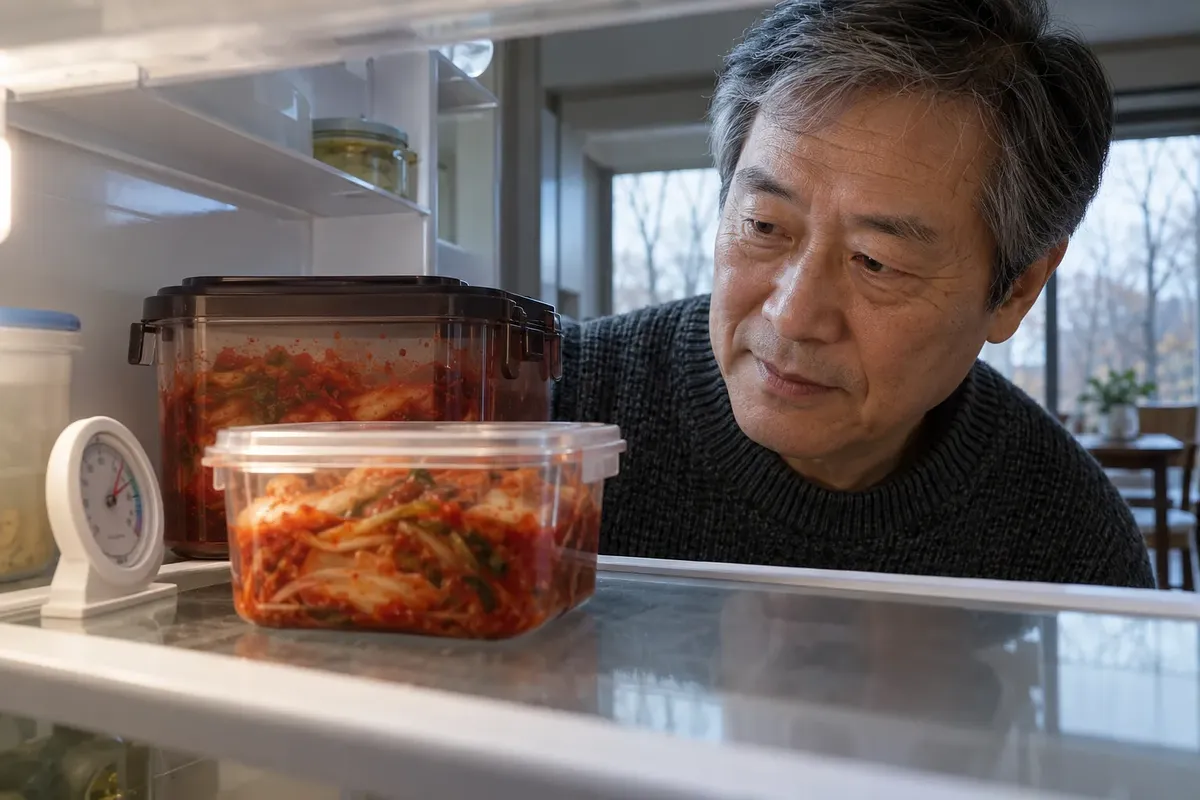
Kimjang kimchi can also be stored in a regular refrigerator. To prevent golmaji, the temperature should be 4℃ or below. Separating out the portion to eat first can reduce the remaining kimchi's exposure to air. How long it keeps depends on the temperature and hygiene.
The storage temperature figures follow guidance issued by the Korea Food Safety Information Service on October 24, 2024.
Differences between a regular refrigerator and a kimchi refrigerator
The difference between the two appliances lies in temperature control suited to kimchi and their ripening functions. A regular refrigerator is used to refrigerate various foods together. Many kimchi refrigerators have separate functions for storing and ripening kimchi. Specific temperatures and functions vary by model.
| Comparison | Regular refrigerator | Kimchi refrigerator |
|---|---|---|
| Temperature control | Check the refrigerator compartment setting and the temperature where the kimchi is stored | Check the storage function suited to the type of kimchi |
| Ripening control | Kimchi ripens slowly at refrigeration temperatures | Select storage or ripening functions on models that support them |
| Temperature changes | Affected by opening and closing the door and by food placement | Use temperature control functions designed for kimchi storage |
| What to watch for | Avoid overfilling it and blocking cold air | Avoid settings that are too cold for the kimchi's salt content |
LG Electronics describes the direct cooling method used in chest-style models. It cools the walls to reduce changes in the internal temperature. This description does not apply to every type of kimchi refrigerator. LG Electronics guide to cooling methods
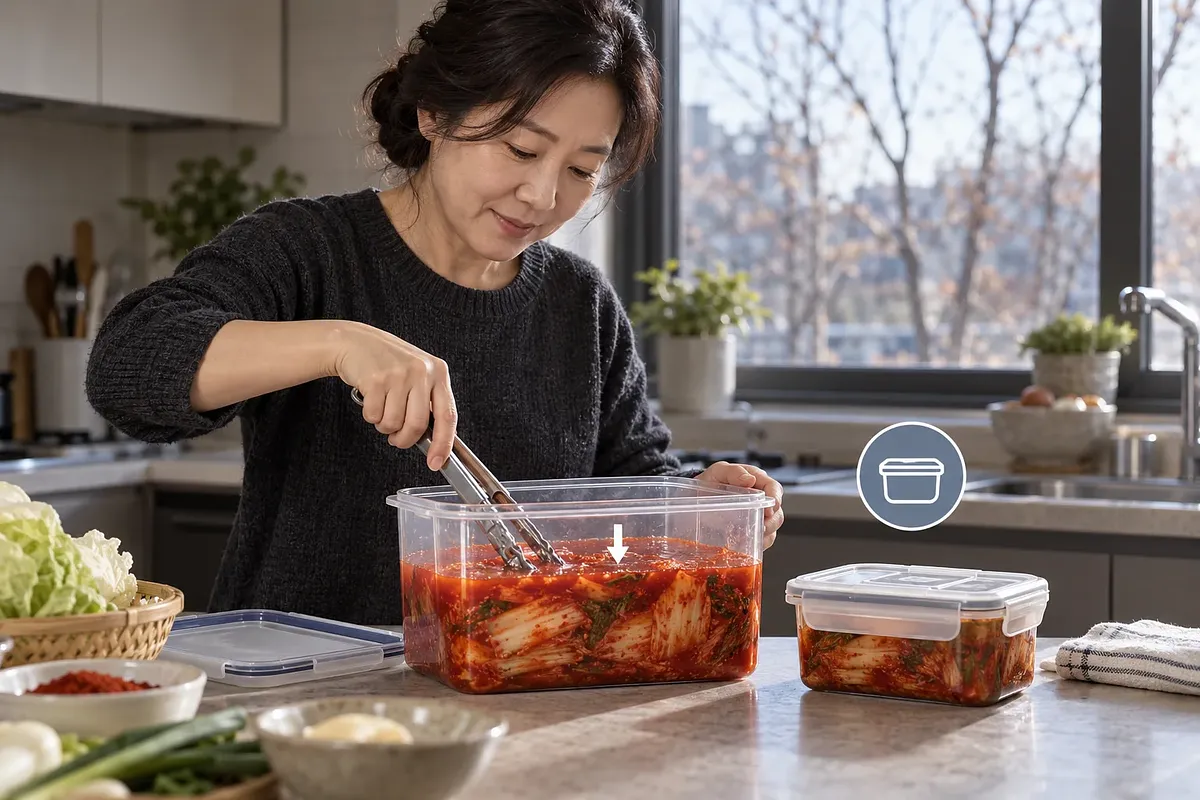
Separating kimchi to eat first reduces how often the stored portion is opened.
Temperature guidelines for storing kimchi without a kimchi refrigerator
Preventing golmaji requires both a low temperature and less exposure to air. The Korea Food Safety Information Service advises:
Cover the surface of the kimchi with plastic wrap or submerge it in its liquid, then keep it at 4 degrees Celsius or below.
This is an excerpt from the Korea Food Safety Information Service's “Should I Throw Away Kimchi with a Mold-Like White Film?” The temperature is storage guidance for preventing golmaji. It does not guarantee that the kimchi is safe to eat for a particular period. Korea Food Safety Information Service guidance
The refrigerator setting alone does not tell you the actual temperature. The FDA recommends checking it with a refrigerator thermometer. Containers should also be placed so they do not block the flow of cold air around them. FDA guide to refrigerator thermometers
Managing kimchi to eat first and kimchi to keep longer
Dividing kimchi among containers according to when you plan to eat it can reduce how often you open the containers reserved for later. This is an example of applying the principles of keeping kimchi cold and limiting its exposure to air. Dividing it into portions does not, by itself, extend its storage life.
| Kimchi condition and use | What to do | What to check |
|---|---|---|
| Kimchi to eat later | Put it in a separate container from the start and refrigerate it | Unnecessary openings and time left out of the refrigerator |
| Kimchi to eat first | Put a frequently eaten portion in a small container | Cleanliness of the utensils used to serve it |
| Kimchi that has already ripened to your liking | Store it at a low temperature | Changes in taste as it continues to ripen |
| Kimchi made with less salt | Check that the appliance setting suits its salt content | Ice forming because it is too cold |
For example, even kimchi made on the same day can differ in how often each container has been opened. A container frequently brought to the table is exposed to the outside more often. There is no need to open the container reserved for later each time. LG Electronics temperature guidance also addresses cooling settings for less salty kimchi separately.
Using airtight containers and serving kimchi
The aim of container management is to reduce the kimchi surface's contact with air and outside contaminants. Even with the lid closed, the top of the kimchi may sit above the liquid. Check both how full the container is and the condition of the surface.
- Thoroughly wash the food-safe container and lid.
- Divide the kimchi among containers according to when you plan to eat it.
- Leave space at the top, following the container's maximum fill line.
- Press the kimchi down so it is submerged in its liquid, or cover its surface with food-safe plastic wrap.
- Use a clean utensil to take out the amount you need, then refrigerate the rest right away.
During fermentation, gas and liquid can cause the contents to overflow. Filling a container to the brim to reduce air exposure is not appropriate. The manufacturer also advises following the maximum fill line. LG Electronics guide to using containers
It is best not to put chopsticks that have touched your mouth into a storage container. Do not return kimchi that has been served at the table to its original container. Keep it separate from juices from raw meat or fish. These steps help prevent contamination between foods.
The difference between storing kimchi to slow ripening and storing it to ripen
Refrigeration slows fermentation. Kimchi continues to ripen slowly even in the refrigerator. Ripening it further and maintaining its ripe flavor are different goals.
| Goal | Approach | Limitation |
|---|---|---|
| Keep it less ripe for longer | Maintain a steady refrigerated temperature | Fermentation does not stop completely |
| Ripen it until it is ready to eat | Follow a tested recipe or the appliance's ripening instructions | The time varies with temperature and ingredients |
| Maintain its already ripe flavor | Focus on refrigeration rather than further ripening | Sourness that has already developed cannot be reversed |
Samsung Electronics Service explains that ripening speed varies with ingredients and temperature. Even for the same kimchi, the seasonings and amount of salt affect it. That makes it difficult to apply the same room-temperature ripening time to every household. Samsung Electronics Service guide to storing kimchi
The season alone does not tell you the temperature on a balcony. Winter does not make its conditions the same as those inside a refrigerator. Kimchi intended for longer storage should be kept refrigerated.