Gimpo Kimchi-Making Waste: Food vs. General Waste Bags
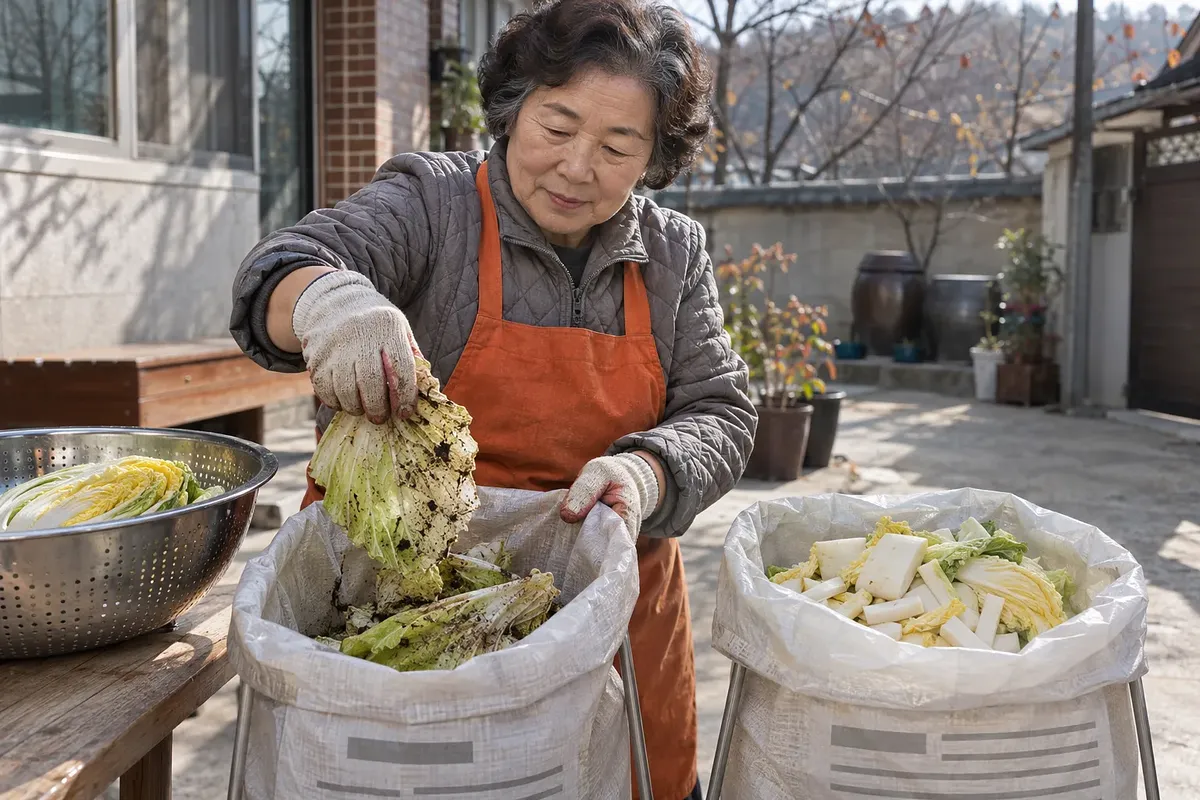
In Gimpo, outer napa cabbage leaves with soil on them go in pay-as-you-throw general waste bags. Remove as much moisture and salt as possible from napa cabbage, radish, and salted seafood before placing them in pay-as-you-throw food waste bags.
In Gimpo, outer napa cabbage leaves with soil on them go in pay-as-you-throw general waste bags.
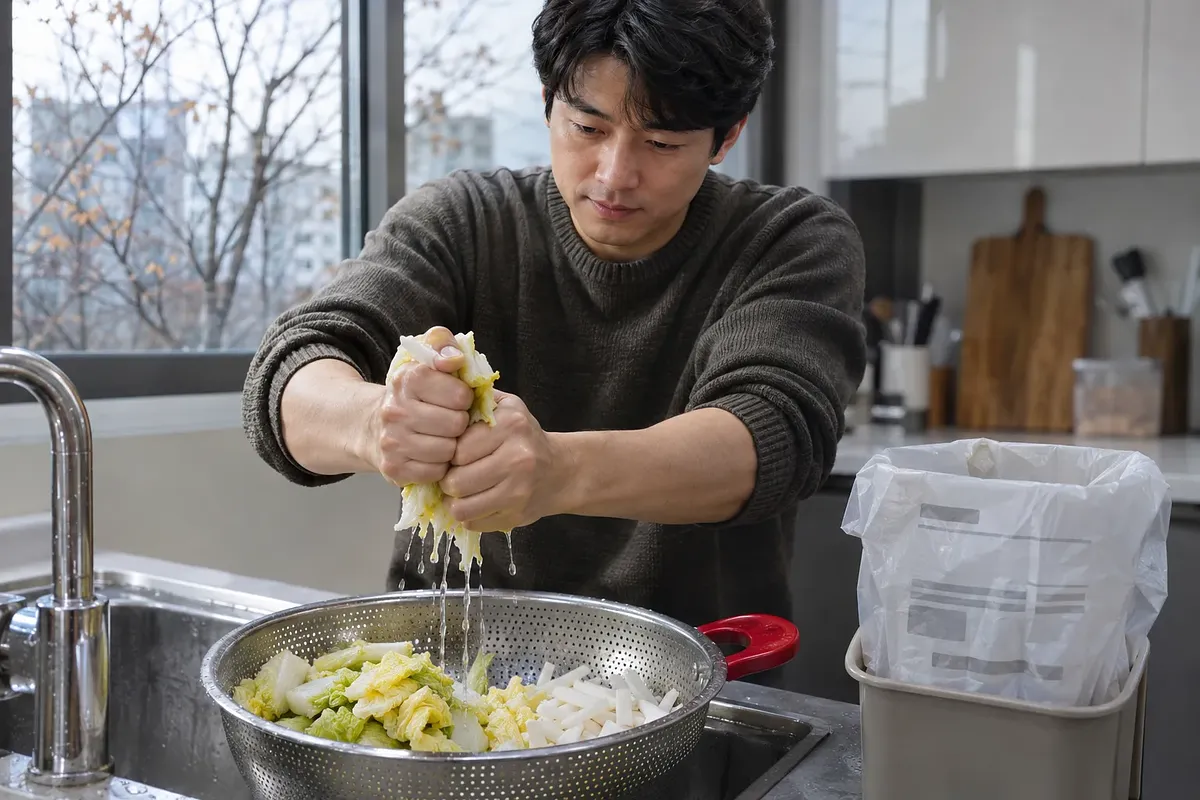
Remove as much moisture and salt as possible from napa cabbage, radish, and salted seafood before placing them in food waste bags.
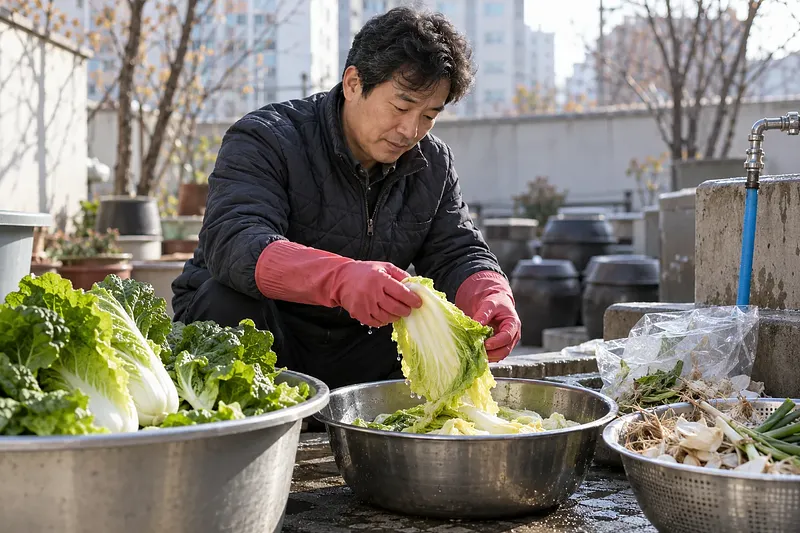
Green onion, garlic, and onion roots and skins, along with chili pepper stalks, stems, and seeds, go in general waste bags.
Blue bags for markets and shops, clear bags, and mesh vegetable bags cannot be used for waste disposal.
For items that are difficult to classify, check with Gimpo's Resource Circulation Division at 031-980-2765.
In Gimpo City, soil-covered outer cabbage leaves from kimjang waste go in pay-as-you-throw bags for general waste. Cabbage, including salted cabbage, radishes, and salted seafood go in food waste bags. Remove as much moisture and salt as possible before disposing of food waste.
The classifications and fine amounts in this article are based on Gimpo City’s notice dated October 30, 2026.
Gimpo City’s Bag Requirements by Item
Gimpo City specifies different bags for cabbage, radishes, and salted seafood versus soil-covered outer cabbage leaves. Even materials used for kimjang are classified differently depending on the type of waste. The rules below apply to Gimpo City.
Item and condition | Disposal bag | Preparation requirements
Cabbage, radishes, and salted seafood | Pay-as-you-throw food waste bag | Remove as much moisture and salt as possible
Bulky vegetables | Pay-as-you-throw food waste bag | Chop finely and squeeze out the moisture before disposal
Vegetable scraps and seasoning ingredients | Pay-as-you-throw food waste bag | Separate the items designated as general waste below
Soil-covered outer cabbage leaves | Pay-as-you-throw general waste bag | Keep separate from cabbage classified as food waste
Roots and skins of green onions, garlic, onions, and similar vegetables | Pay-as-you-throw general waste bag | Keep separate from the edible parts of vegetables
Chili pepper stalks, stems, and seeds | Pay-as-you-throw general waste bag | Do not mix with food waste just because they are seasoning ingredients
Animal bones and fish bones | Pay-as-you-throw general waste bag | Separate from food waste
Clam, oyster, and crab shells | Pay-as-you-throw general waste bag | Separate the contents from the shells
Gimpo City’s “2026 Guide to Disposing of Kimjang Waste in Gimpo City” states:
Remove as much moisture and salt as possible from cabbage, radishes, salted seafood, and similar items before disposal.
Sorting Outer Cabbage Leaves by Condition
The cabbage parts that Gimpo City’s notice explicitly classifies as general waste are soil-covered outer leaves. Salted cabbage is handled according to the food waste disposal rules for cabbage. Whether vegetables have been salted is not enough on its own to determine which bag to use for all vegetables.
Situation | How to decide
Soil-covered outer leaves are removed during trimming | Use a general waste bag
Salted cabbage is left over | Remove as much moisture and salt as possible and dispose of it as food waste
Trimming cabbage or radishes produces scraps | Apply the food waste rules, but separate items designated as general waste
The outer leaves differ from the example in the notice, making classification unclear | Describe their condition to the Resource Circulation Division and confirm
Do not assume that all outer leaves must go in general waste bags simply because they are outer leaves. The notice specifies that outer leaves classified as general waste are “soil-covered.” It does not separately explain whether washing off the soil changes their classification.
Steps for Disposing of Vegetables as Food Waste
Reduce the volume of vegetables classified as food waste and remove moisture and salt before disposal. Gimpo City explains that removing moisture reduces odors and leachate. Leachate is contaminated water that drains from waste.
· First separate roots, skins, seeds, and other items designated as general waste.
· Finely chop bulky vegetables classified as food waste.
· Remove as much moisture and salt as possible from cabbage, radishes, and salted seafood.
· Squeeze the moisture out of the vegetables, then place them in a pay-as-you-throw food waste bag.
The notice does not specify how many times to rinse items or give a numerical salt limit. It is therefore not possible to say that washing them a certain number of times meets the requirements. If the preparation details are unclear, check with the Resource Circulation Division.
Examples of Separating Waste Produced Together
Waste from a single kimjang session may need to go in different bags. One example is when both soil-covered outer leaves and salted cabbage are left over. Do not combine them in one bag simply because they came from the same ingredient.
Waste produced together | What goes in general waste | What goes in food waste
Soil-covered outer leaves and salted cabbage | Soil-covered outer leaves | Salted cabbage with moisture and salt removed
Radish trimmings and green onion roots | Green onion roots | Radish trimmings with moisture removed
Salted seafood and clam or oyster shells | Clam or oyster shells | Salted seafood with moisture and salt removed
Using Nonstandard Bags and Common Mistakes
Gimpo City states that waste put out in nonstandard bags will not be collected. Such disposal may result in a fine of at most 1,000,000 won. This is the upper limit stated in the notice, not an indication that every violation carries the same fine.
· Blue bags used by markets and shops cannot be used for waste disposal.
· Clear bags and vegetable mesh bags are not approved disposal bags either.
· Even with pay-as-you-throw bags, you must distinguish between food waste and general waste bags.
· Chili pepper seeds left over from preparing seasonings are also designated as general waste.
· Gimpo City’s rules must not be applied as disposal rules for other areas.
Bags used to bring vegetables home must be distinguished from bags used to put waste out for collection. A vegetable mesh bag is not an approved disposal method even if it contains only vegetables. Use a pay-as-you-throw bag appropriate for the items being discarded.
Checking the Notice Date and Contact Details
This guide is based on October 30, 2026, the date the notice was posted. The last-modified date at the bottom of the page differs from the posting date. When citing the content, check both the notice’s title and its posting date.
The contact information in the body of the notice also needs to be distinguished from the information at the bottom of the page. The department named in the body is the Resource Circulation Division. For questions about item classification, call 031-980-2765.
Information to check | Where and how to check
Notice posting date | The posting date field in the notice
Department and phone number for classification inquiries | The contact section in the body of the notice
Items that are difficult to classify | Describe the ingredient, the part, whether it has soil on it, and whether it has been salted
Disposal days, times, and locations | Check the disposal guidance for your area or contact the Resource Circulation Division
Bag capacities and special collection schedules | Check whether Gimpo City has issued guidance specifying these details
This notice does not specify disposal times or an end date for special collection. Do not apply other areas’ temporary rules allowing general waste bags. Bag capacities and the use of waste disposal fee stickers also cannot be determined from this notice alone.
Frequently Asked Questions
Does salted cabbage go in a general waste bag?
Salted cabbage goes in a pay-as-you-throw food waste bag. Remove as much moisture and salt as possible from cabbage. If it is bulky, chop it finely and squeeze out the moisture.
Do green onion, garlic, and onion skins also count as food waste?
Gimpo City classifies the roots and skins of green onions, garlic, onions, and similar vegetables as general waste. Do not put them in food waste bags simply because they came from kimjang ingredients. Chili pepper stalks, stems, and seeds are also designated as general waste.
Can all kimjang waste go in large general waste bags during kimjang season?
Gimpo City’s current notice instructs residents to use different bags depending on the item. It does not allow all kimjang waste to go in general waste bags. Special collection guidance from other areas is not a basis for disposal in Gimpo City.
Can I also find disposal times and locations in this notice?
This notice does not specify disposal times or locations. Check the separate disposal guidance for your area. If you cannot confirm the details, contact Gimpo City’s Resource Circulation Division.
 Injoys