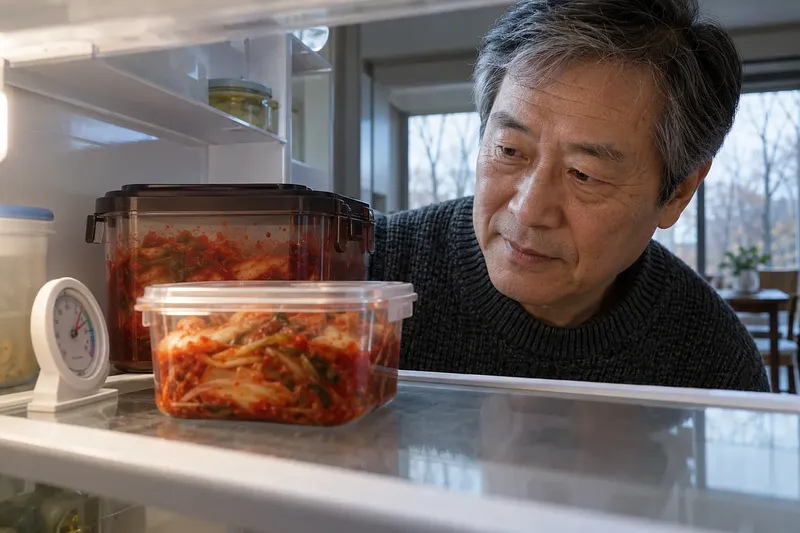
20kg salted cabbage: heads and seasoning for 10 and 40kg
Check each product's estimated head count, and calculate seasoning amounts using the weight of the salted cabbage. Using recipes from public agencies, we list ingredient quantities for 10·20·40kg and distinguish the base seasoning mix from seasoning that includes vegetables.
Check the product's salted cabbage weight and estimated head count.
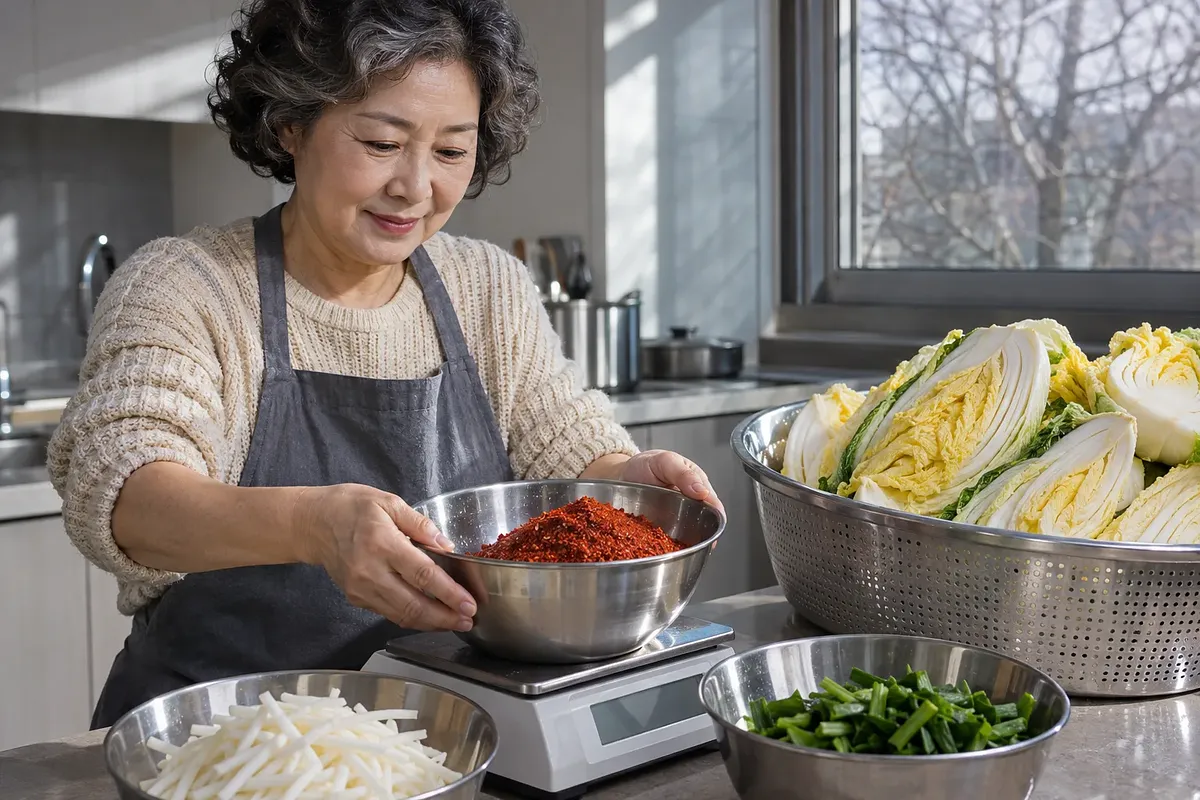
Have a kitchen scale ready and check the cabbage weight the recipe is based on.
Divide the cabbage weight you plan to prepare by the recipe's reference weight to calculate the scaling factor for each ingredient.
When measuring, distinguish the base seasoning mix from the radish and leafy greens added separately.
Choose a delivery date so you can use the cabbage on the day it arrives, and check the storage and washing instructions.
Check each product's estimated head count to find out how many heads are in 20kg of salted cabbage. Calculate seasoning quantities by the weight of the salted cabbage, not the number of heads. Scaling the Rural Development Administration's recipe gives 900g of red pepper powder for 20kg.
The seasoning calculations are based on the recipe published by the Rural Development Administration on November 15, 2013.
How do you check the number of heads in 20kg?
Check the head count listed for the weight of the product you plan to buy. Even at the same weight, the count varies with cabbage size. Do not use one seller's estimated range as the standard for all products.
SSG.COM product listings include the following examples. The figures below are the ranges listed for each product. Check the details for your selected option again when ordering.
Example product listing | Salted cabbage weight | Listed head count
Jayeoneul Dameum Haenam product | 20kg | 6~10 heads
Gamdong Haenam Ttangkkeut product | 20kg | 7~9 heads
Danongine Goesan product | 20kg | 7~11 heads
You can check the differences in head counts between products on the SSG.COM product page.
Also distinguish between whole heads and cut pieces. Two cabbage halves make 1 head. If cabbages are cut differently, it is difficult to determine the number of heads from the number of pieces alone.
What should you prepare before calculating seasoning quantities?
Have the product's weight information, the reference recipe, and a kitchen scale ready. You must distinguish between fresh cabbage weight and salted cabbage weight. The conversion table below is based on salted cabbage.
· Check the weight of the cabbage alone in the product details.
· Check whether your recipe is based on fresh cabbage or salted cabbage.
· Divide the weight of the cabbage you will prepare by the recipe's reference weight.
· Multiply the quantity of each ingredient by that factor.
· Place a container on the scale, zero it, and then weigh the ingredients.
Listed quantity | Meaning | What to watch for when calculating
Fresh cabbage weight | Weight of the cabbage before salting | Do not use it directly in a table based on salted cabbage
Salted cabbage weight | Weight of the cabbage after salting | Check how packaging and drainage are accounted for
Head count | Number of cabbages | Do not use it as a fixed substitute for weight
Total set weight | Combined weight of cabbage, seasoning, and other components | Check the weight of the cabbage alone separately
Seasoning ingredient conversion table for 20kg of salted cabbage
The table below proportionally scales a publicly available recipe from Rural Development Administration sources. The original recipe is based on 50kg of salted cabbage. It is not a definitive formula for all kimchi.
Ingredient | Original 50kg recipe | Scaled to 10kg | Scaled to 20kg | Scaled to 40kg
Red pepper powder | 2.25kg | 450g | 900g | 1.8kg
Garlic | 1kg | 200g | 400g | 800g
Ginger | 500g | 100g | 200g | 400g
Salted fermented seafood | 2.5kg | 500g | 1kg | 2kg
Sesame seeds | 250g | 50g | 100g | 200g
Sugar | 250g | 50g | 100g | 200g
Glutinous rice paste | 4.25kg | 850g | 1.7kg | 3.4kg
Radish | 5kg | 1kg | 2kg | 4kg
Total green leafy vegetables | 2.5kg | 500g | 1kg | 2kg
The detailed quantities for radish and green leafy vegetables follow Nongsikpum Allbaro's easy kimjang method. The green leafy vegetable quantity is the combined total of water dropwort, scallions, garlic chives, mustard greens, cheonggak seaweed, and similar ingredients. It does not mean adding the listed quantity of each vegetable separately.
Distinguish the weight of glutinous rice paste from the weight of glutinous rice flour itself. The original recipe instructs you to cook glutinous rice and water at a ratio of 1:10. It does not specify how much water evaporates during cooking. Therefore, do not treat the paste weight in the table as the weight of dry glutinous rice.
Calculation examples for 10kg, 20kg, and 40kg
You can calculate the quantities to prepare by multiplying every ingredient by the same factor. First, make sure the reference cabbage weight and the cabbage weight you will prepare use the same unit. Be careful not to divide kg by g or vice versa.
The formula is Required ingredient quantity = Reference ingredient quantity × Cabbage weight to prepare ÷ Reference cabbage weight.
Cabbage to prepare | Scaling factor from the 50kg recipe | Red pepper powder calculation example
10kg | 0.2 times | 2.25kg × 0.2 = 450g
20kg | 0.4 times | 2.25kg × 0.4 = 900g
40kg | 0.8 times | 2.25kg × 0.8 = 1.8kg
For seasoning for 40kg of salted cabbage, doubling the quantities in the 20kg column gives the same result. This scaling applies when you keep the same recipe. Taking just the red pepper powder quantity from another recipe and combining it with this one changes the proportions.
How do the basic seasoning mixture and finished seasoning differ?
The basic seasoning mixture does not include radish or green leafy vegetables. It is the combined total of red pepper powder, garlic, ginger, salted fermented seafood, sesame seeds, sugar, and glutinous rice paste. The Rural Development Administration announcement specifies 220g of seasoning mixture per 1kg of cabbage.
Category | For 20kg of cabbage | What it includes
Red pepper powder | 900g | One individual ingredient
Basic seasoning mixture | 4.4kg | Total of the ingredients from red pepper powder through glutinous rice paste in the table above
Additional vegetables | 3kg | 2kg of radish and 1kg of green leafy vegetables
Total seasoning ingredients including vegetables | 7.4kg | Calculated total of the basic seasoning mixture and additional vegetables
The 7.4kg figure is calculated by adding the ingredient quantities in the table. It is not the measured weight of the finished seasoning after mixing. The actual measured weight may vary depending on how much is left behind during preparation and transfer.
For store-bought seasoning, check the product's recommended usage amount. Also check whether it includes shredded radish and rice paste. Do not apply the weight of this recipe's basic seasoning mixture directly to a store-bought product.
The difference between common measuring mistakes and adjustments to taste
Distinguish between misreading units and making changes to suit your taste. Measuring errors require correcting the calculation. Record any quantities you adjust to taste for your next kimjang.
Situation | Assessment | What to check
Treating 20 heads of cabbage as 20kg | Measuring error | Actual weight of the salted cabbage
Preparing 1.7kg of dry glutinous rice instead of 1.7kg of glutinous rice paste | Ingredient interpretation error | The distinction between paste and dry ingredients
Applying the green leafy vegetable quantity separately to scallions and mustard greens | Double counting | Combined total of all the vegetables
Adjusting red pepper powder to change the heat level | Recipe change | Actual weight added
Using a different type of salted fermented seafood | Ingredient change | The product's flavor and usage instructions
Converting the quantities to cups or spoons requires a separate conversion reference. The same volume can weigh differently depending on the condition of the ingredient. To follow this table, keep the measurements in units of weight.
How to compare sets and prices
First, compare prices among cabbage-only products. For sets containing cabbage and seasoning, check the components separately. Also check shipping fees and discount conditions before paying.
The product listings also include a set containing 14kg of cabbage and 6kg of seasoning. The total is 20kg, but the cabbage itself weighs 14kg. Treating this set as a 20kg cabbage product will lead to an incorrect estimate of the quantity you need. You can check the components in the SSG.COM product listings.
Products being compared | What to check
Cabbage-only products | Total payment including shipping ÷ cabbage weight
Cabbage and seasoning sets | Cabbage weight, seasoning weight, and whether additional ingredients are needed
Products from regions such as Haenam and Goesan | Origin, specifications, estimated head count, and available delivery date
Do not use past average prices as current order prices. Check the final payment amount for the option you will order. The region name alone cannot determine the number of heads or the seasoning quantity, either.
Total ingredient weight for preparing kimchi containers
When preparing kimchi containers, account for the seasoning added to the cabbage. Following the table above, you add 7.4kg of seasoning ingredients to 20kg of cabbage. The calculated total ingredient weight is 27.4kg.
This is not the measured weight of the prepared kimchi. You also cannot convert a weight of 27.4kg into a volume of 27.4L. Check the kimchi container's storage instructions and fill line.
How should you plan ordering, washing, and storage?
Schedule your kimjang so you can use the salted cabbage on the day it arrives. The Ministry of Food and Drug Safety warns that coliform bacteria increase when cabbage is stored at room temperature for more than a day. This guidance on safe use was published on November 13, 2019.
It is best to use salted cabbage immediately on the day you receive it.
This wording comes from the Ministry of Food and Drug Safety's “Useful Tips for Safely Using Salted Cabbage During Kimjang Season.” The full text is available in the repost by Daegu Metropolitan City.
· Check the actual available delivery date on the order page. Distinguish between the shipping date and the expected arrival date.
· Schedule your kimjang around using the cabbage on the day it arrives. The Ministry of Food and Drug Safety warns that coliform bacteria may increase after more than a day at room temperature.
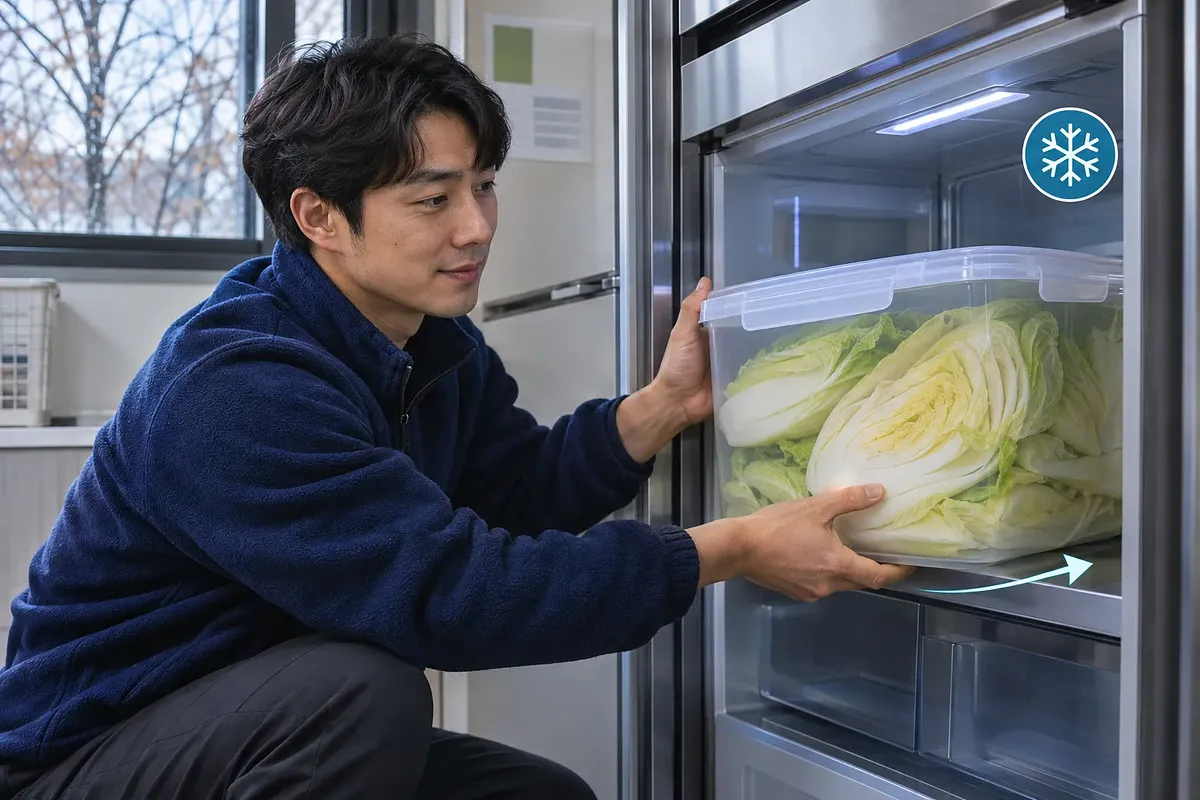
· If you cannot use it immediately, check the product's refrigeration instructions. The relevant Natural Dream product instructs customers to store it in a kimchi refrigerator if they cannot use it on the day it arrives.
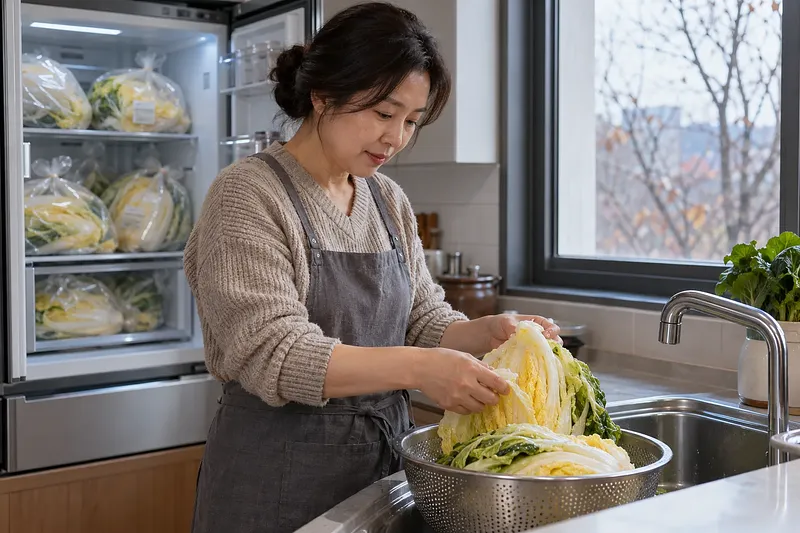
· If it has been stored at room temperature for at least 1 day, wash it before use. The Ministry of Food and Drug Safety recommends washing it at most 3 times. Excessive washing can damage the cabbage, including making it soft.
You can also find refrigeration instructions in the Natural Dream product information. Follow the storage period stated on the product you purchased. Do not apply another product's stated storage duration directly to yours.
 Injoys