Injoys
Seongjusin is the deity who protects the home in traditional beliefs about household gods. “Seongjugut(1),” recorded in Anseong in 1981, tells the story of Hahuwangssi and his wife. This article retells the traditional story of how the couple became the guardian deities of the house and its grounds.
This article follows the Hwangjepuri section of “Seongjugut(1)” and was compiled as of November 2026.
The Story
The conflict in the story of Hahuwangssi and his wife begins with a mistake the husband makes after leaving to build a house. The retelling below follows the events in the Anseong record. Descriptions of threats and bodily mutilation have been omitted.
Building Tools and His Wife’s Warning
Hahuwangssi had a talent for building houses from an early age. His skill showed even when he played at carving wood and piling up earth. One day, he received a summons to come and build a house in Hwangsantteul.
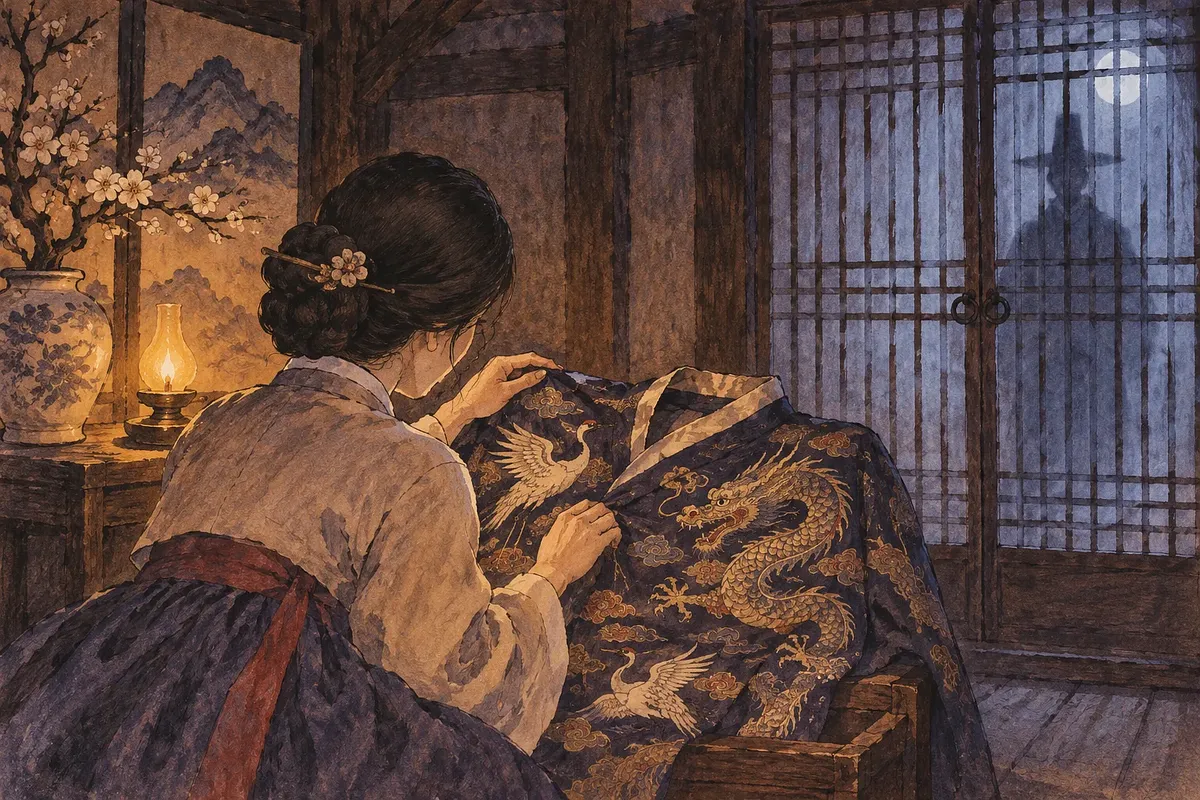
He needed to leave, but he had no tools for building a house. His wife helped her worried husband prepare for the journey. She embroidered cranes and dragons on the clothes she made for him herself.
At last, metalworkers arrived and made the tools. With a chisel and saw packed, he was ready to leave. His wife warned him not to answer anyone who spoke to him along the way.
Sojinyang Exchanges Clothes with Him
Hahuwangssi was taken in by the words of Sojinyang, whom he met on the road. His wife’s warning was soon forgotten. The two exchanged clothes, and Sojinyang headed for Hahuwangssi’s home.
His wife, who had remained at home, heard the sound of bells as someone returned. But she did not immediately accept the person outside the door as her husband. Keeping the door shut, she first asked him to hand over the clothes he was wearing.
The stitching on the clothes was unmistakably her own. But the smell clinging to them was not her husband’s. She realized that someone else had come wearing her husband’s clothes.
His Wife Buys Time and Leaves a Clue
His wife bought time to avoid doing what Sojinyang wanted. First, she cited the need to hold a memorial rite for her parents. Then she said that lengthy preparations were needed to rid her of a ghost attached to her body.
Sojinyang believed her and devoted himself to those preparations. Even after moving to Sojintteul, she continued her ruse. Outwardly, she acted as though she were obeying him.
She also left a clue so that her husband could find her. On clothes she hid at home, she wrote a message telling him to meet her at the well beside a tree in Sojintteul. Her waiting was also a way of making sure her husband could reach her.
Reunion and Becoming Guardian Deities
Hahuwangssi returned home after having an ominous dream. The house was empty, and his wife was nowhere to be seen. He searched for traces she might have left.
Following another clue from a dream, he discovered the hidden clothes. The writing on them pointed to the place where his wife was waiting. Hahuwangssi set out for Sojintteul and was finally reunited with her.
The story ends with the couple becoming deities. Hahuwangssi becomes Seongju. His wife is said to have become Teojumanura, the guardian of the house grounds.
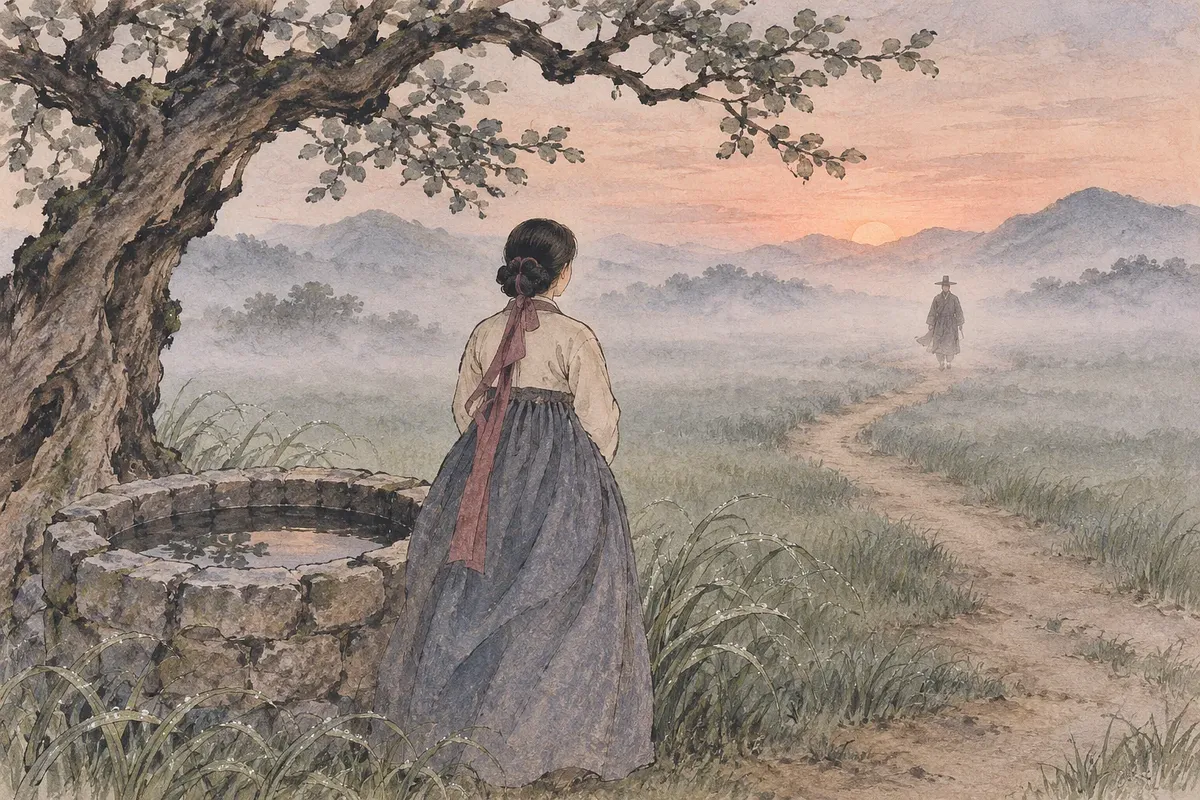
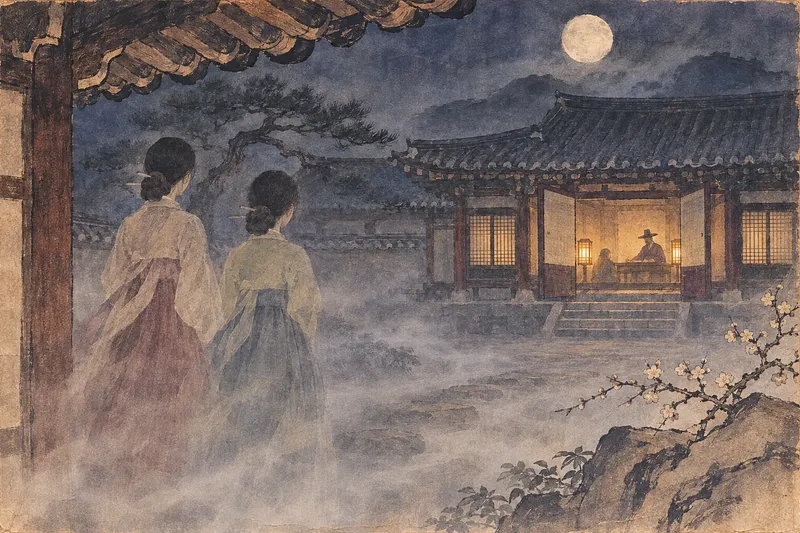
The clues left by the wife lead to the couple’s reunion.AI-generated image
The Source Text and Its Origins
This retelling is based on “Seongjugut(1)” in the Comprehensive Collection of Korean Oral Literature. The opening part of this record contains the Hwangjepuri, which recounts the couple’s history. The transcript can be read on the Korean Studies Data Integration Platform’s “Seongjugut(1)” record page.
| Item | Documented information |
|---|---|
| Title | “Seongjugut(1),” Comprehensive Collection of Korean Oral Literature |
| Type of material | A shamanic song, sung during a shamanic ritual |
| Scope of the retelling | The Hwangjepuri section recounting the history of Hahuwangssi and his wife |
| Date recorded | October 10, 1981 |
| Recording location | Anseong-eup, Anseong-gun, Gyeonggi-do, as it was then |
| Performer | Song Gi-cheol |
| Researchers | Jo Hui-ung and Lee Geun-yong |
This material records an oral tradition of unknown authorship. Song Gi-cheol was the performer who sang the story when it was recorded. The researchers documented and explained that performance.
The recording date is not the date when the story first came into being. In this article, Anseong likewise refers to the area where the tradition and its recording are documented. The record cannot be taken as evidence of a place where a deity actually appeared.
The Difference Between Seongjugut and Seongjupuri
Seongjugut is a ritual, while Seongjupuri is a shamanic song that recounts Seongju’s history. Shamanic songs are songs sung during shamanic rituals. Those that tell stories of events and characters are called narrative shamanic songs.
| Term | What it refers to in this article |
|---|---|
| Seongjugut | A ritual performed for the household gods |
| Seongjupuri | A shamanic song explaining Seongju’s history |
| Hwangjepuri | The section of the source record recounting the history of Hahuwangssi and his wife |
The research notes explain that this Seongjugut was a ritual for several household gods. The couple’s story in the Hwangjepuri is therefore not the same as the ritual as a whole. In the transcript, songs about housebuilding follow the couple’s history.
Other Versions and Similar Stories
The Anseong record and other traditions from southern Gyeonggi differ in character names and details of the ending. The “Seongjupuri” entry in the Encyclopedia of Korean Culture describes the southern Gyeonggi tradition separately. The table below distinguishes that account from the source used for this article.
| Point of comparison | Anseong “Seongjugut(1)” | The encyclopedia’s account of the southern Gyeonggi tradition |
|---|---|---|
| Husband’s name | Hahuwangssi | Hwanguyang |
| Person who impersonates the husband | Sojinyang | Sojinrang |
| Wife’s response | Recognizes the impostor, buys time, and leaves a clue | Recognizes the impostor, postpones the wedding, and waits |
| Deity the husband becomes | Seongju | Seongju |
| Deity the wife becomes | Teojumanura | Jisin |
| Events around the reunion | Moves from the couple’s reunion to their becoming deities | Includes scenes of transformation into a bird and punishment of the opponent |
The plot of Seongjupuri varies depending on which tradition is used as the basis. The encyclopedia’s story of Hwanguyang should not be added to Hahuwangssi’s story as though filling in gaps. In particular, transferring the transformation and punishment to the ending of the Anseong record would mix sources.
Dongnae in Busan and Andong in Gyeongbuk also have traditions recounting Seongju’s history. These likewise connect housebuilding with the deity’s origins, but the events differ. The same title does not mean the same story in every region.
Folk Beliefs in the Story
The ending of this story is connected to beliefs in household gods who protect the house and its grounds. Household gods are deities believed to oversee the spaces and domestic life of a home. The couple’s transformation into Seongju and Teojumanura explains the origins of these beliefs.
The Roles of the Seongjutdae, Baekseolgi, and Main Beam
The research notes describe both spaces in the house and ritual objects. Baekseolgi is recorded as food placed on the ritual table. The main beam served as a place to hang cloth and perform ritual movements.
| Element | Use documented in the research notes for “Seongjugut(1)” |
|---|---|
| Seongjutdae | A ritual object erected and then fitted with decorations cut from clean window paper |
| Baekseolgi | Rice cakes prepared for the ritual and placed on the ritual table |
| Main beam | The place where cloth called tokkeut was hung and pulled |
| Kitchen, inner room, main hall, and entrance area | Spaces in the house linked by a long stretch of full-width cotton cloth |
In this record, the structure of the house itself is used in the ritual. The housebuilding in the story is also connected to the deity’s history. This can be interpreted as a connection between building a house and beliefs about caring for the household.
This explanation concerns the ritual documented in that particular study. It does not mean that Seongjugut in every region used the same arrangements and sequence. Nor does it prove that performing the ritual produces any particular effect.
The Wife’s Judgment and the Taboo Against Speaking
The wife’s judgment is central to resolving the conflict in this story. She distinguishes between her husband’s clothes and her husband himself. She then makes their reunion possible through her tactics for buying time and the clue she leaves for him.
The warning not to answer anyone on the road functions as a taboo within the story. The exchange of clothes takes place after Hahuwangssi breaks it. Here, the taboo is not a rule for people to follow in their lives today.
The wife is not portrayed as someone who merely waits to be rescued. She judges the situation for herself and continues to respond. This sequence of events reveals the wisdom that makes the couple’s reunion possible.
Key questions in this article
Did this really happen?
This is an oral narrative reflecting traditional beliefs, not a story verified as an actual event. What the records confirm is that it was performed and recorded. The ending in which the couple become deities belongs to the tale.
Where can I read the source text?
You can read “Seongjugut(1)” from the Comprehensive Collection of Korean Oral Literature on the Korean Studies Data Integration Platform. Check the title along with the performer, Song Gi-cheol, and the recording date, October 10, 1981. The page includes both the research notes and the transcript.
What does this story mean?
It explains how the deities who protect the house and its grounds came into being. Housebuilding and the couple’s separation and reunion lead into the deities’ history. The story can also be read with a focus on the wife’s judgment and responses.
Are Hahuwangssi and Hwanguyang the same name?
The Anseong source uses Hahuwangssi, while the encyclopedia’s account of the southern Gyeonggi tradition uses Hwanguyang. The two names refer to the husband in stories with similar event structures. However, the names should not be used interchangeably while also combining details from their different plots.
What deity does the wife become?
In Anseong’s “Seongjugut(1),” she becomes Teojumanura. In the southern Gyeonggi tradition described by the encyclopedia, she appears as Jisin. This retelling follows the name used in the Anseong record.
Was the story created in 1981?
October 10, 1981 is the date when the source material was recorded. It is not the date when the story was created or when its transmission began. The material examined does not establish when it first took shape.
Are the objects used in Seongjugut props in the story?
The uses of the Seongjutdae, baekseolgi, and other items are recorded in the researcher’s description of the ritual. Within the source, these are separate from the events experienced by Hahuwangssi and his wife. The story’s plot and the actual field record of the ritual should be read separately.