Injoys
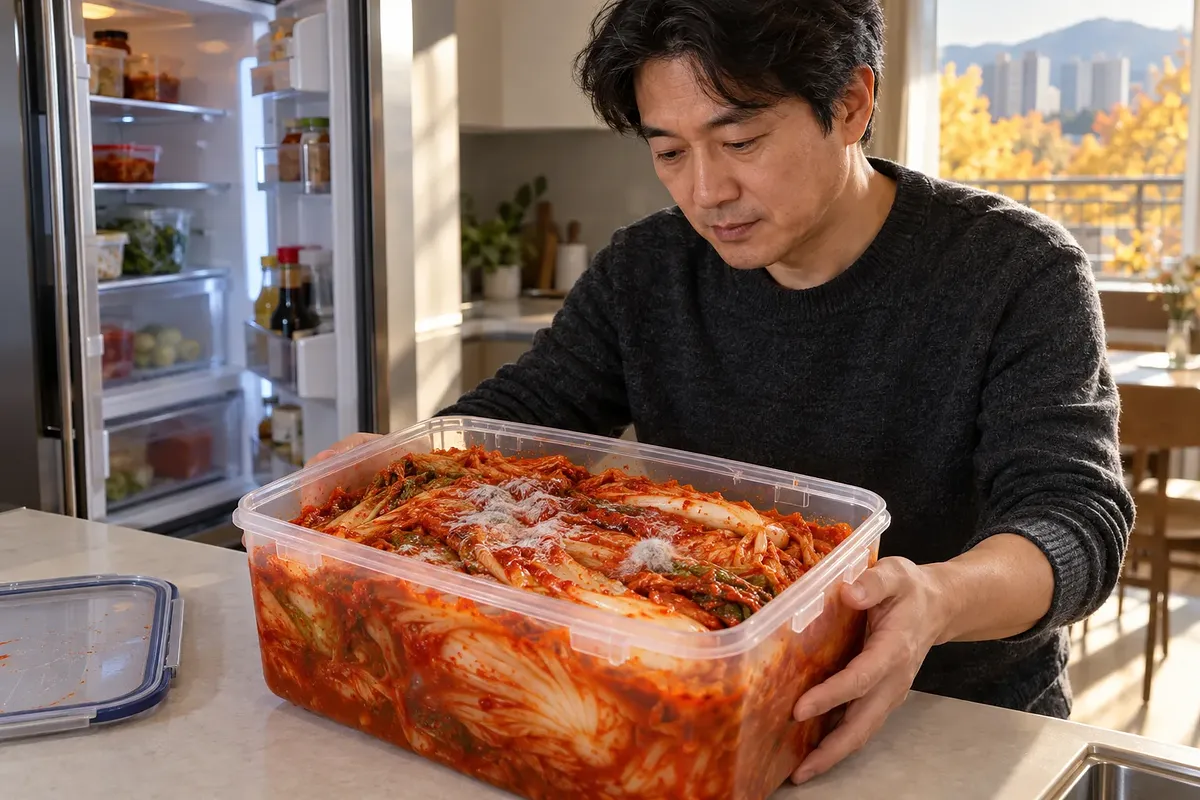
Golmaji on kimchi is a white film produced by yeast. If it is golmaji, the guidance is to skim it off, wash the kimchi, and then cook it. However, a white appearance alone does not confirm that it is golmaji. If mold is suspected or the two are difficult to distinguish, it is safer to discard the kimchi without eating it.
The storage temperature in this article is based on the World Institute of Kimchi's announcement dated November 22, 2018.
What golmaji is and why it forms
Golmaji is a white film that forms as yeast grows on the surface of fermented foods. Lactic acid bacteria drive most of the fermentation in kimchi. In the later stages of fermentation, golmaji may appear as lactic acid bacterial activity declines.
Exposure of the surface to air contributes to golmaji formation on kimchi. It creates conditions in which yeast can grow. Golmaji also appears on other fermented foods, such as soy sauce and soybean paste. This explanation is based on the World Institute of Kimchi's 2018 announcement.
Yeasts and molds are both fungi, but they grow in different forms. Yeasts exist mainly as single cells. Molds on food generally grow as threadlike structures called hyphae. Simply calling golmaji “white mold” can cause confusion about how to handle it.
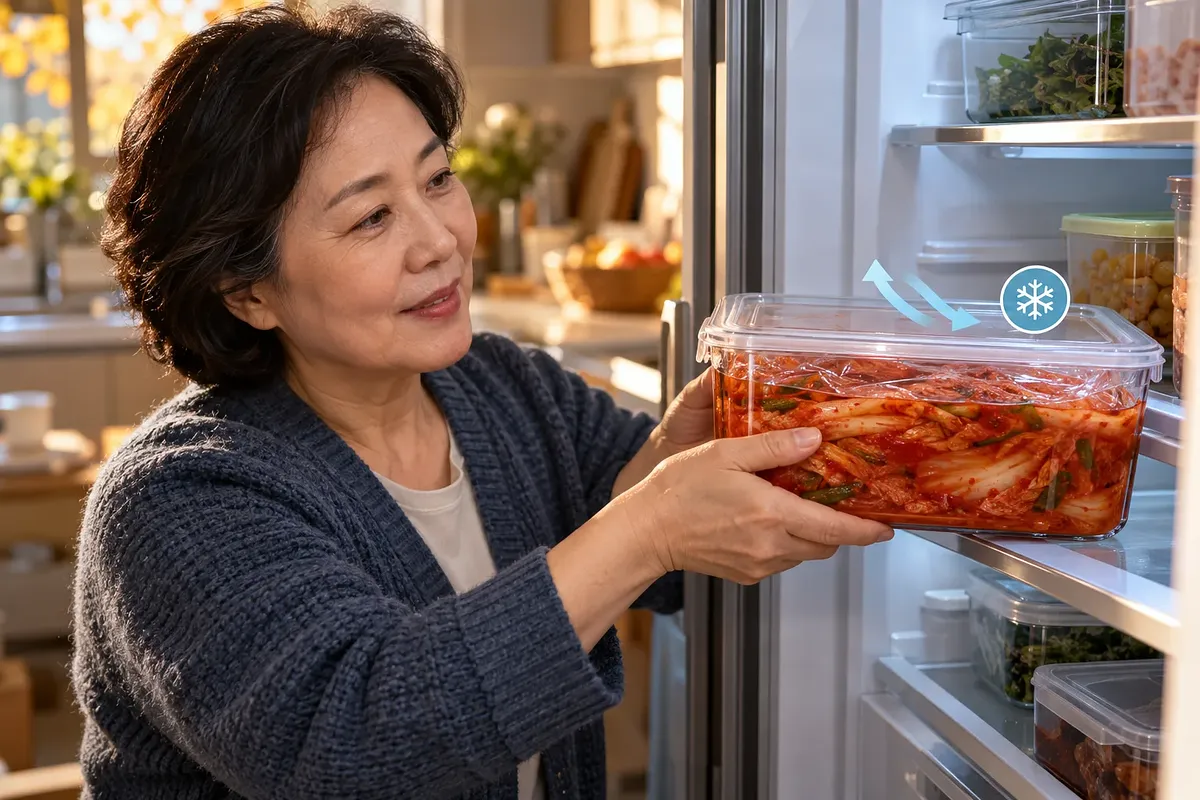
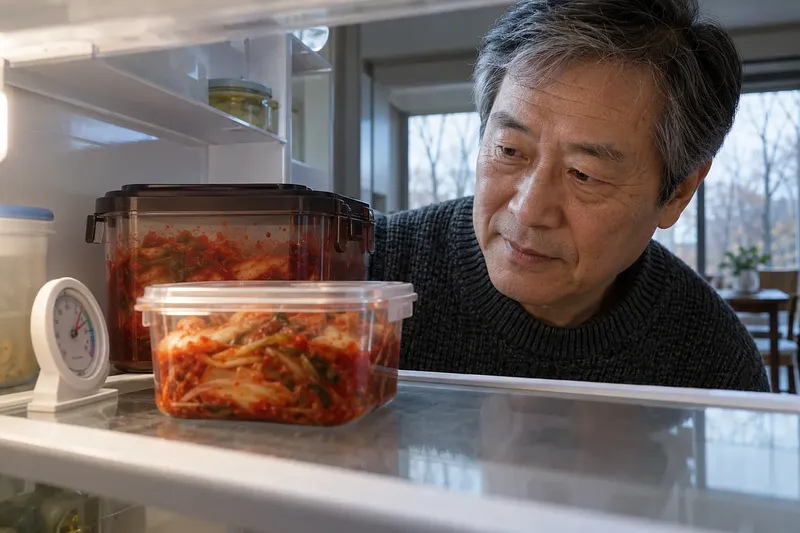
Kimchi should be stored at 4°C or below with minimal exposure to air.
Differences between kimchi golmaji and mold, and the limits of visual identification
Color and shape provide clues, but they are not tests that establish safety. Golmaji may appear as white spots or a film. Mold can also look white. Therefore, “if it is white, it is safe to eat” is not a valid rule.
| Category | Golmaji | Suspected mold |
|---|---|---|
| Main appearance | White spots or a film produced by yeast | Threadlike or fuzzy structures |
| Meaning of color | White is only a clue, not a definitive criterion | May appear in various colors, including white |
| Safety assessment | Refer to findings on the yeasts studied | The type and presence of toxins cannot be determined by sight |
| Handling approach | Follow removal guidance when no other spoilage is suspected | Choose to discard it without eating it |
The World Institute of Kimchi advises against eating kimchi with colored, threadlike mold. The USDA explains that some food molds can extend below the surface. Photos or outward appearance alone cannot reveal the condition inside. The sources are the World Institute of Kimchi's information cards and the USDA's guidance on food molds.
What the safety studies established
The findings must be interpreted within the scope of the yeasts tested and the test conditions. The 2018 announcement and the 2022 follow-up study used different assessment methods. Genetic analysis and actual toxicity testing should not be described as the same result.
| Publication date | Assessment method | Findings and limitations |
|---|---|---|
| November 2018 announcement | Genome analysis of 5 yeast species isolated from kimchi | No toxicity genes were found in the organisms analyzed. Animal toxicity assessment was identified as a follow-up task |
| Published in a journal in September 2022 | Tests on 3 yeast species, including cell and animal tests | No cytotoxicity or signs of toxicity in mice were observed under the test conditions |
The 2022 study used cells derived from human intestines and liver, as well as mice. Animal testing included a single dose and repeated oral dosing for 14 days. It was not a clinical trial evaluating long-term consumption in humans. Details are available in the Food Microbiology paper abstract.
These findings support the safety of the main yeasts that form golmaji. However, they are not test results for other contamination in the kimchi at home. They cannot be applied as-is when both golmaji and mold are suspected.
When to remove growth and when to discard kimchi
Before following the removal guidance, there must be no suspicion of spoilage other than golmaji. The table below combines the institute's guidance with general food safety guidelines. Discarding kimchi when the growth is difficult to identify is a conservative decision that accounts for uncertainty.
| Condition of the kimchi | Assessment and handling |
|---|---|
| Identified as golmaji, with no other suspected spoilage | Skim off the affected part, wash the kimchi, and then cook it |
| Visible threadlike or fuzzy mold | It is safer to discard the kimchi in that container |
| Unclear whether golmaji and mold are mixed together | Do not remove the growth and then eat the kimchi |
| Unidentified growth or suspected decay | Discard without tasting to check |
The USDA advises against removing only the surface mold from soft foods with high moisture content. This guidance does not specifically list kimchi. It is applied here because kimchi is a high-moisture food. Rules for cutting away part of a firm raw vegetable should not be transferred to kimchi.
Handling steps when the growth is identified as golmaji
The guidance for removing golmaji from kimchi follows this order: skim off, wash, and cook. The World Institute of Kimchi's “Identifying Kimchi Golmaji, Often Mistaken for Mold” includes the following sentence.
If golmaji forms on kimchi, skim it off, wash the kimchi in water, and cook it before eating.
- Use a clean utensil to skim off the part where golmaji has formed.
- Wash the kimchi you will cook with water.
- Use it in a cooked dish, such as a stew or stir-fry.
These steps are not a way to salvage moldy kimchi. The quoted guidance does not specify a cooking time or internal temperature. An arbitrary cooking time cannot guarantee safety.